1921 -1970: World renowned missionary Dr. E. Stanley Jones at Maramon Convention (See Rare Photos)
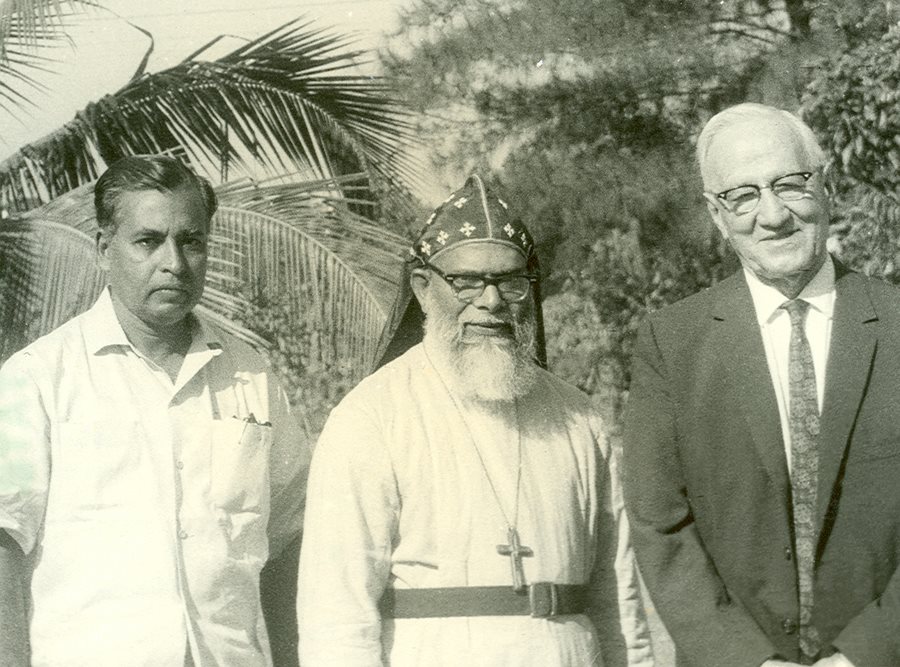
E.Stanley Jones (right) with Alexander Mar Thoma Metropolitan (middle) with an unidentified friend at Sat Tal Ashram, India. (Photos from E. Stanley Jones FB page)
Dr. Eli Stanley Jones was born in Baltimore, Maryland, USA on 3rd January 1884. He was a faculty member at Asbury College, Kentucky, USA when he was called to missionary service in India in 1907 under the Board of Missions of the Methodist Episcopal Church.
He was one of the main speakers of the Maramon Convention from 1921-1970. His messages combined evangelistic challenges with social concerns. The Maramon Convention is one of the largest Christian convention in Asia, and is held at Maramon, Pathanamthitta, Kerala, India annually in February. The venue is on the vast sand-bed of the Pampa River next to the Kozhencherry Bridge. It is organised by Mar Thoma Evangelistic Association, the missionary wing of the Malankara Mar Thoma Syrian Church. The 124th Maramon Convention is happening in 2019.
“For more than half a century Dr E. Stanley Jones proclaimed the Gospel of Christ and applied it to people’s personal, social, national, and international problems. He moved among statesmen and among leaders without portfolios as counselor, friend and worker for peace and goodwill.
Dr Jones became a friend of Mahatma Gandhi and wrote an appreciative biography of Gandhi. In 1950, Dr. Jones provided funds for India’s first Christian psychiatric center, and clinic currently known as Nur Manzil Psychiatric Center and Medical Unit at Lucknow, Uttar Pradesh, India.
~ http://www.facebook.com/SattalAshram”
In 1946, with the help of friends in USA, he donated the first loud speaker setup to the Maramon Convention. He is also the founder of the Sat Tal Christian Ashram movement, Nainital, Uttarakhand, India. He died on January 25, 1973 in his beloved India.
In the 1920s, India began to develop greater appreciation for its own history and culture and greater pride in its own unique contributions to world civilization. Stanley Jones was one of the very first to realize the possibilities that this change in India’s intellectual and spiritual culture created for Christianity and especially for Western Christian missionaries. But he could not fully understand the astounding scope and depth of the possibilities without experiencing the history and culture of his adopted country for himself. So, what better way to immerse himself in the ethos of India than to visit Indian ashrams?
This is exactly what he did. In 1923, he spent two months at Santiniketan, the ashram of the world-famous poet, Rabindranath Tagore. Three years later in 1926 he visited Gandhi’s ashram at Sabarmati.
It is no exaggeration to say that Jones’ visits to these ashrams changed the course of his life. In fact, in 1930, he established his own ashram as a spiritual retreat for Christians modeled on his experience with Ashrams in India. But this was only the first of hundreds of Christian ashrams that would eventually be established throughout the world. These ashrams are truly the work of the Holy Spirit as they continue to inspire, refresh, and renew thousands of Christians in many nations today.
~ From “Ordinary Man, Extraordinary Mission: The Life and Work of E. Stanley Jones” by Stephen A. Graham
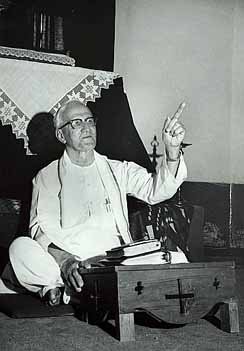
Rev. E. Stanley Jones giving one of his sermons at Sat Tal Ashram, India. (Photo from E. Stanley Jones FB Page)

Bishop T. S. Joseph speaking at the Maramon Convention while Bishop Alexander Mar Theophilus (Metropolitan Alexander Mar Thoma), E. Stanley Jones and Mr. Ramenpillar listen. (Photo from E. Stanley Jones FB page)
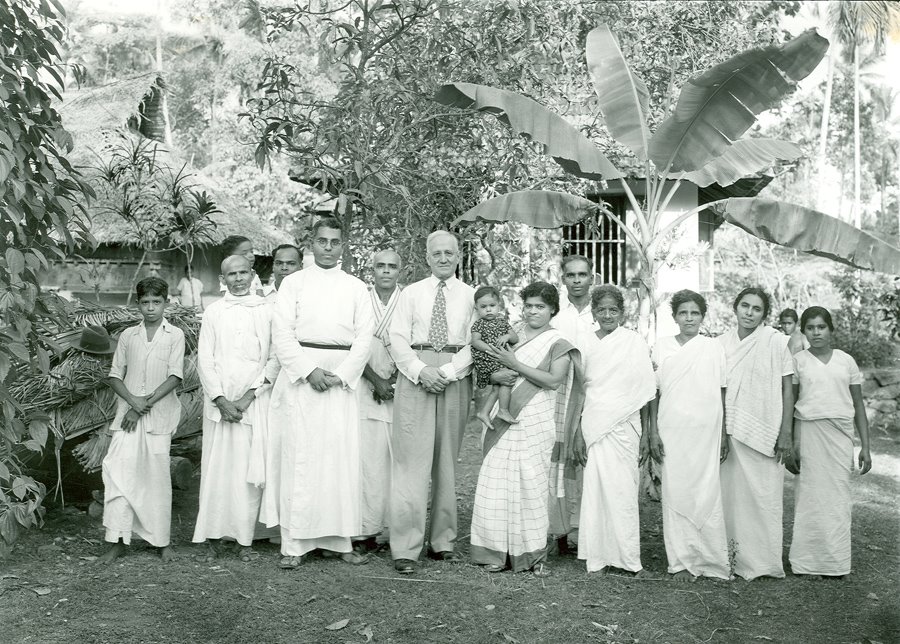
Rev. Stanley Jones with Mar Thoma Church members in Kerala, India. (Photo from E. Stanley Jones FB page)
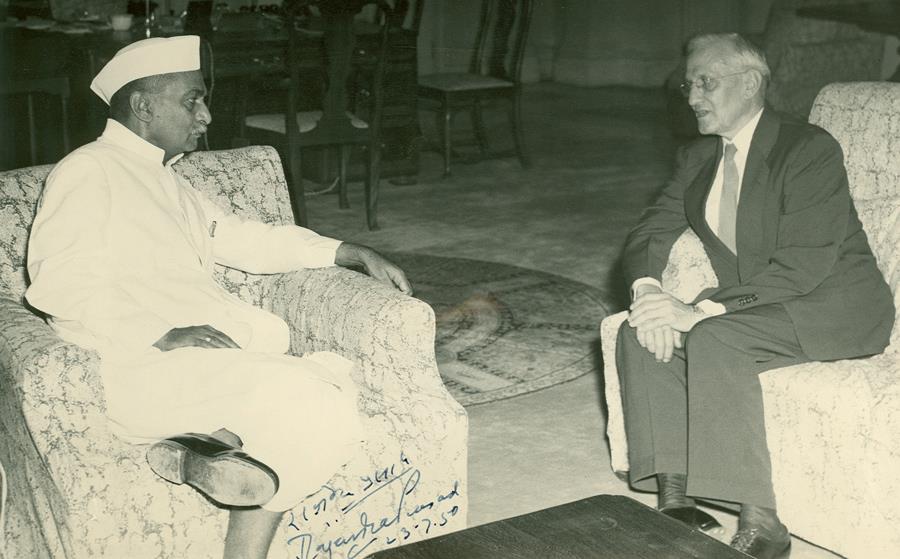
Dr. Stanley Jones with Dr. Rajendra Prasad, first President of India 1950 (Photo from E. Stanley Jones FB page)
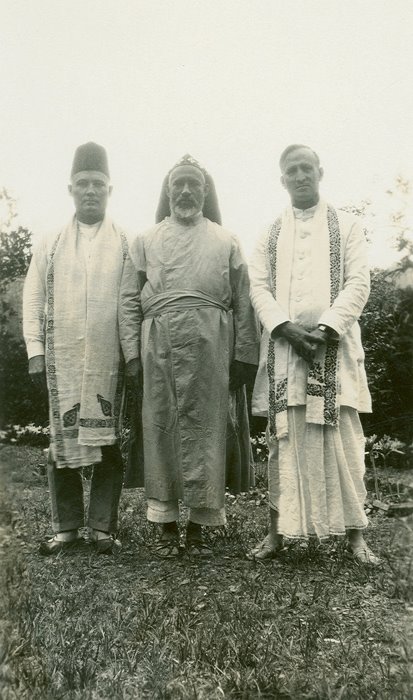
E. Stanley Jones (right) at the Maramon Convention with Bishop Abraham Mar Thoma Metropolitan (middle) and an unidentified friend. (Photo from E. Stanley Jones FB page)

1905: Women Speakers lead the way at Maramon Convention
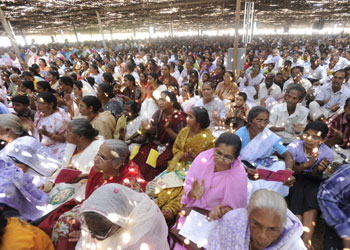
Women listening to the sermon at Maramon Convention. (Image courtesy www.manoramaonline.com)
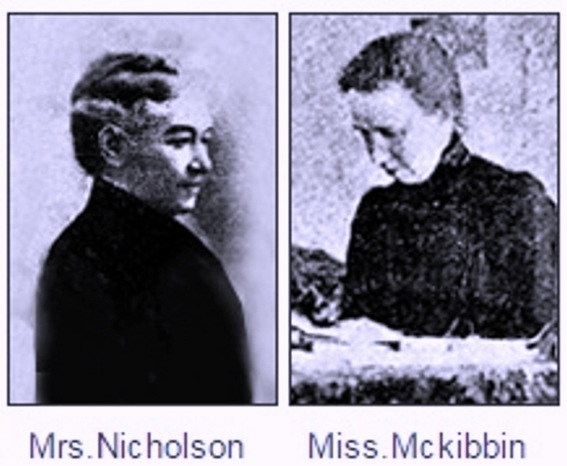
Right from its initial years, many women speakers have made a great impact on the Maramon Convention. Mrs. F.S. Nicholson and Miss. S.C. McKibbin conducted special meetings and Bible classes for women during the convention in 1905. They are remembered for their devoted service to the women of Travancore particularly in the education field. They established the prestigious Nicholson Syrian Girls Higher Secondary School and Training Home in 1910 at Kattode, Tiruvalla, Kerala.
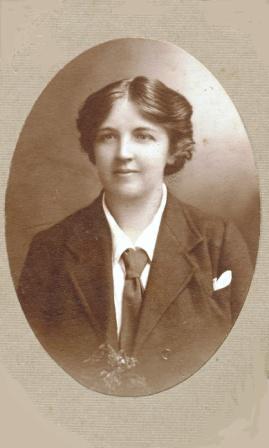
Ms. Gwen Kellaway, Vanitha Mandiram
Other eminent speakers included Miss Amy Carmichael, founder of the Dohnavur Mission, Tamil Nadu, Miss Kellaway of Vanitha Mandiram, and Miss Grower to name a few missionaries who encouraged women towards the Lord’s work through Bible classes during the early days of the Convention.
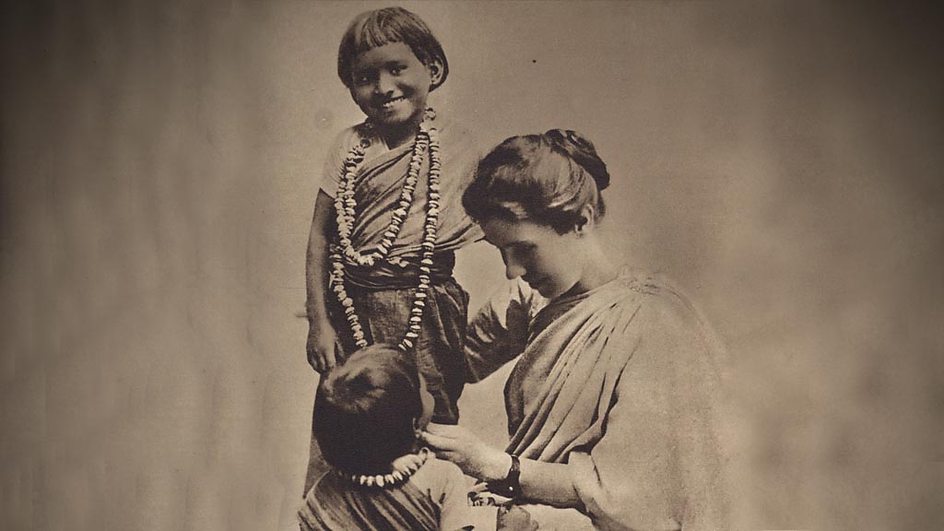
Amy Carmichael with the children of Dohnavur Mission, Tamil Nadu

Ban of Tobacco and Paan at the Maramon Convention

The use of tobacco and paan was a way of life in Kerala during the first half of the 20th Century. It was an essential item at social events such as marriages and other family gatherings. Tobacco and paan was easily available through shops all over Kerala. It was a common sight to have people attend the Maramon Convention meetings with beedi and murukkan in their pockets.
Through his messages, Dr. Stanley Jones urged people to refrain from the use of tobacco products. During one meeting, he asked the convention participants to bury their tobacco (which they were carrying) in the sand on the pandal floor. In another meeting, he collected all the tobacco products from the people and burnt it near the pandal in front of everyone.
It is only after much persuasion that the people stop using it and today it is not permitted at the Maramon Convention pandal.
Read more about Dr. E. Stanley Jones at the Maramon Convention with rare photos

1 December, 1973: Mathews Mar Athanasius Episcopa passes away
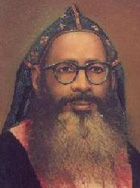
Mathews Mar Athanasius Episcopa
1 December, 1973: Mathews Mar Athanasius Episcopa passes away (b.7 Jun 1900). Dr. Mathews Mar Athanasius Episcopa was a member of the Kurudamannil family of Ayroor.
After obtaining the B.A., L.T Degrees he became the Headmaster of Keezhillam School. He took the initiative for the establishment of the Ashram High School at Perumbavoor.
He became a priest in 1929 and Bishop in 1937. He gave able leadership to various organizations of our Church. He was called home on 1 Dec, 1973.

A fearless Bishop who took on the Prime Minister despite the threat of jail
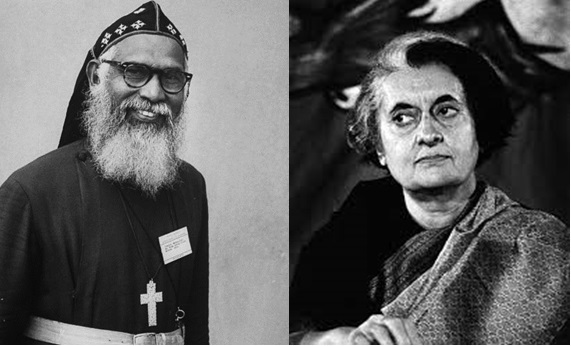
Metropolitan Juhanon Mar Thoma and Indira Gandhi, Prime Minster of India
On 25 June, 1975 – exactly 40 years ago, Prime Minister of India Indira Gandhi unilaterally had a state of emergency declared across the country. Officially issued by President Fakhruddin Ali Ahmed under Article 352(1) of the Constitution for “internal disturbance”, the Emergency was in effect from 25 June 1975 until its withdrawal on 21 March 1977 (21 months). `
So what did the Emergency imply? Essentially, at the stroke of the President’s pen India ceased being a democracy and was converted into a virtual autocracy. Civil liberties were suspended, media was censored, state and parliamentary elections were postponed, and anyone who wrote or spoke against the Government was put behind bars. In the 21 months of the Emergency, 100,000 people were arrested and detained without trial. ~ www.thelogicalindian.com
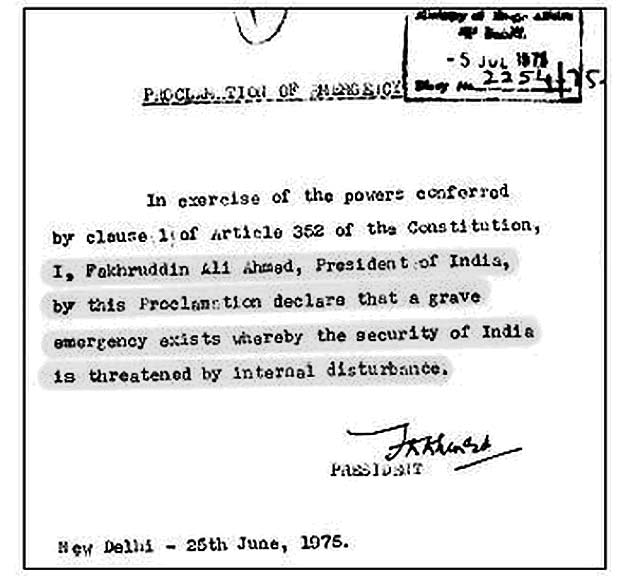
Emergency declared by President Fakhruddin Ali Ahmed under Article 352(1) of the Constitution.
Under the Emergency rule, it was not easy to raise voices of critical opposition, in making even a mild-toned protest, one did so at considerable risk. Many kept silent because of the fear which spread among the people. Despite these pressures, some of the Christian groups made courageous attempts to express critical voices. It is significant to recognise that those who made the critical protests were not the representatives of the large institutional churches; rather, they were members of relatively small groups or of a minority group within the institutional church.
Metropolitan Juhanon Mar Thoma was the only Church leader who wrote a letter to her disapproving it. The Metropolitan’s letter stated that he deemed the Emergency rule as a setback to democracy and demanded its speedy withdrawal as well as the release of the politicians arrested in this regard.
His earlier statement was drafted in Malayalam in the fall of 1975. Even though it was not an entirely critical protest, but raised in a modest way a critical question, it was refused publication in Kerala. Metropolitan has written a brief yet pointed letter to Prime Minister Gandhi stating clearly his concern for the political situation.
“A vast number of people, and that growing numbers, feel the price we have to pay is costly. With people like Morarji and others in jail, and a press which has lost its freedom to write news and views, we feel a kind of depression. On behalf of thousands, I request withdrawal of Emergency by gradual stages. Immediate and altogether withdrawal is likely to have very bad repercussions. If the political detenus are released and’ freedom for press is given, it will be a great relief.
“I have one more request: not to have elections and constitutional changes during the time of Emergency. Hoping to be excused for this letter written from a sincere and painful heart.” ~www.daga.org.hk
He wrote that he was writing as a Church leader and a citizen. Mrs Indira Gandhi gave orders to arrest Metropolitan Juhanon Mar Thoma. Mr. C. Achuthamenon was the Chief Minister at that time and with his interference the arrest was avoided. It was the Mar Thoma Church’s fight for independence and national integrity that echoed through Metropolitan Juhanon Mar Thoma, a fearless commitment to the concerns of the people that is hard to find among religious leaders now. On September 9, shortly after he wrote this letter, he fell ill and died on September 27, 1976.
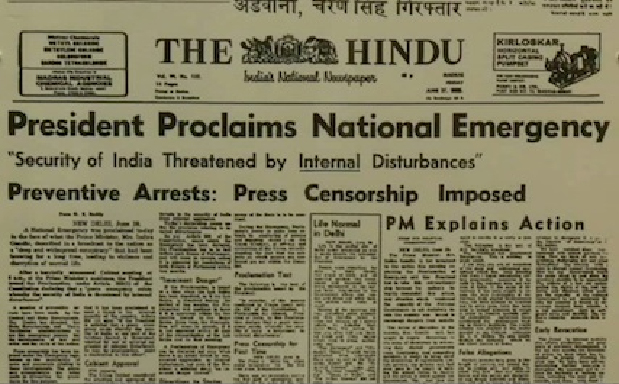
The Hindu front page after imposition of the Emergency.
The first edition of the Indian Express after the imposition of emergency consisted of a blank page instead of editorial. The Financial Express had Rabindranath Tagore’s poem, “Where the mind is without fear, and the head is held high”.
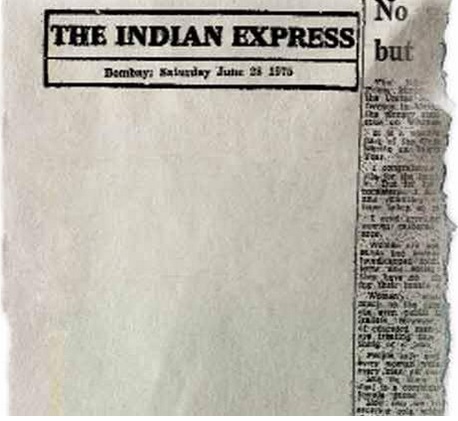
28 June 1975 : Blank Edit Page in The Indian Express Newspaper in Protest Against the Emergency
Where The Mind Is Without Fear
Where the mind is without fear and the head is held high
Where knowledge is free
Where the world has not been broken up into fragments
By narrow domestic walls
Where words come out from the depth of truth
Where tireless striving stretches its arms towards perfection
Where the clear stream of reason has not lost its way
Into the dreary desert sand of dead habit
Where the mind is led forward by thee
Into ever-widening thought and action
Into that heaven of freedom, my Father, let my country awake

15 May, 1857: Birth of Hymn writer Rev. T. Koshy (Aatmopakari Achen)
Kristeeya Keerththanangal
15 May, 1857: Birth of Rev. Thomas Koshy (Aatmopakari Achen), author of Hymn “Ennullil ennum vasichchiduvan”. Born as a member of the Mukkadavu family of Kallada, he became a priest in 1896. He was a gifted artist, hymn writer and publisher. He was a speaker of the Maramon Convention for many years.
Hymn Nos. 10(9), 37(35), 190(179), 216(201), 20(205), 221(206), 246(224), 297(283), 316(311), 344, and 352 in the Hymn Book Kristheeya Kerthanagal are written by him.
Read more in our Short Biographies: Rev. Thomas Koshy (Aatmopakari Achen) (Free PDF)

1936: Loud Speaker and Microphone introduced at Maramon Convention (Rare Photos & Audio MP3)
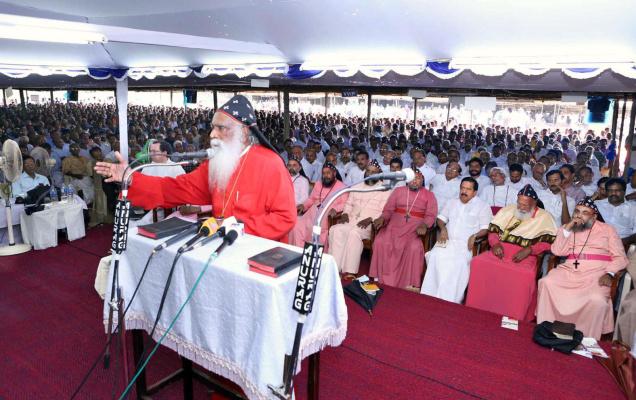
Joseph Mar Thoma Metropolitan speaking at the 118th Maramon Convention (2013). Photo by The Hindu
Though the first convention began in 1895, the sermons were delivered to the tens of thousands of church members who attended in a very unique manner. Until 1936, messages of the main speaker were repeated in relay by designated people standing in between the participants of the convention. It was a time consuming process for the message from the front to pass through thousands of participants to reach the back of the audience. In 1936, a loud speaker and mike (microphone) set was brought to Maramon from USA by the famous missionary Rev. Dr. E. Stanley Jones. It was donated by one of the Christian Churches in USA. He was a well wisher of the Mar Thoma Church and encouraged the missionary zeal of the Church.
Read more and see more rare photos at 1921 -1970: World renowned missionary Dr. E. Stanley Jones at Maramon Convention ( See Rare Photos) Hear a sermon by Dr. E. Stanley Jones – Click Here (The sermon is 26 min. — or download the mp3 (11.8 MB).)  The sermon title is, “The Gift of the Holy Spirit: The Birthright of All Christians.” The sermon was preached at a U.S. Ashram in August 1960. (This sermon is included in the 2008 book, Living Upon the Way: Selected Sermons of E. Stanley Jones on Self-Surrender and Conversion.) This audio clip is from www.methodistthinker.com
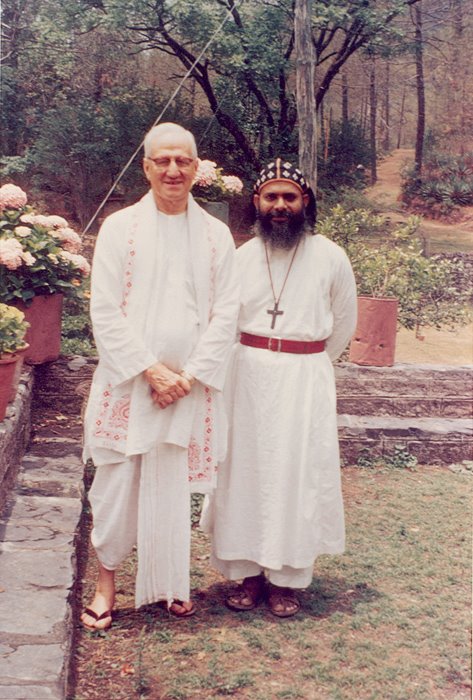
E. Stanley Jones with Mar Thoma Bishop Alexander Mar Theophilus (later became Metropolitan Alexander Mar Thoma)
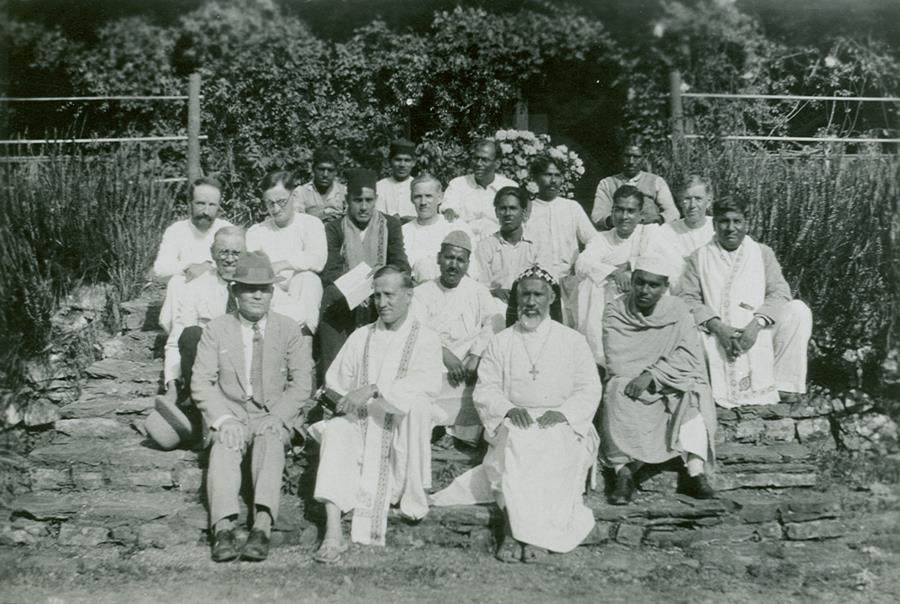
Bishop Juhanon Mar Thoma Metropolitan, E. Stanley Jones, Dr. Murray T. Titus and Ashram members at Sat Tal Ashram, India. (Photo from Dr. E. Stanley Jones FB page)
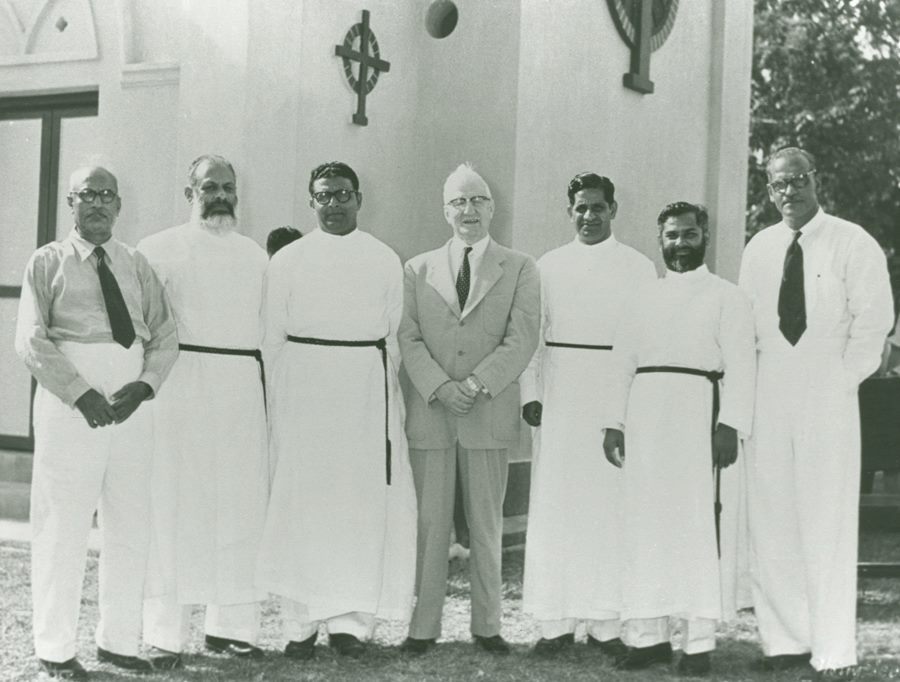
C. John Thomas, Rev. T. N. Koshy, P. C. John, Dr. E. Stanley Jones, Rev. V. E. Thomas, Rev. P. K. Koshy, and Mr. V. E. Chacko at St. Thomas Church, Klang Malaysia (1956)
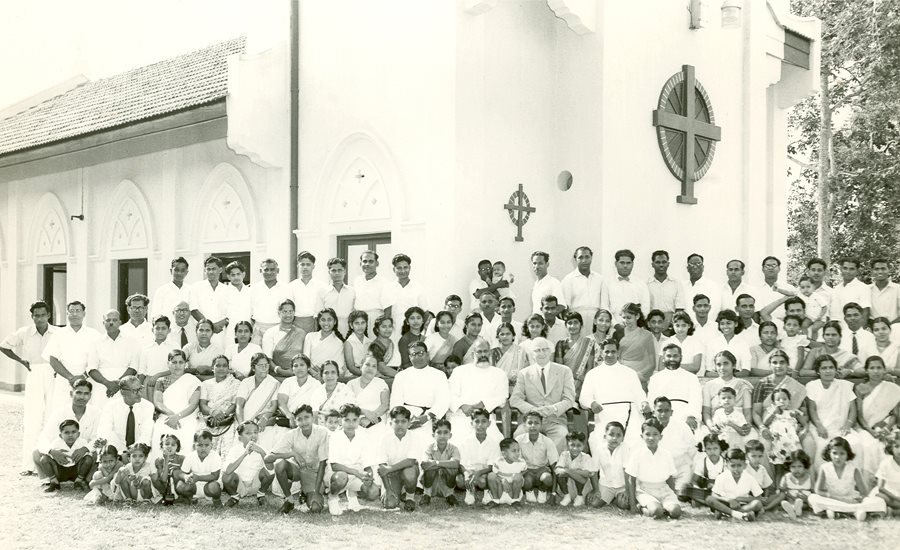
Dr. E. Stanley Jones with members of the St. Thomas Church, Klang, Malaysia 1956

February, 1917: Sadhu Sunder Singh preaches at Maramon Convention
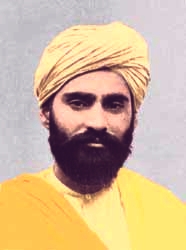
Sadhu Sundar Singh
Sadhu Sunder Singh (3 September 1889-1929) the renowned Indian Christian missionary was one of the speakers of the Maramon Convention in 1918. He spoke in Hindi and the translation was done by Mr. M. O. Oommen, Chief Conservator of Travancore.
Sadhu Sunder Singh drew crowds greater than any previous conventions, so much so that before the end of the week the pandal (covered area) had to be enlarged. It is estimated at the final meeting about 32,000 people gathered to hear his message.

Pages from History: 30th Nov 1945 – Sadhu Kochukunju Upadesi passes away.
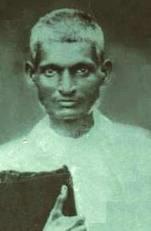
Sadhu Kochu Kunju Upadesi
30th November, 1945 (1121 Virchikam 15): Sadhu Kochukunju Upadesi (b.Dec.1883) passes away. Sadhu Kochukunju Upadesi (Mr. Moothampakkal Itty Varghese,Moothampakkal, Edayaranmula near Chengannur) was a unique personality in history of the Mar Thoma Syrian Church.
For almost forty years he preached the Bible in simple language all over South India. He practised and lived the life of a Sadhu. He wrote more than 200 hymns, many of that are printed in worship books across denominations even today. Thousands turned to God by hearing his messages. He was the first General Secretary of the ‘Mar Thoma Voluntary Evangelists’ Association, which was founded in 1924, and he continued in the post until 1945.
His continuous travels and gospel work made him sick many times. But on Friday, 30th November 1945 he became very sick and called to eternal rest on 15 Virchikam 1121 (8.45 am) and was buried in the Lakha St.Thomas Mar Thoma Church Cemetery on the following day. The funeral service itself was a great honour for him. Two Bishops, more than 100 priests and more than 40,000 people attended the funeral service.
Read more about his life in our free pdf Ebook: https://nalloorlibrary.com/wp-content/uploads/2013/06/sadhu-kuchujunu-upadeshi.pdf
Pages from History: 29 November, 1970: Formation of Church of North India (CNI).
29 November, 1970: Formation of Church of North India (CNI). The inaugural meeting of the CNI was held in the Unity Hall opposite the Anglican Cathedral in Nagpur. The metropolitan of the Mar Thoma Syrian Church Dr. Juhanon Mar Thoma attended this meeting.
It was a merger of six Christian denominations, including the United Church of Northern India; the Anglican Church of India, Pakistan, Burma (Myanmar) and Ceylon; the British and Australian Methodist churches; the Council of Baptist Churches in Northern India; the Church of the Brethren; and the Disciples of Christ.The motto of the church is: Unity – Witness – Service.


 Nalloor Library