Remembering the Mahatma of the Mar Thoma Church (Freedom Fighter) Rare Photos and Video
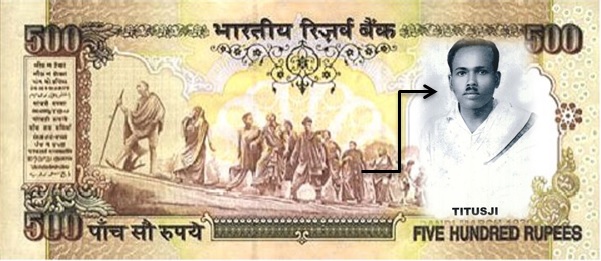
The Christian priest on the Indian Rs. 500 note to represent Titusji the only Christian in the Dandi Salt March along with Mahatma Gandhi. (Currency note used for illustrative purposes only)
Everyday millions of Indians use the Indian 500 Rupee note with the image of the historic Dandi Salt march by Mahatma Gandhi in 1930 that triggered the wider Civil Disobedience Movement leading to India’s freedom from the British. Among the marchers that would change India’s destiny was just one Christian and a Mar Thomite, Shri Thevarthundiyil Titus also known as ‘Titusji’. He is represented on the Indian Rs. 500 note as a “Christian Priest” (circled in blue in the image above). However he was sidelined and never received a pension from the Central Government, State Government or Freedom Fighter’s Associations. His own Church, the Mar Thoma Syrian Church seems to have no recollection of him or given him due recognition. Tituji’s home Parish, Maramon Mar Thoma Church or the Bhopal Parish St.Peter’s Mar Thoma Church which began in his residence have all but forgotten their illustrious son and his contribution to the nation’s freedom.
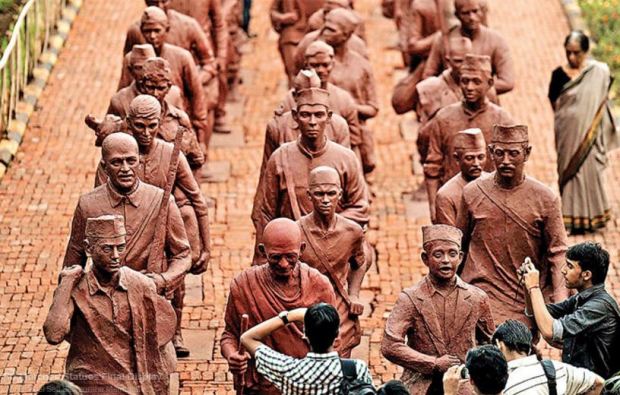
The image on the Indian 500 Rupee note is that of a sculpture made in tribute of the march in the heart of Delhi city, on the Sardar Patel Marg. The sculpture shows ten Indian people following Gandhi on his path-breaking civil disobedience protest, hence the name “Gyarah Murti” (Eleven Statues). The Christian priest was included to represent the only Christian in the march – Titusji. A devout Gandhian – he was known by the name Titus in his earlier days. “Titusji” was the name given to him by Mahatma Gandhi as a token of love and honour.
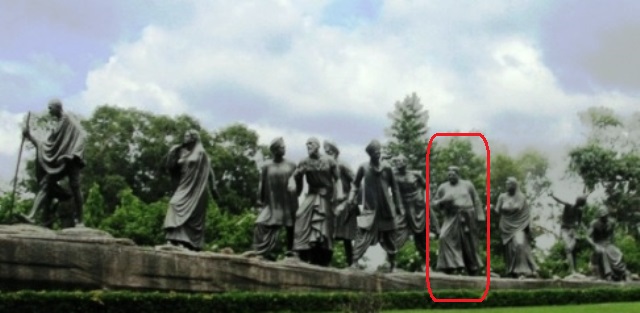
“Gyarah Murti” or “Eleven Statues with the priest highlighted in Red to represent Titusji who the lone Christian in the Dandi Salt March.
“Gandhi’s iconic retinue in the sculpture includes a woman with her head covered following close after him; a cluster of three men including a turbaned Sikh visibly of high pedigree, a Hindu scholar with a topi and an emaciated Muslim peasant; a Hindu man wearing a turban as a mark of intellectual distinction, with a religious mark etched on his forehead; an impoverished peasant looking far ahead, bearing no marks of class, caste or religion on his body; a Christian priest; another woman in a skirt and a young boy egging on a weary old man to travel farther.” ~ www.sodelhi.com

About Titusji
Titusji (b.18 Feb, 1905) hailed from a farming family, (Theverthundiyil, Maramon) in Kerala. He was a member of the Maramon Mar Thoma Parish. After his high school graduation, he taught in a school in Vadasserikkara (a village about 20 km away from Maramon), for a few years and then joined the Allahabad Agriculture University and cleared an Indian Dairy Diploma course with distinction.
Titusji-The Freedom Fighter
Gandhiji’s way of life, his principles and his simplicity greatly influenced Titusji that he decided to join Gandhiji’s Ashram named” Goshala “in Sabarmati. The lifestyle there was simple and austere, to say the least. All the inmates in the Ashram were allowed only two pairs of clothing and every one had to do his own chores. Early morning after prayers and two hours of charkha, each one was assigned his or her duties.He was selected by Mahatma Gandhi as a secretary for his milk project in the Sabarmati Ashram near Ahmedabad. Mr. Gulzarilal Nanda (who later became acting prime mister of India) was the secretary of another unit. Both of them were trusted friends of Gandhiji. Titus got married in 1933, to Annamma (Ikarethu House, Kozhencherry). Annamma, after her marriage, joined the Sabarmati Ashram and she donated her wedding ornaments to the Ashram. Gandhiji was very keenly interested in the activities of the dairy at the Ashram .It was in these formative years that Titusji got to know Gandhiji personally and his commitment to the freedom struggle was made stronger.
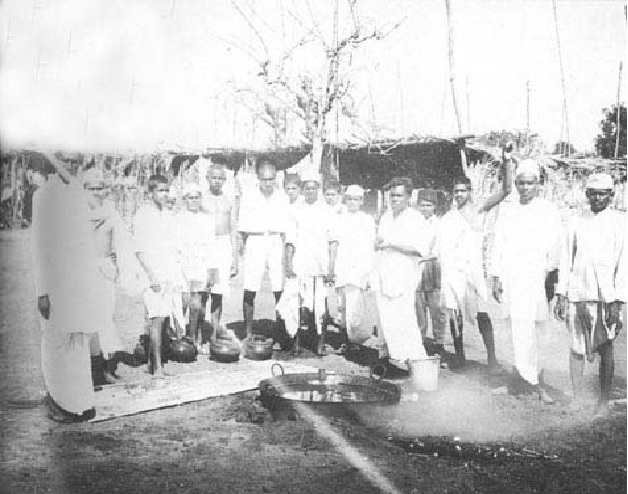
Titusji at the Dandi Salt March (4th from right) 1930
The Dandi March
.In 1930, when Mahatma Gandhi decided to break the salt law, he chose trusted Titus to be one of the selected 80 men. On March 12, 1930, Gandhi and 78 male satyagrahis set out, on foot, for the coastal village of Dandi, Gujarat, some 240 miles from their starting point in Sabarmati. Titusji was one of the satyagrahis who accompanied Gandhi in this historic event known as “Dandi March” or “The Salt Satyagraha.” Titusji was the only Christian in that group. They were beaten up and arrested by the British Police. Titusji was arrested during the march to the Dharasana Salt depot. He was initially imprisoned in the Jalalpur jail and subsequently shifted to the Nasik jail.
An interesting observation about Titusji’s participation in the Dandi march was that he was not wearing the Gandhi cap during the march. Apart from him, Gandhiji was the only other person who did not wear a cap. When some of the other marchers complained to Gandhiji about it, Gandhiji took the stand that no one should be compelled to wear one.
On being released from the prison, Titusji went back to the Sabarmati Ashram. In 1932 Gandhiji asked him to take charge of the ‘Goshala’ (Dairy farm) at the Ashram again. It was while he was here in 1933 that his marriage took place to Annamma, a caring, warm person who supported Titusji in all his difficult times.
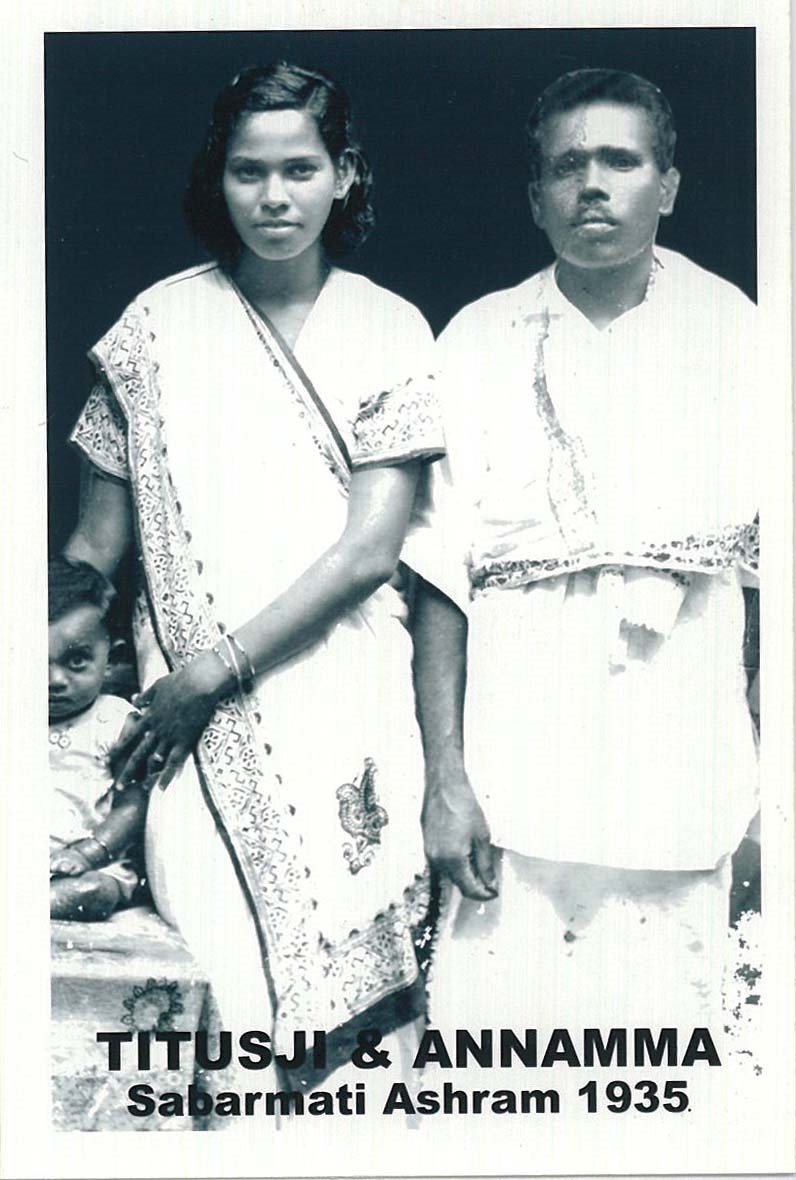
Titusji and his wife Annama with daughter Aleyamma at Sabarmati Ashram 1935.
Titusji’s eldest daughter Aleyamma was born when he was at Sabarmati Ashram. In 1933, Gandhiji suddenly decided to disband the Ashram .Gandhiji’s instructions to Titusji was that he take the entire cattle out of the Ashram and protect the cattle. Following Gandhiji’s orders, Titusji shifted all the cattle and staff members out of the ashram and took shelter in a Panjrapole (animal shelter). Titusji slept in the stables beside the cattle through out the monsoon He worked hard to keep up the various activities of the Goshala. It was a tough life but since hardships were a way of life, Titusji did not have any problem obeying such orders.
Mahatma Gandhi’s Visit to Kerala – 1934
During one of his visits to Travancore (Kerala) Titusji burnt British-made clothes (foreign clothes) in Kottayam and gave a fiery speech to thousands of Malayalees to join the freedom movement.
Mahatma Gandhi visited Titusji’s house in Maramon (Theverthundiyil) in 1934 on his way to the famous Hindu temple in Aranmula near Chengannur. He assured Titusji’s father that his son is safe and sound. This was considered one of the greatest events in Central Travancore. In and around Maramon, thousands witnessed his visit.
Involvement in Dairy
Gandhiji by this time was totally busy travelling the length and breadth of the country in mobilizing the masses for the cause of independence. In-spite of his hectic schedules he still took interest in the activities of the ‘Goshala’ (Dairy farm) and was in touch with Titusji. Gandhiji in one of his letters to Titusji in 1933 wrote “I wanted to come and see the ‘Goshala’ (Dairy farm), but it was impossible for me to spare the time during the few hours that I was in Ahmedabad….I knew however that you were working very hard to make the ‘Goshala’ (Dairy farm) a success and to keep it in a clean condition….. I want you to write to me from time to time telling me all about the progress of the ‘Goshala’ (Dairy farm).”
Then in the middle of 1935, Gandhiji decided to handover the entire ashram property including ‘Goshala’ (Dairy farm) to the Harijan Sevak Sangh and then the Sabarmati Ashram thereafter ceased to be the hub of activities as far as the freedom movement was concerned. Titusji then worked in various Dairy farms as Manager in different parts of India. Due to the frequent change of places, his elder children Aleyamma, Titus and Easow stayed with relatives in Travancore .Then during the time of independence he was in Delhi as Manager with Keventers Diary.
In the early 50’s, Titusji moved to Jabalpur and then to Bhopal. His family now included the addition of four more sons Joseph, George, John and Thomas. He had one daughter and six sons. He then took a job as a Manager in Bairagarh Dairy, Bhopal, Madhya Pradesh.
A couple of years later the Bairagarh Dairy closed down and the family had to go through a lot of hardships. Titusji had to sell off the family car and even his property in Maramon, Kerala. But he refused to ask for any special privileges as a freedom fighter. He then got a break by getting a Government job in Obaidullaganj as instructor in an Institute training Village Level Workers. It was a job of his liking. He stayed alone in Obaidullaganj and would return to Bhopal on Saturdays for the weekend and go back on Mondays. In those days a song sung by Mohammed Rafi ‘Suno suno ye Bapuji ki Amar Kahani ’was a favourite of his and used to be played in the Institute regularly.
The family kept shifting their residences in Bhopal from one rented house to another. After many ups and downs, Titusji managed to get a loan of Rs.16,000 and bought a piece of land in the Noor-Mahal area of Bhopal. The entire family worked hard to build the house which was promptly named ‘Lake View Cottage’ since it afforded a clear view of the Bhopal Lake. At that time, there were no other houses in the neighbourhood. The family shifted to this house in 1956.
In 1962, Titusji got a job in Bhilai Steel Plant establishing the dairy unit in the Bhilai Steel Plant Township. He arranged for the collection of milk from nearby villages and introduced for the first time pasteurization and bottling of milk with pilfer-proof aluminium foil using imported machines. This was then distributed to all the sectors of the township.
After retiring from Bhilai Steel Plant, Titusji worked with a Christian NGO in Siliguri, West Bengal. Later he shifted to Sodpur in 24 Parganas, West Bengal. Thereafter he served the World Council of Churches (Bengal Refugee Services) in Calcutta.
At this point of time he had to face personal loss. On 2nd of December 1964, his second son, 24 year old Joy suddenly had a heart attack in his office and died. The funeral was attended by thousands. But cruel fate had more in store for him. On 12th April 1965, barely two months after the sixtieth birthday of Titusji, his beloved wife Annamma passed away. She died of post operative complications after having undergone an operation for appendicitis.
Inspite of all the setbacks Titusji remained active in his work. He was selected by the Birla group for setting up a dairy in the township of Hindustan Motors in Uttarpara, near Calcutta. He did this successfully and then re-settled in Bhopal in 1972 for a quiet life with his children and grand children.
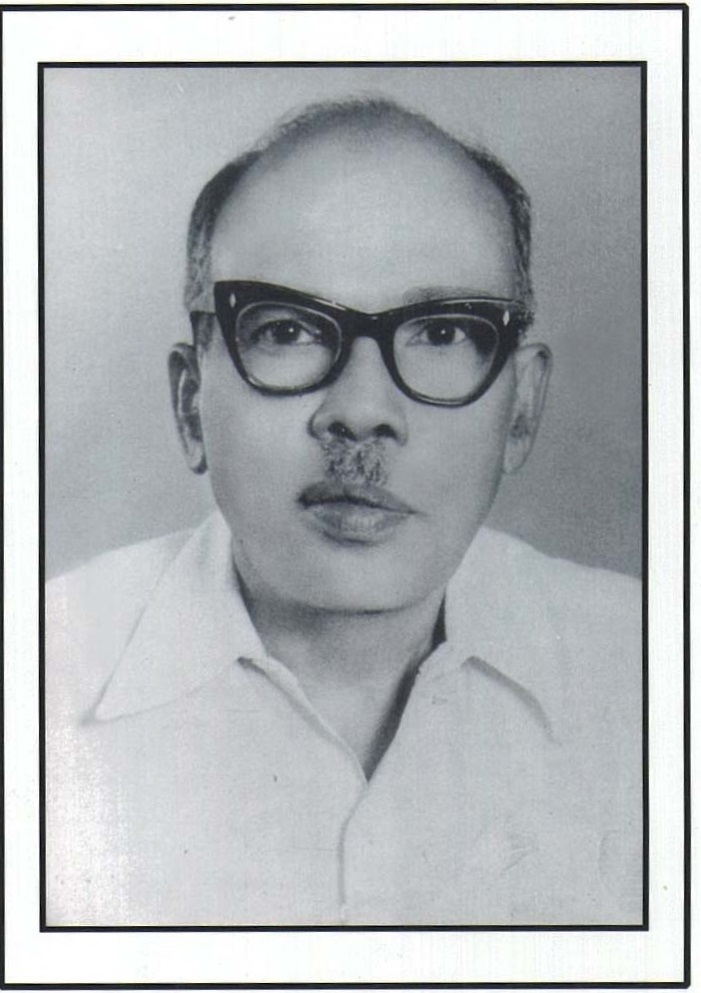
Titusji in his later years
Titusji- A man of faith
Titusji had immense faith in God. This helped him to overcome the trials and tribulations in his life. His honest and simple way of life made it easier for him to lead the life of a true Christian. He believed in the dignity of the individual, irrespective of his or her origin or status. He strived to help the fellow human beings in which ever way he could. Titusji being one of the few Malayali gazetted officers in Bhopal in the early 50’s, helped many Keralites who used to come to him to get their certificates attested and also in case of other difficulties .His was one home to which people could turn to without hesitation and ask for any help. Annamma, his wife had this habit of visiting the nearby Government Hospital and offering food or any possible help to anyone needy. Having experienced tough days themselves, they knew the importance of helping out the unfortunate,the lesser privileged.
In Bhopal Titusji initiated the forming of a Christian Congregation. A few Marthomites who were in Bhopal in the fifties started the Sunday worship in October 1954 at the residence of Titusji. That was the beginning of the Bhopal parish and was a congregation of all Christian denominations except the Roman Catholics. As the number of members grew, the space became inadequate and the Sunday service was shifted to other spacious halls and later to local church buildings. He was an active and a well-known member of the St.Peter’s Mar Thoma Church, Bhopal. Titusji was the driving force behind the establishment of Christa Prema Kulam Mission Field at Sehatganj, which is on the Bhopal-Sagar National Highway, about 25 kms from Bhopal City. The land for the Ashram was given by him at a nominal cost.This mission field is currently doing commendable work in uplifting the condition of the rural people living in the area.
In 1970, he published the book “The Bharat of my Dreams” in which he revealed his hope for the nation,and for its teeming millions. He firmly believed that all are equal and hence there should not be any disparity.
He had one daughter and six sons. He passed away on 8 August, 1980, at the Kasturba Hospital in Bhopal and was buried in the Christian Cemetery there. He never got any medals or pension for his participation in the freedom struggle. We salute his humbleness, patriotism, and dedication to the nation.
It is a matter of great pride to the Mar Thoma Syrian Church that it had men of such vision like Titusji, who worked untiringly for the freedom of the country. We praise and thank God for such leaders like Mr. and Mrs. Titus of Bhopal on his death anniversary on 8th August and the country’s Independence Day on 15th August.
How can you not share this story with others. We hope that it will inspire more youth from our Church to be involved in nation building with selflessness and pure thoughts.
***
Eternal Memory – ‘Dandi Salt Satyagraha Memorial’ a Project of the Ministry of Culture, Government of India.
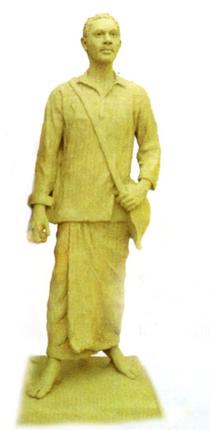
The model of Titusji sculpture as part of the ‘Dandi Salt Satyagraha Memorial’ a Project of the Ministry of Culture, Government of India. (Photo copyright www.thehindu.com)
In a unique tribute to commemorate the historic Dandi Salt march by Mahatma Gandhi in 1930, India’s Ministry of Culture has set up a National Dandi Salt Satyagraha Memorial. IIT Bombay was given the responsibility to design, coordinate and implement the memorial project. The main memorial includes a statue of Gandhi inside a pyramid of light, followed by the life-size sculptures of the 80 marchers who participated in the Salt March. www.dandimemorial.org
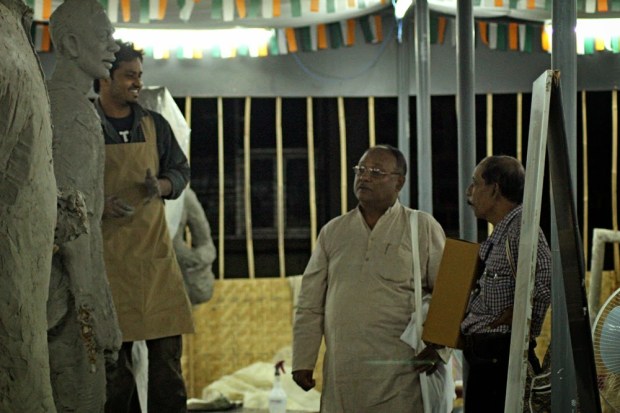
Shri Thomas Titus, son of Shri Thevarthundiyil Titus ji, one of the 1930 Salt Marchers in conversation with one of the Dandi Sculptors inside the Dandi Sculpture Workshop at IIT Bombay. (2013) (Photo copyright http://dandimemorialproject.blogspot.com)
See more photos of the National Salt Satyagraha Memorial on their official Flickr Page
A short film by Prashant Sharma, capturing the spirit and energy of Dandi Marchers Sculptures’ Workshop 1 Team Members who came from all walks of life and from all over the world to make the ambitious Dandi Memorial Project a reality. The Dandi Memorial Sculptures’ Workshop is a project of the Ministry of Culture, Government of India, coordinated and implemented by IIT Bombay in association with an International Design Team.
*With inputs and photos from Ms. Renu Thomas, granddaughter of Titusji and Mr. & Mrs. John Titus (son and daughter in law of Titusji).

29 July 1955: Daniel Case – St.Thomas Evangelical Church of India separates from the Mar Thoma Syrian Church (with Rare Photos)
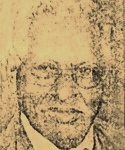
K. Ninan Daniel
29 July, 1955: Mr. Daniel files suit against the Mar Thoma Metropolitan. On 29 July 1955, Mr. Nina Daniel, of Kurumthottikkal, Melukara Pathanamthitta District and three others filed a civil suit in the District Court of Kottayam against the then Metropolitan of the Mar Thoma Church Most Rev. Juhanon Mar Thoma and six others. Mr. K.N. Daniel, was a lay leaders in the Mar Thoma Church, an eminent liturgiologist, theologian, an author of many books, and a prominent lawyer.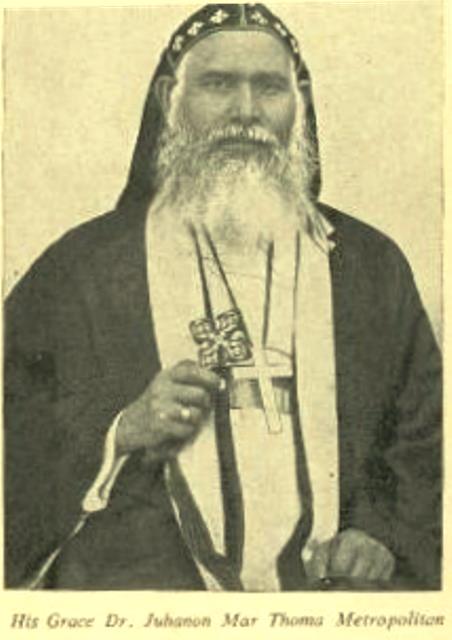
According to Mr. Daniel, the Metropolitan favoured and accepted the faith of the Jacobite Church and as such he had no right to enter any of the Mar Thoma Churches and that he should not be allowed to continue as the Supreme Head of the Church. This case is known as the ‘Daniel Case’. This litigation lasted for almost 10 years and the final judgment from the Supreme Court of India came on 7 Jan 1965. In all the three courts (the District Court, Kerala High Court and the Supreme Court) verdicts were against Mr. Daniel.
This case was an unfortunate event in the history of the Mar Thoma Syrian Church and resulted in the formation of the St. Thomas Evangelical Church of India on 26 January 1961. Twenty priests who had been ordained in the Mar Thoma Church joined and pledged allegiance to the new Church.

- First defendant Most Rev. Juhanon Mar Thoma Metropolitan was examined through the judicial commission in the Mar Thoma Seminary in Kottayam. His examination took 35 hours over seven days.
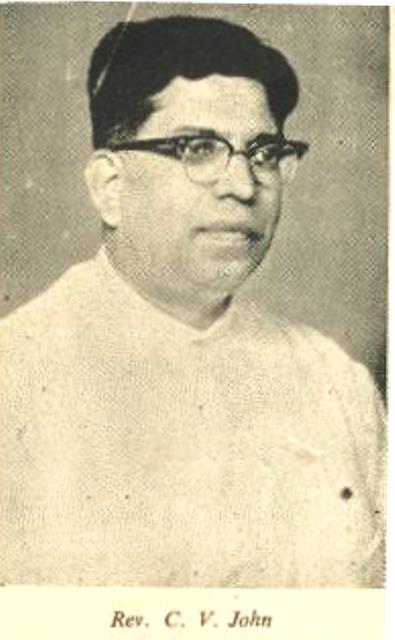 Second defendant Rev. C.V.John was examined for 11 days continuously 6 hours each day. (Total 66 hours)
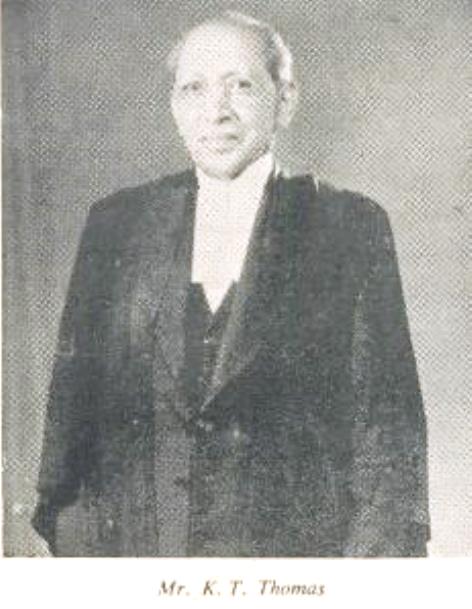 Adv. K.T.Thomas appeared before all the three courts for the Mar Thoma Syrian Church without taking any remuneration. Total cost of the case was Rs. 13;239/- (today it could be in crores).
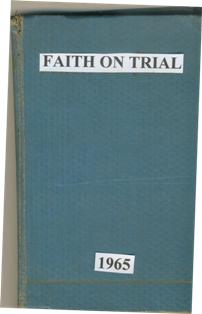
The book with all the details of the Daniel Case published in English (1965)
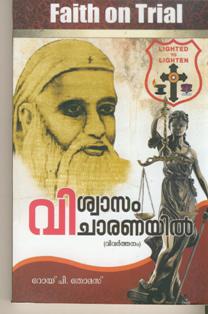
The Malayalam translation of the Daniel case from English.
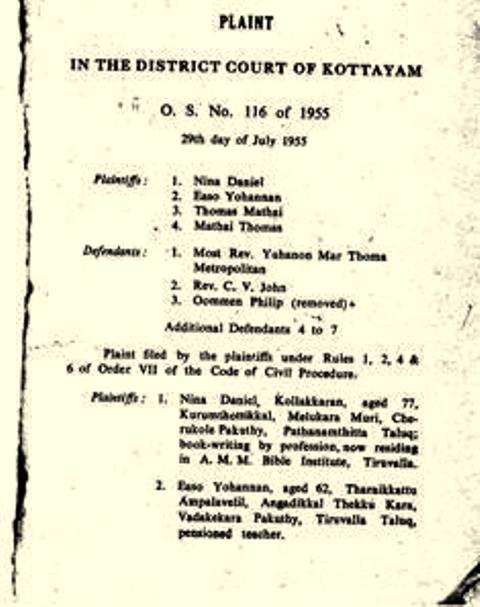
Excerpts of the Daniel case.
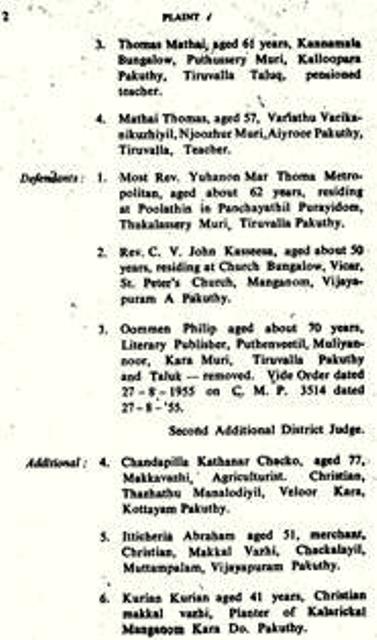
Excerpts of the Daniel case.
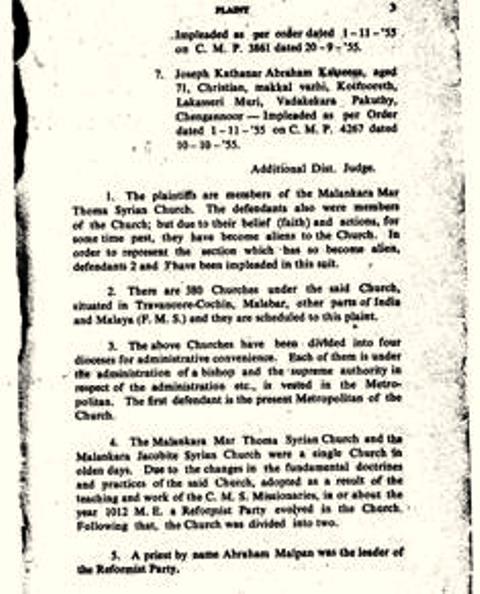
Excerpts of the Daniel case
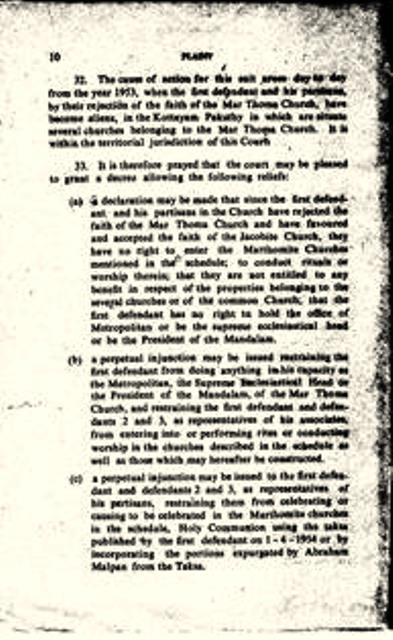
Excerpts of the Daniel case

July, 1889- Seminary Case: Division of the Mar Thoma Church and Jacobite Church (with Video)
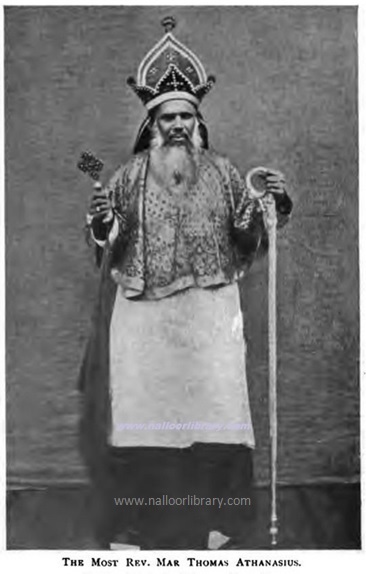
Thomas Mar Athanasius Metropolitan (Mar Thoma XIV) Photo from The Indian Christians of St. Thomas by William Joseph Richards (1908)
12 July, 1889: Seminary Case Judgment. In 1879 a case was filed in the district court of Alleppey by Bishop Joseph Mar Dionysius against the then Metropolitan of the Church Most Rev. Thomas Mar Athanasius.
Mar Dionysius prayed to the court to declare him as the rightful Metropolitan of the Malankara Church and also requested the court to evict Mar Athanasius and his followers from the Old Seminary building in Kottayam. The final verdict of this case came on 12 July 1889 from the Royal Court of Travancore. Two Judges decreed that Joseph Mar Dionysius was the rightful Metropolitan of the Malankara Church as he expressed allegiance to the Patriarch of Antioch. One Christian judge gave the verdict in favour of Thomas Mar Athanasius because of his conviction that the Malankara Church has been an independent Church from the beginning. The Majority view prevailed and Thomas Mar Athanasius had to leave the Old Seminary and the properties of the Church, because he upheld the autonomy of the Mar Thoma Syrian Church. This led to the formal division of the church into two sections: the Mar Thoma Church and Jacobite Church.
The followers of Mar Athanasius got the Kottarakkara church without a duel, they got the Maramon and Kozhencherry churches through court decision, and was given the right to conduct services on alternate Sundays in five other churches. They put up small sheds in other places to hold worship services.
To learn more about Mar Thoma Syrian Church History – watch this Special Documentary with rare footage on the Malankara Mar Thoma Syrian Church – (English/Malayalam) produced in 1986. It offers a peek into the history, rich culture and heritage of the Mar Thoma Syrian Church.

A fearless Bishop who took on the Prime Minister despite the threat of jail
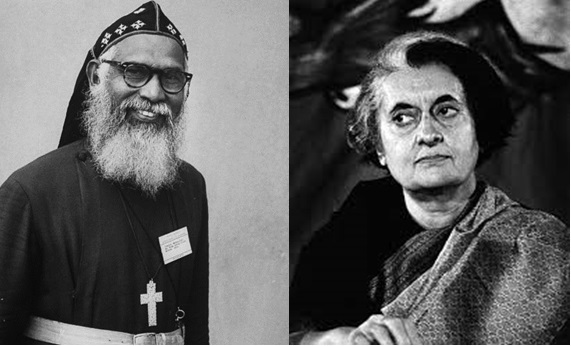
On 25 June, 1975 – exactly 41 years ago, Prime Minister of India Indira Gandhi unilaterally had a state of emergency declared across the country. Officially issued by President Fakhruddin Ali Ahmed under Article 352(1) of the Constitution for “internal disturbance”, the Emergency was in effect from 25 June 1975 until its withdrawal on 21 March 1977 (21 months). `
So what did the Emergency imply? Essentially, at the stroke of the President’s pen India ceased being a democracy and was converted into a virtual autocracy. Civil liberties were suspended, media was censored, state and parliamentary elections were postponed, and anyone who wrote or spoke against the Government was put behind bars. In the 21 months of the Emergency, 100,000 people were arrested and detained without trial. ~ www.thelogicalindian.com
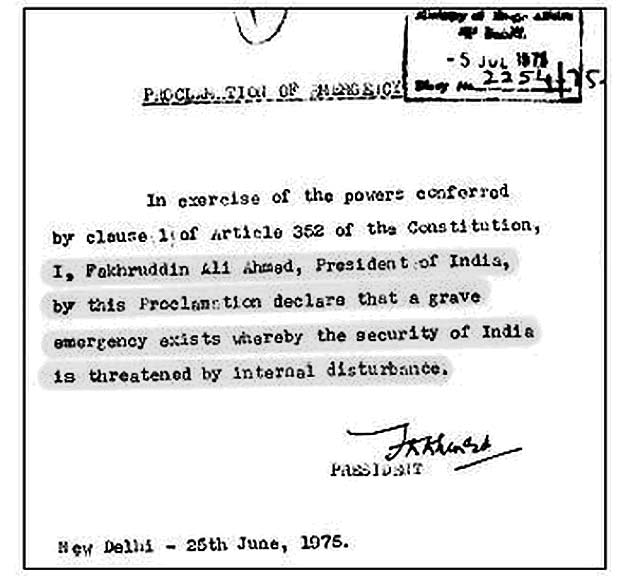
Under the Emergency rule, it was not easy to raise voices of critical opposition, in making even a mild-toned protest, one did so at considerable risk. Many kept silent because of the fear which spread among the people. Despite these pressures, some of the Christian groups made courageous attempts to express critical voices. It is significant to recognise that those who made the critical protests were not the representatives of the large institutional churches; rather, they were members of relatively small groups or of a minority group within the institutional church.
Metropolitan Juhanon Mar Thoma was the only Church leader who wrote a letter to her disapproving it. The Metropolitan’s letter stated that he deemed the Emergency rule as a setback to democracy and demanded its speedy withdrawal as well as the release of the politicians arrested in this regard.
His earlier statement was drafted in Malayalam in the fall of 1975. Even though it was not an entirely critical protest, but raised in a modest way a critical question, it was refused publication in Kerala. Metropolitan has written a brief yet pointed letter to Prime Minister Gandhi stating clearly his concern for the political situation.
“A vast number of people, and that growing numbers, feel the price we have to pay is costly. With people like Morarji and others in jail, and a press which has lost its freedom to write news and views, we feel a kind of depression. On behalf of thousands, I request withdrawal of Emergency by gradual stages. Immediate and altogether withdrawal is likely to have very bad repercussions. If the political detenus are released and’ freedom for press is given, it will be a great relief.
“I have one more request: not to have elections and constitutional changes during the time of Emergency. Hoping to be excused for this letter written from a sincere and painful heart.” ~www.daga.org.hk
He wrote that he was writing as a Church leader and a citizen. Mrs Indira Gandhi gave orders to arrest Metropolitan Juhanon Mar Thoma. Mr. C. Achuthamenon was the Chief Minister at that time and with his interference the arrest was avoided. It was the Mar Thoma Church’s fight for independence and national integrity that echoed through Metropolitan Juhanon Mar Thoma, a fearless commitment to the concerns of the people that is hard to find among religious leaders now. On September 9, shortly after he wrote this letter, he fell ill and died on September 27, 1976.
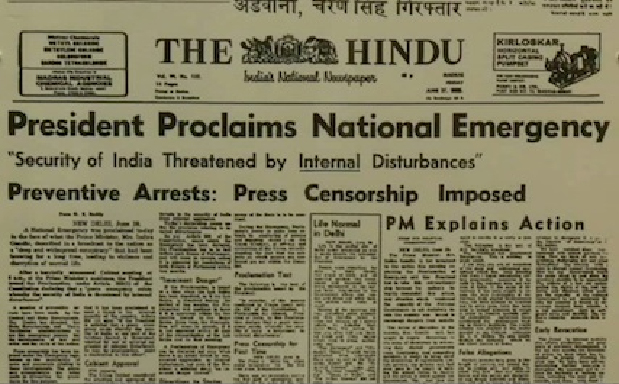
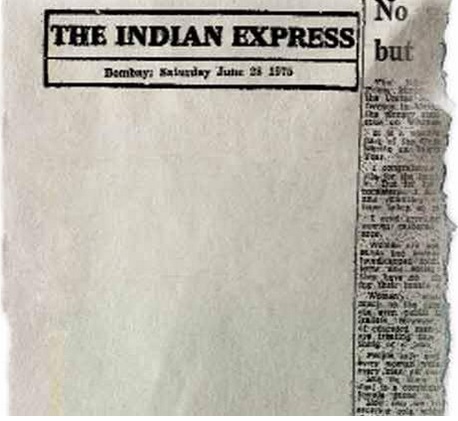
The first edition of the Indian Express after the imposition of emergency consisted of a blank page instead of editorial. The Financial Express had Rabindranath Tagore’s poem, “Where the mind is without fear, and the head is held high”.
Where The Mind Is Without Fear
Where the mind is without fear and the head is held high
Where knowledge is free
Where the world has not been broken up into fragments
By narrow domestic walls
Where words come out from the depth of truth
Where tireless striving stretches its arms towards perfection
Where the clear stream of reason has not lost its way
Into the dreary desert sand of dead habit
Where the mind is led forward by thee
Into ever-widening thought and action
Into that heaven of freedom, my Father, let my country awake

We are Three! Thank you for your support!

The last three years have been a blessing as we receive your continued support and readership. We want to thank each and every one as we complete this anniversary. Our website has nearly 94,000 hits from almost every corner of the world. It began with a dream and today your feedback and prayers have encouraged us to make more resources available.
Readers and Parishes have reached out from far and wide, telling us how our resources are being used in Parish Bulletins, Sunday School textbooks, VBS, Summer camps, sermons, prayer groups and much more. We have made new friends on the journey and social media has enabled us to take the rich cultural history and tradition of our Church to many more readers. We request that you keep us in your prayers.
“Praise the Lord! Oh give thanks to the Lord, for he is good, for his steadfast love endures forever!” Psalm 106:1

12 May, 1921: V. Nagel, author of “Samayamaam radhaththil” passes away. (Rare Photos)
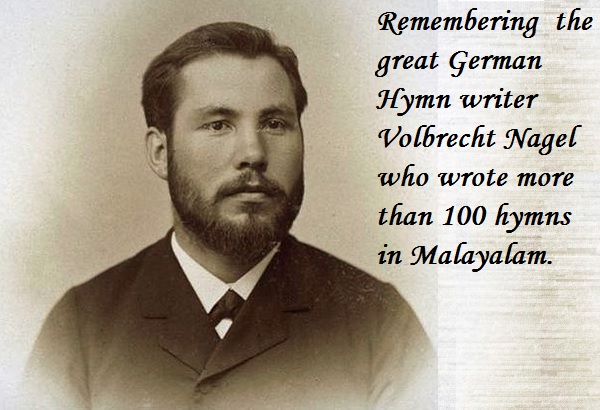
12 May, 1921: V. Nagel, author of “Samayamaam radhaththil” passes away. Born in Germany on 3 November, 1867, he came to India in 1893, as a missionary. Along with his wife Harriet, he worked in Kunnamkulam, North Paravur, Trichur and Kumbanadu.
He has written more than 100 hymns in Malayalam that is still sung by all denominations and churches in Kerala.
Hymns written by him in the Kristheeya Keerththanangal (Hymn Book of the Mar Thoma Syrian Church) are – Nos. 57, 144(135), 153(143), 155(145), 203(392), 214(199), 223(208), 238(216), 239(217), 242(220), 244(222), 287, 294(280), 298(284), 300, 301, 325(319), 374(257), 380(260), 382(262), 390(269), 402(294) ,405(353) and 411(354).
The song has been translated into 17 languages though it was originally written in Malayalam and even incorporated in a film.The song depicts the journey of ones life…but it is mistakenly interpreted as many as just a funeral song…but actually its just a song about ones journey from birth …to home ie heaven.
Read below about the great hym writer Volbrecht Nagel from an account by his son Karl Heinrich Nagel.
——————————————
The Story of Volbrecht Nagel
By his son, Karl Heinrich Nagel
This account of Volbrecht Nagel was found in an exercise book belonging to Karl Heinrich Nagel and was probably written in the early 1980s when Karl was in his 70s, was ill and his memory was failing. It has been written up by Karl’s daughter, Pauline Munns. February 2007

Volbrecht Nagel
Volbrecht Nagel was born to Heinrich Peter Nagel and Elisabeth May Nagel on the 3rd November 1867 in the village of Stammheim, Hessen, Germany. He was baptised on November 17th in the Lutheran church and Volbrecht Nagel II was his godfather. He appears to have lost his parents at a young age and to have been taken over by a Mr and Mrs Bindewald, who educated him. He was brought up according to the Lutheran Church. He appears to have been ordained as a Pastor at the early age of 20 and to have been sent as a Lutheran missionary to Cannanore, Malaba (now Kerala State). He served the Lutheran Church until about 1892 when he left them owing to doctrinal differences. He had no money at the time and began to walk barefoot, trusting the Lord to lead him to the place where he could start a work for Him.

Volbrecht Nagel

Harriet Sabina Mitchell Nagel
Eventually he came to a place called Kunnamkulum, in Cochin State, where he met a small group of Christians, who called themselves Brethren, and worshipped God in a simple manner without a pastor. He believed that this was where the Lord would have him work for the time being. It was while he was here, building up the church, that he met and married Harriet Mitchell, on 1st April 1896, who gave him his first two sons, Samuel Frederick (1.1.1898) and Theodore Ernst (10.3.1899).
When he saw that the believers were well established and capable of carrying on by themselves, he moved with his wife and two sons, to a place called PARUR, also in Cochin State, and began a work for the Lord there. Here his third son, Gotlob Volbrecht was born on 8.8.1900 and his first daughter Olive Margaret on 31.12.1901. About this time my mother decided that she should take a nurse’s training so that she may be more qualified to work as a missionary’s wife, so she went to Madras and qualified in a short midwifery course, and returned to the family at Parur.
Considering that the believers were well established in the faith, my father moved, with his family, to British Cochin. Here his fourth son, Karl Heinrich was born on 17.11 1905. Two [other]children were also born, Wilfried Adolf and Elsa Hope but they died as infants and were buried in Hosur Road cemetery, Bangalore.

The Volbrecht Nagel Family
With Harriet’s sister, Josephine Mitchell
Seeing that the work was well established at British Cochin, my father decided to move, with his family to Trichur in Cochin State. The time had now come for the education of his children, and as there were no English schools in Trichur, he made arrangements for the four older children to go to Bangalore for their education. I was sent to school in Bangalore in January 1914. During these years my father developed the work at Trichur. Besides the assembly work, he opened a girls’ orphanage, which still flourishes.
As my brother Samuel and Theodore’s futures had now to be considered, my father took them to London, presumably about March 1914, to apprentice them there as engineers. That was the last his three younger children saw of him. On his way to London he called at Stammheim with my brothers for a few days. After seeing that they were settled in London, he went to the Bible School at Berlin, intending to visit his relatives once more before returning to India. Unfortunately for him, World War 1 broke out, and, being a German, he was not allowed to return to India. The problem now arose of joining the German army, which was compulsory, a thing he said he would never do, being a Christian. He prayed about the matter and asked the Lord to open the way for him to cross over into Switzerland, which was neutral. He made the attempt one night, and the Lord undertook by making the frontier guards very sleepy, so that they carelessly examined his passport and allowed him through.

Volbrecht Nagel
When the war ceased in November 1918 my father sought permission to return to India but was refused. He therefore went back to the Bible School. (The Bible School had moved [from Berlin] to Wiedenest. He obtained a position on the staff until about February 1921 when he had a stroke of apoplexy. They cabled to my mother in India and she left immediately. Ironically the English government gave him permission to return to India just then but it was too late. My mother nursed him until he passed away on May 12th, 1921. He was buried in the cemetery adjoining the Bible School. My brothers Samuel and Theodore went from England to attend his funeral. Mr and Mrs Bindewald,who brought him up also attended because, they said, he was the means of their salvation.
A Mr. Kocher, a missionary from India, also attended as he was in charge of a girls’ orphanage at Irinjalakuda, very close to Trichur, during my father’s time there. After the funeral my mother visited his relatives at Stammheim and stayed with them for a short while before returning to India.

Ted, Harriet, and Sam @ Volbrecht’s funeral
Reproduced with kind permission from https://revisitingthepast.wordpress.com/2010/07/24/the-story-of-volbrecht-nagel/
This post reflected an error that incorrectly stated 21st May as the day of death. The correct date is 12th May 1921.
Thank you to @schneid9 for pointing out the error and providing the following sources:· Echoes of Service 50 (1921), p. 144
We welcome our readers for helping us fact-check and provide more accurate information.
· Varghese Mathai: “The Malabar Mandate: A Life of Volbrecht Nagel”
· Johannes Warns’ diary (forthcoming; Warns was head of Wiedenest Bible School, where Nagel died)
17 May, 1889 Birth of Military Chaplain Rev. T. M.Mathai
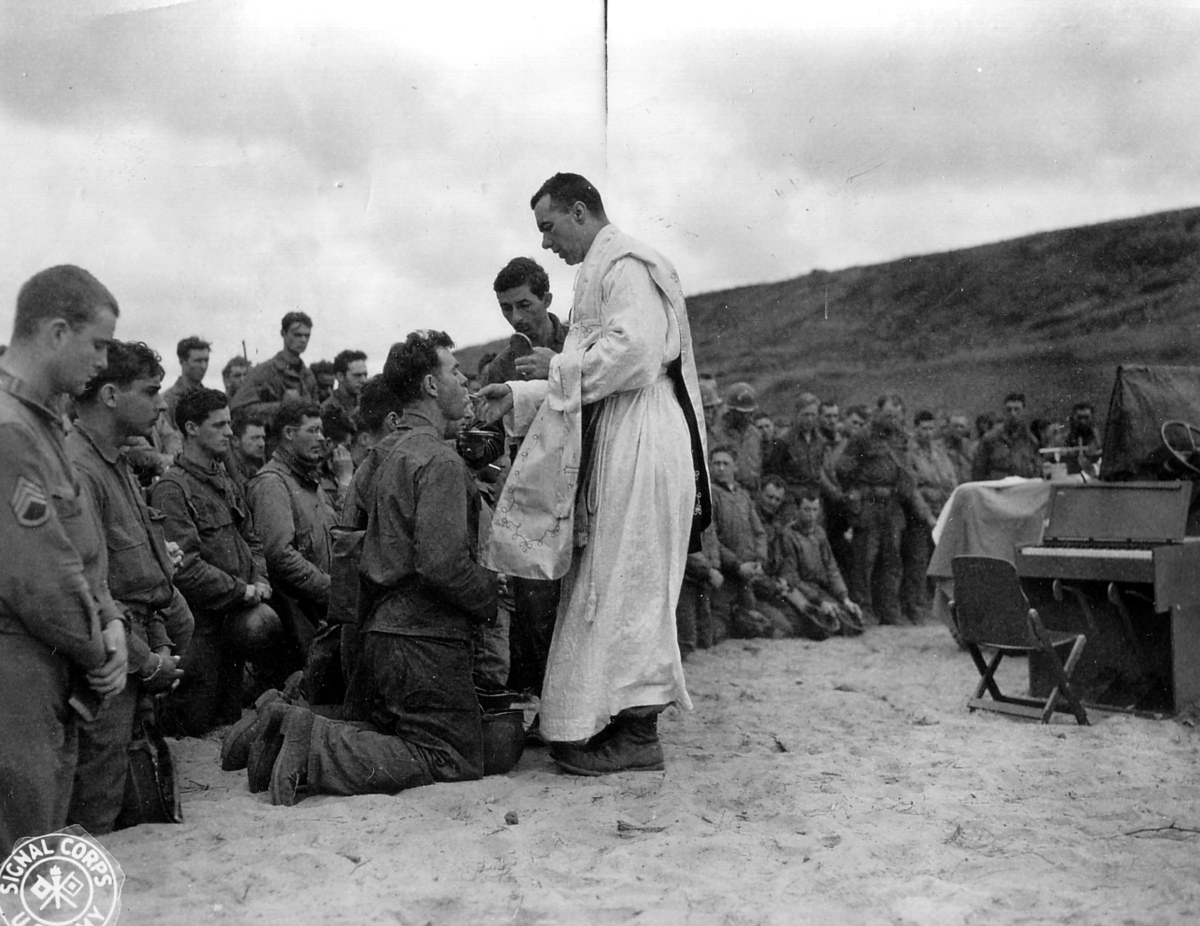
For Illustrative Purposes – Military Chaplain Father John McGovern gives mass in France during World War II. (U.S. Army Signal Corps)
Abraham Mar Thoma: “…the most Christ like person ever known…”
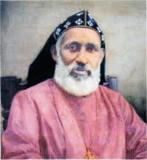
Abraham Mar Thoma
M.N. Abraham was born on 30th October 1880 to Ninan and Mariamma of Marettu House, Kalloopara. He had two sisters. Unfortunately, when Abraham was only 5 years old his father, Ninan, passed away. Abraham’s maternal uncle, Kochukunju of Karikkattil in Eraviperoor took up the responsibility to bring him up. From a very young age, Abraham learned to trust God.
He was ordained as deacon on 30th April, 1911 by Metropolitan Titus II along with M.P. Pothen at the St. Thomas Mar Thoma Church in Tiruvalla. They were the first priests of the Mar Thoma Church to hold a university degree. Rev. M.N. Abraham was ordained as Thirumeni and was affectionately called Marettu Kochu Thirumeni by people of the church. He later became Abraham Mar Thoma Metropolitan.
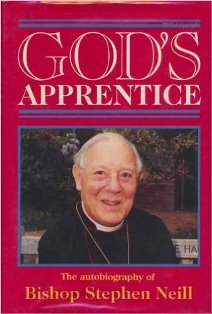
Bishop Stephen Neil’s autobiography God’s Apprentice
(1900 -1984), Anglican Bishop of Tirunelvelli (Tamil Nadu) from 1939 – 1945, was one of the Maramon Convention speakers during the time of Abraham Mar Thoma. In his autobiography he writes about Abraham Mar Thoma :“Bishop Abraham Mar Thoma was the most Christ like person I have ever known. Abraham Mar Thoma was a Bishop of supreme simplicity. From his childhood he learned to trust in the promises of God and to expect that they would be fulfilled. He used to spend whole nights in prayer in order to solve problems.”
M.P. Pothen (Rev. M.P. Philipose)
Rev.M.P.Philipose
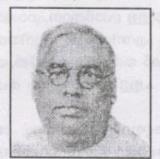
M.P. Pothen was born on 24th July 1885 to Potha of Mepurathu House, Keezhuvaipur and Mariamma of Nalamvelil House, Niranam. He became deacon along side Abraham Mar Thoma Metropolitan. After having served as Secretary of Madras YMCA and a teacher at S.C. Seminary School in Tiruvalla and Mar Thoma Seminary School, Kottayam, he went on to become a missionary in Honavar, Karnataka. He even became the President of Honavar Municipality for many years. He passed away on 8 July 1951.
To read the short biography of Abraham Mar Thoma Metropolitan please click:
https://nalloorlibrary.com/wp-content/uploads/2013/06/ebook-dr-abraham-mar-thoma.pdf
A murder mystery! Who killed the Metropolitan’s horse?
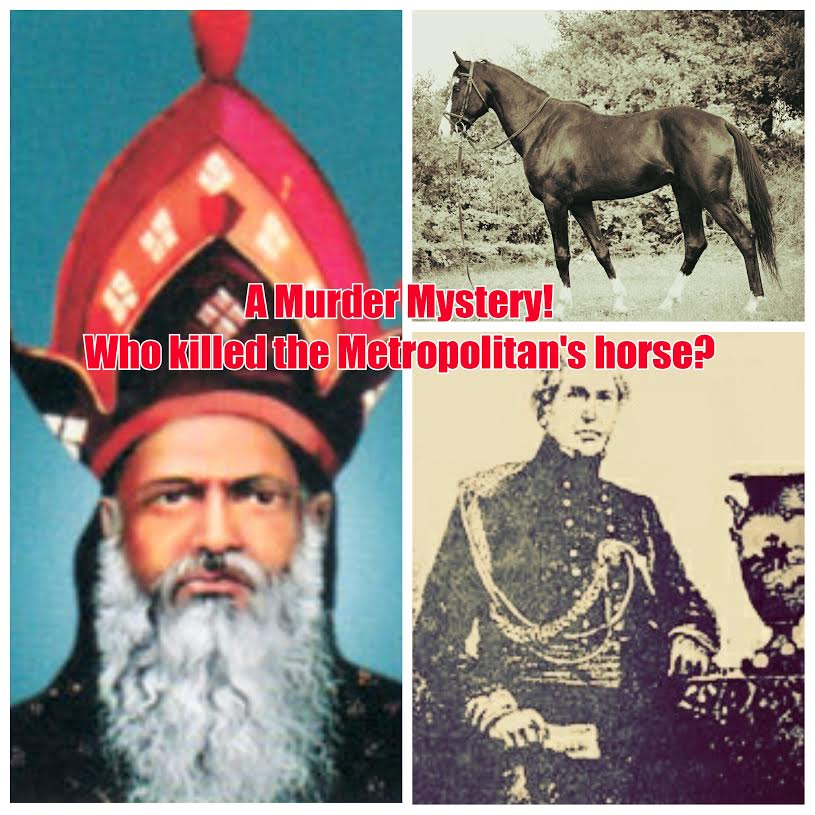
Mathews Mar Athanasius (1818–1877) was the Metropolitan of the Malankara Syrian Church from 1852 until his death in 1877. As a reformer, he spent most of his time as the Metropolitan attempting to heal differences between the various factions within the church.
Major General William Cullen
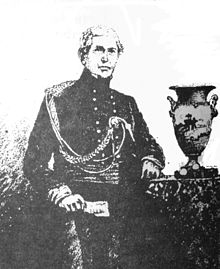
Major General William Cullen, Resident of Travancore and Cochin
Major General William Cullen (17 May 1785 – 1 October 1862) was a British Army Officer with the Madras Artillery Regiment, and from 1840 to 1860, he served as the British Resident in the Kingdom of Travancore and Cochin. During his stay in India, he took a scholarly interest in the region and contributed to journals on geology, plants and the culture of the region. He was instrumental in establishing the Napier Museum in Trivandrum.
Cullen interacted mainly with the Maharajas of Travancore Swathi Thirunal Rama Varma and Uthram Thirunal Marthanda Varma and took considerable interest in scholarly and cultural pursuits. He also took a keen interest in the Christians of Kerala.
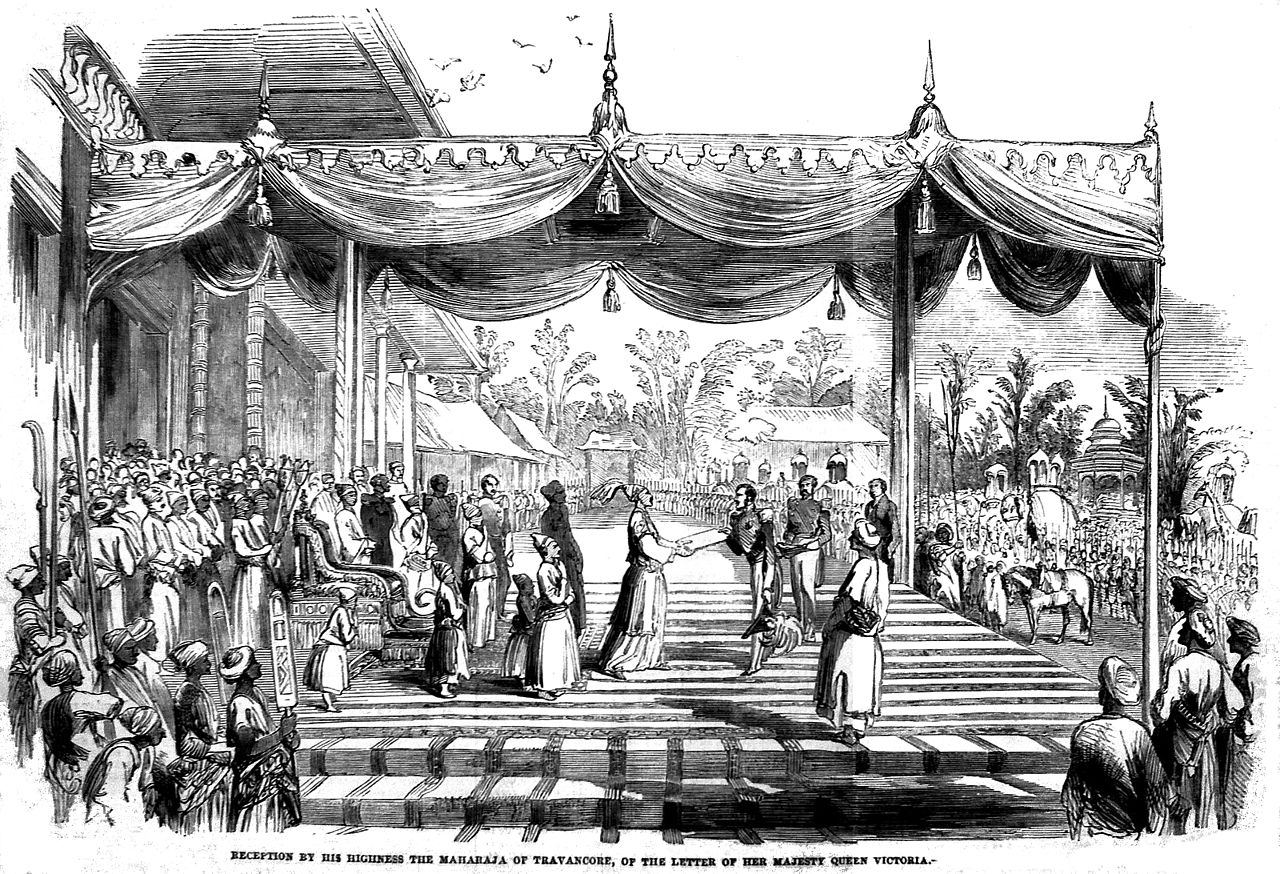
Reception by his highness the Maharaja of Travancore Uthram Thirunal Marthanda Varma of the letter of her Majesty Queen Victoria being delivered by the British Resident William Cullen on 27 November 1851. Illustrated London News 31 January 1852 Date 1852 Source Illustrated London News 31, January 1852 Author Engraving based on a sketch by Frederick Christian Lewis (1813-1875)
Metropolitan Mar Athanasius officially recognized by the government
Mar Athanasius was approved by an order by the governments of Travancore and Cochin as Malankara Metropolitan on 30 August 1852.
As head of the church he worked hard for the education of the clergy and for raising the moral standards of the people and the reformation process. From the beginning there was opposition against him from those who feared that he would be in favour of the reformation.
The opposition became gradually strong and succeeded in enlisting the support of the Patriarch on its side. The opponents of Mathews Mar Athanasius had sent complaints about him to the Patriarch, who without a judicial enquiry appointed Pulikottil Joseph Mar Dionysius to supercede Mathews Mar Athanasius as Metropolitan. As a result of this struggle for power the church tended to be divided into two sections, one favouring reform and the other opposing it.
The gifting of the horse to the Metropolitan by the Resident
It is said that the Resident William Cullen greatly admired the Metropolitan and gifted him a rare Panch Kalyani horse (Kathiawari breed). The female copper brown horse was bought at an auction held in Bombay and brought to Kerala.
The Kathiawari breed horse was known throughout India as the purest and oldest of all horse breeds. Its origins are in the Middle East and the land of Saurashtra region in Gujarat, India, where the Kathi’s tribesmen and Rajput clan’s rulers used it as a warhorse. Princes were the breeders of the Kathiyawari horse. It was well known from the earliest times and prized for it’s beauty and high status as a war horse, and like most desert breeds could and can survive heat, poor feed and low water intake.(www.horseshowcentral.com) It is still used by the army and mounted police.
‘Panch Kalyani’
In this breed, horses with four white stockings and a white face is known as ‘Panch Kalyani’ which means ‘Five Good Markings’ from God. It was popularly known among the princely states as the ‘Horse of the Lord Krishna’. The ears are also know to point into each other.
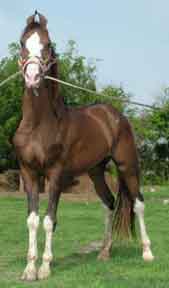
A ‘Panch Kalyani’ horse.Photo from modelhorsegallery.info
Metropolitan Mathews was known to call the horse with the pet name”Shomi”. He loved the horse and the favourite dish given to the horse by the Metropolitan was “Vatta Aopam” (Rice cake), a delicacy in Kerala.
Shomi had won first place in the horse race held in Bombay at the Royal Western India Turf Club before being bought by Major General Cullen to Kerala.It was known for it’s lightning speed and people exclaimed it could jump like a whirl wind.
In those early days, there were no proper tarred roads nor vehicles. Mathews Mar Athanasius Metropolitan used to travel and visit churches on horseback. Owning a horse was a sign of power and usually only ridden by royalty. People used to travel across Travancore via boat or bullock carts .
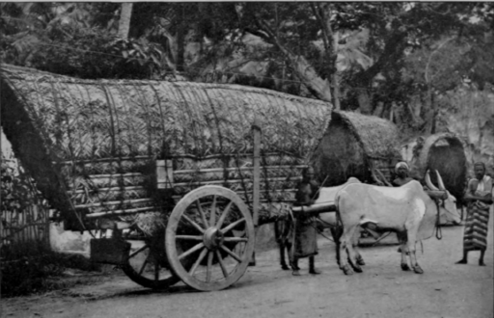
Covered bullock cart used for travelling and transporting goods by land before the coming of cars and trucks. Photo from pazhayathu.blogspot.ae
An Age of Enemies
It was dangerous times and the Metropolitan had many enemies. He used to travel with a team of bodyguards. A man called Muthukkaramban was the chief of his security. He was very tall, dark in colour and was said to have been an expert in all sorts of martial arts..
Puthuppally St.George Church and the death of the Horse
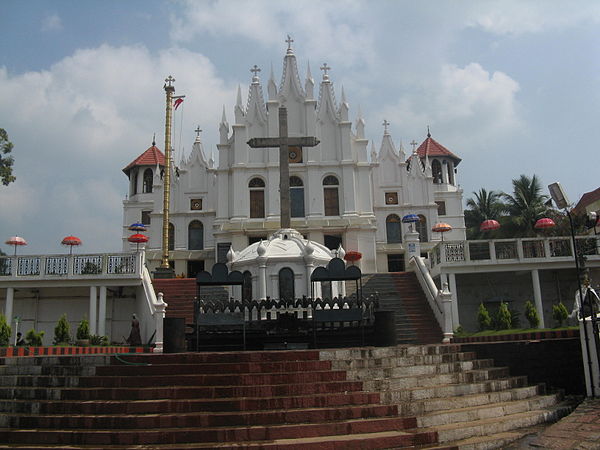
Puthuppally St. George Church. (Image from Wikipedia)
This incident happened in 1853. The Metropolitan was visiting the Puthuppally St.George Church. Few members of the Parish was against him because of his inclination towards the Reformation movement started by Abraham Malpan. One fine morning , during his visit to the Putthuppaly church, he found his horse dead in the horse shed. It is believed that the horse was poisoned by the enemies of the bishop.
“Shomi” his Pancha Kalyani horse was the favourite horse of the Metropolitan and he could not bear its loss.
He did not curse his enemies nor take revenge, or used the weapon of vengeance on anyone.They never apologized for their actions either. With the death of Pancha Kalyani, his favorite horse, his external ministry of reaching out people was affected. But no one could suppress his zeal and vigorous spirit for the work of the reformation.
Further Conflict
In 1856, inspired by the Anglican missionaries who cooperated with him in the Old Syrian Seminary at Kottayam, the Metropolitan printed and distributed prayer books in Malayalam, leaving out prayer to Mother Mary.
Holy Communion services were conducted in Malayalam the language of the people of Malabar. He preached at worship services from his days in Antioch and continued this new practice after coming to Kerala. He encouraged his clergy to read the Bible and interpret it to the common people of parishes. He also allowed Tamil missionaries to preach at various churches.
He was against honouring icons and statues, so he removed the statue of Mother Mary from Manarcaud Church (near Kottayam), and from Puthupally church, near Kottayam.
Mar Athanasius Metropolitan established a printing press at Kottayam for the use of the Church. There, the liturgy was printed and published, omitting the prayers to Mother Mary and other saints. This infuriated a few priests, who opposed the Metropolitan and published another book with all these prayers included.
Thomas Mar Athanasius, son of Abraham Malpan was consecrated by Mathews Mar Athanasius as his successor in 1869. Mathews Mar Athanasius is generally considered one of the ablest Metropolitans of the Syrian Church. At this difficult time the support of leaders from the clergy and the laity who had been inspired by the spirit of the reform movement was a source of great strength to the position taken up by their bishops.
***********

Rare 1940 Traditional Knanaya Church Wedding Video
A rare video showing the customs and traditions of a Knanaya Church wedding in Kerala from the 1940’s (exact date unknown).
About the Knanaya Church Community in Kerala
The Knanaya Community traces its origin back to a Jewish-Christian immigrant community. They migrated from Southern Mesopotamia to the Malabar ( present Kerala ) Coast of Cranganore ( Kodungalloor ) in AD 345 under the leadership of an enterprising merchant Thomas of Cana ( Knai Thomman ).
This migration is considered as a turning point in the history of St Thomas Christians of Malabar. The original community consisted of about 400 persons belonging to 72 families of seven clans.
A bishop by name Uraha Mar Yousef, four priests and several deacons were among them. They formed themselves into an endogamous community by keeping their tradition and culture but co-existed peacefully among the St. Thomas Christians in India.
These colonists were welcomed by Cheraman Perumal, then king, and were given permission to settle down in Kodungalloor. – kottayamad.org
Traditionally the Knanaya have followed the religious traditions and practices of the wider Saint Thomas Christian community. In the 17th century, when the Saint Thomas Christians were split into Catholic and Malankara Church factions following the Coonan Cross Oath, both Knanaya and Northist groups were internally divided.
The Malankara faction became affiliated with the Syriac Orthodox Church, an Oriental Orthodox church based in Syria, while the Catholic faction is now known as the Syro-Malabar Catholic Church. – Wikipedia



 Nalloor Library