Ban of Tobacco and Paan at the Maramon Convention
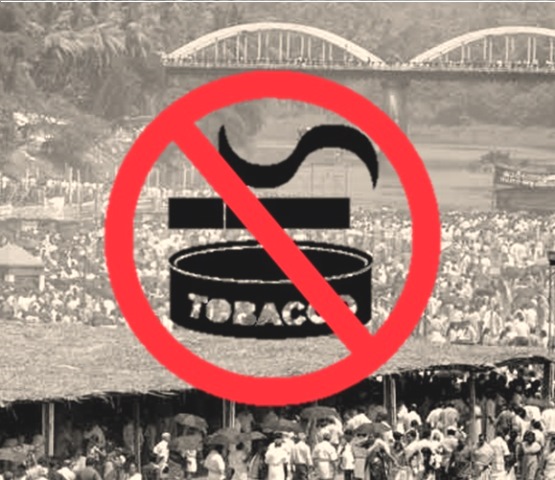
The use of tobacco and paan was a way of life in Kerala during the first half of the 20th Century. It was an essential item at social events such as marriages and other family gatherings. Tobacco and paan was easily available through shops all over Kerala. It was a common sight to have people attend the Maramon Convention meetings with beedi and murukkan in their pockets.
Through his messages, Dr. Stanley Jones urged people to refrain from the use of tobacco products. During one meeting, he asked the convention participants to bury their tobacco (which they were carrying) in the sand on the pandal floor. In another meeting, he collected all the tobacco products from the people and burnt it near the pandal in front of everyone.
It is only after much persuasion that the people stop using it and today it is not permitted at the Maramon Convention pandal.
Read more about Dr. E. Stanley Jones at the Maramon Convention with rare photos

1905: Printing Maramon Convention Sermons overnight!
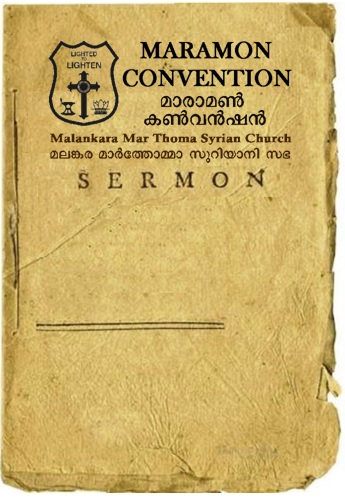
At present, Maramon Convention messages (full text) are printed and sold on the next day morning from counters for the convention attendees. This enables people to take home the sermons of the previous day and read them again and share the sermons with people who were not able to attend the convention. These printed sermons are also shared in cottage prayer fellowships, parish prayer groups and for personal prayer and meditation.
However, few people know that this practice started in 1905. There were no microphones and speakers. The convention messages were repeated in relay by three persons – at times four or more – standing in different places of the pandal to make it audible to the thousands of people who attended. This relay process took a long time and was tedious for the audiences. The printing of messages in 1905 became a real blessing for all and continues to be so today. Today, God has blessed the Church members with technology which enables them to watch the Convention live through web streaming and receive updates on emails and websites.

Rev. Thomas Walker – Church Missionary Society
Given below is the report about this, from the Thomas Walker’s biography.
“1905 Wednesday, February 22. I awoke feeling very weary, for the heat was extraordinarily oppressive, and seemed to take all the life out of one. The Syrian brethren made one very good arrangement this year.
Each day’s addresses wore printed by night at their printing press at Tiruwella, eight miles away, and were on sale the next day in a booth near the pandal. Thus
the printed pages supplemented the speaker’s voice, and carried the message far and wide.”

1936: Loud Speaker and Microphone introduced at Maramon Convention (Rare Photos & Audio MP3)
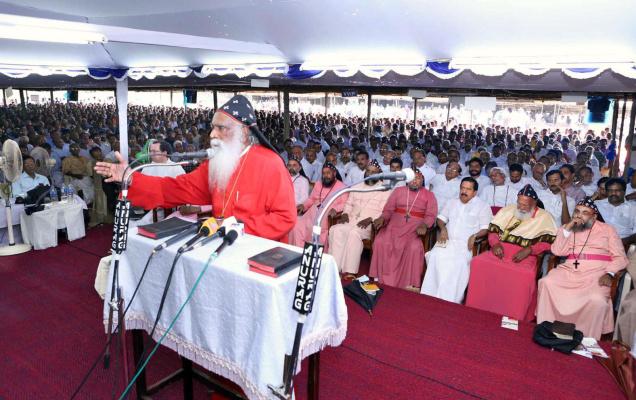
Joseph Mar Thoma Metropolitan speaking at the 118th Maramon Convention (2013). Photo by The Hindu
Though the first convention began in 1895, the sermons were delivered to the tens of thousands of church members who attended in a very unique manner. Until 1936, messages of the main speaker were repeated in relay by designated people standing in between the participants of the convention. It was a time consuming process for the message from the front to pass through thousands of participants to reach the back of the audience. In 1936, a loud speaker and mike (microphone) set was brought to Maramon from USA by the famous missionary Rev. Dr. E. Stanley Jones. It was donated by one of the Christian Churches in USA. He was a well wisher of the Mar Thoma Church and encouraged the missionary zeal of the Church.
Read more and see more rare photos at 1921 -1970: World renowned missionary Dr. E. Stanley Jones at Maramon Convention ( See Rare Photos) Hear a sermon by Dr. E. Stanley Jones – Click Here (The sermon is 26 min. — or download the mp3 (11.8 MB).)  The sermon title is, “The Gift of the Holy Spirit: The Birthright of All Christians.” The sermon was preached at a U.S. Ashram in August 1960. (This sermon is included in the 2008 book, Living Upon the Way: Selected Sermons of E. Stanley Jones on Self-Surrender and Conversion.) This audio clip is from www.methodistthinker.com
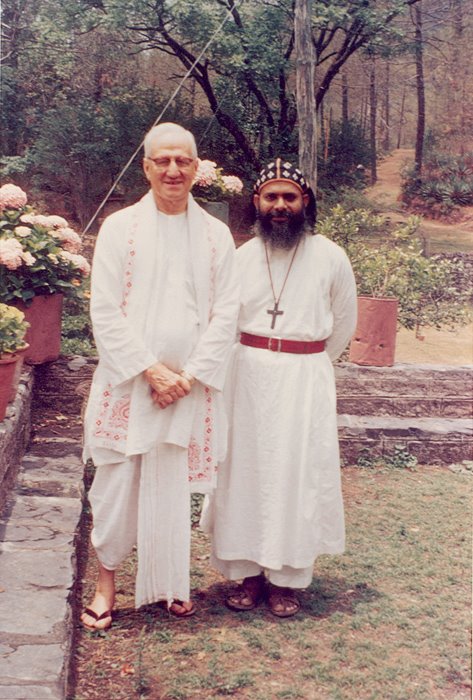
E. Stanley Jones with Mar Thoma Bishop Alexander Mar Theophilus (later became Metropolitan Alexander Mar Thoma)
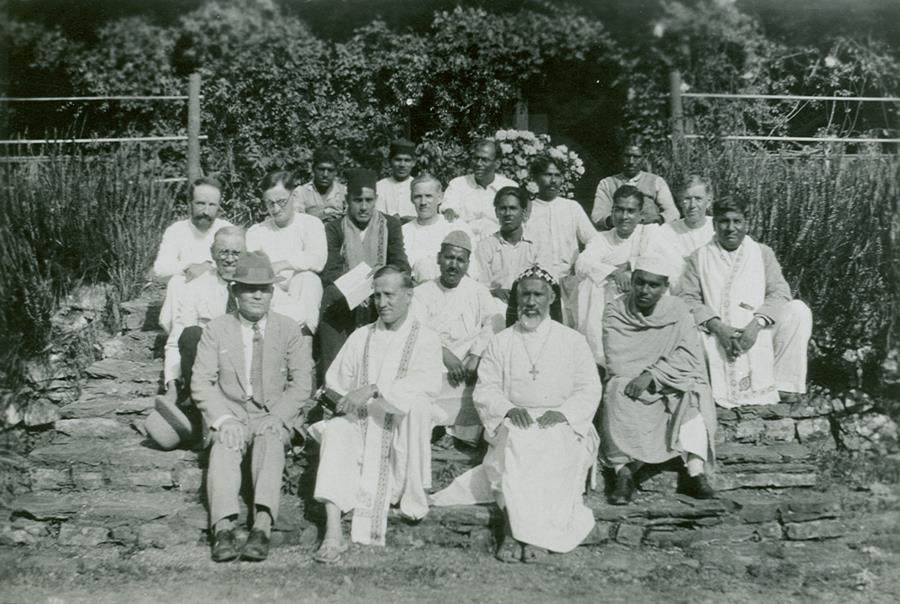
Bishop Juhanon Mar Thoma Metropolitan, E. Stanley Jones, Dr. Murray T. Titus and Ashram members at Sat Tal Ashram, India. (Photo from Dr. E. Stanley Jones FB page)
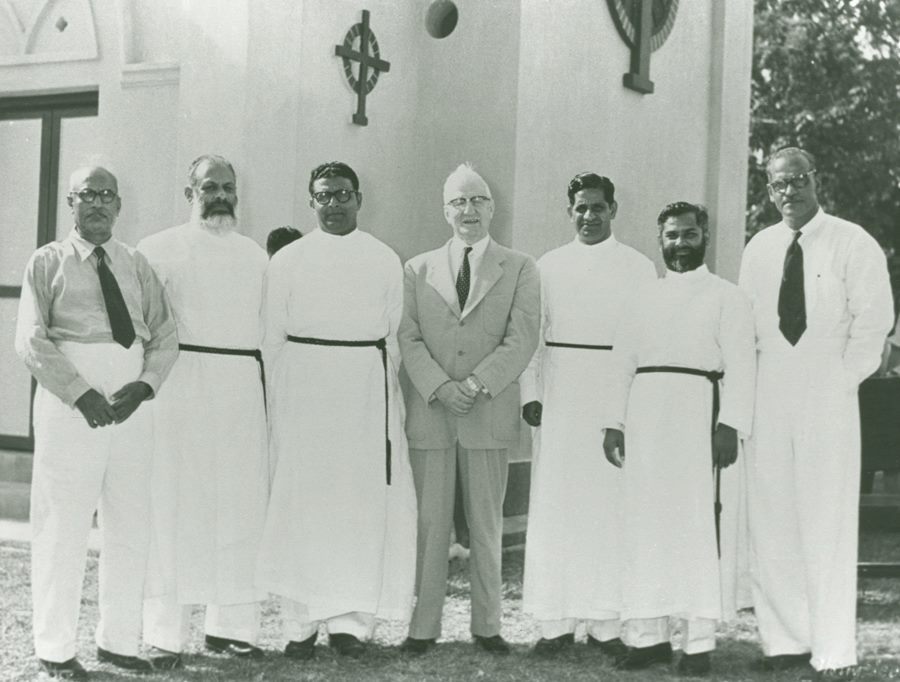
C. John Thomas, Rev. T. N. Koshy, P. C. John, Dr. E. Stanley Jones, Rev. V. E. Thomas, Rev. P. K. Koshy, and Mr. V. E. Chacko at St. Thomas Church, Klang Malaysia (1956)
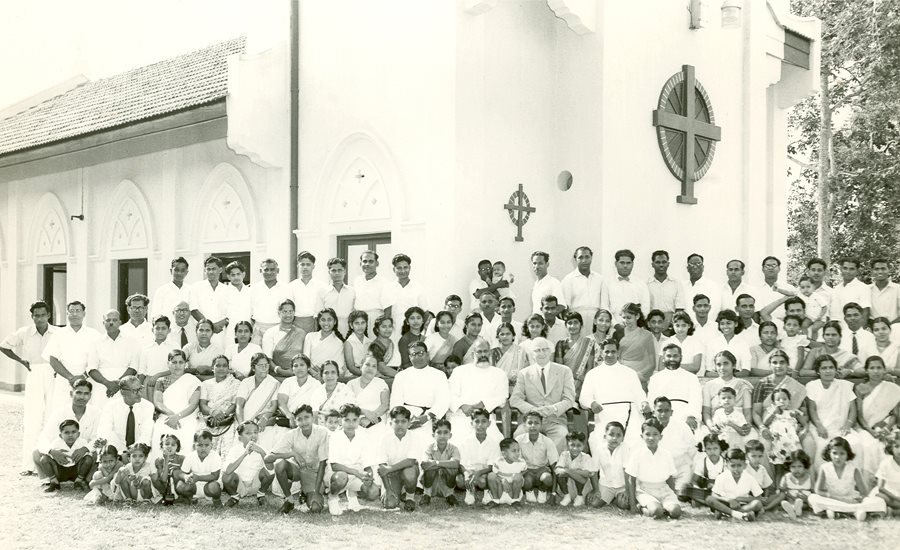
Dr. E. Stanley Jones with members of the St. Thomas Church, Klang, Malaysia 1956

The Coonan Cross – A forgotten Church!
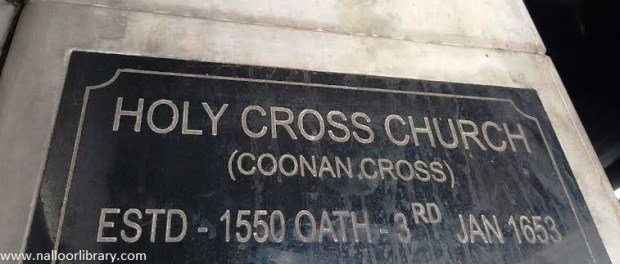
Stone plaque inside Coonan Cross Church – Photo by Nalloor Library on 3rd Jan 2016 on the anniversary.
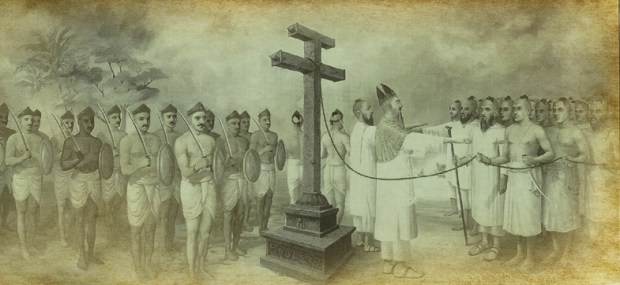
An illustration of the Oath taking at the Coonan Cross. Picture courtesy chroniclesofmalabar
3 January, 1653: Oath of Coonan Cross. Under the influence of the Portuguese Empire a synod was convened at Udayamperoor near Ernakulam in 1599 and the Malankara Church was made part of the Roman Catholic Church. People who wished for freedom from the supremacy of the Roman Catholic Church tried to get a bishop from Babylon.
On the request of the Syrian Christians, a bishop named Ahathulla was sent to Malankara in 1652. However, he was captured and killed by the Portuguese in Goa. The Syrian Christians were infuriated and on 3rd January 1653, gathered in large numbers at a church in Mattancherry (Cochin).
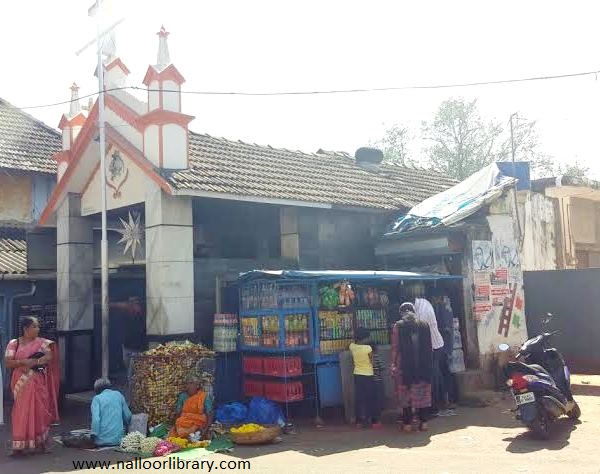
Coonan Cross Church – Photo by Nalloor Library on 3rd Jan 2016 on the anniversary day
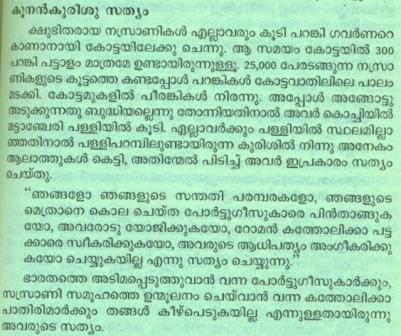
They tied ropes to the granite cross in front of the church and by touching the ropes, took an oath severing their connection with the Roman Catholic Church. This incident is known as the Oath of Coonan Cross. (Coonan in Malayalam means bent – The Cross bent to one side during the oath taking ceremony).
According to tradition , out of a population of 200,000 St. Thomas Christians, only 400 remained loyal to the Roman Arch bishop Garcia. The event in 1653 broke the fifty four year old yoke of Roman supremacy imposed at the Udayamperur Synod of 1599.
However, today the church is a Catholic Church and it seems that a Church of historical value has no importance to any of the Non-Catholic Syrian Christian Indian Churches. It is also ironical that this story is taught in Sunday Schools in all these Churches with no historical meaning or significance. The Cross present today appears to be a wooden cross. It does not look like a stone cross that should be a couple of centuries old now as mentioned in all history books.
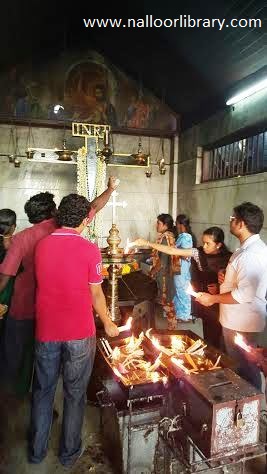
Inside Coonan Cross Church – Photo by Nalloor Library on 3rd Jan 2016 on the anniversary day.
27 September, 1947: Formation of Church of South India (with Rare Photos)
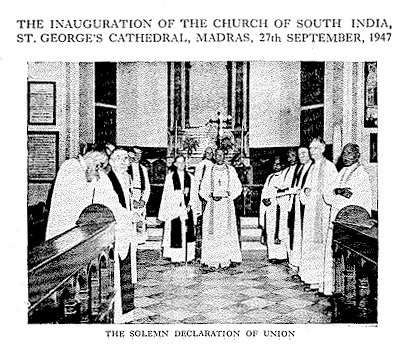
Photo credit: http://www.csisynod.com
27 September, 1947: Formation of Church of South India (CSI) in 1947, as a union of Anglican, Presbyterian, Congregationalist and Methodist churches. The idea of a Church union was proposed in 1919 at a conference held in Tranquebar (now Tarangambadi) in 1919. After 28 years of discussions various denominational churches in South India established by different Missionary societies agreed to the formation of the Church of South India in 1947 after India attained independence. The inaugural ceremony was held at St. George Cathedral Madras (Chennai).
Today the Church of South India is one of the largest Protestant churches in India and is a member of the Anglican Communion and its bishops participate in the Lambeth Conferences. It is also a member of the World Council of Churches, the World Alliance of Reformed Churches, and the National Council of Churches in India.
The Church of South India (CSI), Church of North India (CNI), and Malankara Mar Thoma Syrian Church of India jointly formed the Communion of Churches in India (CCI) in 1978 for mutual recognition of the ministry and leaders, inter communal relationship, and to explore possibilities of working together and other areas of cooperation in the fulfillment of the mission of the Church in India.
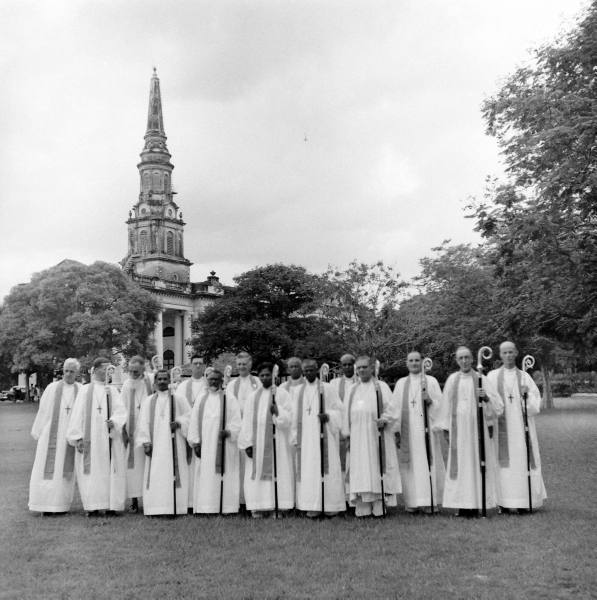
At the inauguration of Church of South India. Photo by Mark Kauffman (LIFE magazine)
The presiding bishop of the inaugural function was the Rt. Revd. C. K. Jacob of the Anglican Diocese of Travancore and Cochin. A vast congregation gathered in the cathedral at Madras from all over the world. The following historical declaration was made by Bishop Jacob at the inaugural service.
“Dearly beloved brethren, in obedience to the Lord Jesus Christ the head of the church, who on the night of his passion prayed that his disciples might be one, and by authority of the governing bodies of the uniting churches whose resolutions have been read in your hearing and laid in your prayer before Almighty God; I do hereby declare that these three churches, namely – the Madras, Madura, Malabar, Jaffna, Kannada, Telugu, Travancore Church councils of the South India United Church; the Methodist Church of South India, Trichinopoly, Hyderabad and Mysore districts; the Madras, Travancore and Cochin, Tinnevelly and Dornakal dioceses of the Churches of India, Burma and Ceylon; are become one Church of South India, and these bishops, presbyters, deacons and probationers who have assented to the basis of union and accepted the constitution of the Church of South India, whose names are laid upon this holy table, are bishops, presbyters and deacons of this church. In the name of the Father, and the Son, and the Holy Spirit, Amen.” ~ wikipedia

Inauguration procession of Church of South India. Photo by Mark Kauffman (LIFE magazine)
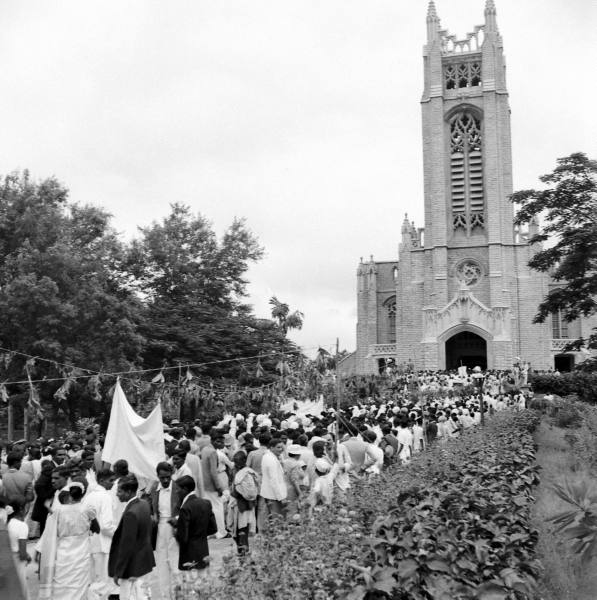
Inauguration procession of Church of South India. Photo by Mark Kauffman (LIFE magazine)
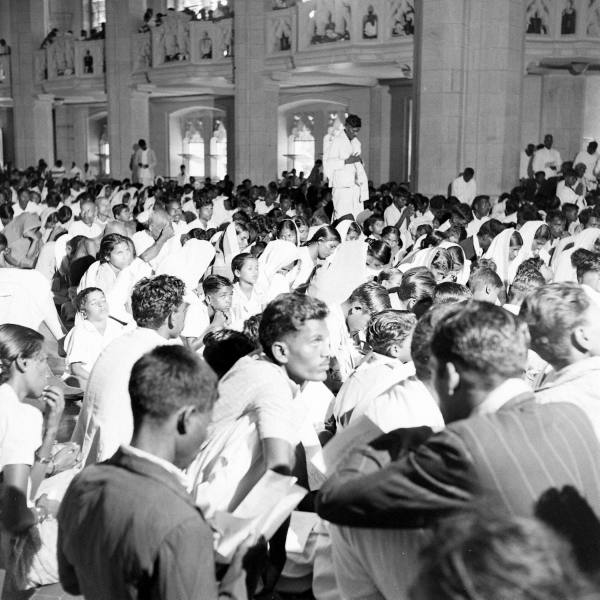
Inauguration service of Church of South India. Photo by Mark Kauffman (LIFE magazine)
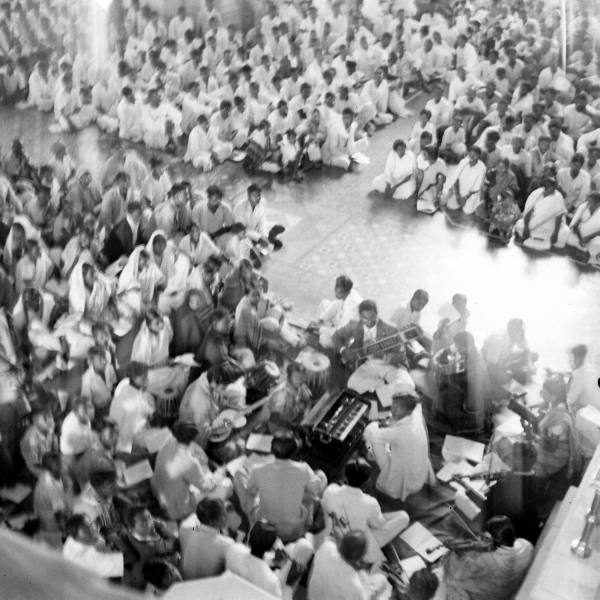
Inauguration service of Church of South India. Photo by Mark Kauffman (LIFE magazine)

Inauguration service of Church of South India. Photo by Mark Kauffman (LIFE magazine)
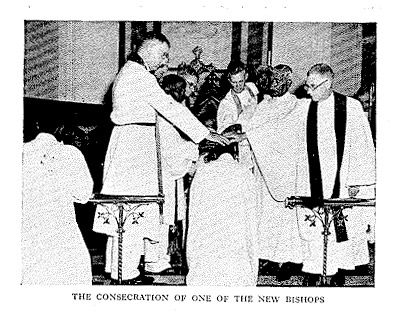
Photo credit: http://www.csisynod.com
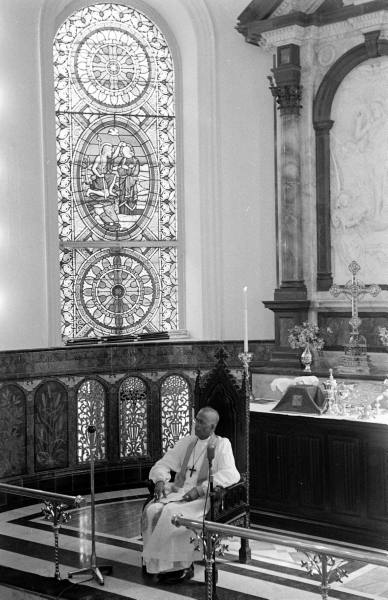
Presiding Bishop Rt. Revd. C. K. Jacob at the Inauguration of Church of South India. Photo by Mark Kauffman (LIFE magazine)
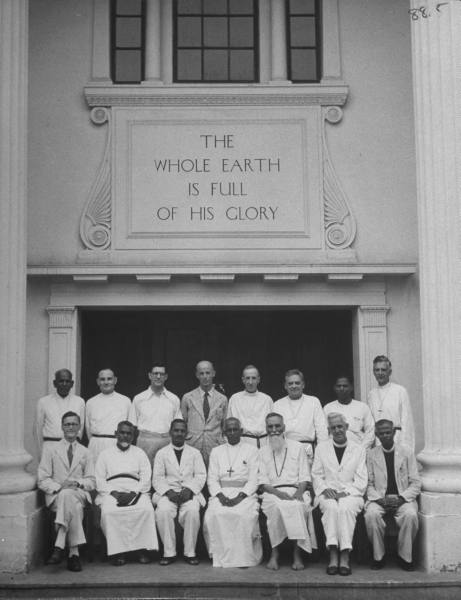
Clergymen from 5 Protestant faiths attending the inaguration of the Church of South India. Photo by Mark Kauffman (LIFE magazine)

St George’s Cathedral, Chennai (photo credit – wiki)
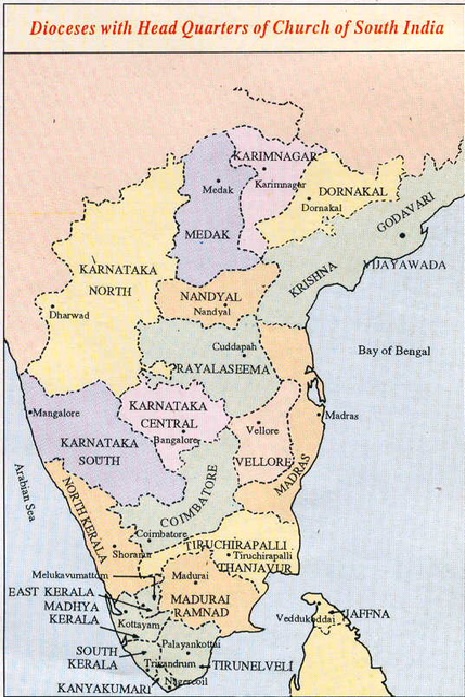
CSI Diocese Map (image credit – http://www.csimichigan.org)
3rd September, 1889 – Birth of Sadhu Sunder Singh (Special Video Feature)
Sadhu Sunder Singh the renowned Indian Christian missionary was a member of an ancient, aristocratic, and wealthy Sikh family from the village of Rampur in the State of Patiala (present day Punjab). He was a very religious and God fearing person. Jesus appeared to him in a vision in the early hours of 18th December 1904. Like Paul in the New Testament, he heard a voice “Why do you persecute me? Remember that I gave my life for you upon the Cross”. On Sunday, the 3rd of September, 1905, on his sixteenth birthday, he was baptized in St. Thomas Church at Shimla according to the rite of the Anglican Church.
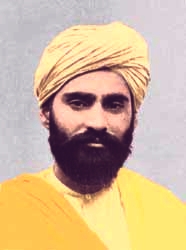
Sadhu Sundar Singh
A month after his baptism, Sundar Singh donned the yellow linen robe that celibate Indian Sadhus wore and set out to preach the gospel, carrying nothing but a New Testament. From now on he would have no permanent home and no income.”I am not worthy to follow in the steps of my Lord,” he said, “but like Him, I want no home, no possessions. Like Him I will belong to the road, sharing the suffering of my people, eating with those who will give me shelter, and telling all people of the love of God.’ He also authored eight books.
Sadhu Sunder Singh was one of the speakers of the Maramon Convention in 1918. He spoke in Hindi and the translation was done by Mr. M. O. Oommen, Chief Conservator of the then Travancore Kingdom.
Sadhu Sunder Singh drew crowds greater than any previous conventions, so much so that before the end of the week the pandal (covered area) had to be enlarged. It is estimated at the final meeting about 32,000 people gathered to hear his message.
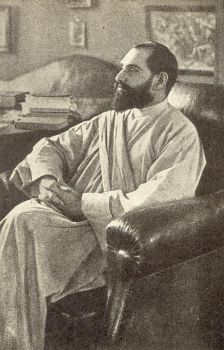
Sadhu Sundar Singh
He is believed to have died in the foothills of the Himalayas in 1929 on his way to Tibet. His body was never found.
Journey to the Sky – Sadhu Sundar Singh (1977)
A fearless Bishop who took on the Prime Minister despite the threat of jail
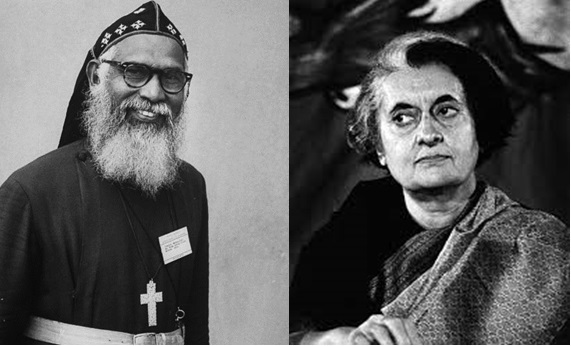
Metropolitan Juhanon Mar Thoma and Indira Gandhi, Prime Minster of India
On 25 June, 1975 – exactly 40 years ago, Prime Minister of India Indira Gandhi unilaterally had a state of emergency declared across the country. Officially issued by President Fakhruddin Ali Ahmed under Article 352(1) of the Constitution for “internal disturbance”, the Emergency was in effect from 25 June 1975 until its withdrawal on 21 March 1977 (21 months). `
So what did the Emergency imply? Essentially, at the stroke of the President’s pen India ceased being a democracy and was converted into a virtual autocracy. Civil liberties were suspended, media was censored, state and parliamentary elections were postponed, and anyone who wrote or spoke against the Government was put behind bars. In the 21 months of the Emergency, 100,000 people were arrested and detained without trial. ~ www.thelogicalindian.com
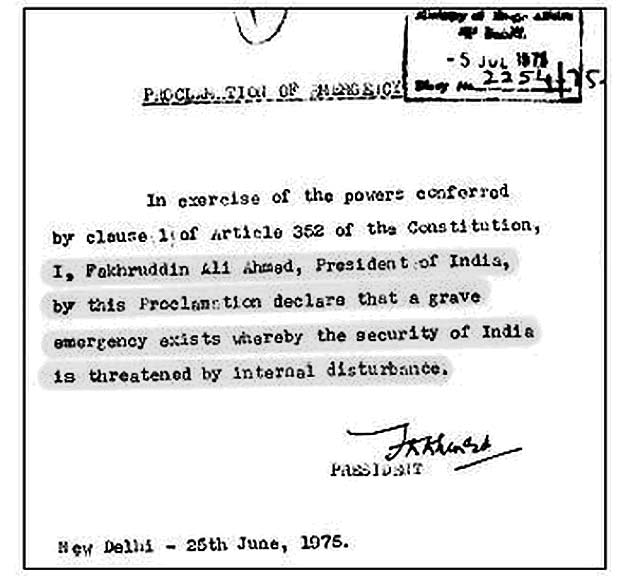
Emergency declared by President Fakhruddin Ali Ahmed under Article 352(1) of the Constitution.
Under the Emergency rule, it was not easy to raise voices of critical opposition, in making even a mild-toned protest, one did so at considerable risk. Many kept silent because of the fear which spread among the people. Despite these pressures, some of the Christian groups made courageous attempts to express critical voices. It is significant to recognise that those who made the critical protests were not the representatives of the large institutional churches; rather, they were members of relatively small groups or of a minority group within the institutional church.
Metropolitan Juhanon Mar Thoma was the only Church leader who wrote a letter to her disapproving it. The Metropolitan’s letter stated that he deemed the Emergency rule as a setback to democracy and demanded its speedy withdrawal as well as the release of the politicians arrested in this regard.
His earlier statement was drafted in Malayalam in the fall of 1975. Even though it was not an entirely critical protest, but raised in a modest way a critical question, it was refused publication in Kerala. Metropolitan has written a brief yet pointed letter to Prime Minister Gandhi stating clearly his concern for the political situation.
“A vast number of people, and that growing numbers, feel the price we have to pay is costly. With people like Morarji and others in jail, and a press which has lost its freedom to write news and views, we feel a kind of depression. On behalf of thousands, I request withdrawal of Emergency by gradual stages. Immediate and altogether withdrawal is likely to have very bad repercussions. If the political detenus are released and’ freedom for press is given, it will be a great relief.
“I have one more request: not to have elections and constitutional changes during the time of Emergency. Hoping to be excused for this letter written from a sincere and painful heart.” ~www.daga.org.hk
He wrote that he was writing as a Church leader and a citizen. Mrs Indira Gandhi gave orders to arrest Metropolitan Juhanon Mar Thoma. Mr. C. Achuthamenon was the Chief Minister at that time and with his interference the arrest was avoided. It was the Mar Thoma Church’s fight for independence and national integrity that echoed through Metropolitan Juhanon Mar Thoma, a fearless commitment to the concerns of the people that is hard to find among religious leaders now. On September 9, shortly after he wrote this letter, he fell ill and died on September 27, 1976.
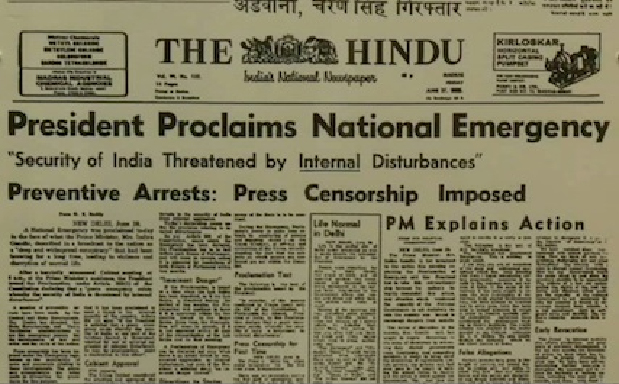
The Hindu front page after imposition of the Emergency.
The first edition of the Indian Express after the imposition of emergency consisted of a blank page instead of editorial. The Financial Express had Rabindranath Tagore’s poem, “Where the mind is without fear, and the head is held high”.
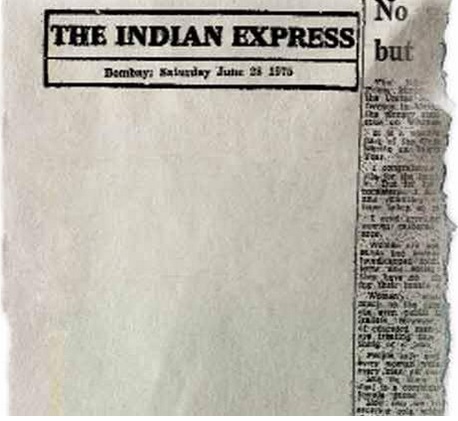
28 June 1975 : Blank Edit Page in The Indian Express Newspaper in Protest Against the Emergency
Where The Mind Is Without Fear
Where the mind is without fear and the head is held high
Where knowledge is free
Where the world has not been broken up into fragments
By narrow domestic walls
Where words come out from the depth of truth
Where tireless striving stretches its arms towards perfection
Where the clear stream of reason has not lost its way
Into the dreary desert sand of dead habit
Where the mind is led forward by thee
Into ever-widening thought and action
Into that heaven of freedom, my Father, let my country awake

Pages from History: 19 June 1986. Death of Mariamma Joseph – Co-founder of Hoskote Mission
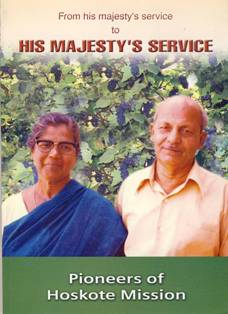
Mrs. Mariamma Joseph and Mr. M.T. Joseph (Co-founders of Hoskote Mission)
18 June 1986: Death of Mrs. Mariamma (Pennamma) Joseph (b.31 March 1917), Co-founder of the Hoskote Mission, Bangalore District, Karnataka, India. Mariamma was the daughter of Mammen Mammen and Mariamma of Manalukalayil, Kumbanad. She did her Teacher’s Training Course (TTC) from Peringara School near Tiruvalla, after which she taught in many schools including Arrangatu School, Pullad, Perumbara (Kuriannoor) School near Charal Mount; Kanjeettukara and Nedumprayar (Maramon).
She was trained by the CMS Missionary, Miss Kellaway (Australia) of Vanitha Mandiram, Tiruvalla. Pennamma was greatly influenced through her life and testimony of this missionary. She had an earnest desire to go for mission work in Karnataka but her parents did not allow it (according to the then prevalent customs/ norms, Syrian Christian parents were not willing to send their unmarried daughters to unknown ‘foreign’ lands) until her marriage.
However, her marriage with Mr. M.T. Joseph, (Manon House, Maramon) was a definite fulfillment of God’s call at the Maramon Convention (1947). who had a similar call and vision to Karnataka. In obedience to this heavenly call, she resigned her Government teacher’s job, that had a permanent income, to an uncertain and unknown future. This journey led to the humble beginnings of the Hoskote Mission. She was called home on 18 June 1986 and buried in the Mission Cemetery in Ghonakhanahally, 7 km away from the Hoskote mission field.
Mariamma has finished her race and now she is with the Lord. The harvest is plenty, but the workers are few. We need more and more persons like Mariamma to work for the Lord. Millions of villagers are there who have never heard about our Saviour even once in their lives. Who will go???
To read a more detailed biography of Mr. & Mrs. M.T.Joseph Please click.

18 April, 1929: Sadhu Sunder Singh disappears
Sadhu Sundar Singh
18 April, 1929: Sadhu Sunder Singh (b.3 Sep 1889) disappears on his way to Tibet. The mystery of the disappearance of Sadhu Sunder Singh after leaving Sabathu-near Tibet on 18th April 1929 has never been solved. The route he was to have taken was one he had often traveled before. Reports of his disappearance appeared in newspapers all over the world.
No one knows what happened to him and how he died. By whatever means God took His servant home, He evidently did not intend it to be known. Sunder manifested into his life the verse written in Mark 8:35 which says, “For whoever wants to save his own life will lose it; but whoever loses his life for me and for the Gospel will save it.”
Read more in our Free PDF Ebook:
https://nalloorlibrary.com/wp-content/uploads/2013/05/sadhu-sunder-singh.pdf

Pages from History: 27 September, 1947: Formation of Church of South India (with Photos)
Photo credit: http://www.csisynod.com
27 September, 1947: Formation of Church of South India (CSI) in 1947, as a union of Anglican, Presbyterian, Congregationalist and Methodist churches. The idea of a Church union was proposed in 1919 at a conference held in Tranquebar (now Tarangambadi) in 1919. After 28 years of discussions various denominational churches in South India established by different Missionary societies agreed to the formation of the Church of South India in 1947 after India attained independence. The inaugural ceremony was held at St. George Cathedral Madras (Chennai).
Today the Church of South India is one of the largest Protestant churches in India and is a member of the Anglican Communion and its bishops participate in the Lambeth Conferences. It is also a member of the World Council of Churches, the World Alliance of Reformed Churches, and the National Council of Churches in India.
The Church of South India (CSI), Church of North India (CNI), and Malankara Mar Thoma Syrian Church of India jointly formed the Communion of Churches in India (CCI) in 1978 for mutual recognition of the ministry and leaders, inter communal relationship, and to explore possibilities of working together and other areas of cooperation in the fulfillment of the mission of the Church in India.
At the inauguration of Church of South India. Photo by Mark Kauffman (LIFE magazine)
The presiding bishop of the inaugural function was the Rt. Revd. C. K. Jacob of the Anglican Diocese of Travancore and Cochin. A vast congregation gathered in the cathedral at Madras from all over the world. The following historical declaration was made by Bishop Jacob at the inaugural service.
“Dearly beloved brethren, in obedience to the Lord Jesus Christ the head of the church, who on the night of his passion prayed that his disciples might be one, and by authority of the governing bodies of the uniting churches whose resolutions have been read in your hearing and laid in your prayer before Almighty God; I do hereby declare that these three churches, namely – the Madras, Madura, Malabar, Jaffna, Kannada, Telugu, Travancore Church councils of the South India United Church; the Methodist Church of South India, Trichinopoly, Hyderabad and Mysore districts; the Madras, Travancore and Cochin, Tinnevelly and Dornakal dioceses of the Churches of India, Burma and Ceylon; are become one Church of South India, and these bishops, presbyters, deacons and probationers who have assented to the basis of union and accepted the constitution of the Church of South India, whose names are laid upon this holy table, are bishops, presbyters and deacons of this church. In the name of the Father, and the Son, and the Holy Spirit, Amen.” ~ wikipedia
Inauguration procession of Church of South India. Photo by Mark Kauffman (LIFE magazine)
Inauguration procession of Church of South India. Photo by Mark Kauffman (LIFE magazine)
Inauguration service of Church of South India. Photo by Mark Kauffman (LIFE magazine)
Inauguration service of Church of South India. Photo by Mark Kauffman (LIFE magazine)
Inauguration service of Church of South India. Photo by Mark Kauffman (LIFE magazine)
Photo credit: http://www.csisynod.com
Presiding Bishop Rt. Revd. C. K. Jacob at the Inauguration of Church of South India. Photo by Mark Kauffman (LIFE magazine)
Clergymen from 5 Protestant faiths attending the inaguration of the Church of South India. Photo by Mark Kauffman (LIFE magazine)
St George’s Cathedral, Chennai (photo credit – wiki)


 Nalloor Library