Malayala Manorama Special Supplement

Do pick up and read our front page article in today’s Malayala Manoroma special supplement for the Maramon Convention.
You can read the article Malayala Manorama Article
We want to thank all our readers for your continuous support and prayers.

Maramon Convention, 1947: Joseph’s call to Karnataka
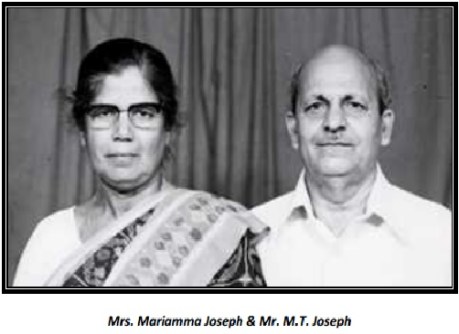
It was during the 1947 Maramon Convention that Joseph heard a definite call from God to go to Karnataka and so he dedicated his life and waited for the right time. While he was working in the Anchal office at Maramon he met A.C. Zachariah, who was teacher in Kuriannoor and Kottayam.
Zachariah told him of his plans for the future, about how he was in search for a coworker to start work in Hoskote. Joseph responded immediately, without any hesitation or bargain with God. Zachariah praised God that he had found the right co-worker to go with him to Hoskote. Obedience to God’s call meant resigning the promising and stable careers in Pune and Maramon.
Obedience to God’s call meant sacrificing the comfort of a home, leaving parents, loved ones, relatives, job and father’s house. Joseph was prepared for 40 years. And he was ready to be sown in Gods field. And so they resigned from their secure Government jobs, bid farewell to their dear ones, especially their parents and turned their backs to everything they considered near and dear.
Joseph, his wife and their one year and three month old daughter; and Zachariah Sir, his wife and their three daughters were the pioneering team of Hoskote Mission. The two families left Kerala on 26 June, 1947. They were sent with prayer and blessings by Abraham Mar Thoma Thirumeni. The families reached Hoskote on 27th June, 1947.
The Hoskote Mission Medical Center was established in 1947 in Hoskote, Bangalore Rural District, Karnataka.
Read more about this incredible story (Free PDF)
https://nalloorlibrary.com/wp-content/uploads/2015/02/maramon-convention-1947-joseph_s-call-to-karnataka.pdf
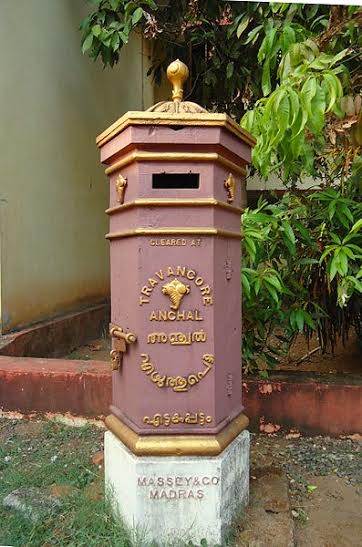
An old post box in Kerala, India
Watch the Maramon Convention 2016 – Videos and Photos
Watch the VIDEO proceedings of the 121st Maramon Convention from here
You can also see PHOTOS from the 120th Convention here arranged day by day
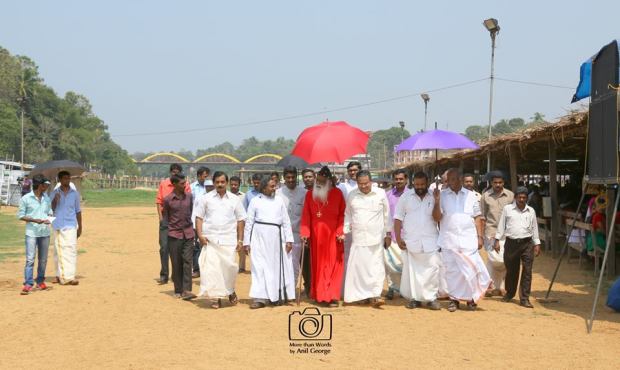
Opening day of the 121st Maramon Convention – Photo Courtesy – www.facebook.com/MalankaraMarThomaSyrianChurch
8th Feb 1900: Earthquake in Puthen Cavu near Chengannur, Kerala
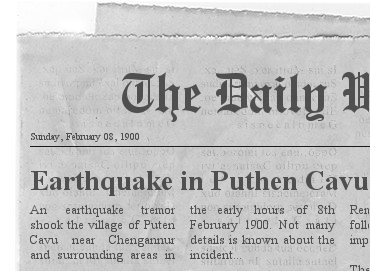
Date 8th February 1900 Time 3.30 am on 8 February morning
An earthquake tremor shook the village of Puthen Cavu near Chengannur and surrounding areas in the early hours of 8th February 1900. Not many details is known about the incident, however, it is well documented by Rev. Thomas Walker in his book and passed on as oral legend by many elders. Thomas Walker was a principal speaker at the Maramon Convention from 1899 to 1912.

Rev. Thomas Walker – Church Missionary Society
In the early days of the Maramon Convention, due to the limited means of travel, guest speakers used to arrive days or weeks in advance. In this time they would attend fellowship meetings and deliver messages to nearby congregations.
Rev. Thomas Walker wrote in his diary on 7th and 8th Feb, 1900, about an incident where he had preached and asked people to repent, that night the earth shook and people thought it was he who was responsible for the tremors. Many went on their knees and repented:
February 7. Last night we had a very solemn meeting, and I gave an opportunity to any seeking souls. Thank God, there were some; but oh, how many are indifferent, crowding to hear, but not willing to give up sin. The moment I had finished praying, some of the converted men struck up prayer of their own accord, red-hot if you like: they pleaded for the unconverted.
Then came my trials. I asked those who had held up their Hands to stay behind, and a number did so. But the other people would stand all round. They are not accustomed to quiet after-meetings, and simply refused to go away, even when asked five or six times. The Achans have no command over the people. At last I had fairly to drive them out before I could deal with those poor souls.
In the C.M.S. churches here they have full control of their congregations; but in the Syrian churches, none. And they have made up their mind that they can have none. You cannot get a single Syrian congregation to go off quietly after a service, for the sake of either Christ or souls. It makes it very difficult to get at anyone who is impressed. We were at least twenty minutes getting the people (or most of them) away last night. It seems to me that it is a case of either taking after-meetings in the mass (which is most unsatisfactory), or not taking them at all. Well, one has just to go forward trust the Lord. He knows the circumstances, and can help. And, praise Him, He knows every heart which is hungering for Him.
February 8. We had a solemn service last night, and sent them home with earnest warnings; but except for a quiet time on our knees, did not attempt an after-meeting. Well, in the very early hours of this morning I was suddenly roused from sleep to find the whole ground quivering with an earthquake. You have probably had the same shock. It seemed to last several minutes at least. I felt perfectly quiet under it, and then subsided towards slumber again. Not so the people. There were shouts and cries and prayers all over the place. There seemed to be a tremendous commotion. After a time they came thumping and knocking at my doors and windows, so I had to light a lamp and get up.
My room soon filled with men, some converted and some unconverted. They quite connect the earthquake with the solemn warnings I have been giving here. I told them last night in the pandal that I could do no more, and must just leave them to God. I asked them to go home and say truthfully in His presence, I am saved, or I am not saved. Then followed this earthquake shock, and they immediately connected the two together. It seems in a real sense God’s confirmation of His word by signs following. Call it a coincidence if you please, with Divine before the coincidence. & quot; “Well, I spoke to them, and two young men professed to repent on the spot, while I warned again several others. I then turned into bed and went to sleep again.
One of the Christians said, This morning’s meeting must be for the unconverted. It is against our practice, as the morning meetings are intended to help Christians; but I felt it was God’s will that I should go and preach on earthquakes. So I got some notes together, and a large crowd assembled. The Rev. T. K. Joseph turned up to help me. We had a very solemn time, and I told them that God was giving them another chance and a special warning.
Afterwards I called on any who wanted to turn to Him to stand up, and several men did so, and several women. I then got them to the front of the table where I stood, and we had an after-meeting before the whole pandal, in public. I felt that, after the earthquake, anxious souls ought not to shirk publicity. We were at it till nearly twelve o clock,…”

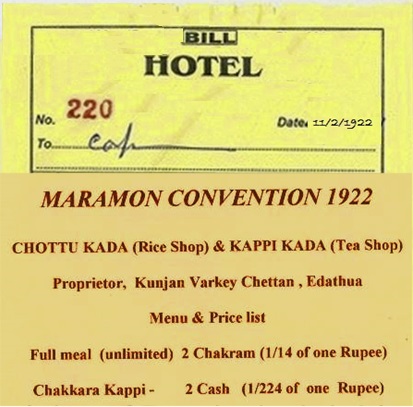
Maramon Convention 1922: The price of meals
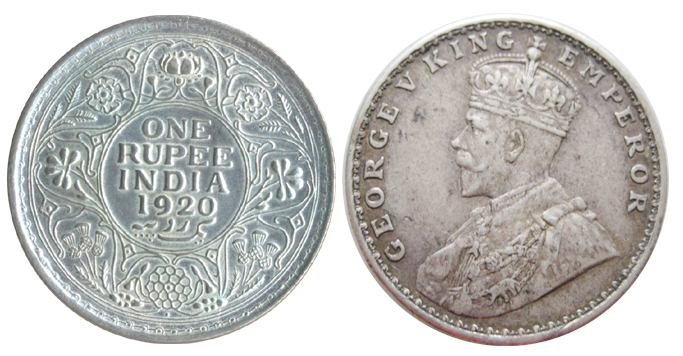
One British Rupee 1920
Fourteen meals for One rupee. During the early years of the Convention, restaurants and hotels were not in existence. Kappi Kadas (coffee/tea shops) and Chottu Kadas (rice shops) were the only available eateries at the Manalpuram (river bed) venue of the convention.
One of the famous chottu kada’s was managed by Kunjan Varkey Chetten from Edathua. He would serve 14 full meals for just one rupee and 228 full glasses of black coffee (Chakkara Kappi) also for Rs.1 in the early 1920’s.
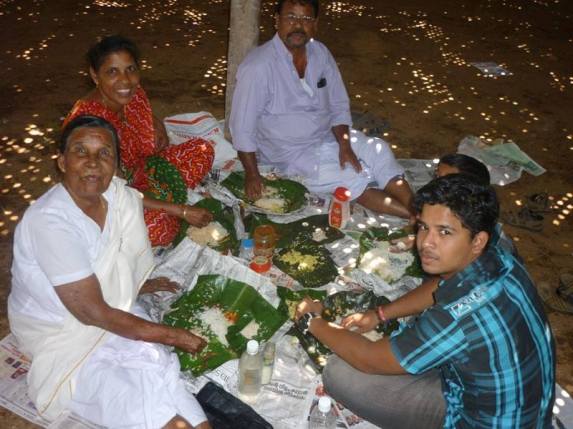
Having lunch at Maramon Convention. (Photo courtesy Facebook Group)
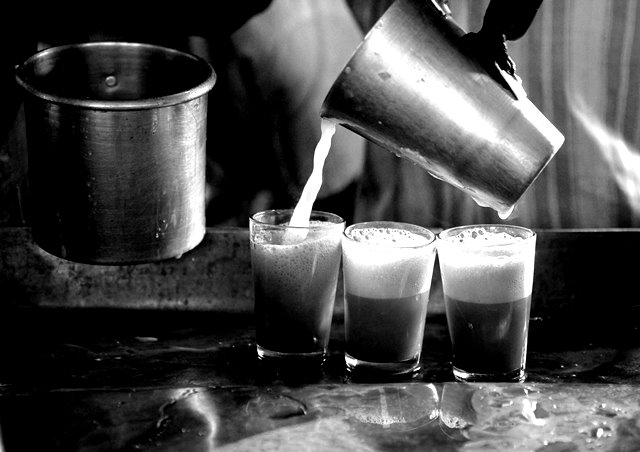
Chai shop
(www.chaiwallahsofindia.com)

1905: Women Speakers lead the way at Maramon Convention
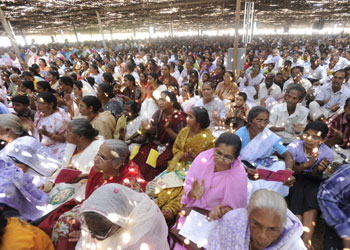
Women listening to the sermon at Maramon Convention. (Image courtesy www.manoramaonline.com)
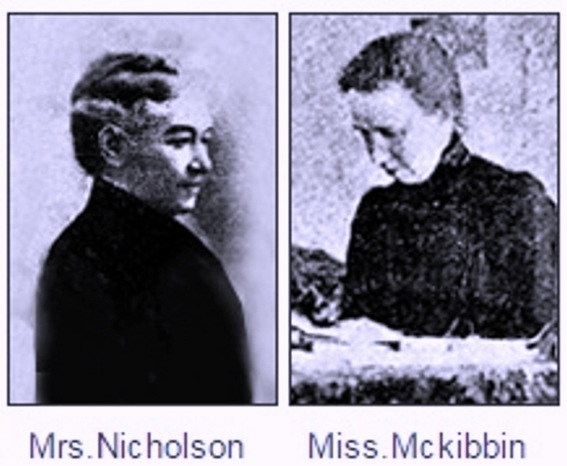
Right from its initial years, many women speakers have made a great impact on the Maramon Convention. Mrs. F.S. Nicholson and Miss. S.C. McKibbin conducted special meetings and Bible classes for women during the convention in 1905. They are remembered for their devoted service to the women of Travancore particularly in the education field. They established the prestigious Nicholson Syrian Girls Higher Secondary School and Training Home in 1910 at Kattode, Tiruvalla, Kerala.
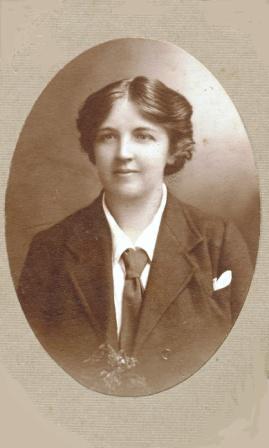
Ms. Gwen Kellaway, Vanitha Mandiram
Other eminent speakers included Miss Amy Carmichael, founder of the Dohnavur Mission, Tamil Nadu, Miss Kellaway of Vanitha Mandiram, and Miss Grower to name a few missionaries who encouraged women towards the Lord’s work through Bible classes during the early days of the Convention.
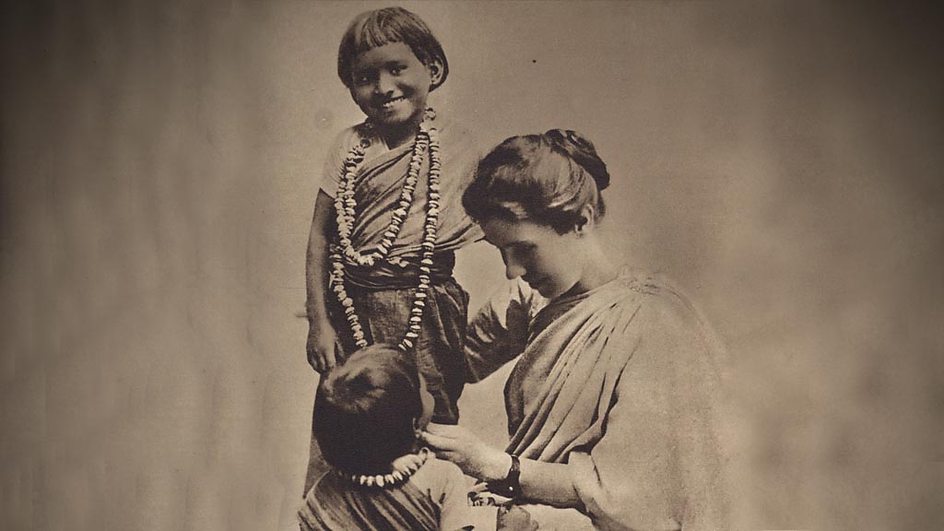
Amy Carmichael with the children of Dohnavur Mission, Tamil Nadu

Ban of Tobacco and Paan at the Maramon Convention
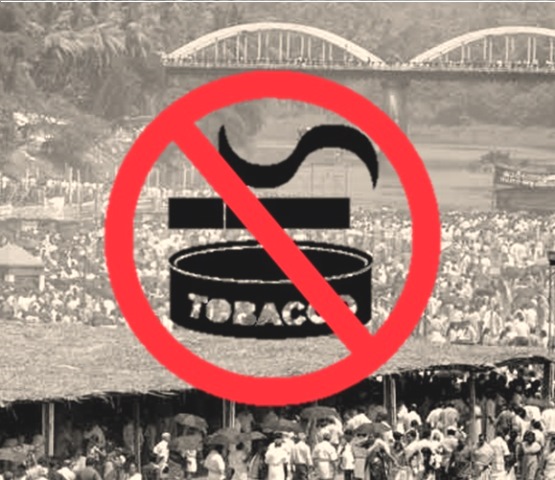
The use of tobacco and paan was a way of life in Kerala during the first half of the 20th Century. It was an essential item at social events such as marriages and other family gatherings. Tobacco and paan was easily available through shops all over Kerala. It was a common sight to have people attend the Maramon Convention meetings with beedi and murukkan in their pockets.
Through his messages, Dr. Stanley Jones urged people to refrain from the use of tobacco products. During one meeting, he asked the convention participants to bury their tobacco (which they were carrying) in the sand on the pandal floor. In another meeting, he collected all the tobacco products from the people and burnt it near the pandal in front of everyone.
It is only after much persuasion that the people stop using it and today it is not permitted at the Maramon Convention pandal.
Read more about Dr. E. Stanley Jones at the Maramon Convention with rare photos

1905: Printing Maramon Convention Sermons overnight!
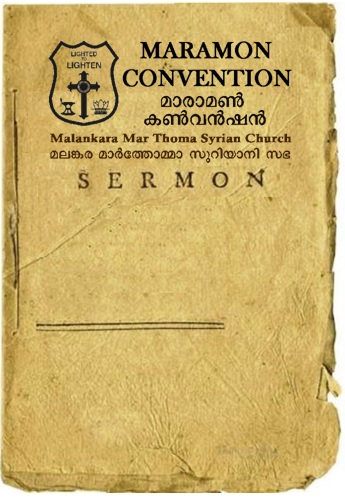
At present, Maramon Convention messages (full text) are printed and sold on the next day morning from counters for the convention attendees. This enables people to take home the sermons of the previous day and read them again and share the sermons with people who were not able to attend the convention. These printed sermons are also shared in cottage prayer fellowships, parish prayer groups and for personal prayer and meditation.
However, few people know that this practice started in 1905. There were no microphones and speakers. The convention messages were repeated in relay by three persons – at times four or more – standing in different places of the pandal to make it audible to the thousands of people who attended. This relay process took a long time and was tedious for the audiences. The printing of messages in 1905 became a real blessing for all and continues to be so today. Today, God has blessed the Church members with technology which enables them to watch the Convention live through web streaming and receive updates on emails and websites.
Rev. Thomas Walker – Church Missionary Society
Given below is the report about this, from the Thomas Walker’s biography.
“1905 Wednesday, February 22. I awoke feeling very weary, for the heat was extraordinarily oppressive, and seemed to take all the life out of one. The Syrian brethren made one very good arrangement this year.
Each day’s addresses wore printed by night at their printing press at Tiruwella, eight miles away, and were on sale the next day in a booth near the pandal. Thus
the printed pages supplemented the speaker’s voice, and carried the message far and wide.”

The Coonan Cross – A forgotten Church!
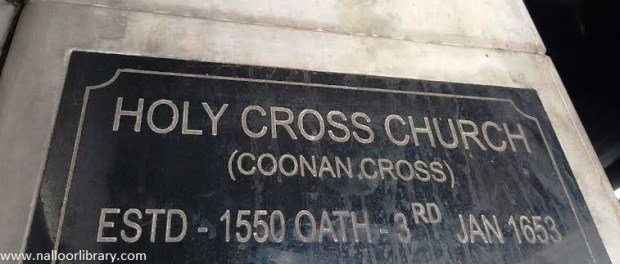
Stone plaque inside Coonan Cross Church – Photo by Nalloor Library on 3rd Jan 2016 on the anniversary.
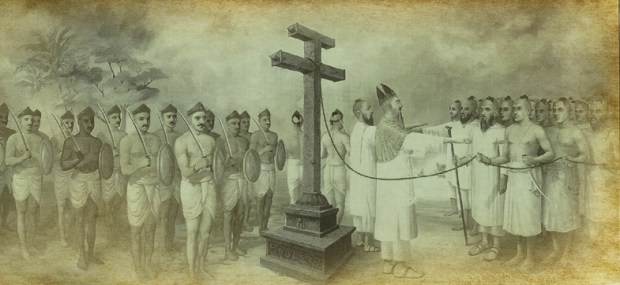
An illustration of the Oath taking at the Coonan Cross. Picture courtesy chroniclesofmalabar
3 January, 1653: Oath of Coonan Cross. Under the influence of the Portuguese Empire a synod was convened at Udayamperoor near Ernakulam in 1599 and the Malankara Church was made part of the Roman Catholic Church. People who wished for freedom from the supremacy of the Roman Catholic Church tried to get a bishop from Babylon.
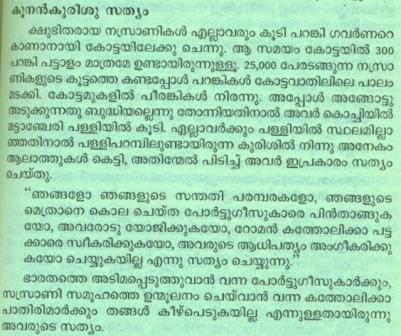
On the request of the Syrian Christians, a bishop named Ahathulla was sent to Malankara in 1652. However, he was captured and killed by the Portuguese in Goa. The Syrian Christians were infuriated and on 3rd January 1653, gathered in large numbers at a church in Mattancherry (Cochin).
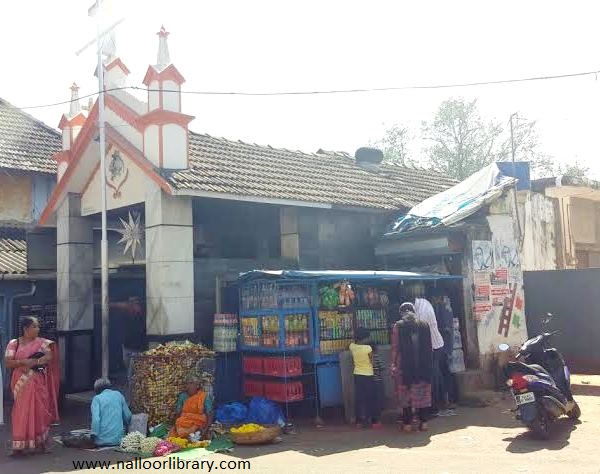
Coonan Cross Church – Photo by Nalloor Library on 3rd Jan 2016 on the anniversary day
They tied ropes to the granite cross in front of the church and by touching the ropes, took an oath severing their connection with the Roman Catholic Church. This incident is known as the Oath of Coonan Cross. (Coonan in Malayalam means bent – The Cross bent to one side during the oath taking ceremony).
According to tradition , out of a population of 200,000 St. Thomas Christians, only 400 remained loyal to the Roman Arch bishop Garcia. The event in 1653 broke the fifty four year old yoke of Roman supremacy imposed at the Udayamperur Synod of 1599.
However, today the church is a Catholic Church and it seems that a Church of historical value has no importance to any of the Non-Catholic Syrian Christian Indian Churches. It is also ironical that this story is taught in Sunday Schools in all these Churches with no historical meaning or significance. The Cross present today appears to be a wooden cross. It does not look like a stone cross that should be a couple of centuries old now as mentioned in all history books.
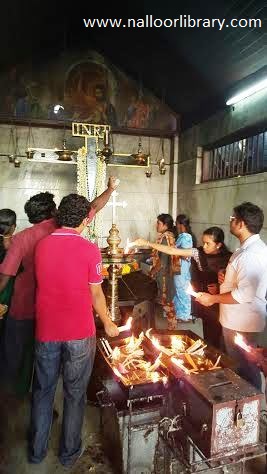
Inside Coonan Cross Church – Photo by Nalloor Library on 3rd Jan 2016 on the anniversary day.
World Sunday School Day: 1st November 2015 (Free Ebook – Robert Raikes and how we got Sunday School)
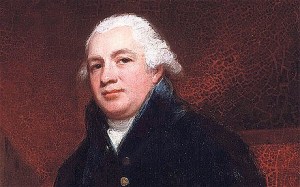
George Romney’s portrait of Robert Raikes, the newspaperman who popularised schooling on Sundays Photo: National Portrait Gallery, London
1st November 2015 : World Sunday School Day – The first Sunday of the Month of November is celebrated throughout the world as Sunday School Day. The Mar Thoma/ CSI/ CNI churches are celebrating Sunday, 1st November, 2015 as World Sunday School Day.
Robert Raikes (1735- 1811), an English Publisher, started the first Sunday School in the city of Gloucester in England in 1780. During the early days, reading, arithmetic and Bible was taught at the Sunday Schools.
In 1809, Church representatives of the Malankara Churches held a meeting at Kandanadu Church, near Ernakualam to arrange facilities to teach children in the Church about religion, prayers and sacraments. The India Sunday School Union was founded in 1876.The Mar Thoma Sunday School Samajam was established on 25 February 1905, at the Maramon Convention.
We encourage our readers to read and share this Free 4 page PDF Ebook Resource for your Sunday Schools and children’s services: Robert Raikes and How We Got Sunday School
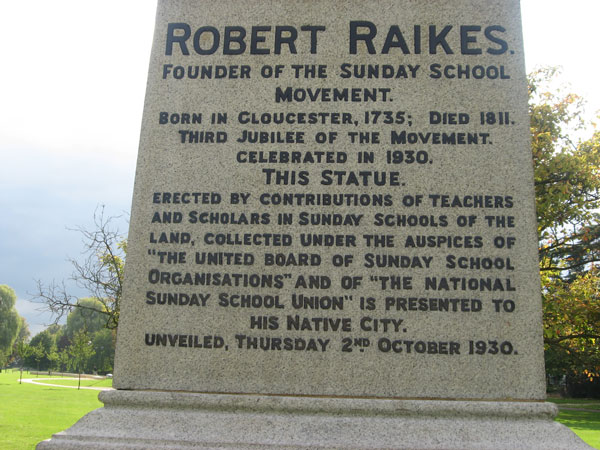
Inscription on the tomb of Robert Raikes.


 Nalloor Library