9 November, 1964: Mrs. Kandamma Varghese (of Mar Thoma Sevika Sanghom) passes away.
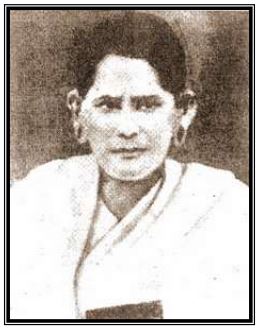
Mrs. Kandamma Varghese
9 November, 1964: Mrs. Kandamma Varghese (of Mar Thoma Sevika Sanghom) passes away.
“The Mar Thoma Suvisesha Sevika Sanghom owes much to the self sacrificing work of Mrs. Kandamma Varghese who worked untiringly as the Organizing Secretary for over 20 years, traveling far and wide, organizing branches in the parishes, doing evangelistic work among Christians and non Christians, and building up the work in parishes.” ~ The Mar Thoma Church, Heritage and Mission – Alexander Mar Thoma Metropolitan.
Mrs. Kandamma was a modest person in wearing jewellery. She used to request people who had more than one gold chain to donate the second one for gospel work. Due to Kandamma’s loving approach to the wife of Diwan Bhadur Dr. V. Varghese sold her ornaments and donated the money for the construction of the Salem Orphanage in Tiruvalla.
Kandamma spent her final days in Perumbavoor with her son Mr. C. V. Koshy who was the headmaster of the Ashram High school there. When she died on 9 Nov, 1964, at the age of 88, she left behind a glowing legacy of her work in Kerala.
Read more in our free pdf E-book which is also an excellent resource for Sunday Schools and church organizations.


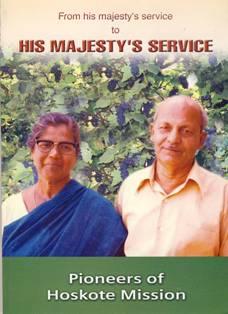
Birth Anniversary of Mr. M. T. Joseph (Co-founder of Hoskote Mission) 21 October, 1910
21 October, 1910: Birth of Mr. M. T. Joseph (d.18 Feb,1995) ), Co-founder of the Hoskote Mission. Joseph was the son of Ipe Thomas and Rachelamma of Manon, Maramon. He was an Anchel Master (Post Master) who left his lucrative government job and home town, to go to an unknown village far away in rural Karnataka, with the sole purpose of spreading the Gospel.
The Hoskote Mission Medical Center was established in 1947 in Hoskote, Bangalore Rural District, Karnataka.
Read more about his story : https://nalloorlibrary.com/wp-content/uploads/2013/06/ebook-m-t-joseph-co-founder-of-hoskote-mission.pdf
27 September, 1947: Formation of Church of South India (with Rare Photos)
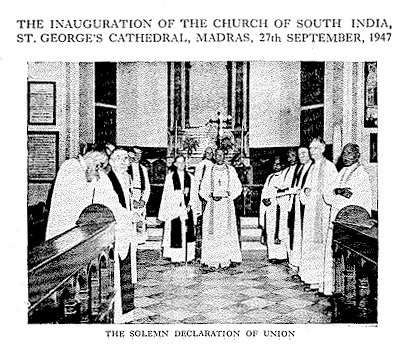
Photo credit: http://www.csisynod.com
27 September, 1947: Formation of Church of South India (CSI) in 1947, as a union of Anglican, Presbyterian, Congregationalist and Methodist churches. The idea of a Church union was proposed in 1919 at a conference held in Tranquebar (now Tarangambadi) in 1919. After 28 years of discussions various denominational churches in South India established by different Missionary societies agreed to the formation of the Church of South India in 1947 after India attained independence. The inaugural ceremony was held at St. George Cathedral Madras (Chennai).
Today the Church of South India is one of the largest Protestant churches in India and is a member of the Anglican Communion and its bishops participate in the Lambeth Conferences. It is also a member of the World Council of Churches, the World Alliance of Reformed Churches, and the National Council of Churches in India.
The Church of South India (CSI), Church of North India (CNI), and Malankara Mar Thoma Syrian Church of India jointly formed the Communion of Churches in India (CCI) in 1978 for mutual recognition of the ministry and leaders, inter communal relationship, and to explore possibilities of working together and other areas of cooperation in the fulfillment of the mission of the Church in India.
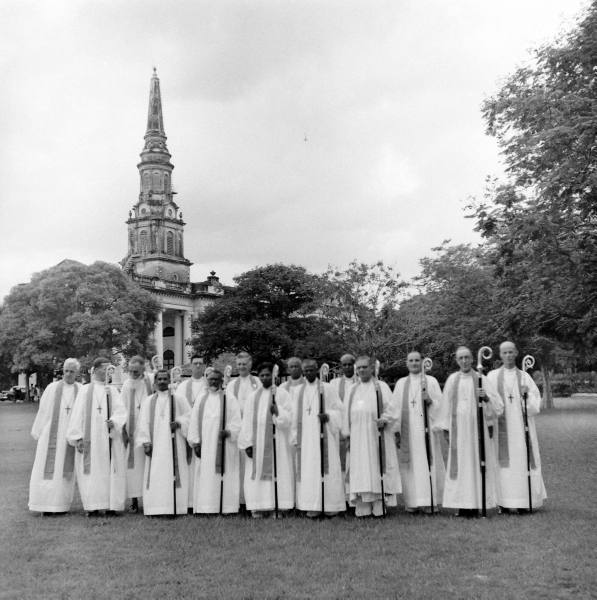
At the inauguration of Church of South India. Photo by Mark Kauffman (LIFE magazine)
The presiding bishop of the inaugural function was the Rt. Revd. C. K. Jacob of the Anglican Diocese of Travancore and Cochin. A vast congregation gathered in the cathedral at Madras from all over the world. The following historical declaration was made by Bishop Jacob at the inaugural service.
“Dearly beloved brethren, in obedience to the Lord Jesus Christ the head of the church, who on the night of his passion prayed that his disciples might be one, and by authority of the governing bodies of the uniting churches whose resolutions have been read in your hearing and laid in your prayer before Almighty God; I do hereby declare that these three churches, namely – the Madras, Madura, Malabar, Jaffna, Kannada, Telugu, Travancore Church councils of the South India United Church; the Methodist Church of South India, Trichinopoly, Hyderabad and Mysore districts; the Madras, Travancore and Cochin, Tinnevelly and Dornakal dioceses of the Churches of India, Burma and Ceylon; are become one Church of South India, and these bishops, presbyters, deacons and probationers who have assented to the basis of union and accepted the constitution of the Church of South India, whose names are laid upon this holy table, are bishops, presbyters and deacons of this church. In the name of the Father, and the Son, and the Holy Spirit, Amen.” ~ wikipedia

Inauguration procession of Church of South India. Photo by Mark Kauffman (LIFE magazine)
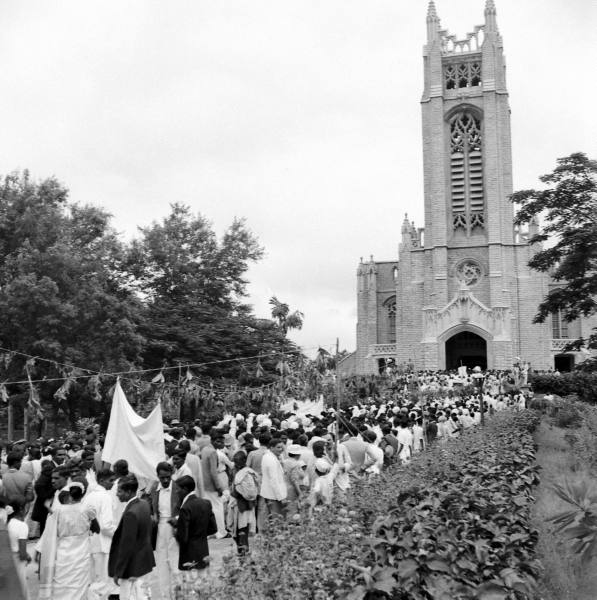
Inauguration procession of Church of South India. Photo by Mark Kauffman (LIFE magazine)
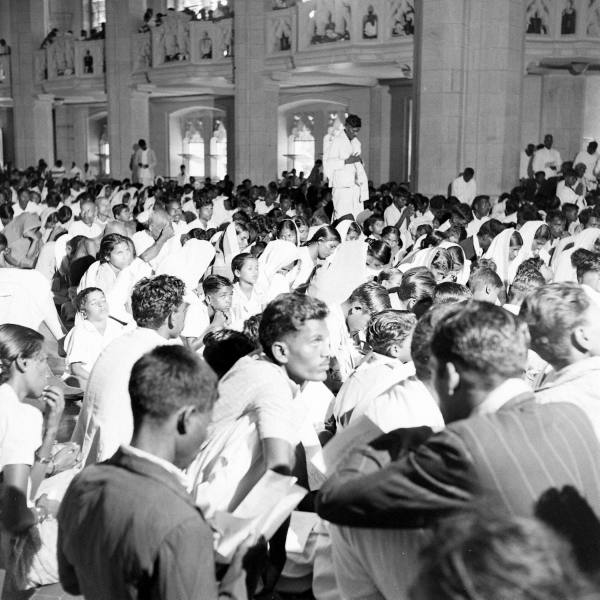
Inauguration service of Church of South India. Photo by Mark Kauffman (LIFE magazine)
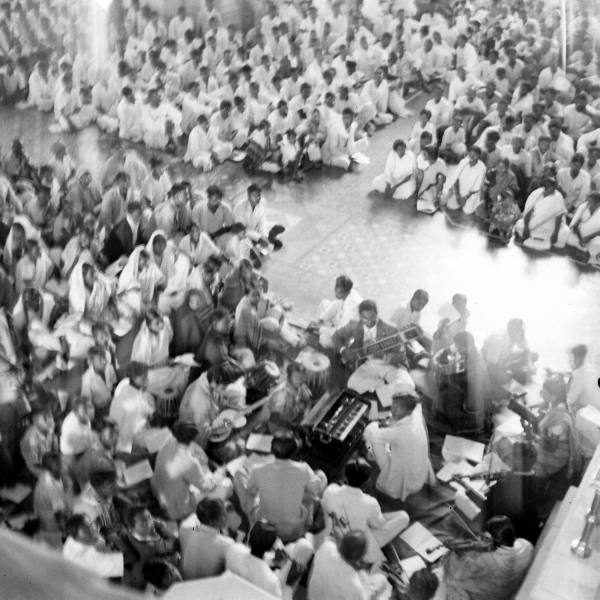
Inauguration service of Church of South India. Photo by Mark Kauffman (LIFE magazine)

Inauguration service of Church of South India. Photo by Mark Kauffman (LIFE magazine)
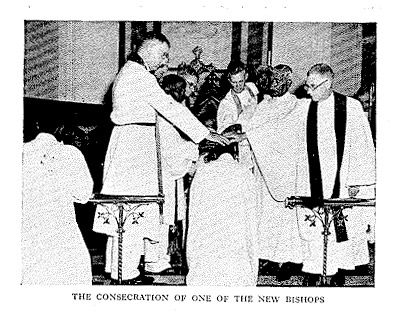
Photo credit: http://www.csisynod.com
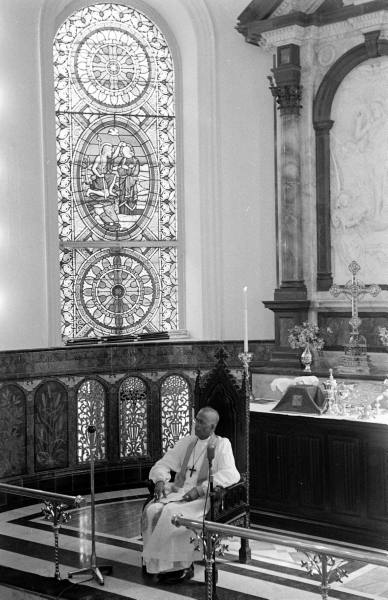
Presiding Bishop Rt. Revd. C. K. Jacob at the Inauguration of Church of South India. Photo by Mark Kauffman (LIFE magazine)
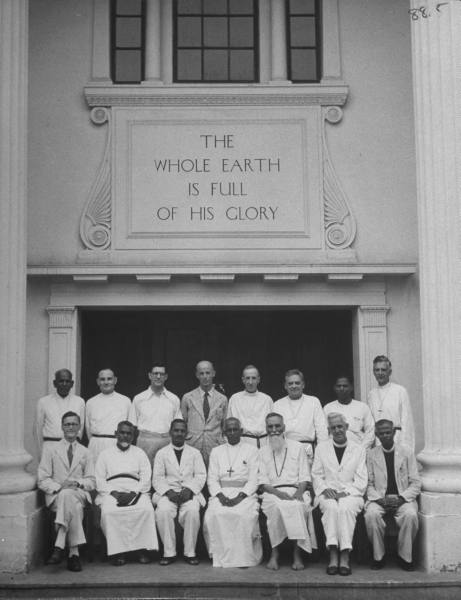
Clergymen from 5 Protestant faiths attending the inaguration of the Church of South India. Photo by Mark Kauffman (LIFE magazine)

St George’s Cathedral, Chennai (photo credit – wiki)
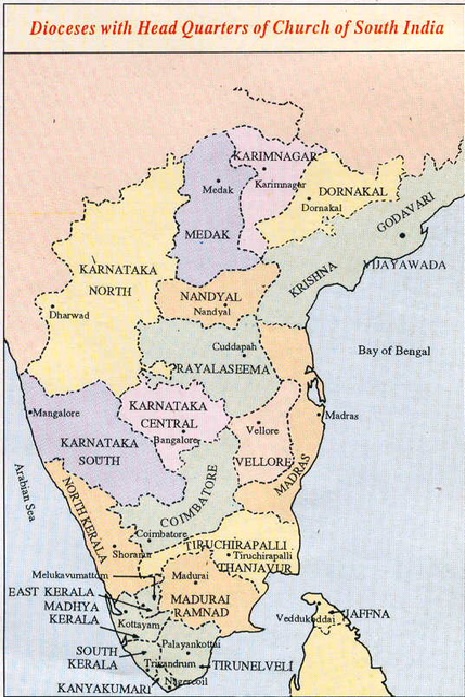
CSI Diocese Map (image credit – http://www.csimichigan.org)
3rd September, 1889 – Birth of Sadhu Sunder Singh (Special Video Feature)
Sadhu Sunder Singh the renowned Indian Christian missionary was a member of an ancient, aristocratic, and wealthy Sikh family from the village of Rampur in the State of Patiala (present day Punjab). He was a very religious and God fearing person. Jesus appeared to him in a vision in the early hours of 18th December 1904. Like Paul in the New Testament, he heard a voice “Why do you persecute me? Remember that I gave my life for you upon the Cross”. On Sunday, the 3rd of September, 1905, on his sixteenth birthday, he was baptized in St. Thomas Church at Shimla according to the rite of the Anglican Church.
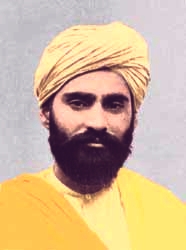
Sadhu Sundar Singh
A month after his baptism, Sundar Singh donned the yellow linen robe that celibate Indian Sadhus wore and set out to preach the gospel, carrying nothing but a New Testament. From now on he would have no permanent home and no income.”I am not worthy to follow in the steps of my Lord,” he said, “but like Him, I want no home, no possessions. Like Him I will belong to the road, sharing the suffering of my people, eating with those who will give me shelter, and telling all people of the love of God.’ He also authored eight books.
Sadhu Sunder Singh was one of the speakers of the Maramon Convention in 1918. He spoke in Hindi and the translation was done by Mr. M. O. Oommen, Chief Conservator of the then Travancore Kingdom.
Sadhu Sunder Singh drew crowds greater than any previous conventions, so much so that before the end of the week the pandal (covered area) had to be enlarged. It is estimated at the final meeting about 32,000 people gathered to hear his message.
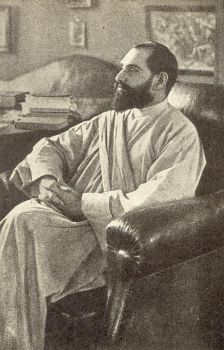
Sadhu Sundar Singh
He is believed to have died in the foothills of the Himalayas in 1929 on his way to Tibet. His body was never found.
Journey to the Sky – Sadhu Sundar Singh (1977)
6 July, 1944: Titus Mar Thoma II passes away
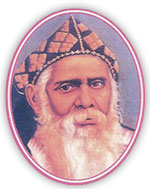
Most Rev. Titus II Mar Thoma (Mar Thoma XVI) Metropolitan
6 July, 1944: Titus Mar Thoma II passes away. He was born in 1866, consecrated as the bishop on 9 December 1898 and Metropolitan on 5 Nov.1909. He was called to eternal rest on 6th July 1944 and buried the following day at the Bishops’ cemetery in the SCS Compound, Tiruvalla. During his long tenure as the Metropolitan, he consecrated three bishops.
A large number of our church buildings were constructed during his time. Many organizations like Mar Thoma Theological Seminary, Mar Thoma Students Conference, Teachers-Students Fellowship, Mar Thoma Evangelistic Association (1888), Maramon Convention (1895), Mar Thoma Sunday School Samjam (1905), Mar Thoma Suvisesha Sevika Sanghom (1919), Mar Thoma Voluntary Evangelists’ Association (1924), Mar Thoma Yuvajana Sakhyam (1933), were started during his time.
in addition he also promoted education with the opening of: S.C. Seminary School, Tiruvalla (1902), Kozhencherry School (1904), Maramon School (1918, Kottayam Theological College (1923) Tiruvalla S.C. Training School (1925).
Titus II Metropolitan was also known to have taken the initiative to translate many of the prayer books into Malayalam.

15 May, 1857: Birth of Hymn writer Rev. T. Koshy (Aatmopakari Achen)
Kristeeya Keerththanangal
15 May, 1857: Birth of Rev. Thomas Koshy (Aatmopakari Achen), author of Hymn “Ennullil ennum vasichchiduvan”. Born as a member of the Mukkadavu family of Kallada, he became a priest in 1896. He was a gifted artist, hymn writer and publisher. He was a speaker of the Maramon Convention for many years.
Hymn Nos. 10(9), 37(35), 190(179), 216(201), 20(205), 221(206), 246(224), 297(283), 316(311), 344, and 352 in the Hymn Book Kristheeya Kerthanagal are written by him.
Read more in our Short Biographies: Rev. Thomas Koshy (Aatmopakari Achen) (Free PDF)

18 April, 1929: Sadhu Sunder Singh disappears
Sadhu Sundar Singh
18 April, 1929: Sadhu Sunder Singh (b.3 Sep 1889) disappears on his way to Tibet. The mystery of the disappearance of Sadhu Sunder Singh after leaving Sabathu-near Tibet on 18th April 1929 has never been solved. The route he was to have taken was one he had often traveled before. Reports of his disappearance appeared in newspapers all over the world.
No one knows what happened to him and how he died. By whatever means God took His servant home, He evidently did not intend it to be known. Sunder manifested into his life the verse written in Mark 8:35 which says, “For whoever wants to save his own life will lose it; but whoever loses his life for me and for the Gospel will save it.”
Read more in our Free PDF Ebook:
https://nalloorlibrary.com/wp-content/uploads/2013/05/sadhu-sunder-singh.pdf

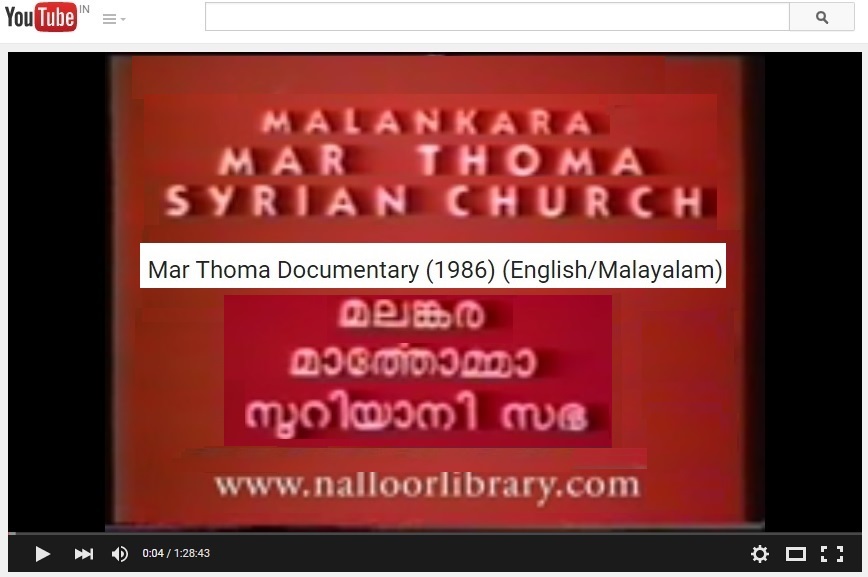
Rare 1986 Documentary on the Malankara Mar Thoma Syrian Church
A Must Watch Special Documentary with rare footage on the Malankara Mar Thoma Syrian Church – (English/Malayalam) produced in 1986. It offers a peek into the history, rich culture and heritage of the Mar Thoma Syrian Church.
A Malaysian presentation in conjunction with the 150th Anniversary of the REFORMATION in the Malankara Mar Thoma Syrian Church. (Please watch and share).
8 March 1835, Freedom for Kerala Slaves. (Munro Island – Travancore)

Slaves
Slavery was a social evil which prevailed all over the world including what is now the state of Kerala in India. According to the 1836 census there were 164,864 slaves in Travancore vis-à-vis a total civilian population of 12,80,668.
Slaves were treated like animals and the cost of one slave was that of an ox, cost of an ox was 5 (big para) measures of Paddy or Rs. 10/- only. Slaves were chained and sold like animals in markets.
Kottayam, Changanasserry, Thirunakkara, Alleppey, Kayamkulam, Kollam, Attingal, Chirayinkizh, Kaniyapuram, Pettah and Kovalam were the notorious slave trade markets of the time. Churches in Cochin were used as godowns for the slaves except for Sundays. Slaves were exported out of the kingdom. There was no one to speak on behalf of these unfortunate people.
With the arrival and the teachings of the CMS (Church Missionary Society) missionaries, people became aware of this social evil. In 1819, Munro Island was given to the missionaries, by the then Travancore Government along with the slaves residing there on the Island. Munro Island is located at the confluence of Ashtamudi Lake and the Kallada River, in Kollam district, Kerala, India.
In 1833, England passed the Slavery Abolition Law. CMS missionaries, Benjamin Bailey and Joseph Peet made a historic declaration on 8th March 1835, giving freedom to the slaves in Munro Island.
The declaration read as follows:
“We the undersigned, acting as trustees of Munro Island, do hereby declare that… who has hitherto been a slave of the soil, is from this time liberated by us and made a free man and that his wife and offspring are wholly and forever free and are regarded by us only as hired servants and that no one has any right to bring them into servitude again. At the same time we declare that we do not consider ourselves as released from any claim which he or his wife or offspring may have upon us according to custom, privilege or law in consequence of their having been slaves.”
8 March 5. Sd/- Benj Bailey Sd/- Josh Peet,
In 1847, Uthram Thirunal Marthanda Varma became the King of Travancore. The same year CMS missionaries submitted a memorandum to the King requesting him to stop the slavery in Travancore. In 1853, by royal declaration slavery was abolished in Travancore forever. In 1864, the Kingdom of Cochin also made a similar declaration abolishing slavery.
2 March, 1791: Founder of Methodism, John Wesley dies in London

“John Wesley,” by the English artist George Romney, oil on canvas. Courtesy of the National Portrait Gallery, London.
Founder of Methodism, John Wesley dies in London. Thanks to his organizational genius, we know exactly how many followers he had when he died: 71,668 British members, 294 preachers, 43,265 American members with 198 preachers and 19 missionaries. Today the Methodists number about 30 million worldwide.


 Nalloor Library