10 July, 1919: Noted Hymn writer P.V. Thommy Upadesi passes away

P. V. Thommy Upadesi (Photo from ww.facebook.com/pvthommy)

Tombstone of P. V. Thommy Upadesi (Photo from ww.facebook.com/pvthommy)
10 July, 1919: P.V. Thommy Upadeshi passes away. Thommy Upadeshi was born in a very poor family of the Kunnamkulam Mar Thoma Parish in 1881. After his basic education he became a teacher. But after few years of teaching he became a full time evangelist in the Mar Thoma Church.
Rev. C.M. Joseph, Vicar of the Kunnamkulam Parish encouraged him in his Gospel work. Titus II Metropolitan appointed him as evangelist in Trichur and Perumbavoor
He was a blessed Hymn writer. In 1905 he published a Hymn Book “Vishudha Geethangal” comprising of 136 hymns. His language is simple and even the illiterate persons can enjoy his hymns. The following hymns in the book Kristheeya Keerththanangal are written by him: 3 (3), 11(10), 12(11), 30(28), 56(56), 61(61), 67(67), 70(70), 71(71), 73(73), 96(96), 130(111), 35(126), 145(136), 243(221), 247(225), 286(286), 295(281), 345 (345), 351(351), 366(242), 368(251).
In 1919 there was an outbreak of Cholera in Kunnamkulam and many persons died. Thommy Upadesi volunteered to serve the cholera patients and was finally infected with cholera. He passed away on Wednesday 10 July 1919 at the age of 38.
Read more P. V. Thommy Upadesi – Malayalam Hymn Writer

6 July, 1944: Titus Mar Thoma II passes away
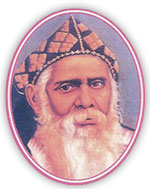
Most Rev. Titus II Mar Thoma (Mar Thoma XVI) Metropolitan
6 July, 1944: Titus Mar Thoma II passes away. He was born in 1866, consecrated as the bishop on 9 December 1898 and Metropolitan on 5 Nov.1909. He was called to eternal rest on 6th July 1944 and buried the following day at the Bishops’ cemetery in the SCS Compound, Tiruvalla. During his long tenure as the Metropolitan, he consecrated three bishops.
A large number of our church buildings were constructed during his time. Many organizations like Mar Thoma Theological Seminary, Mar Thoma Students Conference, Teachers-Students Fellowship, Mar Thoma Evangelistic Association (1888), Maramon Convention (1895), Mar Thoma Sunday School Samjam (1905), Mar Thoma Suvisesha Sevika Sanghom (1919), Mar Thoma Voluntary Evangelists’ Association (1924), Mar Thoma Yuvajana Sakhyam (1933), were started during his time.
in addition he also promoted education with the opening of: S.C. Seminary School, Tiruvalla (1902), Kozhencherry School (1904), Maramon School (1918, Kottayam Theological College (1923) Tiruvalla S.C. Training School (1925).
Titus II Metropolitan was also known to have taken the initiative to translate many of the prayer books into Malayalam.

A fearless Bishop who took on the Prime Minister despite the threat of jail
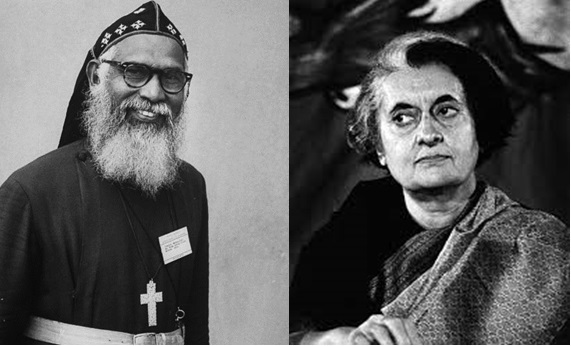
Metropolitan Juhanon Mar Thoma and Indira Gandhi, Prime Minster of India
On 25 June, 1975 – exactly 40 years ago, Prime Minister of India Indira Gandhi unilaterally had a state of emergency declared across the country. Officially issued by President Fakhruddin Ali Ahmed under Article 352(1) of the Constitution for “internal disturbance”, the Emergency was in effect from 25 June 1975 until its withdrawal on 21 March 1977 (21 months). `
So what did the Emergency imply? Essentially, at the stroke of the President’s pen India ceased being a democracy and was converted into a virtual autocracy. Civil liberties were suspended, media was censored, state and parliamentary elections were postponed, and anyone who wrote or spoke against the Government was put behind bars. In the 21 months of the Emergency, 100,000 people were arrested and detained without trial. ~ www.thelogicalindian.com
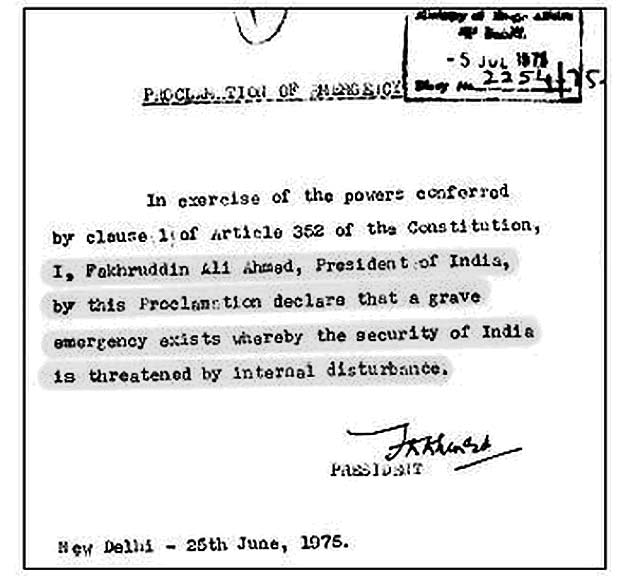
Emergency declared by President Fakhruddin Ali Ahmed under Article 352(1) of the Constitution.
Under the Emergency rule, it was not easy to raise voices of critical opposition, in making even a mild-toned protest, one did so at considerable risk. Many kept silent because of the fear which spread among the people. Despite these pressures, some of the Christian groups made courageous attempts to express critical voices. It is significant to recognise that those who made the critical protests were not the representatives of the large institutional churches; rather, they were members of relatively small groups or of a minority group within the institutional church.
Metropolitan Juhanon Mar Thoma was the only Church leader who wrote a letter to her disapproving it. The Metropolitan’s letter stated that he deemed the Emergency rule as a setback to democracy and demanded its speedy withdrawal as well as the release of the politicians arrested in this regard.
His earlier statement was drafted in Malayalam in the fall of 1975. Even though it was not an entirely critical protest, but raised in a modest way a critical question, it was refused publication in Kerala. Metropolitan has written a brief yet pointed letter to Prime Minister Gandhi stating clearly his concern for the political situation.
“A vast number of people, and that growing numbers, feel the price we have to pay is costly. With people like Morarji and others in jail, and a press which has lost its freedom to write news and views, we feel a kind of depression. On behalf of thousands, I request withdrawal of Emergency by gradual stages. Immediate and altogether withdrawal is likely to have very bad repercussions. If the political detenus are released and’ freedom for press is given, it will be a great relief.
“I have one more request: not to have elections and constitutional changes during the time of Emergency. Hoping to be excused for this letter written from a sincere and painful heart.” ~www.daga.org.hk
He wrote that he was writing as a Church leader and a citizen. Mrs Indira Gandhi gave orders to arrest Metropolitan Juhanon Mar Thoma. Mr. C. Achuthamenon was the Chief Minister at that time and with his interference the arrest was avoided. It was the Mar Thoma Church’s fight for independence and national integrity that echoed through Metropolitan Juhanon Mar Thoma, a fearless commitment to the concerns of the people that is hard to find among religious leaders now. On September 9, shortly after he wrote this letter, he fell ill and died on September 27, 1976.
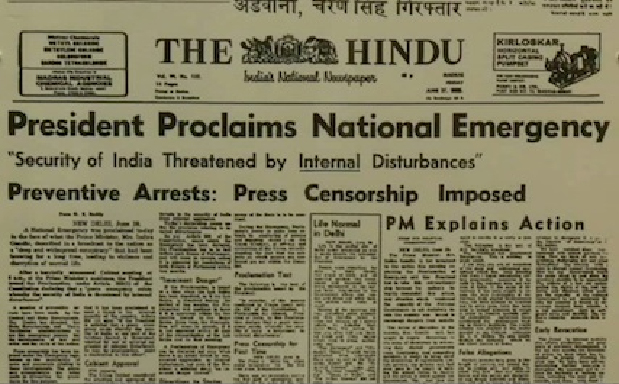
The Hindu front page after imposition of the Emergency.
The first edition of the Indian Express after the imposition of emergency consisted of a blank page instead of editorial. The Financial Express had Rabindranath Tagore’s poem, “Where the mind is without fear, and the head is held high”.
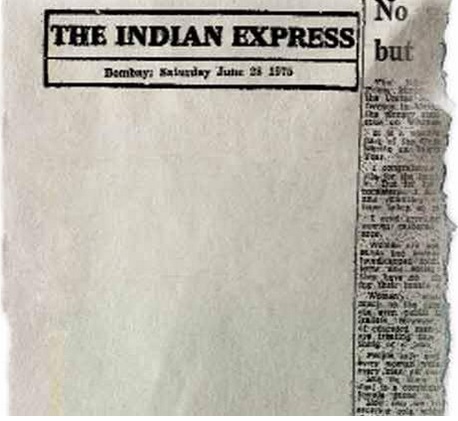
28 June 1975 : Blank Edit Page in The Indian Express Newspaper in Protest Against the Emergency
Where The Mind Is Without Fear
Where the mind is without fear and the head is held high
Where knowledge is free
Where the world has not been broken up into fragments
By narrow domestic walls
Where words come out from the depth of truth
Where tireless striving stretches its arms towards perfection
Where the clear stream of reason has not lost its way
Into the dreary desert sand of dead habit
Where the mind is led forward by thee
Into ever-widening thought and action
Into that heaven of freedom, my Father, let my country awake

Pages from History: 19 June 1986. Death of Mariamma Joseph – Co-founder of Hoskote Mission
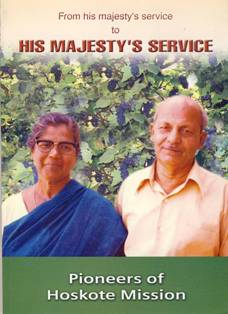
Mrs. Mariamma Joseph and Mr. M.T. Joseph (Co-founders of Hoskote Mission)
18 June 1986: Death of Mrs. Mariamma (Pennamma) Joseph (b.31 March 1917), Co-founder of the Hoskote Mission, Bangalore District, Karnataka, India. Mariamma was the daughter of Mammen Mammen and Mariamma of Manalukalayil, Kumbanad. She did her Teacher’s Training Course (TTC) from Peringara School near Tiruvalla, after which she taught in many schools including Arrangatu School, Pullad, Perumbara (Kuriannoor) School near Charal Mount; Kanjeettukara and Nedumprayar (Maramon).
She was trained by the CMS Missionary, Miss Kellaway (Australia) of Vanitha Mandiram, Tiruvalla. Pennamma was greatly influenced through her life and testimony of this missionary. She had an earnest desire to go for mission work in Karnataka but her parents did not allow it (according to the then prevalent customs/ norms, Syrian Christian parents were not willing to send their unmarried daughters to unknown ‘foreign’ lands) until her marriage.
However, her marriage with Mr. M.T. Joseph, (Manon House, Maramon) was a definite fulfillment of God’s call at the Maramon Convention (1947). who had a similar call and vision to Karnataka. In obedience to this heavenly call, she resigned her Government teacher’s job, that had a permanent income, to an uncertain and unknown future. This journey led to the humble beginnings of the Hoskote Mission. She was called home on 18 June 1986 and buried in the Mission Cemetery in Ghonakhanahally, 7 km away from the Hoskote mission field.
Mariamma has finished her race and now she is with the Lord. The harvest is plenty, but the workers are few. We need more and more persons like Mariamma to work for the Lord. Millions of villagers are there who have never heard about our Saviour even once in their lives. Who will go???
To read a more detailed biography of Mr. & Mrs. M.T.Joseph Please click.

We are Two! Thank you for your support!

We are blessed to have your continued support and thank each and every one as we complete two years. Our website has nearly 50,000 hits from almost every corner of the world. It began with a dream and today your feedback and prayers have encouraged us to make more resources available.
People have written to us from far and near, how our resources are being used in Parish Bulletins, Sunday School books, VBS, Summer camps, sermons, prayer groups and much more. Do continue to keep us in your prayers.
“Praise the Lord! Oh give thanks to the Lord, for he is good, for his steadfast love endures forever!” Psalm 106:1

16 May, 1998: Death of Rev. C. G. George
16 May, 1998: Death of Rev. C. G. George, Chiramannil, Kottayam (b.3 Jun 1921). After his education from Ajmeer Board, Patna University and Yavatmal Theological Seminary,he started his career as a teacher. He joined the Palakkad Ashram and participated in the Nepal Mission (1952) work. He became priest in 1956 and worked in Kathmandu from 1956 to 1972. He has translated the Gospels of Mark and John into Nepali.

15 May, 1857: Birth of Hymn writer Rev. T. Koshy (Aatmopakari Achen)
Kristeeya Keerththanangal
15 May, 1857: Birth of Rev. Thomas Koshy (Aatmopakari Achen), author of Hymn “Ennullil ennum vasichchiduvan”. Born as a member of the Mukkadavu family of Kallada, he became a priest in 1896. He was a gifted artist, hymn writer and publisher. He was a speaker of the Maramon Convention for many years.
Hymn Nos. 10(9), 37(35), 190(179), 216(201), 20(205), 221(206), 246(224), 297(283), 316(311), 344, and 352 in the Hymn Book Kristheeya Kerthanagal are written by him.
Read more in our Short Biographies: Rev. Thomas Koshy (Aatmopakari Achen) (Free PDF)

18 April, 1929: Sadhu Sunder Singh disappears
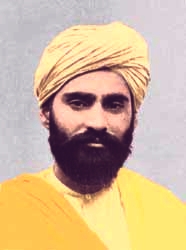
Sadhu Sundar Singh
18 April, 1929: Sadhu Sunder Singh (b.3 Sep 1889) disappears on his way to Tibet. The mystery of the disappearance of Sadhu Sunder Singh after leaving Sabathu-near Tibet on 18th April 1929 has never been solved. The route he was to have taken was one he had often traveled before. Reports of his disappearance appeared in newspapers all over the world.
No one knows what happened to him and how he died. By whatever means God took His servant home, He evidently did not intend it to be known. Sunder manifested into his life the verse written in Mark 8:35 which says, “For whoever wants to save his own life will lose it; but whoever loses his life for me and for the Gospel will save it.”
Read more in our Free PDF Ebook:
https://nalloorlibrary.com/wp-content/uploads/2013/05/sadhu-sunder-singh.pdf

1799 – Formation of the Church Missionary Society
12 April, 1799: Formation of the Church Missionary Society. Founded in 1799, CMS has attracted more than nine thousand men and women to serve as mission partners during its 200-year history.
The Society was founded in Aldersgate Street in the City of London on 12 April 1799. The founders of CMS were committed to three great enterprises: abolition of the slave trade, social reform at home and world evangelisation.
“The contribution made by the society in creating and maintaining educational institutions in Kerala, the most literate state in India, is significant. Many colleges and schools in Kerala and Tamil Nadu still have CMS in their names. The CMS College in Kottayam may be one of the pioneers in popularising secondary education in southern India.”
“Benjamin Bailey was appointed to the Kottayam CMS mission in the Indian state of Kerala. Benjamin Bailey translated the complete Bible to Malayalam language. Also Authored the first printed Malayalam-English dictionary and the first Malayalam-English Dictionary. He is considered as the father of Malayalam Printing.”
Today there are about 150 mission partners in 26 countries in Africa, Asia, Europe and the Middle East. A budget of £7.02 million a year is needed to maintain and expand this work.
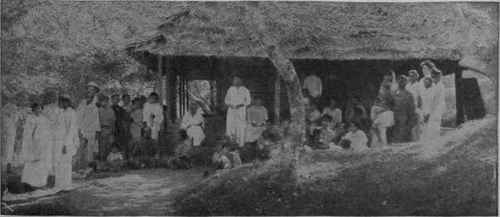
A daily scene at Thiruvananthapuram (Trivandrum, Kerala, India). Patients waiting outside the CMS dispensary. (Photo Credit: chestofbooks.com)

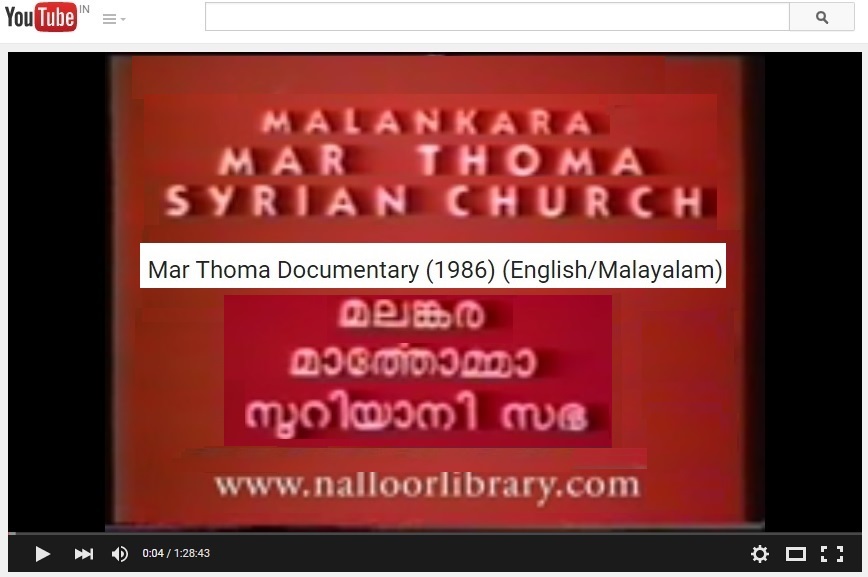
Rare 1986 Documentary on the Malankara Mar Thoma Syrian Church
A Must Watch Special Documentary with rare footage on the Malankara Mar Thoma Syrian Church – (English/Malayalam) produced in 1986. It offers a peek into the history, rich culture and heritage of the Mar Thoma Syrian Church.
A Malaysian presentation in conjunction with the 150th Anniversary of the REFORMATION in the Malankara Mar Thoma Syrian Church. (Please watch and share).