We are Two! Thank you for your support!

We are blessed to have your continued support and thank each and every one as we complete two years. Our website has nearly 50,000 hits from almost every corner of the world. It began with a dream and today your feedback and prayers have encouraged us to make more resources available.
People have written to us from far and near, how our resources are being used in Parish Bulletins, Sunday School books, VBS, Summer camps, sermons, prayer groups and much more. Do continue to keep us in your prayers.
“Praise the Lord! Oh give thanks to the Lord, for he is good, for his steadfast love endures forever!” Psalm 106:1

15 May, 1857: Birth of Hymn writer Rev. T. Koshy (Aatmopakari Achen)
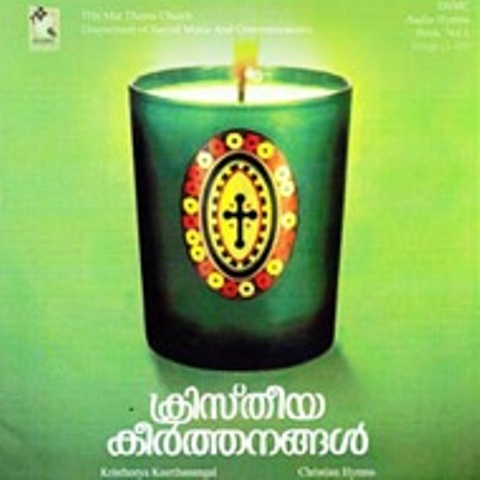
Kristeeya Keerththanangal
15 May, 1857: Birth of Rev. Thomas Koshy (Aatmopakari Achen), author of Hymn “Ennullil ennum vasichchiduvan”. Born as a member of the Mukkadavu family of Kallada, he became a priest in 1896. He was a gifted artist, hymn writer and publisher. He was a speaker of the Maramon Convention for many years.
Hymn Nos. 10(9), 37(35), 190(179), 216(201), 20(205), 221(206), 246(224), 297(283), 316(311), 344, and 352 in the Hymn Book Kristheeya Kerthanagal are written by him.
Read more in our Short Biographies: Rev. Thomas Koshy (Aatmopakari Achen) (Free PDF)

18 April, 1929: Sadhu Sunder Singh disappears
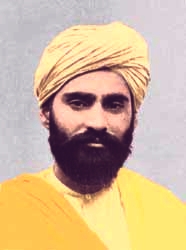
Sadhu Sundar Singh
18 April, 1929: Sadhu Sunder Singh (b.3 Sep 1889) disappears on his way to Tibet. The mystery of the disappearance of Sadhu Sunder Singh after leaving Sabathu-near Tibet on 18th April 1929 has never been solved. The route he was to have taken was one he had often traveled before. Reports of his disappearance appeared in newspapers all over the world.
No one knows what happened to him and how he died. By whatever means God took His servant home, He evidently did not intend it to be known. Sunder manifested into his life the verse written in Mark 8:35 which says, “For whoever wants to save his own life will lose it; but whoever loses his life for me and for the Gospel will save it.”
Read more in our Free PDF Ebook:
https://nalloorlibrary.com/wp-content/uploads/2013/05/sadhu-sunder-singh.pdf

1799 – Formation of the Church Missionary Society
12 April, 1799: Formation of the Church Missionary Society. Founded in 1799, CMS has attracted more than nine thousand men and women to serve as mission partners during its 200-year history.
The Society was founded in Aldersgate Street in the City of London on 12 April 1799. The founders of CMS were committed to three great enterprises: abolition of the slave trade, social reform at home and world evangelisation.
“The contribution made by the society in creating and maintaining educational institutions in Kerala, the most literate state in India, is significant. Many colleges and schools in Kerala and Tamil Nadu still have CMS in their names. The CMS College in Kottayam may be one of the pioneers in popularising secondary education in southern India.”
“Benjamin Bailey was appointed to the Kottayam CMS mission in the Indian state of Kerala. Benjamin Bailey translated the complete Bible to Malayalam language. Also Authored the first printed Malayalam-English dictionary and the first Malayalam-English Dictionary. He is considered as the father of Malayalam Printing.”
Today there are about 150 mission partners in 26 countries in Africa, Asia, Europe and the Middle East. A budget of £7.02 million a year is needed to maintain and expand this work.
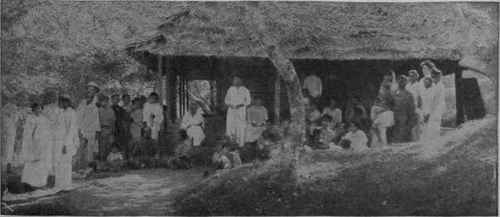
A daily scene at Thiruvananthapuram (Trivandrum, Kerala, India). Patients waiting outside the CMS dispensary. (Photo Credit: chestofbooks.com)


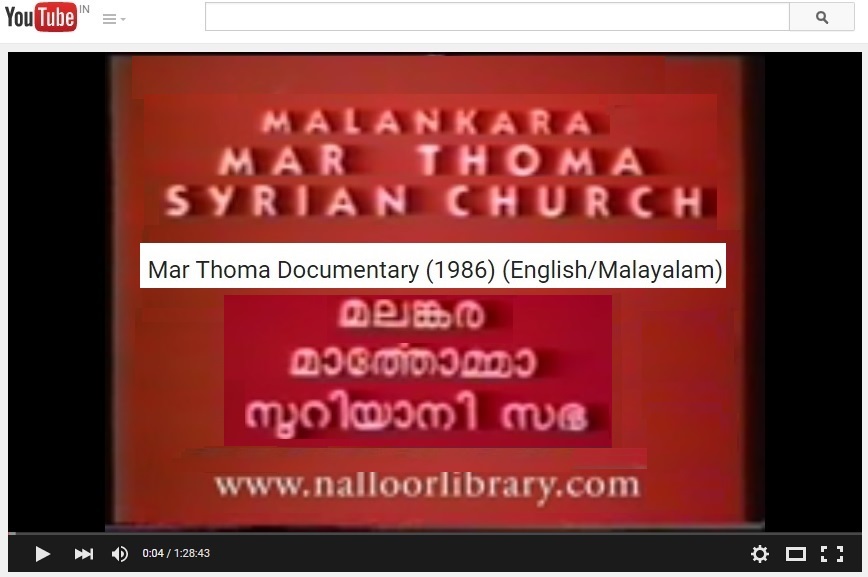
Rare 1986 Documentary on the Malankara Mar Thoma Syrian Church
A Must Watch Special Documentary with rare footage on the Malankara Mar Thoma Syrian Church – (English/Malayalam) produced in 1986. It offers a peek into the history, rich culture and heritage of the Mar Thoma Syrian Church.
A Malaysian presentation in conjunction with the 150th Anniversary of the REFORMATION in the Malankara Mar Thoma Syrian Church. (Please watch and share).
“Sthuthippin sthuthippin Yesudevane” – Unchanged final hymn from the first Maramon Convention in 1895
The Hymn “Sthuthippin sthuthippin Yesudevane, Halleluiyah paadi sthuthippeen sthuthippen yesudevane” written by Rev. Yusthus Joseph (Vidhuwan Kutty Achen) (1835-1887) is sung by the complete congregation at the close of the final meeting of each year’s convention. This may be a world record for the same hymn being sung every year at the same time since the year 1895.
Rev. Yusthus Joseph (Vidhuwan Kutty Achen) (1835-1887) has written 26 out of the total 427 hymns in the Kristeeya Keerthanangal (hymn book used by the Mar Thoma Syrian Church).
Kristeeya Keerthanangal
According to the Late Metropolitan Most. Rev. Dr. Juhanon Mar Thoma, Vidhuwan Kutty Achen had a vital role in the Revival movement of the Mar Thoma Church “The spiritual revival started by an unknown preacher Mathai Upadesi and carried on by Rev. Yusthus Joseph (Vidhuwan Kutty), a famous scholar and musician and a Brahmin convert, had its influence throughout Central Travancore. – “Christianity in India and a brief history of the Mar Thoma Syrian Church” by Most. Rev. Juhanon Mar Thoma.
Read more about Rev. Yusthus Joseph (Vidhuwan Kutty Achen) in our free pdf ebook.
https://nalloorlibrary.com/wp-content/uploads/2013/06/ebook-vidhuwan-kutty-achen.pdf
The original composition by in Carnatic music style is still performed by classical singers.

Watch the Maramon Convention 2015 Videos and Photos
Watch the VIDEO proceedings of the Maramon Convention from here
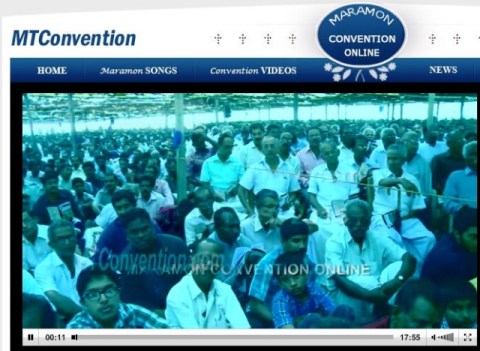
Screenshot of http://www.m.mtconvention.com/website
http://www.m.mtconvention.com/
You can also see PHOTOS from the 120th Convention here arranged day by day
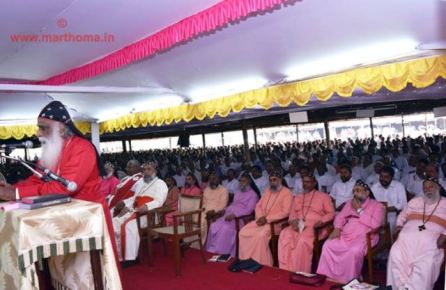
Opening day at the Maramon Convention – Photo Courtesy http://marthoma.in/maramon-convention
http://marthoma.in/maramon-convention
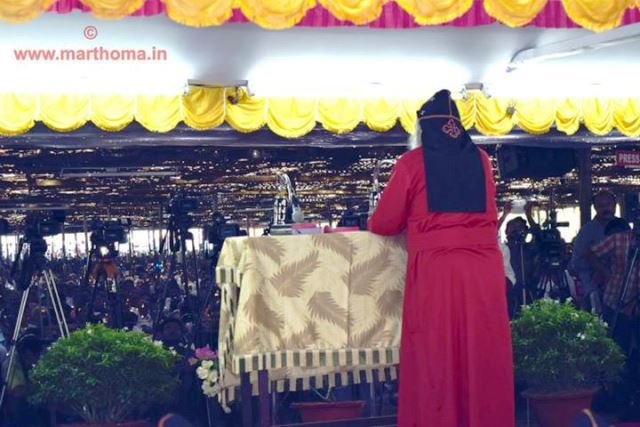
Opening day of the 120th Maramon Convention. Photo courtesy http://marthoma.in/maramon-convention
1905: When the Maramon Convention Sermons were printed overnight!
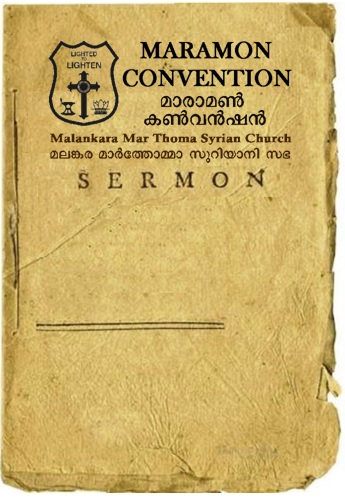
At present, Maramon Convention messages (full text) are printed and sold on the next day morning from counters for the convention attendees. This enables people to take home the sermons of the previous day and read them again and share the sermons with people who were not able to attend the convention. These printed sermons are also shared in cottage prayer fellowships, parish prayer groups and for personal prayer and meditation.
However, few people know that this practice started in 1905. There were no microphones and speakers. The convention messages were repeated in relay by three persons – at times four or more – standing in different places of the pandal to make it audible to the thousands of people who attended. This relay process took a long time and was tedious for the audiences. The printing of messages in 1905 became a real blessing for all and continues to be so today. Today, God has blessed the Church members with technology which enables them to watch the Convention live through web streaming and receive updates on emails and websites.

Rev. Thomas Walker – Church Missionary Society
Given below is the report about this, from the Thomas Walker’s biography.
“1905 Wednesday, February 22. I awoke feeling very weary, for the heat was extraordinarily oppressive, and seemed to take all the life out of one. The Syrian brethren made one very good
arrangement this year. Each day’s addresses wore printed by night at their printing press at Tiruwella, eight miles away, and were on sale the next day in a booth near the pandal. Thus
the printed pages supplemented the speaker’s voice, and carried the message far and wide.”

1936: Loud Speaker and Microphone introduced at Maramon Convention (Rare Photos & Audio MP3)
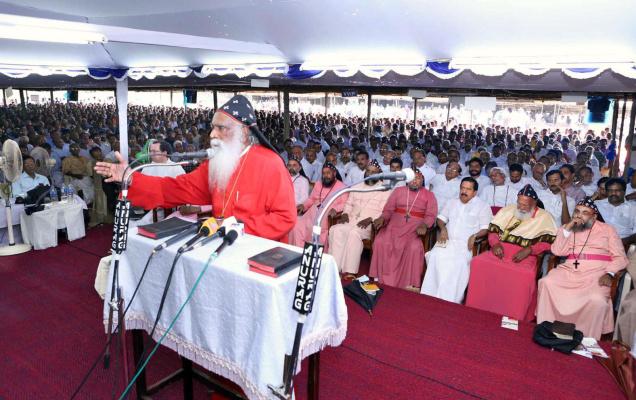
Joseph Mar Thoma Metropolitan speaking at the 118th Maramon Convention (2013). Photo by The Hindu
Though the first convention began in 1895, the sermons were delivered to the tens of thousands of church members who attended in a very unique manner. Until 1936, messages of the main speaker were repeated in relay by designated people standing in between the participants of the convention. It was a time consuming process for the message from the front to pass through thousands of participants to reach the back of the audience. In 1936, a loud speaker and mike (microphone) set was brought to Maramon from USA by the famous missionary Rev. Dr. E. Stanley Jones. It was donated by one of the Christian Churches in USA. He was a well wisher of the Mar Thoma Church and encouraged the missionary zeal of the Church.
Read more and see more rare photos at 1921 -1970: World renowned missionary Dr. E. Stanley Jones at Maramon Convention ( See Rare Photos) Hear a sermon by Dr. E. Stanley Jones – Click Here (The sermon is 26 min. — or download the mp3 (11.8 MB).)  The sermon title is, “The Gift of the Holy Spirit: The Birthright of All Christians.” The sermon was preached at a U.S. Ashram in August 1960. (This sermon is included in the 2008 book, Living Upon the Way: Selected Sermons of E. Stanley Jones on Self-Surrender and Conversion.) This audio clip is from www.methodistthinker.com
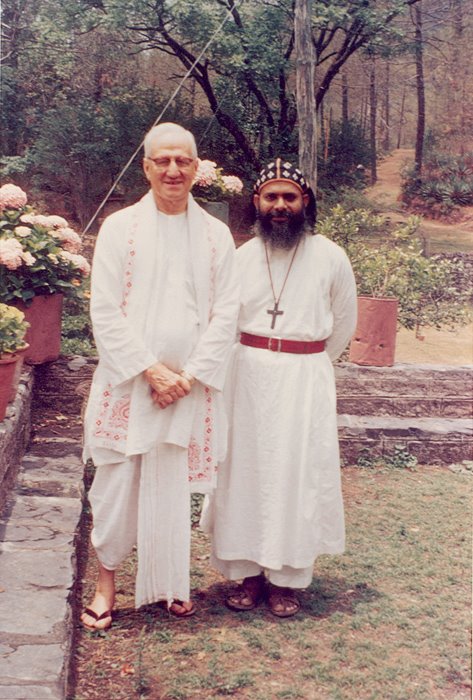
E. Stanley Jones with Mar Thoma Bishop Alexander Mar Theophilus (later became Metropolitan Alexander Mar Thoma)
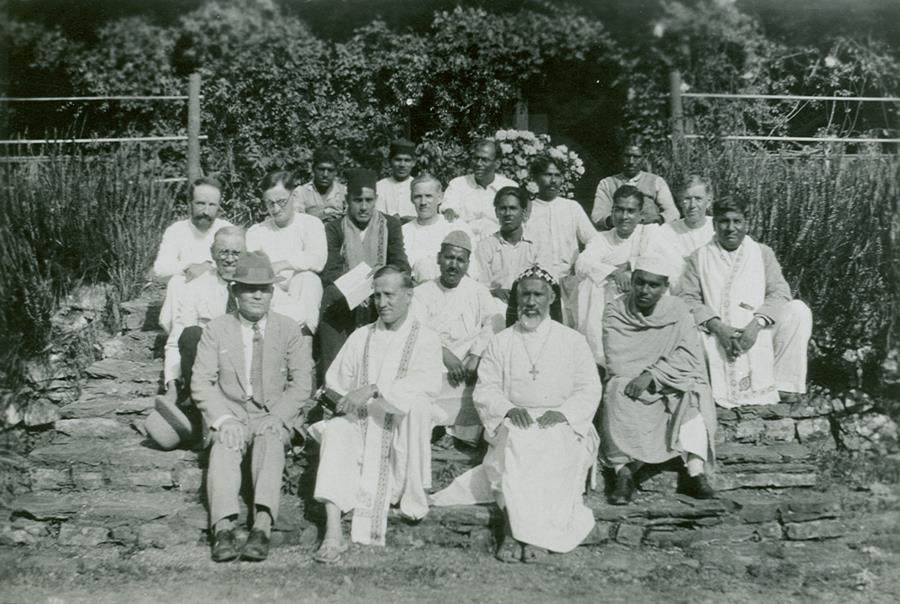
Bishop Juhanon Mar Thoma Metropolitan, E. Stanley Jones, Dr. Murray T. Titus and Ashram members at Sat Tal Ashram, India. (Photo from Dr. E. Stanley Jones FB page)
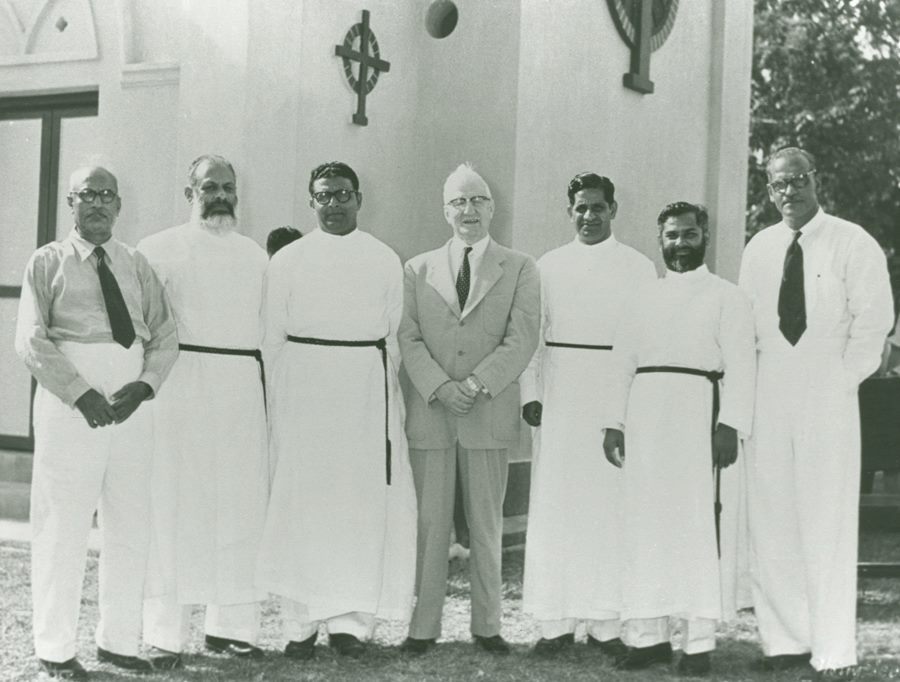
C. John Thomas, Rev. T. N. Koshy, P. C. John, Dr. E. Stanley Jones, Rev. V. E. Thomas, Rev. P. K. Koshy, and Mr. V. E. Chacko at St. Thomas Church, Klang Malaysia (1956)
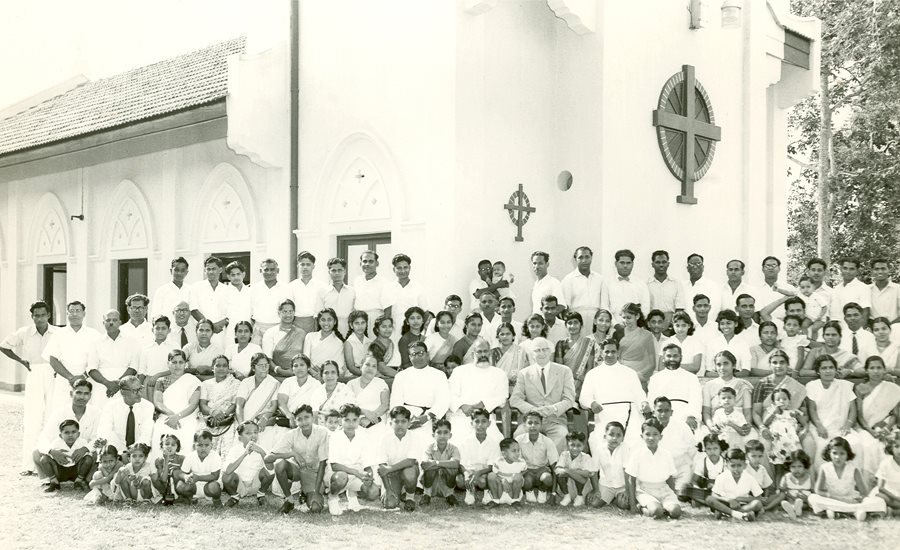
Dr. E. Stanley Jones with members of the St. Thomas Church, Klang, Malaysia 1956

Ban of Tobacco and Paan at the Maramon Convention

The use of tobacco and paan was a way of life in Kerala during the first half of the 20th Century. It was an essential item at social events such as marriages and other family gatherings. Tobacco and paan was easily available through shops all over Kerala. It was a common sight to have people attend the Maramon Convention meetings with beedi and murukkan in their pockets.
Through his messages, Dr. Stanley Jones urged people to refrain from the use of tobacco products. During one meeting, he asked the convention participants to bury their tobacco (which they were carrying) in the sand on the Pandal floor. In another meeting, he collected all the tobacco products from the people and burnt it near the Pandal in front of everyone. It is only after much persuasion that the people stop using it and today it is not permitted at the Maramon Convention pandal.
Read more about Dr. E. Stanley Jones at the Maramon Convention with rare photos



 Nalloor Library