1921 -1970: World renowned missionary Dr. E. Stanley Jones at Maramon Convention ( See Rare Photos)
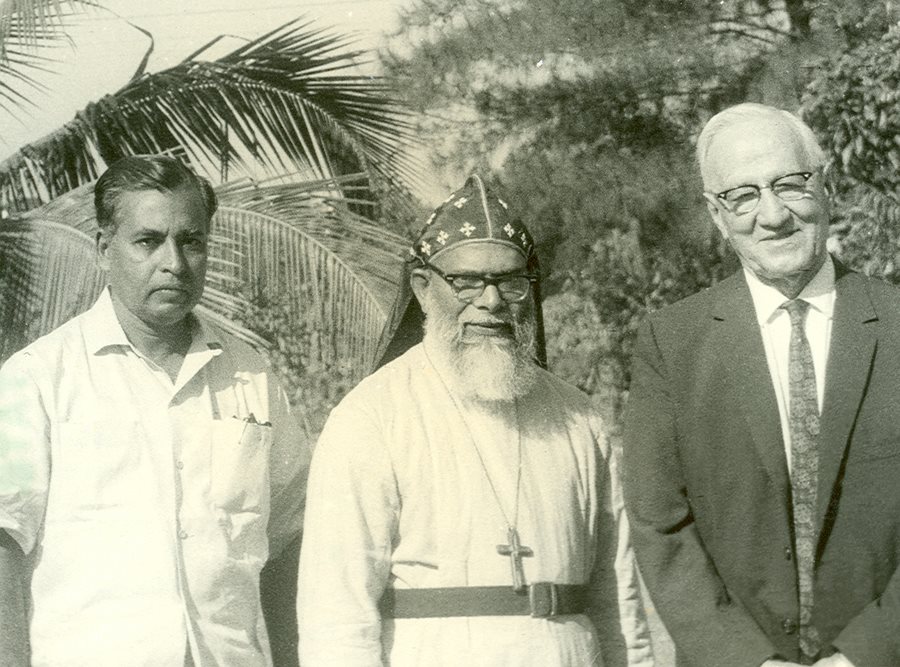
E.Stanley Jones (right) with Alexander Mar Thoma Metropolitan (middle) with an unidentified friend at Sat Tal Ashram, India. (Photos from E. Stanley Jones FB page)
Dr. Eli Stanley Jones was born in Baltimore, Maryland, USA on 3rd Jan 1884. He was a faculty at Asbury College, Kentucky, USA when he was called to missionary service in India in 1907 under the Board of Missions of the Methodist Episcopal Church.
He was one of the main speakers of the Maramon Convention from 1921-1970. His messages combined evangelistic challenges with social concerns.
“For more than half a century Dr E Stanley Jones proclaimed the Gospel of Christ and applied it to people’s personal, social, national, and international problems. He moved among statesmen and among leaders without portfolios as counselor, friend and worker for peace and goodwill.
Dr Jones became a friend of Mahatma Gandhi and wrote an appreciative biography of Gandhi.In 1950 Dr Jones provided funds for India’s first Christian psychiatric center, and clinic currently known as Nur Manzil Psychiatric Center and Medical Unit at Lucknow, Uttar Pradesh, India.
~ http://www.facebook.com/SattalAshram”
In 1946, with the help of friends in USA, he donated the first loud speaker setup to the Maramon Convention. He is also the founder of the Sat Tal Christian Ashram movement, Nainital, Uttarakhand,. He died January 25, 1973 in his beloved India.
In the 1920s, India began to develop greater appreciation for its own history and culture and greater pride in its own unique contributions to world civilization. Stanley Jones was one of the very first to realize the possibilities that this change in India’s intellectual and spiritual culture created for Christianity and especially for Western Christian missionaries. But he could not fully understand the astounding scope and depth of the possibilities without experiencing the history and culture of his adopted country for himself. So, what better way to immerse himself in the ethos of India than to visit Indian ashrams?
This is exactly what he did. In 1923 he spent two months at Santiniketan, the ashram of the world-famous poet, Rabindranath Tagore. Three years later in 1926 he visited Gandhi’s ashram at Sabarmati.
It is no exaggeration to say that Jones’ visits to these ashrams changed the course of his life. In fact, in 1930, he established his own ashram as a spiritual retreat for Christians modeled on his experience with Ashrams in India. But this was only the first of hundreds of Christian ashrams that would eventually be established throughout the world. These ashrams are truly the work of the Holy Spirit as they continue to inspire, refresh, and renew thousands of Christians in many nations today.
~ From “Ordinary Man, Extraordinary Mission: The Life and Work fo E. Stanley Jones” by Stephen A. Graham
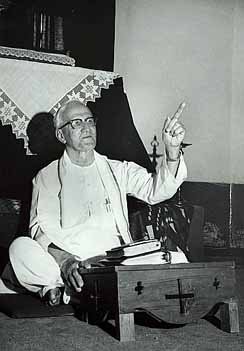
Rev. E. Stanley Jones giving one of his sermons at Sat Tal Ashram, India. (Photo from E. Stanley Jones FB Page)

Bishop T. S. Joseph speaking at the Maramon Convention while Bishop Alexander Mar Theophilus (Metropolitan Alexander Mar Thoma), E. Stanley Jones and Mr. Ramenpillar listen. (Photo from E. Stanley Jones FB page)
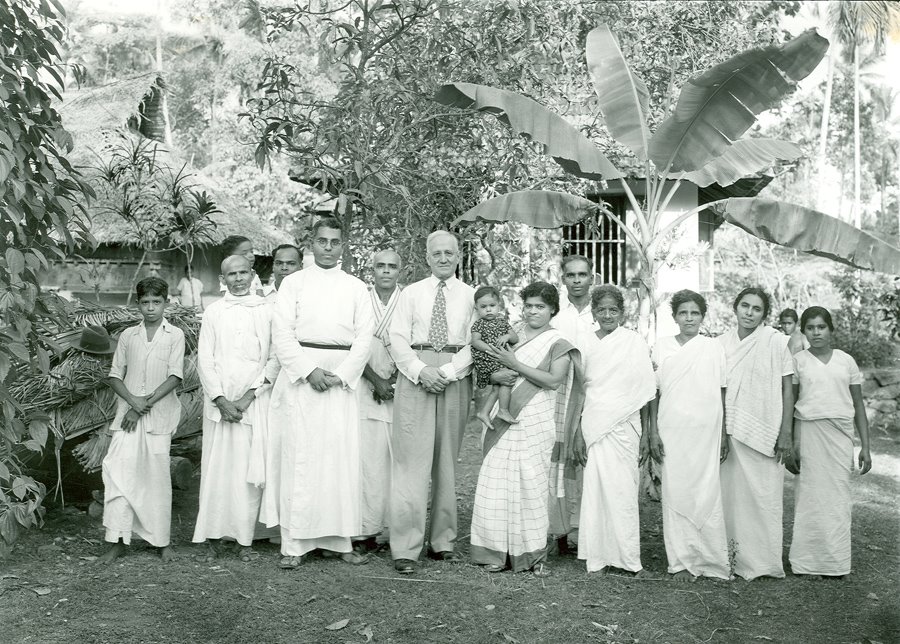
Rev. Stanley Jones with Mar Thoma Church members in Kerala, India. (Photo from E. Stanley Jones FB page)
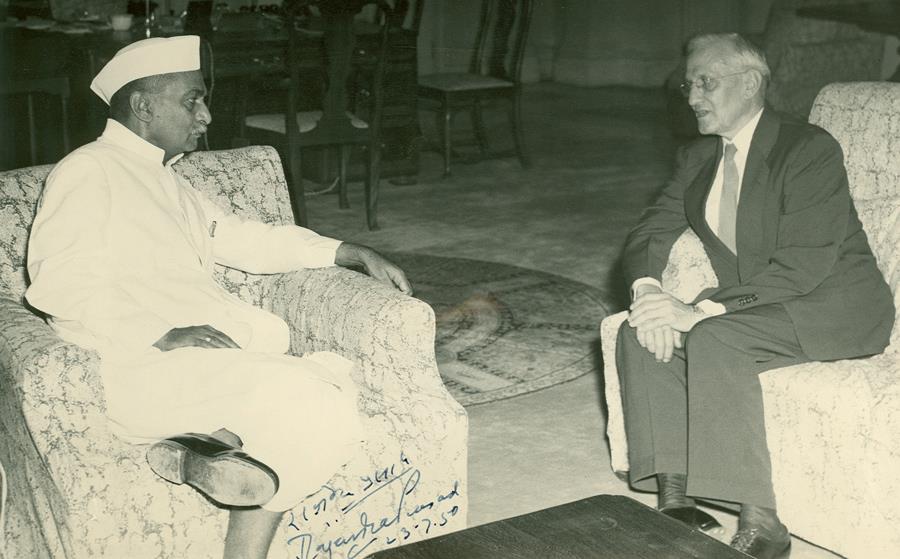
Dr. Stanley Jones with Dr. Rajendra Prasad, first President of India 1950 (Photo from E. Stanley Jones FB page)
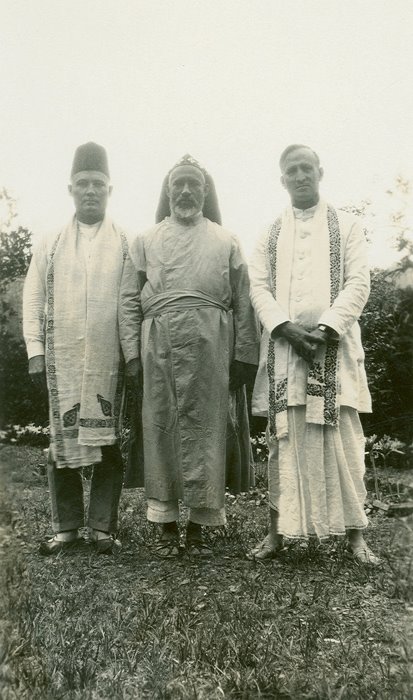
E. Stanley Jones (right) at the Maramon Convention with Bishop Abraham Mar Thoma Metropolitan (middle) and an unidentified friend. (Photo from E. Stanley Jones FB page)

1940: Land Tax for the Maramon Convention Plot and Government Help
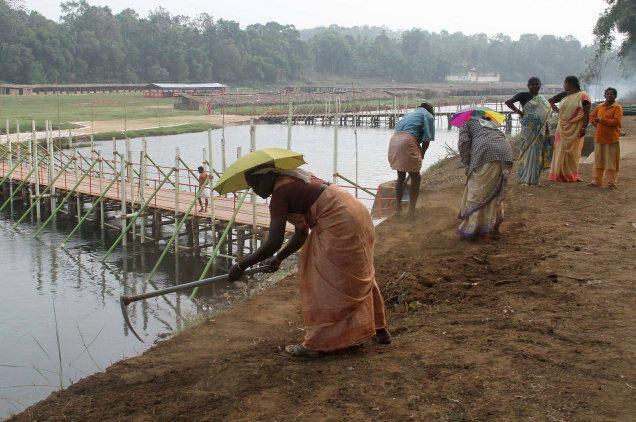
Maramon Convention preparations taking place. (Photo by Leju Kamal, The Hindu)
The Kerala government authorities were always helpful in the organizing and running of the Maramon Convention. in 1940, with the help of C. K. Mathen Peshkar, (District Collector), the river bank (venue of the convention) was registered in the name of the Mar Thoma Syrian Church and a yearly tax of Rs.100/- is being paid every year as registration renewal fee.
Every year, several governmental organizations namely – the Kerala Water Authority, Kerala State Electricity Board, Water Resources Department, Public Works Department, Police, Fire and Rescue Force, Health Department and the Kerala State Road Transport Corporation (KSRTC) work with the Church to make sure the Maramon Convention runs smoothly. Special KSRTC buses are also arranged to Maramon bus stand from depots in the district during the convention period. The security and organizational logistics in place for the lakhs of people attending the convention is made possible by the help of these governmental organizations and thousands of volunteers from the various parishes of the Church.

9 March 1936: C. V. Kunjiraman (SNDP) speaks at Maramon Convention
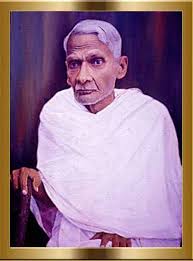
C.V. Kunhiraman, (Potrait at Sahitya Akademi Thrissur – Photo by Nandakumar Thottathil)
Most of the times Maramon Convention speakers are Christian leaders. At times, even Non-Christian leaders are invited to speak occasionally to express their views. On 9th March 1936, Mr. C. V. Kunjiraman (C.V. Kunhiraman), one of the prominent Ezhava leaders and General Secretary of the SNDP Yogam was given the privilege to speak at the convention. He was a social reformer and author of many books. This was an example of the religious harmony that existed in Kerala.

1895: The First Maramon Convention and preparations undertaken
The first Maramon Convention was called ‘Pentecost Convention’ as the leaders and participants waited and prayed for the Holy Spirit’s presence to be present throughout the proceedings of the convention just like in the Book of Acts. It was conducted for 10 days from 9th March to 18th March.
In a circular issued to all the Church parishes, Titus I Mar Thoma Metropolitan entrusted the complete responsibility of conducting the Maramon Convention to the Evangelistic Association.
Palakunnathu Madathil Koshykunju (Titus I Metropolitan’s elder brother) volunteered to take charge of the Pandal construction with the help of parishes in and around Maramon, Kozhencherry and Edayaranmula. Members of these surrounding parishes donated the thatched roof made from the coconut leaves and came out in large numbers to help set up the pandal (tent).
According to news reports an estimated 2 lakh people visit the convention daily. The convention takes place on the river bed under a sprawling temporary shed, made of coconut leaves, which will seat about 100,000 people.

Parishioners help in setting up the roof of the Maramon convention Pandal using thatched coconut leaves. (Photo by Sachin Jose)

The Maramon Pandal (Photo by Soby George – 2010)

Temporary bridges built for people to cross the shallow waters of the River Pamba.

BALANCING ACT: Construction of a temporary footbridge linking the convention venue and the western bank of river Pampa progressing at Maramon near Kozhencherry. Photo: Leju Kamal – The Hindu

Maramon Convention 2010. Photo: Sajeesh P Sankaran, Malyalalam Manorama

1898 -1912: Rev. Thomas Walker inspires Mar Thoma Missionary projects

Rev. Thomas Walker – Church Missionary Society
Rev. Thomas Walker was one of the main speakers at the Maramon Convention from 1898 to 1912. He was a Church Missionary Society (CMS) missionary from Tirunelveli. He emphasized the importance on studying the Word of God (Bible) and to promote the missionary work of the Mar Thoma Syrian Church. His inputs were instrumental in inspiring and the beginning of many Mar Thoma Missionary projects across India.

Maramon Convention 1925: The price of meals
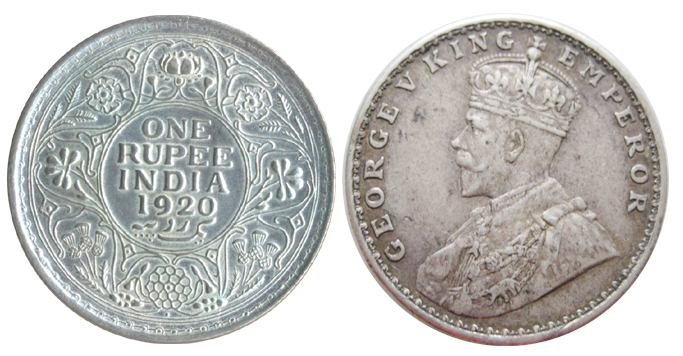
One British Rupee 1920
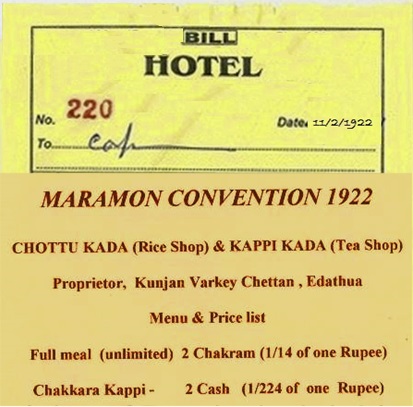
Fourteen meals for One rupee. During the early years of the Convention, restaurants and hotels were not in existence. Kappi Kadas (coffee/tea shops) and Chottu Kadas (rice shops) were the only available eateries at the Manalpuram (river bed) venue of the convention. One of the famous chottu kada’s was managed by Kunjan Varkey Chetten from Edathua. He would serve 14 full meals for just one rupee and 228 full glasses of black coffee (Chakkara Kappi) also for Rs.1 in the early 1920’s.
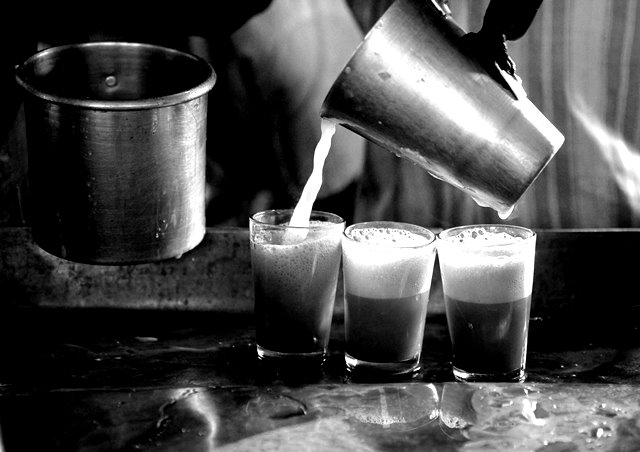
Chai shop
(www.chaiwallahsofindia.com)

February, 1917: Sadhu Sunder Singh preaches at Maramon Convention
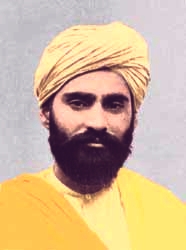
Sadhu Sundar Singh
Sadhu Sunder Singh (3 September 1889-1929) the renowned Indian Christian missionary was one of the speakers of the Maramon Convention in 1918. He spoke in Hindi and the translation was done by Mr. M. O. Oommen, Chief Conservator of Travancore.
Sadhu Sunder Singh drew crowds greater than any previous conventions, so much so that before the end of the week the pandal (covered area) had to be enlarged. It is estimated at the final meeting about 32,000 people gathered to hear his message.




 Nalloor Library
