1905: Women Speakers lead the way at Maramon Convention
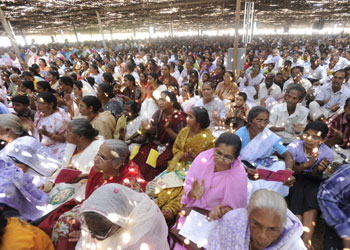
Women listening to the sermon at Maramon Convention. (Image courtesy www.manoramaonline.com)
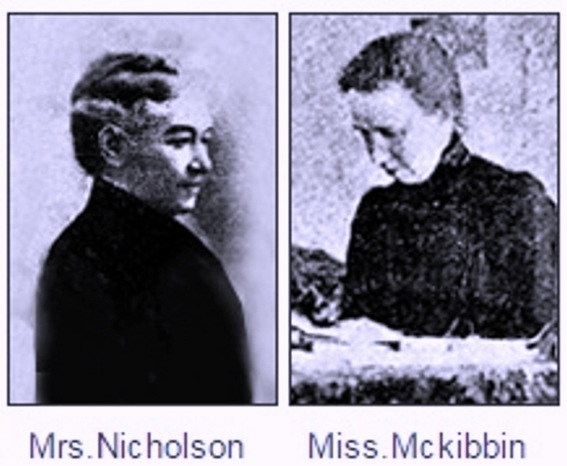
Right from its initial years, many women speakers have made a great impact on the Maramon Convention. Mrs. F.S. Nicholson and Miss. S.C. McKibbin conducted special meetings and Bible classes for women during the convention in 1905. They are remembered for their devoted service to the women of Travancore particularly in the education field. They established the prestigious Nicholson Syrian Girls Higher Secondary School and Training Home in 1910 at Kattode, Tiruvalla, Kerala.
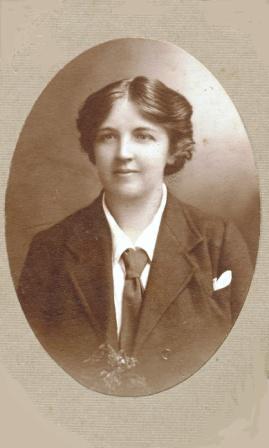
Ms. Gwen Kellaway, Vanitha Mandiram
Other eminent speakers included Miss Amy Carmichael, founder of the Dohnavur Mission, Tamil Nadu, Miss Kellaway of Vanitha Mandiram, and Miss Grower to name a few missionaries who encouraged women towards the Lord’s work through Bible classes during the early days of the Convention.
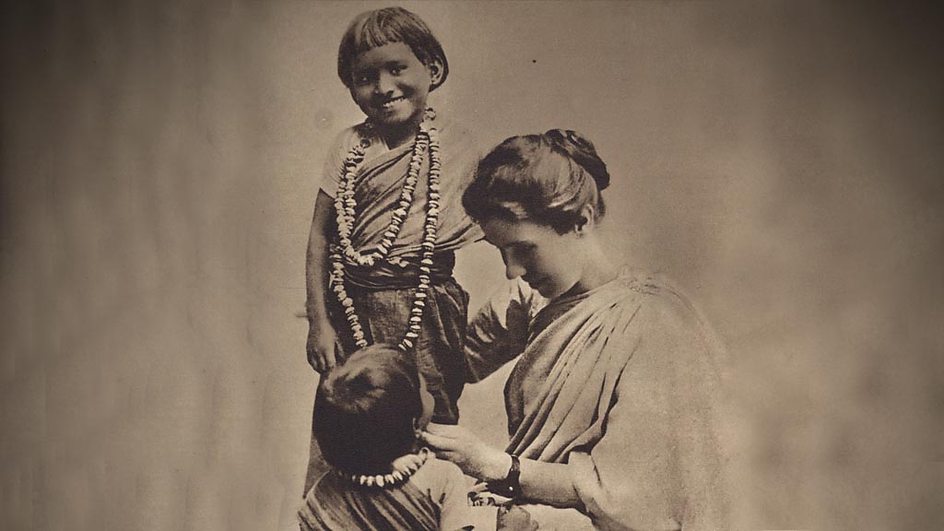
Amy Carmichael with the children of Dohnavur Mission, Tamil Nadu

Ban of Tobacco and Paan at the Maramon Convention
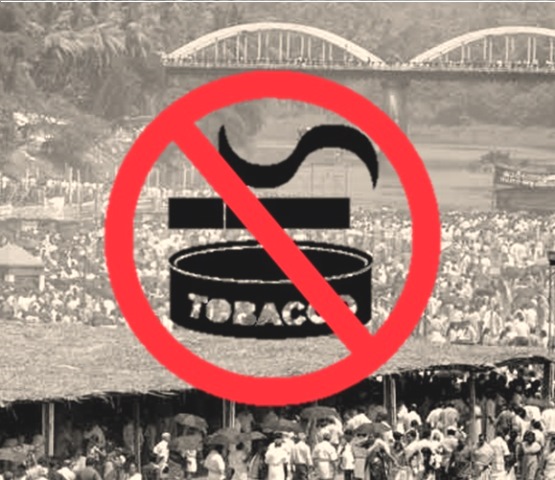
The use of tobacco and paan was a way of life in Kerala during the first half of the 20th Century. It was an essential item at social events such as marriages and other family gatherings. Tobacco and paan was easily available through shops all over Kerala. It was a common sight to have people attend the Maramon Convention meetings with beedi and murukkan in their pockets.
Through his messages, Dr. Stanley Jones urged people to refrain from the use of tobacco products. During one meeting, he asked the convention participants to bury their tobacco (which they were carrying) in the sand on the pandal floor. In another meeting, he collected all the tobacco products from the people and burnt it near the pandal in front of everyone.
It is only after much persuasion that the people stop using it and today it is not permitted at the Maramon Convention pandal.
Read more about Dr. E. Stanley Jones at the Maramon Convention with rare photos

1905: Printing Maramon Convention Sermons overnight!
At present, Maramon Convention messages (full text) are printed and sold on the next day morning from counters for the convention attendees. This enables people to take home the sermons of the previous day and read them again and share the sermons with people who were not able to attend the convention. These printed sermons are also shared in cottage prayer fellowships, parish prayer groups and for personal prayer and meditation.
However, few people know that this practice started in 1905. There were no microphones and speakers. The convention messages were repeated in relay by three persons – at times four or more – standing in different places of the pandal to make it audible to the thousands of people who attended. This relay process took a long time and was tedious for the audiences. The printing of messages in 1905 became a real blessing for all and continues to be so today. Today, God has blessed the Church members with technology which enables them to watch the Convention live through web streaming and receive updates on emails and websites.

Rev. Thomas Walker – Church Missionary Society
Given below is the report about this, from the Thomas Walker’s biography.
“1905 Wednesday, February 22. I awoke feeling very weary, for the heat was extraordinarily oppressive, and seemed to take all the life out of one. The Syrian brethren made one very good arrangement this year.
Each day’s addresses wore printed by night at their printing press at Tiruwella, eight miles away, and were on sale the next day in a booth near the pandal. Thus
the printed pages supplemented the speaker’s voice, and carried the message far and wide.”

1936: Loud Speaker and Microphone introduced at Maramon Convention (Rare Photos & Audio MP3)
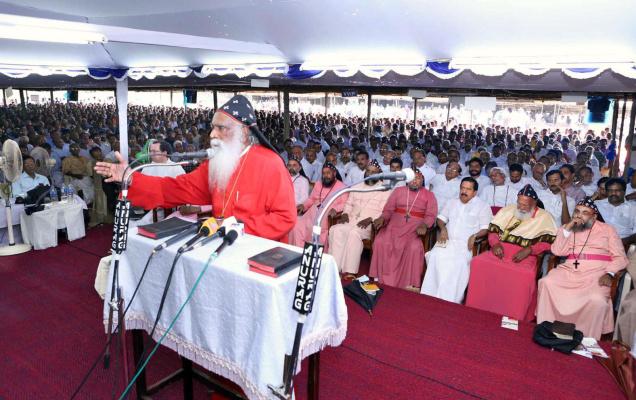
Joseph Mar Thoma Metropolitan speaking at the 118th Maramon Convention (2013). Photo by The Hindu
Though the first convention began in 1895, the sermons were delivered to the tens of thousands of church members who attended in a very unique manner. Until 1936, messages of the main speaker were repeated in relay by designated people standing in between the participants of the convention. It was a time consuming process for the message from the front to pass through thousands of participants to reach the back of the audience. In 1936, a loud speaker and mike (microphone) set was brought to Maramon from USA by the famous missionary Rev. Dr. E. Stanley Jones. It was donated by one of the Christian Churches in USA. He was a well wisher of the Mar Thoma Church and encouraged the missionary zeal of the Church.
Read more and see more rare photos at 1921 -1970: World renowned missionary Dr. E. Stanley Jones at Maramon Convention ( See Rare Photos) Hear a sermon by Dr. E. Stanley Jones – Click Here (The sermon is 26 min. — or download the mp3 (11.8 MB).)  The sermon title is, “The Gift of the Holy Spirit: The Birthright of All Christians.” The sermon was preached at a U.S. Ashram in August 1960. (This sermon is included in the 2008 book, Living Upon the Way: Selected Sermons of E. Stanley Jones on Self-Surrender and Conversion.) This audio clip is from www.methodistthinker.com
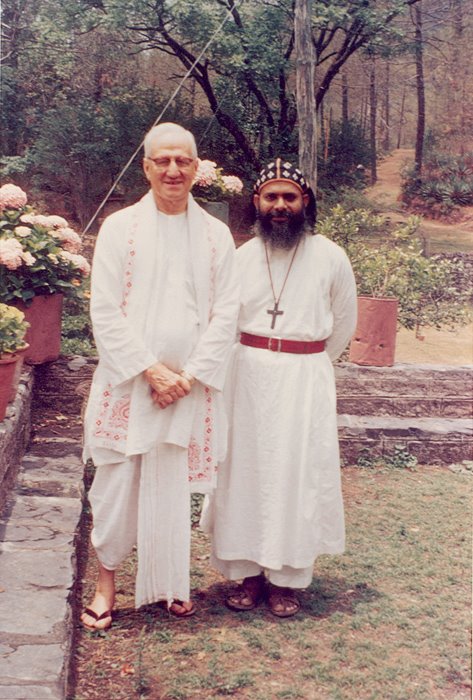
E. Stanley Jones with Mar Thoma Bishop Alexander Mar Theophilus (later became Metropolitan Alexander Mar Thoma)
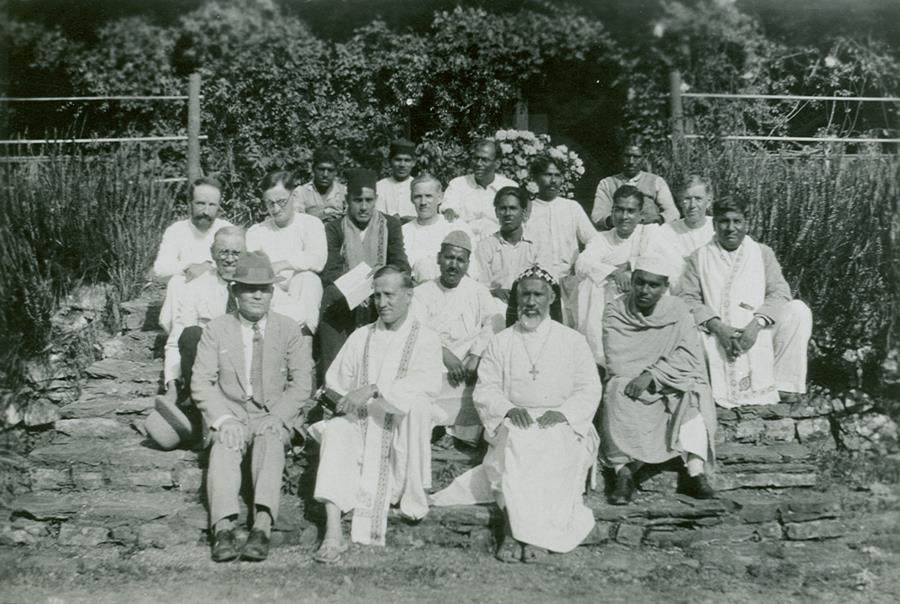
Bishop Juhanon Mar Thoma Metropolitan, E. Stanley Jones, Dr. Murray T. Titus and Ashram members at Sat Tal Ashram, India. (Photo from Dr. E. Stanley Jones FB page)
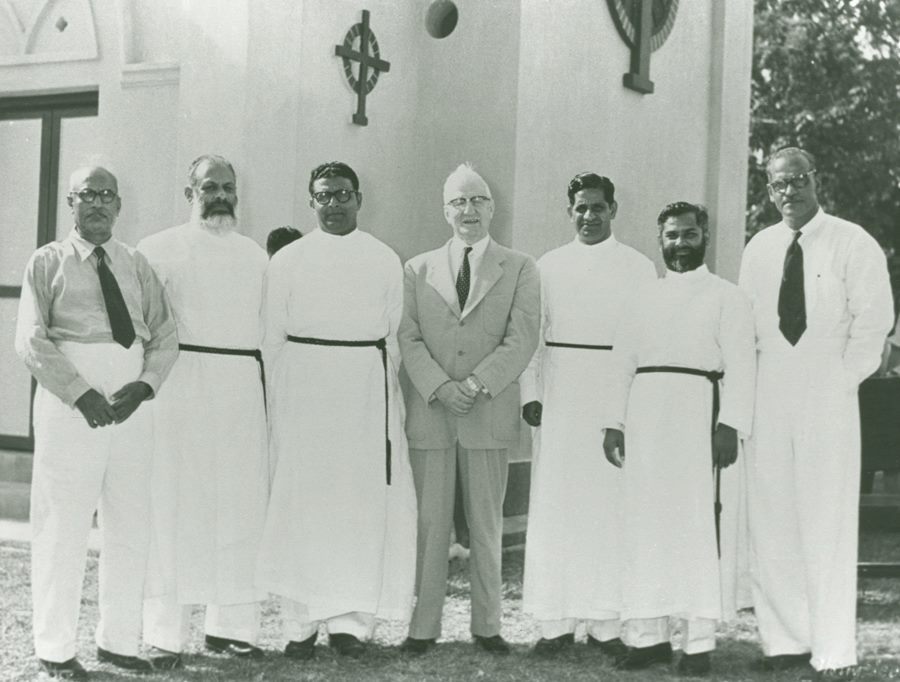
C. John Thomas, Rev. T. N. Koshy, P. C. John, Dr. E. Stanley Jones, Rev. V. E. Thomas, Rev. P. K. Koshy, and Mr. V. E. Chacko at St. Thomas Church, Klang Malaysia (1956)
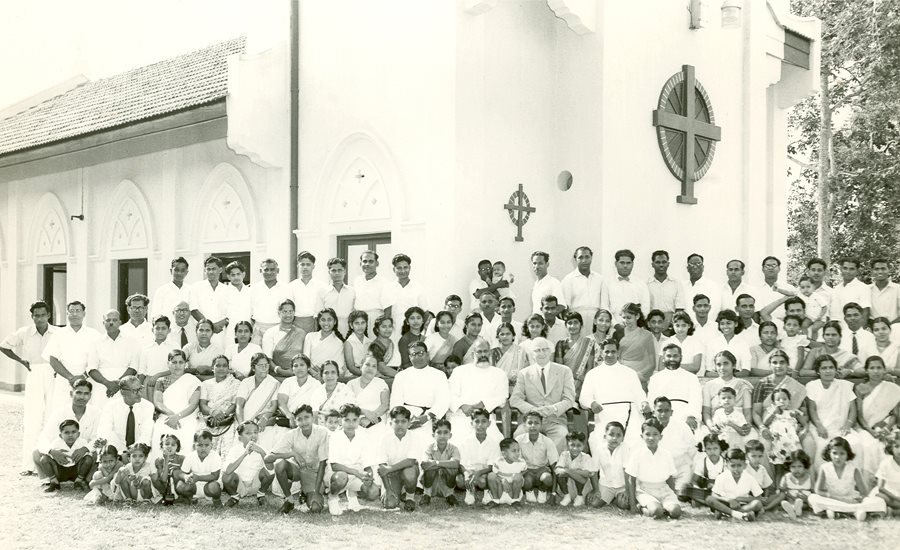
Dr. E. Stanley Jones with members of the St. Thomas Church, Klang, Malaysia 1956

27 September, 1947: Formation of Church of South India (with Rare Photos)
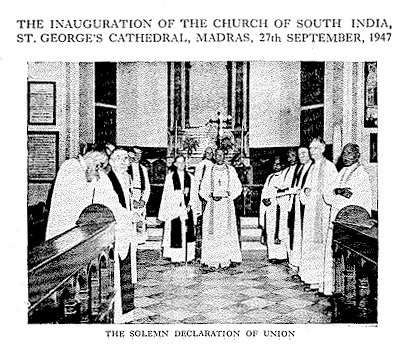
Photo credit: http://www.csisynod.com
27 September, 1947: Formation of Church of South India (CSI) in 1947, as a union of Anglican, Presbyterian, Congregationalist and Methodist churches. The idea of a Church union was proposed in 1919 at a conference held in Tranquebar (now Tarangambadi) in 1919. After 28 years of discussions various denominational churches in South India established by different Missionary societies agreed to the formation of the Church of South India in 1947 after India attained independence. The inaugural ceremony was held at St. George Cathedral Madras (Chennai).
Today the Church of South India is one of the largest Protestant churches in India and is a member of the Anglican Communion and its bishops participate in the Lambeth Conferences. It is also a member of the World Council of Churches, the World Alliance of Reformed Churches, and the National Council of Churches in India.
The Church of South India (CSI), Church of North India (CNI), and Malankara Mar Thoma Syrian Church of India jointly formed the Communion of Churches in India (CCI) in 1978 for mutual recognition of the ministry and leaders, inter communal relationship, and to explore possibilities of working together and other areas of cooperation in the fulfillment of the mission of the Church in India.
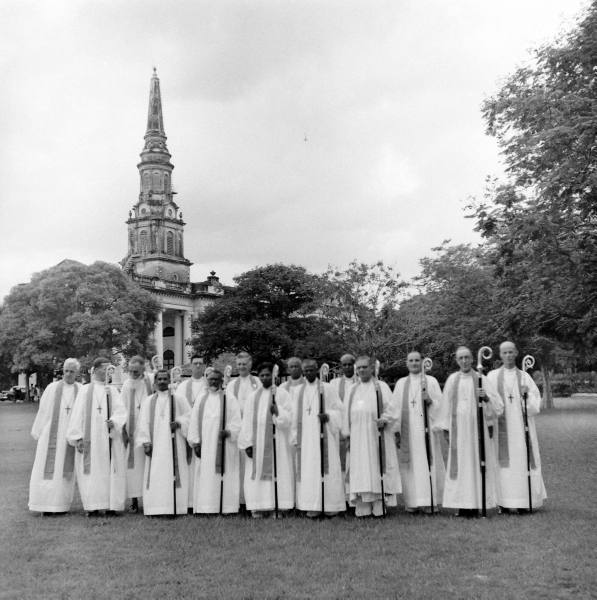
At the inauguration of Church of South India. Photo by Mark Kauffman (LIFE magazine)
The presiding bishop of the inaugural function was the Rt. Revd. C. K. Jacob of the Anglican Diocese of Travancore and Cochin. A vast congregation gathered in the cathedral at Madras from all over the world. The following historical declaration was made by Bishop Jacob at the inaugural service.
“Dearly beloved brethren, in obedience to the Lord Jesus Christ the head of the church, who on the night of his passion prayed that his disciples might be one, and by authority of the governing bodies of the uniting churches whose resolutions have been read in your hearing and laid in your prayer before Almighty God; I do hereby declare that these three churches, namely – the Madras, Madura, Malabar, Jaffna, Kannada, Telugu, Travancore Church councils of the South India United Church; the Methodist Church of South India, Trichinopoly, Hyderabad and Mysore districts; the Madras, Travancore and Cochin, Tinnevelly and Dornakal dioceses of the Churches of India, Burma and Ceylon; are become one Church of South India, and these bishops, presbyters, deacons and probationers who have assented to the basis of union and accepted the constitution of the Church of South India, whose names are laid upon this holy table, are bishops, presbyters and deacons of this church. In the name of the Father, and the Son, and the Holy Spirit, Amen.” ~ wikipedia

Inauguration procession of Church of South India. Photo by Mark Kauffman (LIFE magazine)
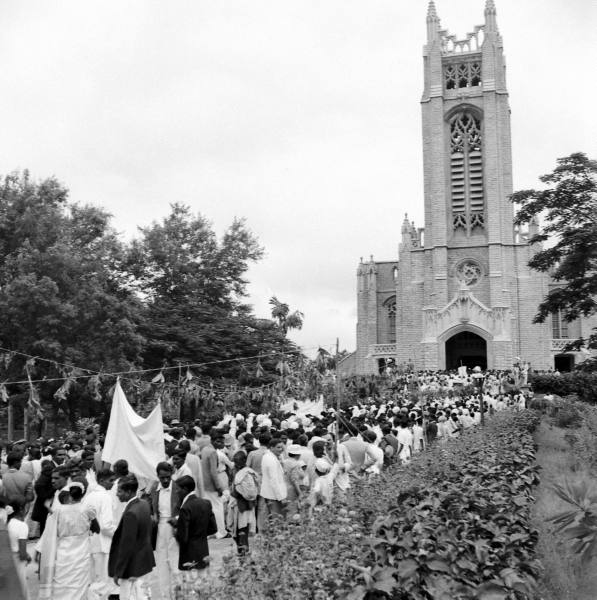
Inauguration procession of Church of South India. Photo by Mark Kauffman (LIFE magazine)
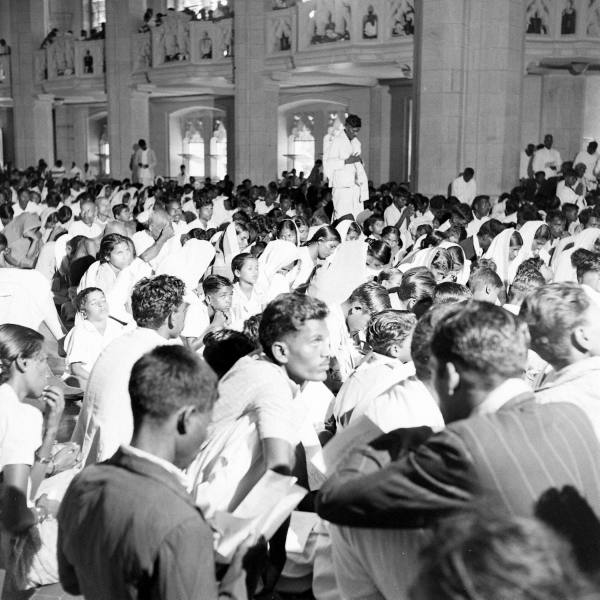
Inauguration service of Church of South India. Photo by Mark Kauffman (LIFE magazine)
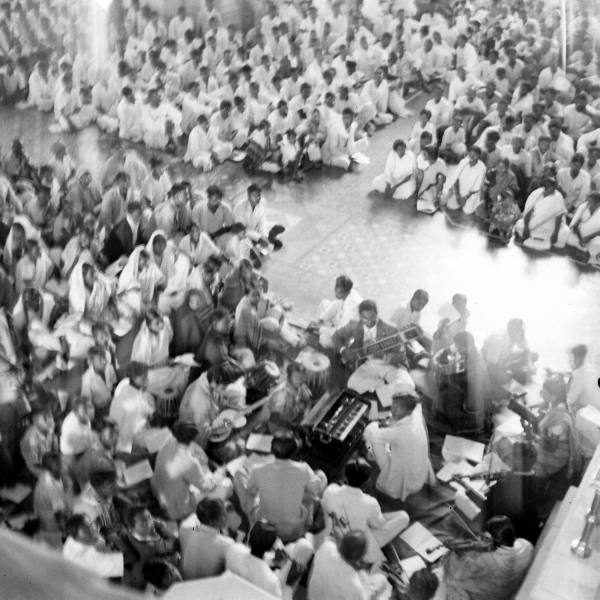
Inauguration service of Church of South India. Photo by Mark Kauffman (LIFE magazine)

Inauguration service of Church of South India. Photo by Mark Kauffman (LIFE magazine)
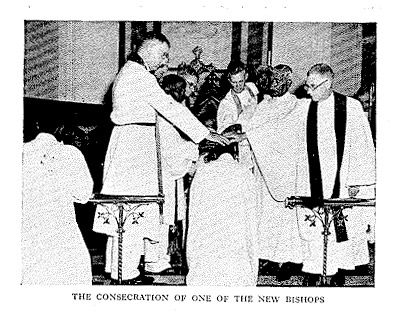
Photo credit: http://www.csisynod.com
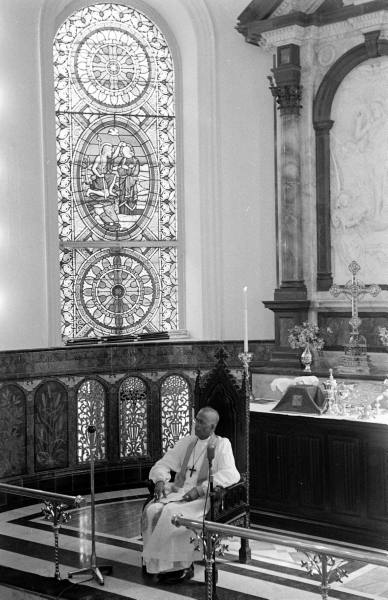
Presiding Bishop Rt. Revd. C. K. Jacob at the Inauguration of Church of South India. Photo by Mark Kauffman (LIFE magazine)
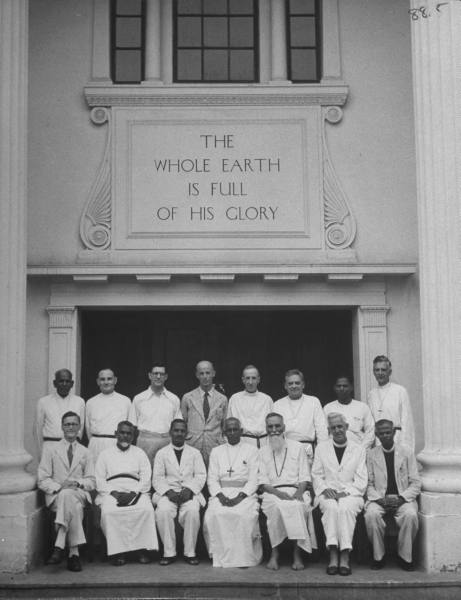
Clergymen from 5 Protestant faiths attending the inaguration of the Church of South India. Photo by Mark Kauffman (LIFE magazine)

St George’s Cathedral, Chennai (photo credit – wiki)
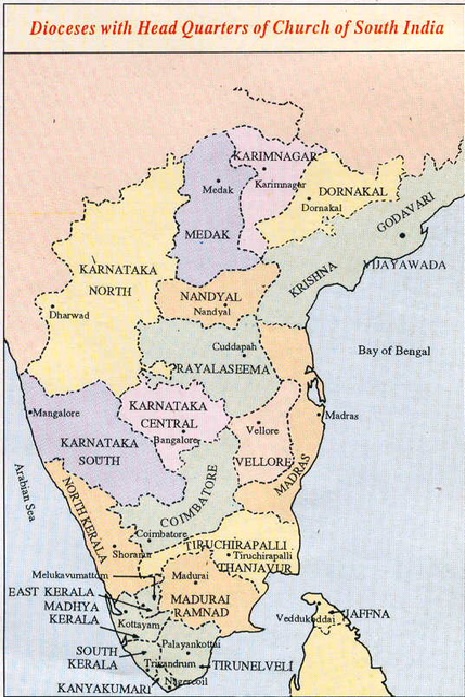
CSI Diocese Map (image credit – http://www.csimichigan.org)
3rd September, 1889 – Birth of Sadhu Sunder Singh (Special Video Feature)
Sadhu Sunder Singh the renowned Indian Christian missionary was a member of an ancient, aristocratic, and wealthy Sikh family from the village of Rampur in the State of Patiala (present day Punjab). He was a very religious and God fearing person. Jesus appeared to him in a vision in the early hours of 18th December 1904. Like Paul in the New Testament, he heard a voice “Why do you persecute me? Remember that I gave my life for you upon the Cross”. On Sunday, the 3rd of September, 1905, on his sixteenth birthday, he was baptized in St. Thomas Church at Shimla according to the rite of the Anglican Church.
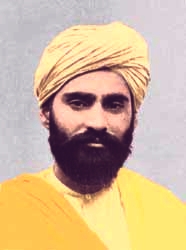
Sadhu Sundar Singh
A month after his baptism, Sundar Singh donned the yellow linen robe that celibate Indian Sadhus wore and set out to preach the gospel, carrying nothing but a New Testament. From now on he would have no permanent home and no income.”I am not worthy to follow in the steps of my Lord,” he said, “but like Him, I want no home, no possessions. Like Him I will belong to the road, sharing the suffering of my people, eating with those who will give me shelter, and telling all people of the love of God.’ He also authored eight books.
Sadhu Sunder Singh was one of the speakers of the Maramon Convention in 1918. He spoke in Hindi and the translation was done by Mr. M. O. Oommen, Chief Conservator of the then Travancore Kingdom.
Sadhu Sunder Singh drew crowds greater than any previous conventions, so much so that before the end of the week the pandal (covered area) had to be enlarged. It is estimated at the final meeting about 32,000 people gathered to hear his message.
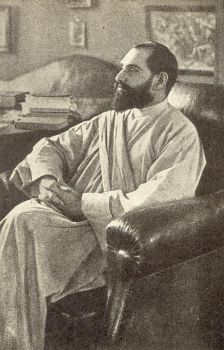
Sadhu Sundar Singh
He is believed to have died in the foothills of the Himalayas in 1929 on his way to Tibet. His body was never found.
Journey to the Sky – Sadhu Sundar Singh (1977)
12 July, 1889 – Seminary Case: Division of the Mar Thoma Church and Jacobite Church (Video)
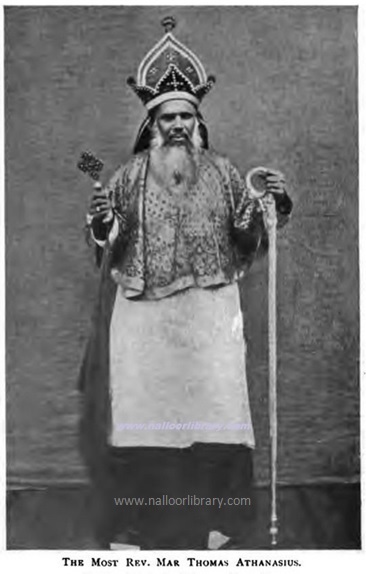
Thomas Mar Athanasius Metropolitan (Mar Thoma XIV) Photo from The Indian Christians of St. Thomas by William Joseph Richards (1908)
12 July, 1889: Seminary Case Judgment. In 1879 a case was filed in the district court of Alleppey by Bishop Joseph Mar Dionysius against the then Metropolitan of the Church Most Rev. Thomas Mar Athanasius.
Mar Dionysius prayed to the court to declare him as the rightful Metropolitan of the Malankara Church and also requested the court to evict Mar Athanasius and his followers from the Old Seminary building in Kottayam. The final verdict of this case came on 12 July 1889 from the Royal Court of Travancore. Two Judges decreed that Joseph Mar Dionysius was the rightful Metropolitan of the Malankara Church as he expressed allegiance to the Patriarch of Antioch. One Christian judge gave the verdict in favour of Thomas Mar Athanasius because of his conviction that the Malankara Church has been an independent Church from the beginning. The Majority view prevailed and Thomas Mar Athanasius had to leave the Old Seminary and the properties of the Church, because he upheld the autonomy of the Mar Thoma Syrian Church. This led to the formal division of the church into two sections: the Mar Thoma Church and Jacobite Church.
The followers of Mar Athanasius got the Kottarakkara church without a duel, they got the Maramon and Kozhencherry churches through court decision, and was given the right to conduct services on alternate Sundays in five other churches. They put up small sheds in other places to hold worship services.
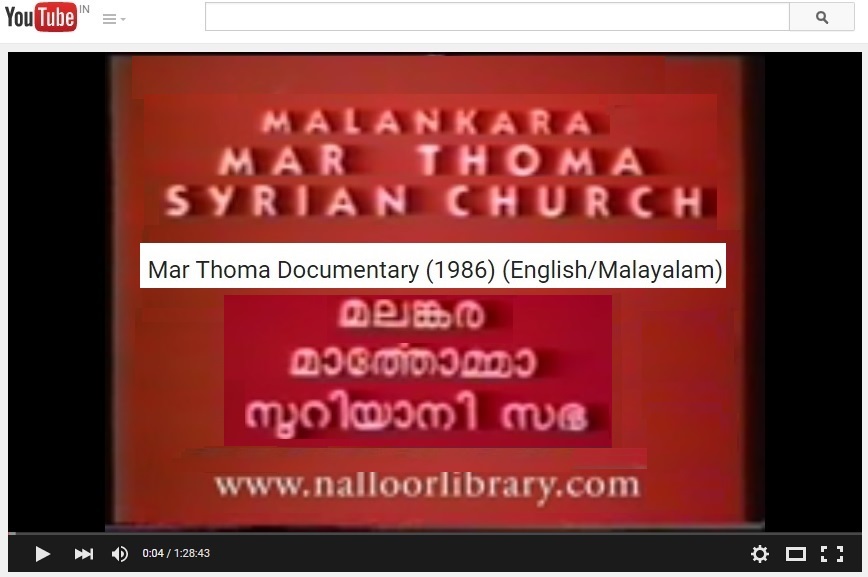
To learn more about Mar Thoma Syrian Church History – watch this Special Documentary with rare footage on the Malankara Mar Thoma Syrian Church – (English/Malayalam) produced in 1986. It offers a peek into the history, rich culture and heritage of the Mar Thoma Syrian Church.



 Nalloor Library