March 9 – 18, 1895: The first Maramon Convention

An undated early photo of the Maramon Convention. (www.marthoma.in)
The first Maramon Convention was held from 9th March (Friday) to 18th March (Sunday) in 1895 at the Parapuzha Manalpuram of the River Pamba (the location was situated between the famous Aranmula Temple and the Maramon Church) about one kilometer away from the present venue. It was a ten day event.
The pandal (tent) could accommodate about 7000 people. Mr. David and Mr. Wordsworth, both missionaries from Ceylon (today known as Sri Lanka) were the main speakers of the convention. Mar Thoma Metropolitan Titus I gave the leadership for the convention meetings. Deacon Kakkasseri Varghese of Kunnamkulam (7 July 1867 – 4 June 1897) translated the messages from English to Malayalam for the audiences to understand.

Pages from History: 21 Nov 1881: Birth of Very Rev. K. E. Oommen

Very Rev. K. E. Oommen
21 Nov 1881: Birth of Very Rev. K. E. Oommen (21/11/1881 to 23 May 1984). Very Rev K. E. Oommen was one of the first four graduates who accepted ordination together in the Mar Thoma Church. He was one of the Divisional Secretaries of the church till 1939. With his evangelical zeal and wise counsel he gave great support to Abraham Mar Thoma and later Metropolitans.
He had a long and fruitful life. He died in 1984 at the age of 103. Most Rev Philipose Mar Chrysostom of the Mar Thoma Church is his son.
9 Nov 2014: CSI, CNI and Mar Thoma Church celebrate ‘The Communion of Churches in India (CCI) Day’.
On 9 November, 2014, Sunday: the CSI, CNI and Mar Thoma Churches celebrate this Sunday as the ‘The Communion of Churches in India (CCI) Day’.
The Communion of Churches in India (CCI) has been constituted as the visible organ for common expression of the life and witness by the founding Churches, the Church of North India (CNI), the Church of South India (CSI) and the Mar Thoma Syrian Church (MTC) which recognise themselves as belonging to the one Church of Jesus Christ in India, even while remaining as autonomous churches, each having its own identity of traditions and organizational structures. “The Communion” invites other Churches in India to enter into full communion with the member churches separately and join “The Communion”.
Pages from History: 17 September 1917, Birth of M. E. Cherian
17 September, 1917: Birth of M. E. Cherian, author of “Anugrahaththin Adhipathiye”.
Cherian was the son of Kuriannoor Thannikkapurathuttu T. M. Easow (Kunjachen Upadeshi) and Ayroor Kanjeettukara Panamthottathil Aleyamma. At the age of 9 he accepted Jesus as his personal saviour. He taught at the Noel Memorial School in Kumbanad for a few years, and from 1943 onwards he started full time gospel work.
He has written more than 300 hymns and 13 books. Hymn nos. 92, 93, 94, 95, 233, 236, 238, 239, 241, 245, 248, 304, 364, 365, 379, 385, 386 and 409 in the Mar Thoma Syrian Church Hymn book (Kristheeya Keerththanangal) are written by him.
He was called to his eternal home on 2 October, 1993 while he was on a gospel trip in Muthukulathoor Village near Madurai in Tamil Nadu.

M. E. Cherian
Pages from History: 15 September, 1853: First woman ordained in the United States
15 September, 1853: Antoinette Brown Blackwell becomes the first female minister ordained in America. Antoinette Brown, (May 20, 1825 – November 5, 1921), was the first woman to be ordained as a minister in the United States, when she was called to be the pastor of the Congregational church in South Butler, New York in 1853. Her ordination, however, was not recognized by her denomination. In 1857, she returned to her work as an orator and reformer for womens rights with her husband Samuel C. Blackwell. She also was a strong activist for the right to vote for women. She died at the age of 96 in Elizabeth, New Jersey.
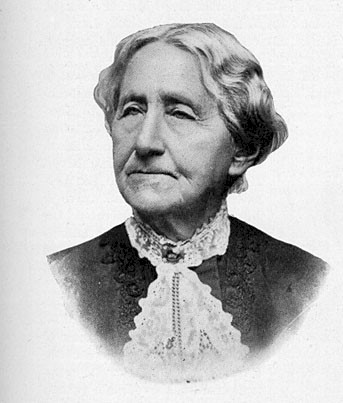
Antoinette Brown Blackwell
Pages from History: 14th September 407, Archbishop John Chrysostom dies
14 September, 407: Early church father John Chrysostom, the greatest preacher of his age, dies in exile when, in poor health, he is forced to travel on foot in bad weather. He was the Archbishop of Constantinople.

John Chrysostom
Pages from History: 4 September, 1847: Henry Francis pens Hymn ‘Abide with me’
4 September, 1847: Henry Francis Lyte (1793-1847) writes the Hymn “Abide with me” (Malayalam – Koode paarkka neram vaikkunnitha, No.8 (7) in Kristheeya Keerththanagal). Lyte wrote this hymn at the end of his life, just two months before he died. The text for this Hymn was taken from Luke’s Gospel Ch.24 v. 29 “Abide with us; for it is toward evening, and the day is far spent”.
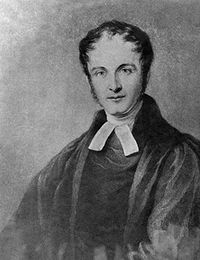
Henry Francis Lyte
Pages from History: 14 July, 1947, Punchamannil Mammen Upadeshi passes away
14 July, 1947: Punchamannil Mammen Upadeshi passes away. Mammen Upadeshi was born in the Vadasseri house of the Punchamannil family in Maramon on 25 Nov.1868, as the son of Mathai and Achiyamma.
Mammen’s elder siblings all died while they were still infants. So Mammen was baptized at home when he was very young by the Parish Priest Rev. Titus (Later Rt. Rev. Titus I Mar Thoma).
Mammen Upadeshi trusted the Lord like the Old Testament Prophet Elijah and lived like Elijah, spoke the messages of the Lord like Elijah, fought against evil forces like Elijah and even performed miracles like Elijah.

Punchamannil Mammen Upadeshi
Pages from History. 10 July, 1919: P.V. Thommy Upadeshi passes away
10 July, 1919: P.V. Thommy Upadeshi passes away. Thommy Upadeshi was born in a very poor family of the Kunnamkulam Mar Thoma Parish in 1881. After his basic education he became a teacher. But after few years of teaching he became a full time evangelist in the Mar Thoma Church.
Rev. C.M. Joseph, Vicar of the Kunnamkulam Parish encouraged him in his Gospel work. Titus II Metropolitan appointed him as evangelist in Trichur and Perumbavoor He was a blessed Hymn writer. In 1905 he published a Hymn Book “Vishudha Geethangal” comprising of 136 hymns.
His language is simple and even the illiterate persons can enjoy his hymns. The following hymns in the book Kristheeya Keerththanangal are written by him: 3 (3), 11(10), 12(11), 30(28), 56(56), 61(61), 67(67), 70(70), 71(71), 73(73), 96(96), 130(111), 35(126), 145(136), 243(221), 247(225), 286(286), 295(281), 345 (345), 351(351), 366(242), 368(251).
In 1919 there was an outbreak of Cholera in Kunnamkulam and many persons died. Thommy Upadesi volunteered to serve the cholera patients and was finally infected with cholera. He passed away on Wednesday 10 July 1919 at the age of 38.

Kristheeya Keerththanangal
Pages from History: 5 July 1415, Church burns John Hus
5 July, 1415: John Huss, Bohemian preacher and forerunner of Protestantism, is burned as a heretic in Constance, Germany. John Huss was a religious thinker and reformer. He initiated a religious movement based on the ideas of John Wycliffe.
His followers became known as Hussies. The Catholic Church did not condone such uprisings, and Huss was excommunicated in 1411, condemned by the Council of Constance. Hus was offered a chance to recant and declined with the words “God is my witness that the things charged against me I never preached. In the same truth of the Gospel which I have written, taught, and preached, drawing upon the sayings and positions of the holy doctors, I am ready to die today.” He was then burned at the stake, and his ashes thrown into the Rhine River.

Jon Hus being burnt at the Stake.
Janíček Zmilelý z Písku – Jena codex


 Nalloor Library