The Advent ( Lent from 1 to 25 December)

The 4 themes/candles of Advent with the centre candle for Christmas Eve (Image from http://www.beaconhillmd.org)
The Advent (Lent from 1 to 25 December). For Eastern Churches this is the season waiting for the birth of Christ. During this time the church prepares herself through cleansing and renewal for the advent of her Lord. It serves as a time of spiritual discipline and renewal in preparation for Christmas. Christians observe lent with fasting, prayer and self-sacrifice. The term is an anglicized version of the Latin word adventus, meaning “coming”.
Latin adventus is the translation of the Greek word parousia, commonly used to refer to the Second Coming of Christ. For Christians, the season of Advent anticipates the coming of Christ from two different perspectives. The season offers the opportunity to share in the ancient longing for the coming of the Messiah, and to be alert for his Second Coming. In 2014 the four Advent Sundays are November 30, December 7, December 14, and December 21.
In recent times the most common observance of Advent outside church circles has been the keeping of an advent calendar or advent candle, with one door being opened in the calendar, or one section of the candle being burned, on each day in December leading up to Christmas Eve.
Pages from History: 29 November, 1970: Formation of Church of North India (CNI).
29 November, 1970: Formation of Church of North India (CNI). The inaugural meeting of the CNI was held in the Unity Hall opposite the Anglican Cathedral in Nagpur. The metropolitan of the Mar Thoma Syrian Church Dr. Juhanon Mar Thoma attended this meeting.
It was a merger of six Christian denominations, including the United Church of Northern India; the Anglican Church of India, Pakistan, Burma (Myanmar) and Ceylon; the British and Australian Methodist churches; the Council of Baptist Churches in Northern India; the Church of the Brethren; and the Disciples of Christ.The motto of the church is: Unity – Witness – Service.
Pages from History: John Bunyan – Author of Pilgrim’s Progress is born

John Bunyan
28 November, 1628: English preacher John Bunyan (d. 31August,1688), author of more than 60 books, including the famous Pilgrim’s Progress, is born in Elston, England.
In 1655, Bunyan was baptized by immersion by Pastor John Gifford of Bedford and called to preach the Gospel of Jesus Christ. Bunyan was arrested November 12, 1660, for preaching without the approval of the Anglican Church. He was charged with “teaching men to worship God contrary to the law” and was in jail more than twelve years.
His most well-known work, The Pilgrim’s Progress, was written while in the Bedford jail. During Bunyan’s lifetime there were 100,000 copies circulated in the British isles, besides several editions in North America. It has been continuously in print since its first printing. Bunyan’s remarkable imagery was firmly rooted in the Reformation doctrines of man’s fallen nature, grace, imputation, justification, and the atonement–all of which Bunyan seems to have derived directly from Scripture. ~ http://www.chapellibrary.org
John Bunyan’s Works
The Collected Works of John Bunyan was carefully edited by George Offor, first published in 1853 and revised in 1862. These files are from the 1862 edition.
These pdf books can be downloaded at no cost and read for free. It can be accessed at http://www.chapellibrary.org/literature/bunyan/
Pages from History: 9 November, 1917: Birth of Dr. Sosamma Philip – Medical Missionary

Late Dr. Sosamma Philip, Medical Missionary.
9th November, 1917: Birth of Dr.Sosamma Philip, Medical Missionary. Dr. Sosamma was the daughter of Late Rev. M.C. George Kasseesa (17 April 1874 – 23 October 1923) of Maliyekkal House, Kuriannoor.
The Late Most Rev. Dr. Alexander Mar Thoma Valiya Metropolitan (10 April 1913 – 11 January 2000) was her elder brother. Dr. Sosamma passed her final school examination in 1933, but she couldn’t afford a college education. She joined the undergraduate teacher’s training course in Tiruvalla and then became a teacher in Kuriannoor Middle School. The family had to sell a portion of their ancestral property to pay for her dowry.
In 1940, she married Dr. P.V. Philip (Palathinkkal, Kottayam), who was working with the Mission Hospital in Karappuram, Cherthala. But unfortunately, Dr. Philip died after nine months of their marriage. She also lost her mother, three months later. Dr. Sosamma had an earnest desire to continue the medical work of her departed husband. She joined Alwaye U.C. College and passed her intermediate examinations and applied for a seat in Christian Medical College, Vellore. As she did not get admission at CMC Vellore, she joined the American College in Madurai and finished her B.A. and then joined the Nicholson School, Tiruvalla, as a teacher.
But the desire for a medical education was burning in her heart, so she applied again and this time she secured an admission in Christian Medical College, Vellore. Immediately after getting her Medical degree, she joined the Karapuram, Cherthala Mission, where her husband had worked. After further passing her specialization courses in Chicago, she worked with the Kumbanad and Kattanam hospitals for many years.
In 1967, she joined the Sihora Ashram Hospital in Madhya Pradesh and remained there till her retirement, 30 years later in 1997. As recognition of her work and social service, the Church awarded her the “Manava Seva Award”.
After her retirement, she returned to stay with her relatives in Kuriannoor. She was called to her eternal home on 4 May 2008 and was buried beside her parents at the St.Thomas Mar Thoma Church Cemetery in Kuriannoor.

Late Rev. M.C. George Kasseesa (Father of Dr. Sosamma Philip)
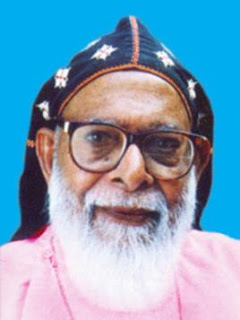
Late Alexander Mar Thoma Valiya Metropolitan (Elder brother of Dr. Sosamma Philip)
9 Nov 2014: CSI, CNI and Mar Thoma Church celebrate ‘The Communion of Churches in India (CCI) Day’.
On 9 November, 2014, Sunday: the CSI, CNI and Mar Thoma Churches celebrate this Sunday as the ‘The Communion of Churches in India (CCI) Day’.
The Communion of Churches in India (CCI) has been constituted as the visible organ for common expression of the life and witness by the founding Churches, the Church of North India (CNI), the Church of South India (CSI) and the Mar Thoma Syrian Church (MTC) which recognise themselves as belonging to the one Church of Jesus Christ in India, even while remaining as autonomous churches, each having its own identity of traditions and organizational structures. “The Communion” invites other Churches in India to enter into full communion with the member churches separately and join “The Communion”.
Pages from History: 6 October, 1536: Church executes William Tyndale
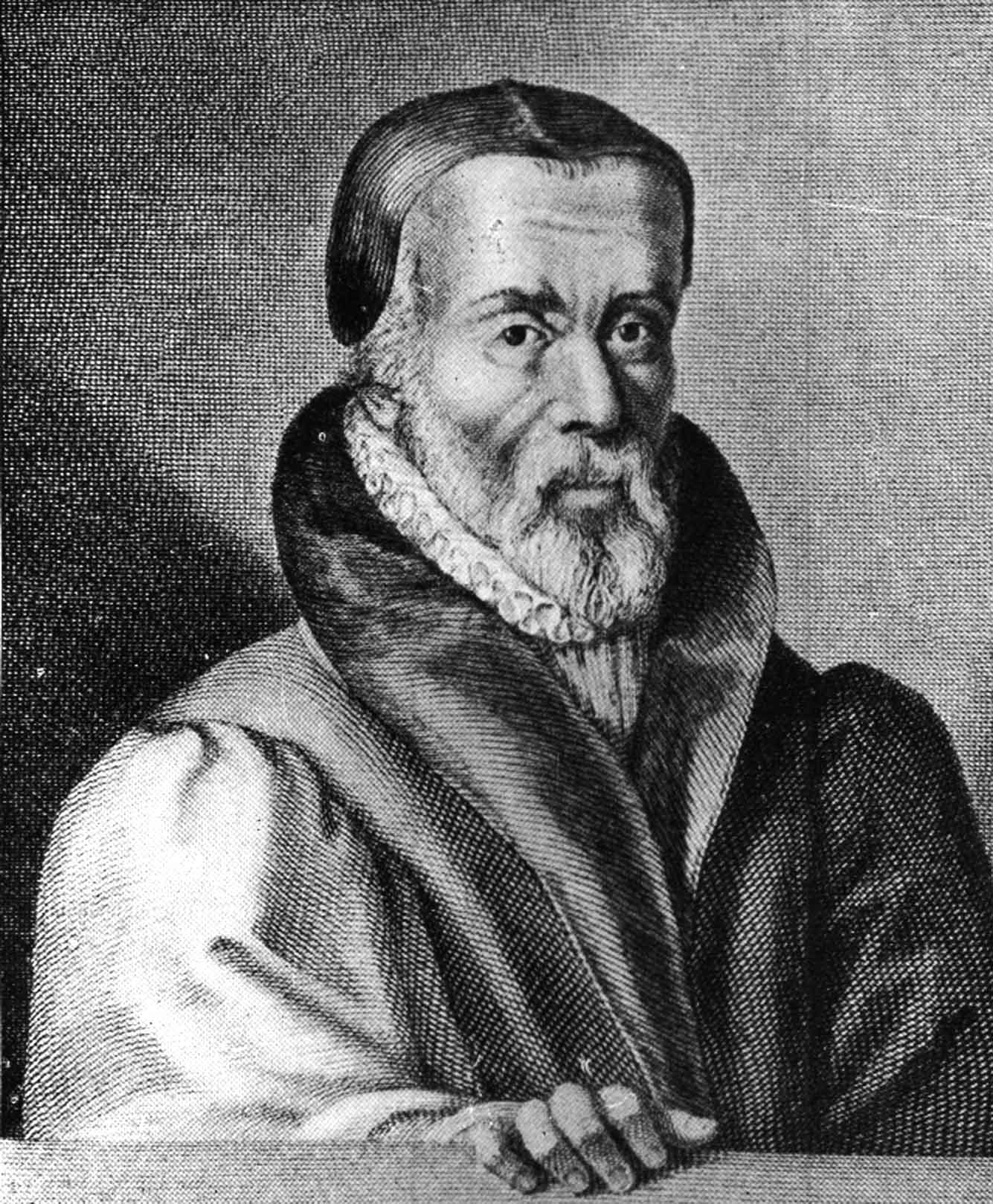
William Tyndale
6 October, 1536: Church executes William Tyndale (b.1494).
The first English version of the Bible made by direct translation from the original Hebrew and Greek, and the first to be printed, was the work of William Tyndale. He met bitter opposition from the main Church. He was accused of willfully perverting the meaning of the Scriptures and his New Testaments were to be burned as “untrue translations”.
He was finally betrayed into the hands of his enemies and on 6 October 1536, was publicly executed and burned at the stake by the Catholic Church.
Pages from History: 27 September, 1947: Formation of Church of South India (with Photos)
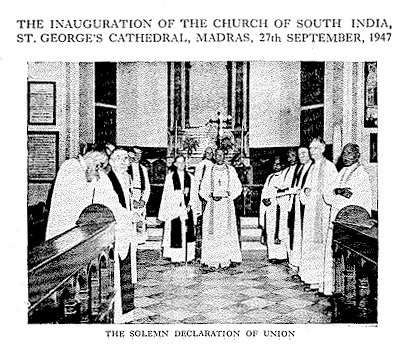
Photo credit: http://www.csisynod.com
27 September, 1947: Formation of Church of South India (CSI) in 1947, as a union of Anglican, Presbyterian, Congregationalist and Methodist churches. The idea of a Church union was proposed in 1919 at a conference held in Tranquebar (now Tarangambadi) in 1919. After 28 years of discussions various denominational churches in South India established by different Missionary societies agreed to the formation of the Church of South India in 1947 after India attained independence. The inaugural ceremony was held at St. George Cathedral Madras (Chennai).
Today the Church of South India is one of the largest Protestant churches in India and is a member of the Anglican Communion and its bishops participate in the Lambeth Conferences. It is also a member of the World Council of Churches, the World Alliance of Reformed Churches, and the National Council of Churches in India.
The Church of South India (CSI), Church of North India (CNI), and Malankara Mar Thoma Syrian Church of India jointly formed the Communion of Churches in India (CCI) in 1978 for mutual recognition of the ministry and leaders, inter communal relationship, and to explore possibilities of working together and other areas of cooperation in the fulfillment of the mission of the Church in India.
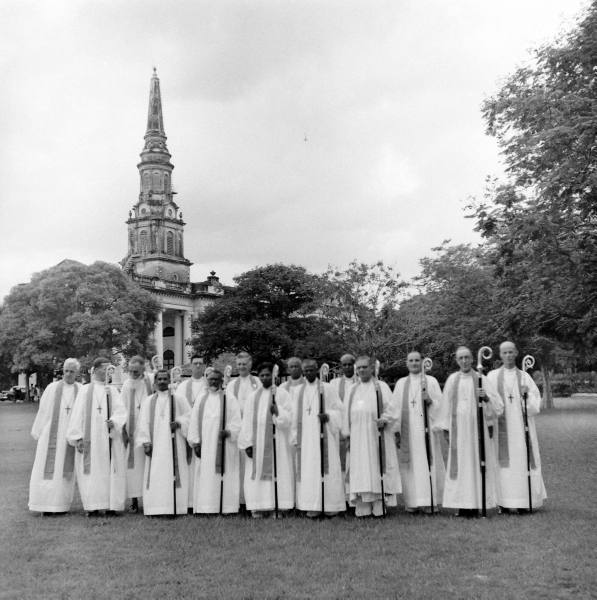
At the inauguration of Church of South India. Photo by Mark Kauffman (LIFE magazine)
The presiding bishop of the inaugural function was the Rt. Revd. C. K. Jacob of the Anglican Diocese of Travancore and Cochin. A vast congregation gathered in the cathedral at Madras from all over the world. The following historical declaration was made by Bishop Jacob at the inaugural service.
“Dearly beloved brethren, in obedience to the Lord Jesus Christ the head of the church, who on the night of his passion prayed that his disciples might be one, and by authority of the governing bodies of the uniting churches whose resolutions have been read in your hearing and laid in your prayer before Almighty God; I do hereby declare that these three churches, namely – the Madras, Madura, Malabar, Jaffna, Kannada, Telugu, Travancore Church councils of the South India United Church; the Methodist Church of South India, Trichinopoly, Hyderabad and Mysore districts; the Madras, Travancore and Cochin, Tinnevelly and Dornakal dioceses of the Churches of India, Burma and Ceylon; are become one Church of South India, and these bishops, presbyters, deacons and probationers who have assented to the basis of union and accepted the constitution of the Church of South India, whose names are laid upon this holy table, are bishops, presbyters and deacons of this church. In the name of the Father, and the Son, and the Holy Spirit, Amen.” ~ wikipedia

Inauguration procession of Church of South India. Photo by Mark Kauffman (LIFE magazine)
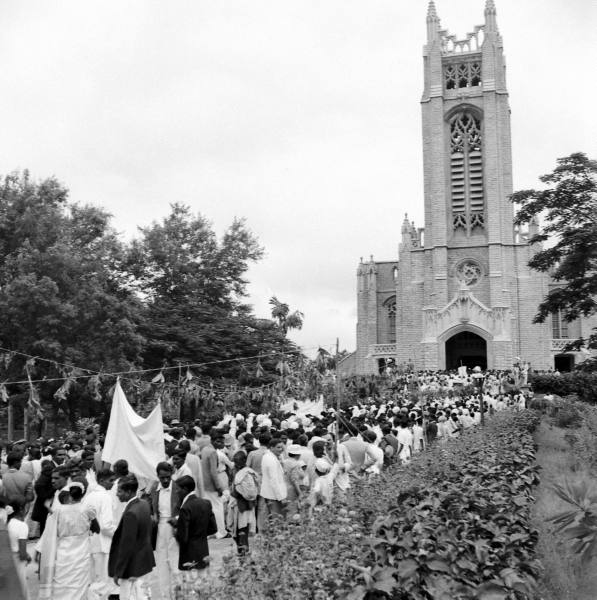
Inauguration procession of Church of South India. Photo by Mark Kauffman (LIFE magazine)
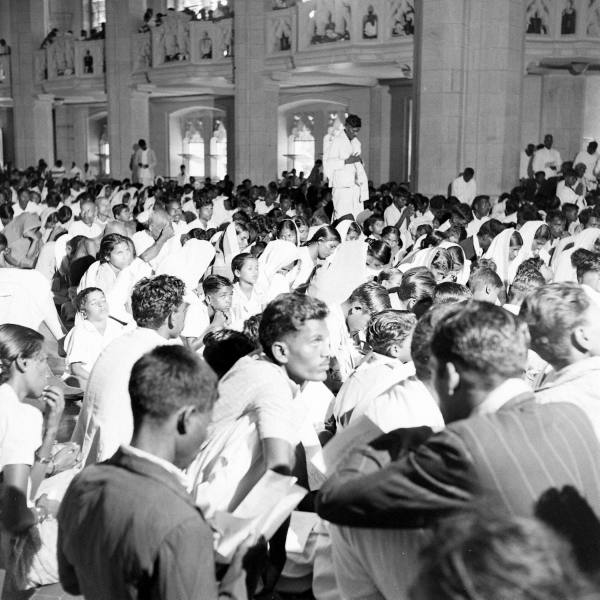
Inauguration service of Church of South India. Photo by Mark Kauffman (LIFE magazine)
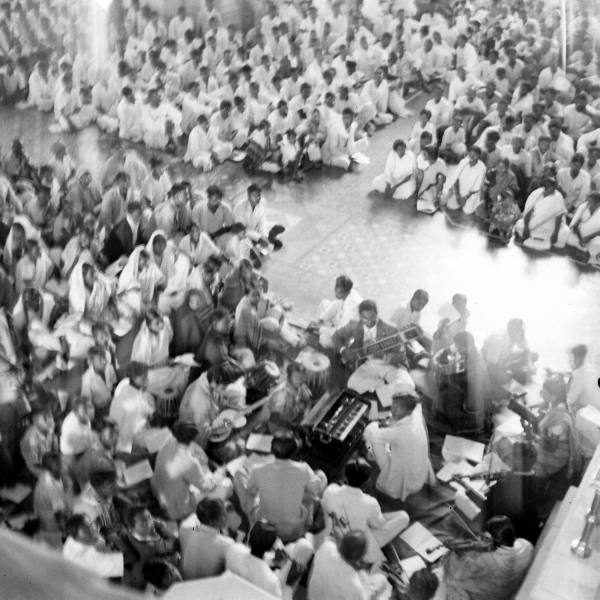
Inauguration service of Church of South India. Photo by Mark Kauffman (LIFE magazine)

Inauguration service of Church of South India. Photo by Mark Kauffman (LIFE magazine)
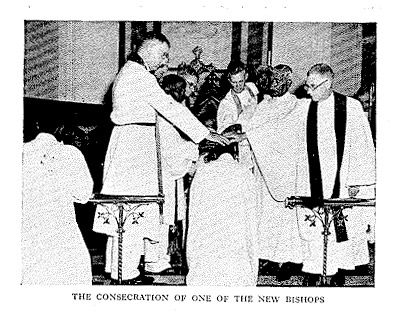
Photo credit: http://www.csisynod.com
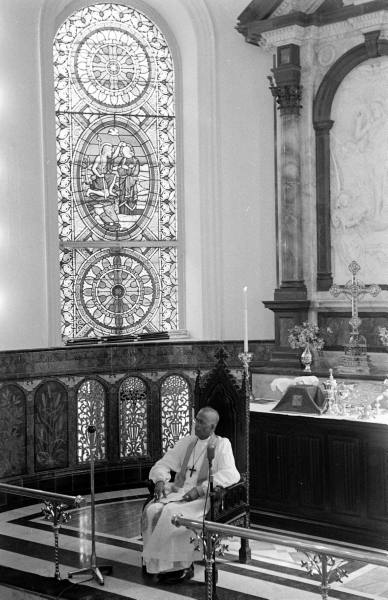
Presiding Bishop Rt. Revd. C. K. Jacob at the Inauguration of Church of South India. Photo by Mark Kauffman (LIFE magazine)
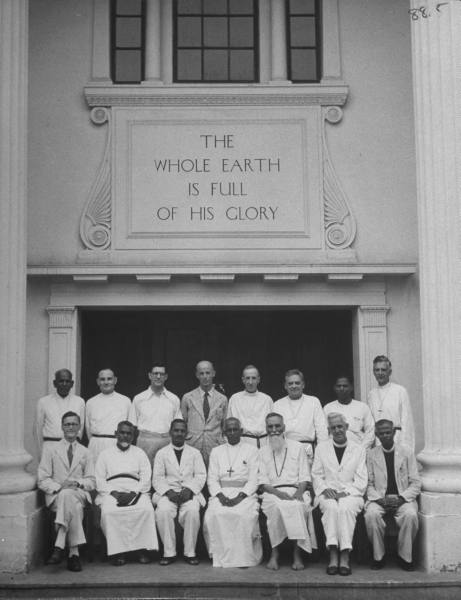
Clergymen from 5 Protestant faiths attending the inaguration of the Church of South India. Photo by Mark Kauffman (LIFE magazine)

St George’s Cathedral, Chennai (photo credit – wiki)
Pages from History: 27 September, 1976: Juhanon Mar Thoma Metropolitan passes away

Metropolitan Juhanon Mar Thoma (Photo credit: LIFE magazine)
27 September, 1976: Juhanon Mar Thoma Metropolitan Passes away. (b.7 Aug.1893) .Dr Juhanon Mar Thoma was the Metropolitan of the Mar Thoma Syrian Church from 1947 to 1976. He provided the Church with the emblem having the motto: “Lighted to Lighten”. This has been appreciated by many leaders of Christian churches.
“Ecumenism was a reality for him; he restored peace with the Indian Orthodox Church. He actively participated in ecumenical councils such as the World Council of Churches. In 1948, he led the delegation to the first Assembly of the World Council of Churches in Amsterdam. At its second meeting at Evanston, Illinois in 1954 he was elected as one of the presidents of WCC. During the third Assembly in New Delhi in 1961 he was the chairman and guided the deliberations with distinction.
It was in 1974, it was decided enter into full communion with the Churches of South India, North India and with various provinces in the Anglican communion.” ~ wikipedia.com
On 26 June 1975 the then Prime Minister of India Indira Gandhi declared Emergency. Juhanon Mar Thoma was the only Christian leader in India who raised a voice and sent a letter to the Prime Minister arguing for the restoration of democracy.
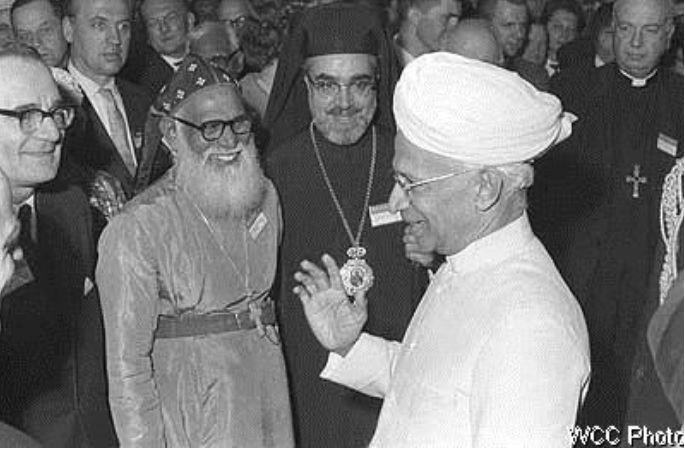
Dr Radhakrishnan, vice-president of India (right) greeting Bishop S. U. Barbieri, Metropolitan Juhanon Mar Thoma and Archbishop Iakovos during the Third Assembly of the WCC in New Delhi, November 18 – December 6, 1961. (Photo from the Archives of wcc-coe.org)
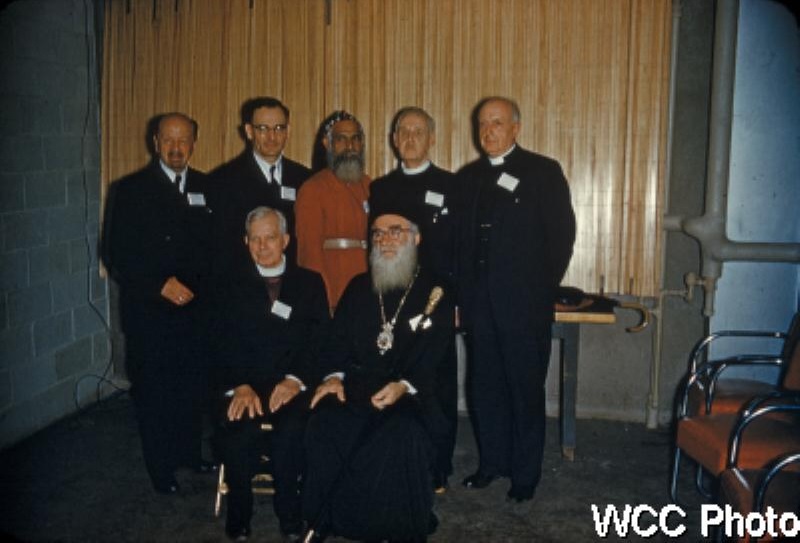
The six new elected Presidents of the World Council of Churches (1954).
Standing, left to right, the are Bishop Dibelius of the Evangelical Church of Germany, Bishop Barbieri of the Methodist Church in Argentina, Metropolitan Juhanon of the Mar Thoma Syrian Church of Malabar, India, the Very Rev. John Baillie of the Church of Scotland, Bishop Sherril of the Protestant Episcopal Church of the U.S.A.
Seated, left to right, Bishop bell of the Church of England (Honorary President), Archbishop Michael of the Eastern Orthodox Church in North and South America. (Photo from the Archive of wcc-coe.org)
Pages from History: 15 September, 1853: First woman ordained in the United States
15 September, 1853: Antoinette Brown Blackwell becomes the first female minister ordained in America. Antoinette Brown, (May 20, 1825 – November 5, 1921), was the first woman to be ordained as a minister in the United States, when she was called to be the pastor of the Congregational church in South Butler, New York in 1853. Her ordination, however, was not recognized by her denomination. In 1857, she returned to her work as an orator and reformer for womens rights with her husband Samuel C. Blackwell. She also was a strong activist for the right to vote for women. She died at the age of 96 in Elizabeth, New Jersey.
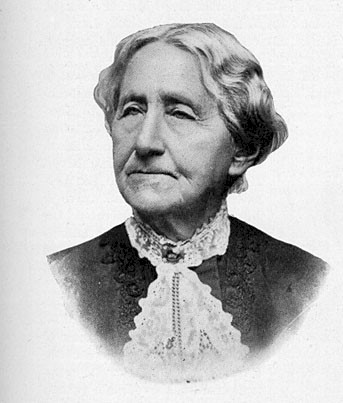
Antoinette Brown Blackwell
Pages from History: 4 September, 1847: Henry Francis pens Hymn ‘Abide with me’
4 September, 1847: Henry Francis Lyte (1793-1847) writes the Hymn “Abide with me” (Malayalam – Koode paarkka neram vaikkunnitha, No.8 (7) in Kristheeya Keerththanagal). Lyte wrote this hymn at the end of his life, just two months before he died. The text for this Hymn was taken from Luke’s Gospel Ch.24 v. 29 “Abide with us; for it is toward evening, and the day is far spent”.
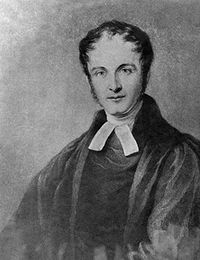
Henry Francis Lyte