1898 -1912: Rev. Thomas Walker inspires Mar Thoma Missionary projects

Rev. Thomas Walker – Church Missionary Society
Rev. Thomas Walker was one of the main speakers at the Maramon Convention from 1898 to 1912. He was a Church Missionary Society (CMS) missionary from Tirunelveli. He emphasized the importance on studying the Word of God (Bible) and to promote the missionary work of the Mar Thoma Syrian Church. His inputs were instrumental in inspiring and the beginning of many Mar Thoma Missionary projects across India.

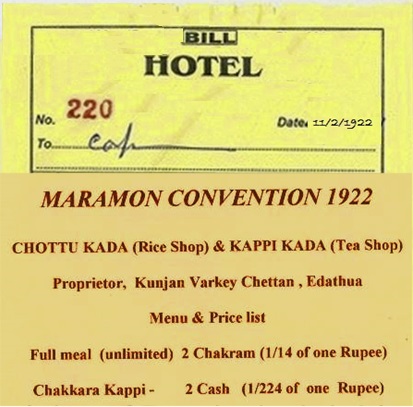
Maramon Convention 1925: The price of meals
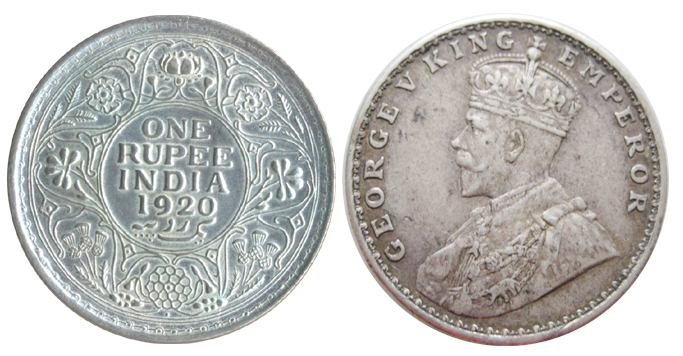
One British Rupee 1920
Fourteen meals for One rupee. During the early years of the Convention, restaurants and hotels were not in existence. Kappi Kadas (coffee/tea shops) and Chottu Kadas (rice shops) were the only available eateries at the Manalpuram (river bed) venue of the convention. One of the famous chottu kada’s was managed by Kunjan Varkey Chetten from Edathua. He would serve 14 full meals for just one rupee and 228 full glasses of black coffee (Chakkara Kappi) also for Rs.1 in the early 1920’s.
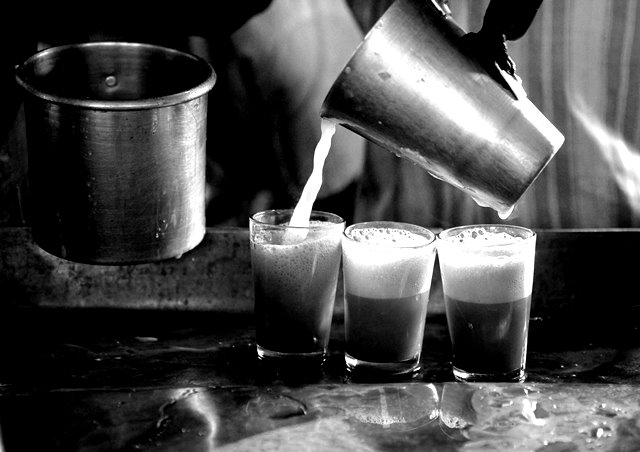
Chai shop
(www.chaiwallahsofindia.com)

February, 1917: Sadhu Sunder Singh preaches at Maramon Convention
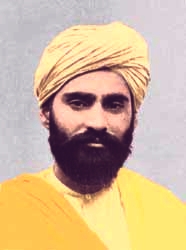
Sadhu Sundar Singh
Sadhu Sunder Singh (3 September 1889-1929) the renowned Indian Christian missionary was one of the speakers of the Maramon Convention in 1918. He spoke in Hindi and the translation was done by Mr. M. O. Oommen, Chief Conservator of Travancore.
Sadhu Sunder Singh drew crowds greater than any previous conventions, so much so that before the end of the week the pandal (covered area) had to be enlarged. It is estimated at the final meeting about 32,000 people gathered to hear his message.

March 9 – 18, 1895: The first Maramon Convention

An undated early photo of the Maramon Convention. (www.marthoma.in)
The first Maramon Convention was held from 9th March (Friday) to 18th March (Sunday) in 1895 at the Parapuzha Manalpuram of the River Pamba (the location was situated between the famous Aranmula Temple and the Maramon Church) about one kilometer away from the present venue. It was a ten day event.
The pandal (tent) could accommodate about 7000 people. Mr. David and Mr. Wordsworth, both missionaries from Ceylon (today known as Sri Lanka) were the main speakers of the convention. Mar Thoma Metropolitan Titus I gave the leadership for the convention meetings. Deacon Kakkasseri Varghese of Kunnamkulam (7 July 1867 – 4 June 1897) translated the messages from English to Malayalam for the audiences to understand.

Pages from History: 2nd December, 1842 – Birth of Iype Thoma Kathanar (Kovoor Achen)
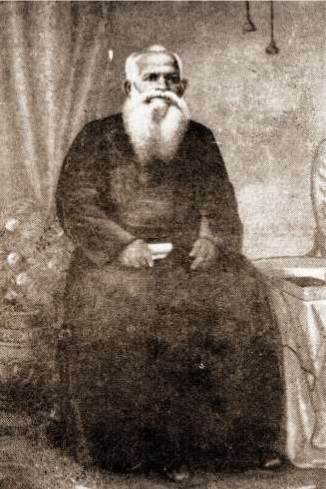
Very Rev. Iype Thoma Kathanar
2 December, 1842: Birth of Iype Thoma Kathanar (Kovoor Achen d.27 Jan,1917).
Ipe Thoma Kathanar was one of the prominent priests of the Mar Thoma Syrian Church. He bought the Panchayathu Purayidam (present SCS Compound in Tiruvalla, Kerala) for the Church in 1892 for Rs.600. It was he who started the Kettuthengu – practice of dedicating coconut trees from each house for the fund collections for the welfare of the Church.
Read more about his life in our free pdf Ebook: https://nalloorlibrary.com/wp-content/uploads/2013/06/very-rev-iype-thoma-kathanar.pdf
First Sunday of December – Bible Sunday
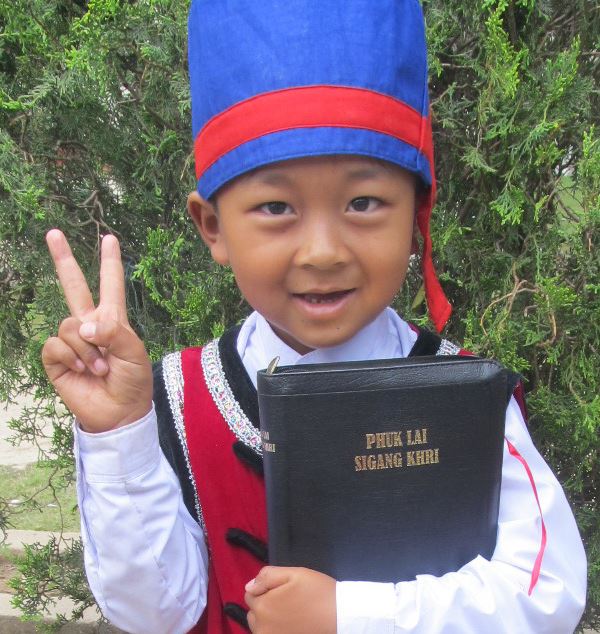
A Myanmar child holding the Bible.
The First Sunday of December is observed as Bible Society Day. It was the British and Foreign Bible Society, established in London in 1804, that first made a concerted effort of translating, printing and publishing Bibles in different languages.
In India, it’s auxiliaries were formed in Calcutta (1811), Bombay (1812), Madras (1820) and in Kerala (1956). Other auxiliaries were formed later. Even before the formation of the auxiliaries in India, the work of translation of the Bible to Indian languages had been taken up by William Carey and his associates in Calcutta. In obedience to the commandment of the Lord “Go ye unto the uttermost corners of the earth and preach my gospel”, the Bible Society aims at making available, copies of the Bible, New Testaments and portions of the Bible to
1.To Every Person in his/her own language.
2.At a price within his/her reach
3.In a style which is easily understood
It is in pursuance of this objective that it brings out special editions for students,members of the armed forces, in Braille type for the blind, etc. The United Bible Society distributes an average of 32 million full Bibles each year. In addition to that, they distribute enough New Testaments and Scripture portions to potentially reach 5% of the world’s population each year. In 2012 they distributed over 405 million Scripture items.
They also manage a growing social media ministry on Facebook and other social networks. The Digital Bible Facebook page reaches millions of young adults every year. 71% report it helps them apply the Bible’s teaching to their lives. https://www.facebook.com/UnitedBibleSocieties

The Advent ( Lent from 1 to 25 December)

The 4 themes/candles of Advent with the centre candle for Christmas Eve (Image from http://www.beaconhillmd.org)
The Advent (Lent from 1 to 25 December). For Eastern Churches this is the season waiting for the birth of Christ. During this time the church prepares herself through cleansing and renewal for the advent of her Lord. It serves as a time of spiritual discipline and renewal in preparation for Christmas. Christians observe lent with fasting, prayer and self-sacrifice. The term is an anglicized version of the Latin word adventus, meaning “coming”.
Latin adventus is the translation of the Greek word parousia, commonly used to refer to the Second Coming of Christ. For Christians, the season of Advent anticipates the coming of Christ from two different perspectives. The season offers the opportunity to share in the ancient longing for the coming of the Messiah, and to be alert for his Second Coming. In 2014 the four Advent Sundays are November 30, December 7, December 14, and December 21.
In recent times the most common observance of Advent outside church circles has been the keeping of an advent calendar or advent candle, with one door being opened in the calendar, or one section of the candle being burned, on each day in December leading up to Christmas Eve.
Pages from History: 30th Nov 1945 – Sadhu Kochukunju Upadesi passes away.
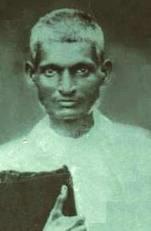
Sadhu Kochu Kunju Upadesi
30th November, 1945 (1121 Virchikam 15): Sadhu Kochukunju Upadesi (b.Dec.1883) passes away. Sadhu Kochukunju Upadesi (Mr. Moothampakkal Itty Varghese,Moothampakkal, Edayaranmula near Chengannur) was a unique personality in history of the Mar Thoma Syrian Church.
For almost forty years he preached the Bible in simple language all over South India. He practised and lived the life of a Sadhu. He wrote more than 200 hymns, many of that are printed in worship books across denominations even today. Thousands turned to God by hearing his messages. He was the first General Secretary of the ‘Mar Thoma Voluntary Evangelists’ Association, which was founded in 1924, and he continued in the post until 1945.
His continuous travels and gospel work made him sick many times. But on Friday, 30th November 1945 he became very sick and called to eternal rest on 15 Virchikam 1121 (8.45 am) and was buried in the Lakha St.Thomas Mar Thoma Church Cemetery on the following day. The funeral service itself was a great honour for him. Two Bishops, more than 100 priests and more than 40,000 people attended the funeral service.
Read more about his life in our free pdf Ebook: https://nalloorlibrary.com/wp-content/uploads/2013/06/sadhu-kuchujunu-upadeshi.pdf
Pages from History: 30 November, 1979: First Catholic Pope to attend Eastern Orthodox service
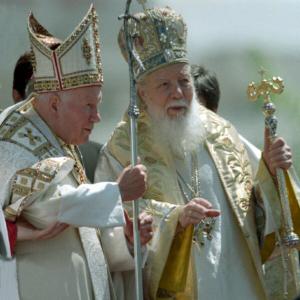
His Holiness Pope John Paul II (left) and His Beatitude Father Teoctist, Patriarch of the Romanian Orthodox Church (right) in Bucharest. Photo credit: (c) Artur MUSTATA / AGERPRES ARCHIVE
30 November, 1979: John Paul II (18 May 1920 – 2 April 2005) attends an Eastern Orthodox service in Romania, the first pope in 1,000 years to do so.
In May 1999, Pope John Paul II visited Romania on the invitation from Patriarch Teoctist of the Romanian Orthodox Church. This was the first time a Pope had visited a predominantly Eastern Orthodox country since the East-West Schism in 1054, the event that separated Eastern Orthodoxy and Western Catholicism.
On his arrival, the Patriarch and the President of Romania, Emil Constantinescu, greeted the Pope. He embraced the head of the Romanian Orthodox Church in Bucharest’s Union Square before a congregation of 50,000 worshippers. The Patriarch stated, “The second millennium of Christian history began with a painful wounding of the unity of the Church; the end of this millennium has seen a real commitment to restoring Christian unity.”

His Holiness Pope John Paul II (right) and His Beatitude Father Teoctist, Patriarch of the Romanian Orthodox Church (left) in front of the worshippers gathered to worship together.
Pages from History: 29 November, 1970: Formation of Church of North India (CNI).
29 November, 1970: Formation of Church of North India (CNI). The inaugural meeting of the CNI was held in the Unity Hall opposite the Anglican Cathedral in Nagpur. The metropolitan of the Mar Thoma Syrian Church Dr. Juhanon Mar Thoma attended this meeting.
It was a merger of six Christian denominations, including the United Church of Northern India; the Anglican Church of India, Pakistan, Burma (Myanmar) and Ceylon; the British and Australian Methodist churches; the Council of Baptist Churches in Northern India; the Church of the Brethren; and the Disciples of Christ.The motto of the church is: Unity – Witness – Service.


 Nalloor Library