Maramon Convention, 1947: Joseph’s call to Karnataka
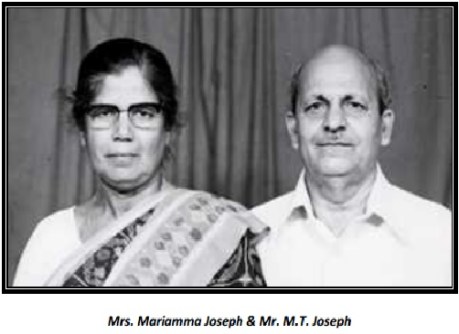
It was during the 1947 Maramon Convention that Joseph heard a definite call from God to go to Karnataka and so he dedicated his life and waited for the right time. While he was working in the Anchal office at Maramon he met A.C. Zachariah, who was teacher in Kuriannoor and Kottayam.
Zachariah told him of his plans for the future, about how he was in search for a coworker to start work in Hoskote. Joseph responded immediately, without any hesitation or bargain with God. Zachariah praised God that he had found the right co-worker to go with him to Hoskote. Obedience to God’s call meant resigning the promising and stable careers in Pune and Maramon.
Obedience to God’s call meant sacrificing the comfort of a home, leaving parents, loved ones, relatives, job and father’s house. Joseph was prepared for 40 years. And he was ready to be sown in Gods field. And so they resigned from their secure Government jobs, bid farewell to their dear ones, especially their parents and turned their backs to everything they considered near and dear.
Joseph, his wife and their one year and three month old daughter; and Zachariah Sir, his wife and their three daughters were the pioneering team of Hoskote Mission. The two families left Kerala on 26 June, 1947. They were sent with prayer and blessings by Abraham Mar Thoma Thirumeni. The families reached Hoskote on 27th June, 1947.
The Hoskote Mission Medical Center was established in 1947 in Hoskote, Bangalore Rural District, Karnataka.
Read more about this incredible story (Free PDF)
https://nalloorlibrary.com/wp-content/uploads/2015/02/maramon-convention-1947-joseph_s-call-to-karnataka.pdf
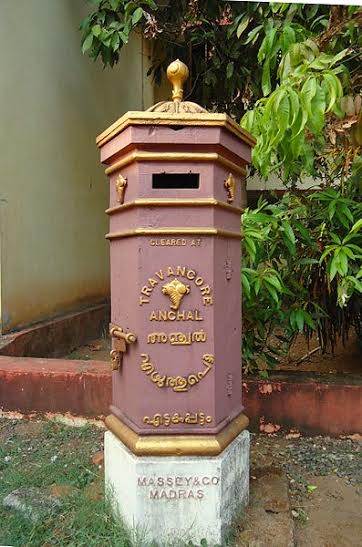
An old post box in Kerala, India
Watch the Maramon Convention 2016 – Videos and Photos
Watch the VIDEO proceedings of the 121st Maramon Convention from here
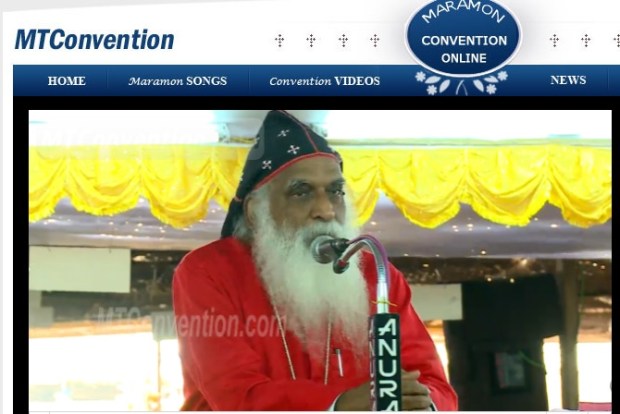
You can also see PHOTOS from the 120th Convention here arranged day by day
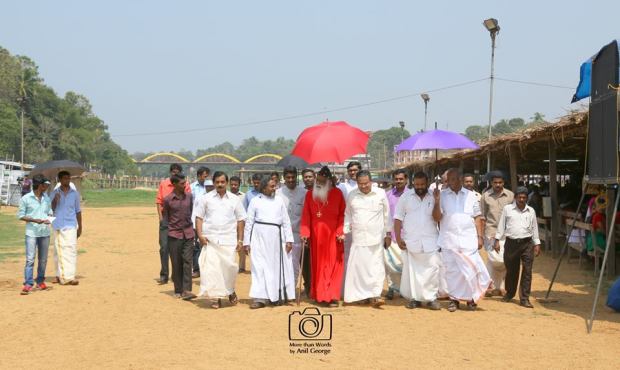
Opening day of the 121st Maramon Convention – Photo Courtesy – www.facebook.com/MalankaraMarThomaSyrianChurch
Maramon Convention 1922: The price of meals
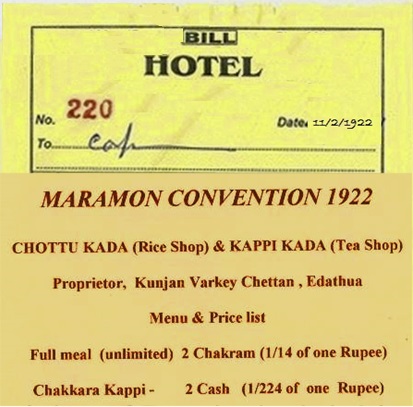
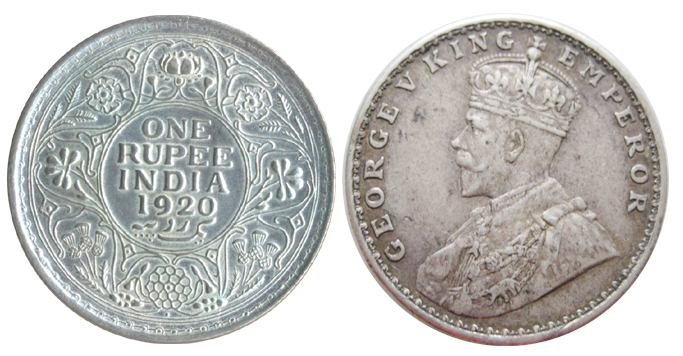
One British Rupee 1920
Fourteen meals for One rupee. During the early years of the Convention, restaurants and hotels were not in existence. Kappi Kadas (coffee/tea shops) and Chottu Kadas (rice shops) were the only available eateries at the Manalpuram (river bed) venue of the convention.
One of the famous chottu kada’s was managed by Kunjan Varkey Chetten from Edathua. He would serve 14 full meals for just one rupee and 228 full glasses of black coffee (Chakkara Kappi) also for Rs.1 in the early 1920’s.
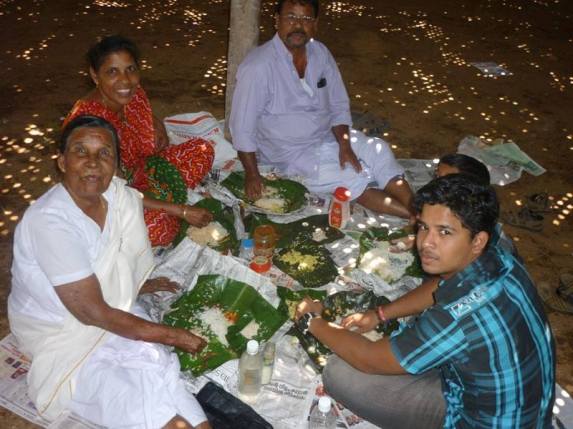
Having lunch at Maramon Convention. (Photo courtesy Facebook Group)
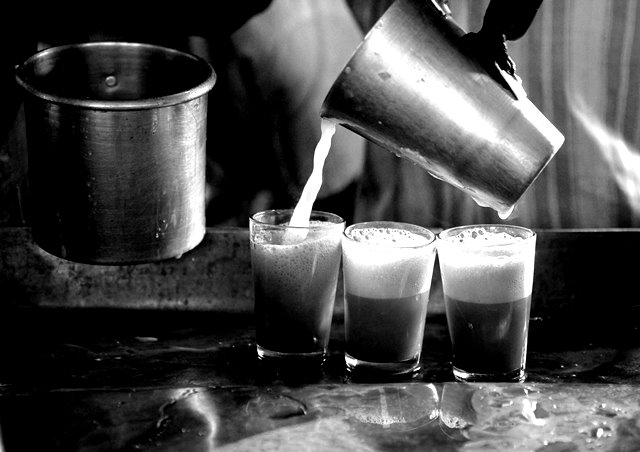
Chai shop
(www.chaiwallahsofindia.com)

1921 -1970: World renowned missionary Dr. E. Stanley Jones at Maramon Convention (See Rare Photos)
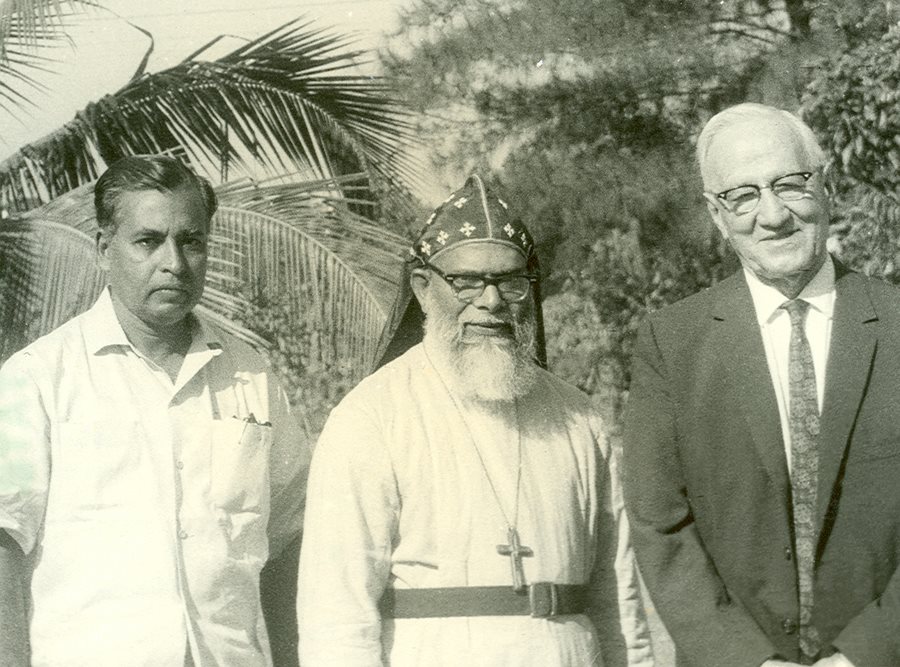
E.Stanley Jones (right) with Alexander Mar Thoma Metropolitan (middle) with an unidentified friend at Sat Tal Ashram, India. (Photos from E. Stanley Jones FB page)
Dr. Eli Stanley Jones was born in Baltimore, Maryland, USA on 3rd January 1884. He was a faculty member at Asbury College, Kentucky, USA when he was called to missionary service in India in 1907 under the Board of Missions of the Methodist Episcopal Church.
He was one of the main speakers of the Maramon Convention from 1921-1970. His messages combined evangelistic challenges with social concerns. The Maramon Convention is one of the largest Christian convention in Asia, and is held at Maramon, Pathanamthitta, Kerala, India annually in February. The venue is on the vast sand-bed of the Pampa River next to the Kozhencherry Bridge. It is organised by Mar Thoma Evangelistic Association, the missionary wing of the Malankara Mar Thoma Syrian Church. The 124th Maramon Convention is happening in 2019.
“For more than half a century Dr E. Stanley Jones proclaimed the Gospel of Christ and applied it to people’s personal, social, national, and international problems. He moved among statesmen and among leaders without portfolios as counselor, friend and worker for peace and goodwill.
Dr Jones became a friend of Mahatma Gandhi and wrote an appreciative biography of Gandhi. In 1950, Dr. Jones provided funds for India’s first Christian psychiatric center, and clinic currently known as Nur Manzil Psychiatric Center and Medical Unit at Lucknow, Uttar Pradesh, India.
~ http://www.facebook.com/SattalAshram”
In 1946, with the help of friends in USA, he donated the first loud speaker setup to the Maramon Convention. He is also the founder of the Sat Tal Christian Ashram movement, Nainital, Uttarakhand, India. He died on January 25, 1973 in his beloved India.
In the 1920s, India began to develop greater appreciation for its own history and culture and greater pride in its own unique contributions to world civilization. Stanley Jones was one of the very first to realize the possibilities that this change in India’s intellectual and spiritual culture created for Christianity and especially for Western Christian missionaries. But he could not fully understand the astounding scope and depth of the possibilities without experiencing the history and culture of his adopted country for himself. So, what better way to immerse himself in the ethos of India than to visit Indian ashrams?
This is exactly what he did. In 1923, he spent two months at Santiniketan, the ashram of the world-famous poet, Rabindranath Tagore. Three years later in 1926 he visited Gandhi’s ashram at Sabarmati.
It is no exaggeration to say that Jones’ visits to these ashrams changed the course of his life. In fact, in 1930, he established his own ashram as a spiritual retreat for Christians modeled on his experience with Ashrams in India. But this was only the first of hundreds of Christian ashrams that would eventually be established throughout the world. These ashrams are truly the work of the Holy Spirit as they continue to inspire, refresh, and renew thousands of Christians in many nations today.
~ From “Ordinary Man, Extraordinary Mission: The Life and Work of E. Stanley Jones” by Stephen A. Graham
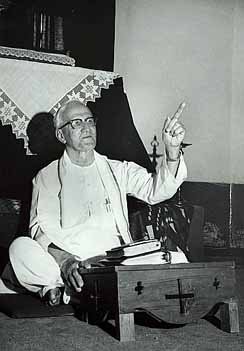
Rev. E. Stanley Jones giving one of his sermons at Sat Tal Ashram, India. (Photo from E. Stanley Jones FB Page)

Bishop T. S. Joseph speaking at the Maramon Convention while Bishop Alexander Mar Theophilus (Metropolitan Alexander Mar Thoma), E. Stanley Jones and Mr. Ramenpillar listen. (Photo from E. Stanley Jones FB page)
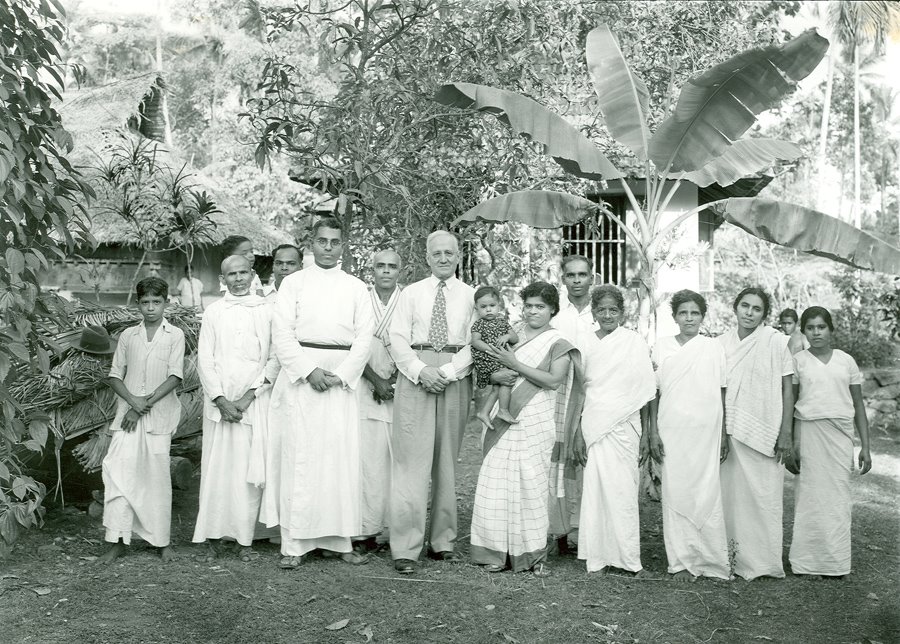
Rev. Stanley Jones with Mar Thoma Church members in Kerala, India. (Photo from E. Stanley Jones FB page)
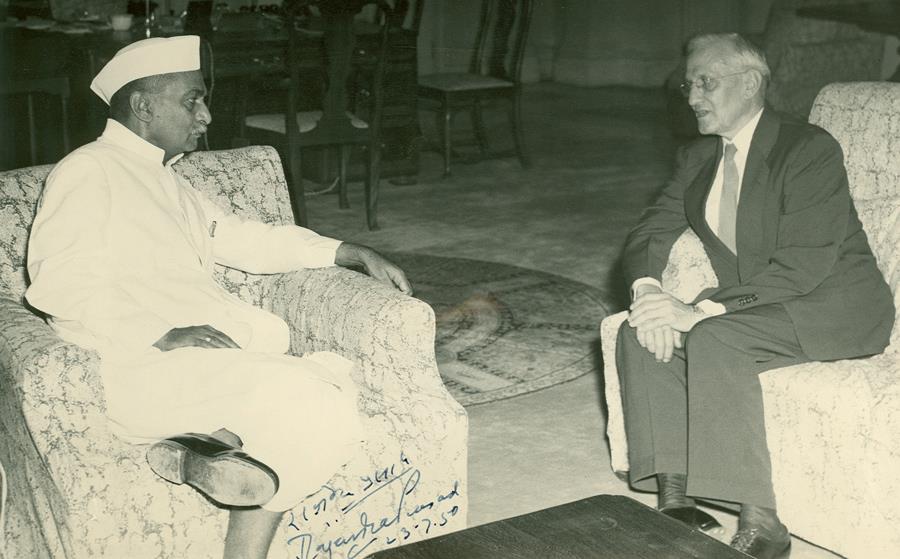
Dr. Stanley Jones with Dr. Rajendra Prasad, first President of India 1950 (Photo from E. Stanley Jones FB page)
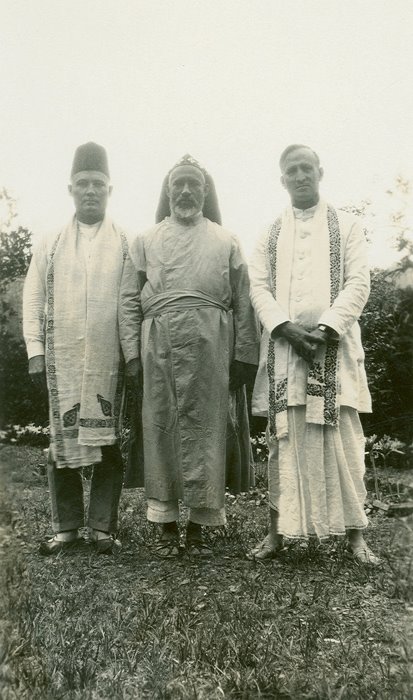
E. Stanley Jones (right) at the Maramon Convention with Bishop Abraham Mar Thoma Metropolitan (middle) and an unidentified friend. (Photo from E. Stanley Jones FB page)

1905: Women Speakers lead the way at Maramon Convention
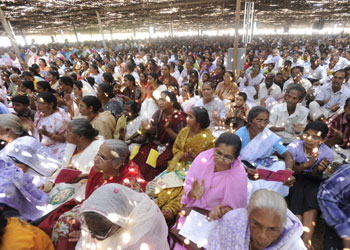
Women listening to the sermon at Maramon Convention. (Image courtesy www.manoramaonline.com)
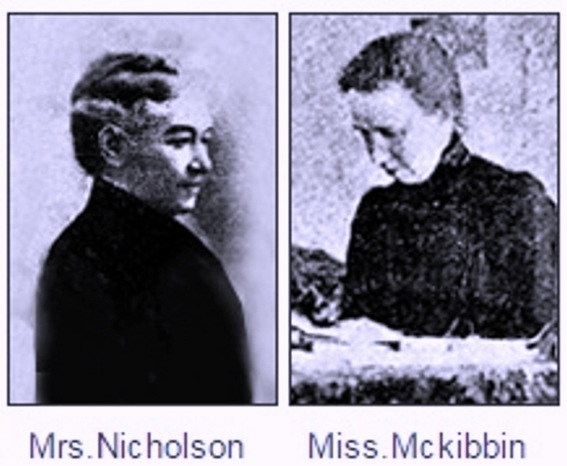
Right from its initial years, many women speakers have made a great impact on the Maramon Convention. Mrs. F.S. Nicholson and Miss. S.C. McKibbin conducted special meetings and Bible classes for women during the convention in 1905. They are remembered for their devoted service to the women of Travancore particularly in the education field. They established the prestigious Nicholson Syrian Girls Higher Secondary School and Training Home in 1910 at Kattode, Tiruvalla, Kerala.
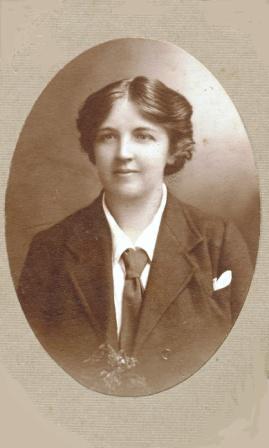
Ms. Gwen Kellaway, Vanitha Mandiram
Other eminent speakers included Miss Amy Carmichael, founder of the Dohnavur Mission, Tamil Nadu, Miss Kellaway of Vanitha Mandiram, and Miss Grower to name a few missionaries who encouraged women towards the Lord’s work through Bible classes during the early days of the Convention.
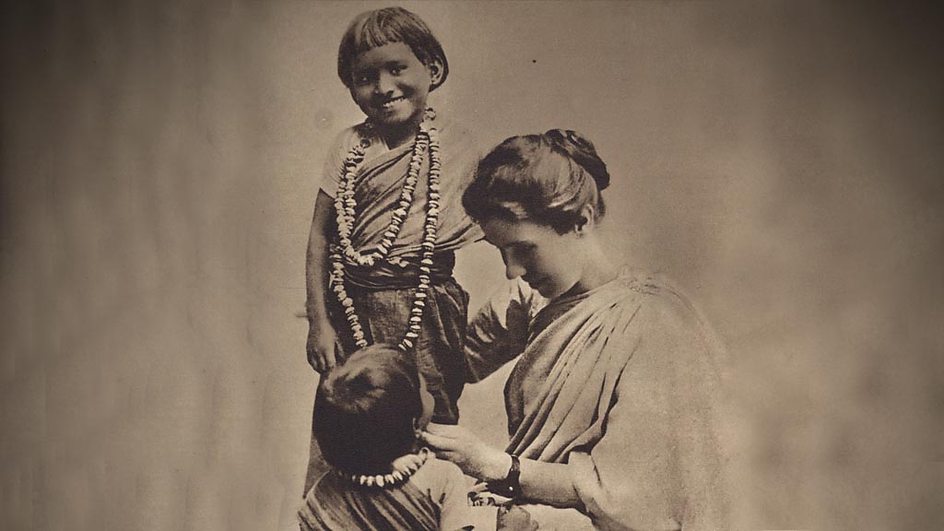
Amy Carmichael with the children of Dohnavur Mission, Tamil Nadu

Ban of Tobacco and Paan at the Maramon Convention
The use of tobacco and paan was a way of life in Kerala during the first half of the 20th Century. It was an essential item at social events such as marriages and other family gatherings. Tobacco and paan was easily available through shops all over Kerala. It was a common sight to have people attend the Maramon Convention meetings with beedi and murukkan in their pockets.
Through his messages, Dr. Stanley Jones urged people to refrain from the use of tobacco products. During one meeting, he asked the convention participants to bury their tobacco (which they were carrying) in the sand on the pandal floor. In another meeting, he collected all the tobacco products from the people and burnt it near the pandal in front of everyone.
It is only after much persuasion that the people stop using it and today it is not permitted at the Maramon Convention pandal.
Read more about Dr. E. Stanley Jones at the Maramon Convention with rare photos



 Nalloor Library