Pages from History: Martin Luther King Jr. is assassinated in Memphis (1968)
4 April, 1968: Civil rights leader and Baptist minister Martin Luther King, Jr., is assassinated in Memphis, Tennessee. He was born Michael Luther King, Jr. (b.15 Jan 1929), but later had his name changed to Martin.
His grandfather began the family’s long tenure as pastors of the Ebenezer Baptist Church in Atlanta, serving from 1914 to 1931; his father served from then on, and from 1960 until his death Martin Luther acted as co-pastor.
On October 14, 1964, King received the Nobel Peace Prize for combating racial inequality through non-violence.
On the evening of April 4, 1968, while standing on the balcony of his motel room in Memphis, Tennessee, where he was to lead a protest march in sympathy with striking garbage workers of that city, he was assassinated.
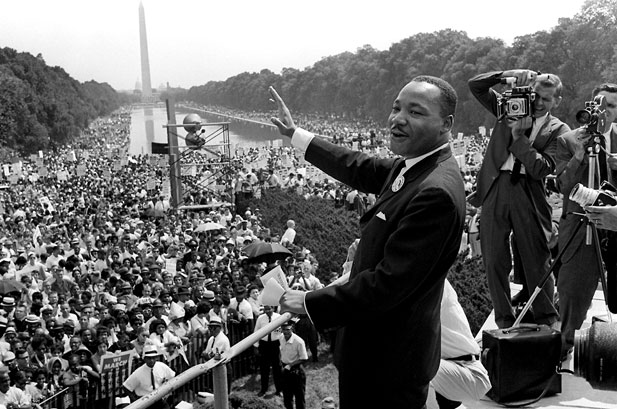
Martin Luther King Jr. addressing the March on Washington (1963)
Pages from History: Bishop Reginald Heber dies at Thiruchirappalli (1826)
3 April, 1826: Bishop Heber (b.21 Apr.1783) was the second Anglican Bishop of Calcutta. He is known for his hymn Holy, Holy, Holy sung on Trinity Sunday.
He was on his way to the Southern Kingdom of Travancore to visit the Syrian Christian Church Leaders as part of a visit to the churches in South India to look into issues of caste plaguing the church. He baptized 42 people the day before he died. “On 3 April, after attending an early-morning service at which he gave a blessing in the Tamil language, Heber returned to his bungalow for a cold bath. Immediately after plunging into the water he died, possibly from the shock of the cold water in the intense heat.”
Heber died at the age of 42 on 2 April, 1826 of a cerebral hemorrhage at Thiruchirappalli. He is buried at St. John’s Church, Thiruchirappalli, Tamil Nadu, India (north side of the altar)
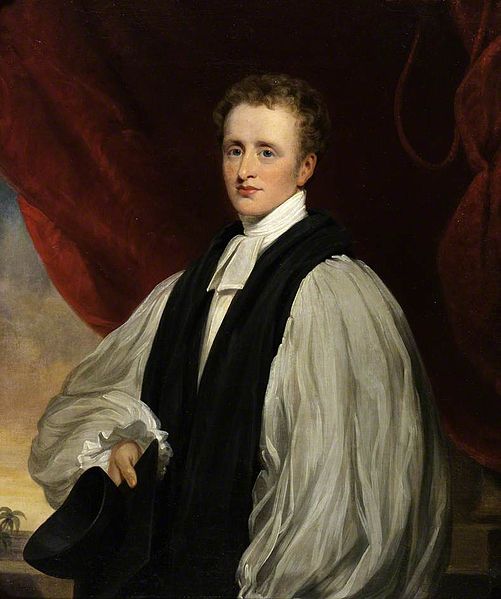
Portrait of Reginald Heber at the British Library
Pages from History: Parliament orders the publication of the Book of Common Prayer (1548)
1 April, 1548: The British Parliament orders the publication of the Book of Common Prayer (BCP). Though Thomas Cranmer is rightly credited with the final form of the BCP, he worked with a committee of scholars, including Reformer Martin Bucer, to shape his famous liturgy.
The Book of Common Prayer is the common title of a number of prayer books of the Church of England and used throughout the Anglican Communion. The first book, published in 1549, in the reign of Edward VI, was a product of the English Reformation following the breach with Rome.
Prayer books, unlike books of prayers, contain the words of structured (or liturgical) services of worship. The work of 1549 was the first prayer book to contain the forms of service for daily and Sunday worship in English and to do so within a single volume; it included Morning Prayer, evening prayer, the Litany, and Holy Communion. The book included the other occasional services in full: the orders for baptism, confirmation, marriage, ‘prayers to be said with the sick’ and a funeral service.
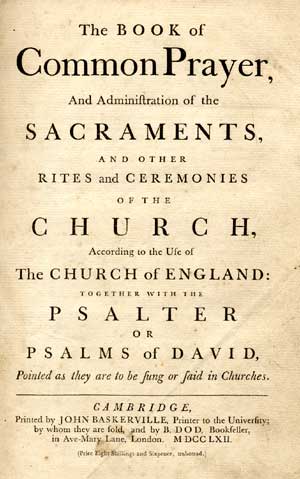
Title page of the 1662 Prayer Book, printed by John Baskerville in 1762
Pages from History: Hamilton’s start VBS (Vacation Bible School) in India (1952)
Rev. Lester John Hamilton and Mrs. Mary Hamilton
The Hamiltons (American Missionaries,) arrived in India in 1951 and were given only a brief period of language study before being plunged into the activities of the South India Bible Institute in Bangarapet, Kolar District, Karnataka. But they both continued to learn Kannada throughout their ministry in India, and found themselves quite at home with the language.
In 1952, Mrs. Mary Hamilton was requested to prepare materials for a model Vacation Bible School, and this was so well received that it has grown to become an annual event in many parts of India, and other countries in the world.
Now millions of children are attending VBS classes in different countries in different languages. Even though the Hamilton’s turned over the leadership of the VBS office into national hands, they continued to remain involved with it and gave their time and assistance until they left India in 1985.
Rev. and Mrs. Hamilton were teachers in the South India Biblical Seminary in Bangarapet, in Karnataka. They both were highly talented and have enriched the lives of many who came in contact with them. Their many and varied contributions to the ministries of South India Biblical Seminary and the Vacation Bible school movement will not be soon forgotten and we thank God for having brought them to serve in India.
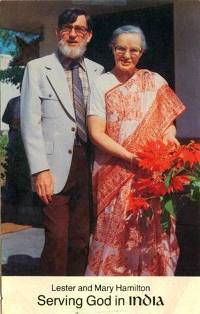
Rev. Lester John Hamilton and Mrs. Mary Hamilton
Pages from History: Birth of Mariamma Joseph – Co-founder of Hoskote Mission
31 March, 1917: Birth of Mrs. Mariamma (Pennamma) Joseph (d.19 June 1986), Co-founder of the Hoskote Mission near Bangalore, Karnataka, India. Mariamma was the daughter of Mammen Mammen and Mariamma of Manalukalayil, Kumbanad. She did her Teacher’s Training Course (TTC) from Peringara School near Tiruvalla, after which she taught in many schools including Arrangatu School, Pullad, Perumbara School near Charal Mount; Kanjeettukara and Nedumprayar (Maramon).
She had the privilege to attend the classes conducted by the CMS Missionary, Miss Kellaway (Australia) of Vanitha Mandiram. Pennamma was greatly influenced through the life and testimony of this missionary. She had an earnest desire to go for mission work in Karnataka but her parents did not allow it (according to the then prevalent customs/ norms, Syrian Christian parents were scared to send their unmarried daughters to unknown ‘foreign’ lands).
However, after her marriage with Mr. M.T. Joseph, (Manon House, Maramon) her desire was fulfilled as he got the call to go to Karnataka for mission work during one of the Maramon Conventions. Because she was obedient to this heavenly call, she resigned from her teacher’s job, of a permanent income, to an uncertain future. This journey led to the humble beginnings of the Hoskote Mission.
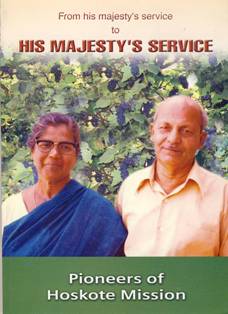
Mrs. Mariamma Joseph and Mr. M.T. Joseph (Co-founders of Hoskote Mission)
Guinness book of world record holder under the entry – ‘longest religious service’ passes away (1984)
28 March, 1984: Rev. K. M. Jacob Kottara, Pooyappally (June 1881) passes away. Rev. K.M. Jacob, of Cherukarakunnil family of Kottara Bethel Mar Thoma Church, was born in June, 1881. He became a deacon of the church in 1897, and priest on 8 October, 1903.
He was the first convener of the Kottarakkara Mar Thoma Convention and was one of the founding members of the Jubilee Mandiram in Kottarakkara.
For certain parishes he was the Vicar for more than 40 years. Achen was called to his eternal home on 28 March, 1984. Achen served the Church for more than 86 years and his name is in the Guinness book of world record under the entry – ‘longest religious service.’

Rev. K. M. Jacob Kottara

Pages from History: Birth of Hymn writer Fanny Crosby (1820)
24 March, 1820: Birth of Hymn writer Fanny Crosby. Frances Jane Crosby commonly known as Fanny Crosby, was an American lyricist best known for her Protestant Christian hymns. She was one of the most prolific hymnists in history, writing over 8,000 hymns despite becoming blind after birth. She is also known for her preaching and speaking. During her lifetime Fanny Crosby was one of the best known women in the States.
To this day, the vast majority of American hymnals contain her work. Some of her best known songs include “Blessed Assurance” “Jesus Is Tenderly Calling You Home” “Praise Him, Praise Him” and “To God be the Glory”. Since some publishers were hesitant to have so many hymns by one person in their hymnals, Crosby used nearly 100 different pseudonyms during her career.
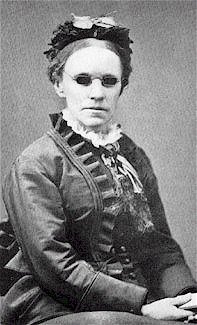
Hymn writer Fanny Crosby
Pages from History: Birth of David Livingstone (1813)
19 March, 1813: Birth of David Livingstone (d.1 May 1873). David Livingstone was born in Blantyre, Scotland on March 19, 1813. The son of poor parents he was the first white man to cross Africa with the Gospel of Christ. His accomplishments were incalculable: traveller, zoologist, philanthropist, linguist, author, geographer, mercantile director, physician, theologian, explorer, astronomer, missionary, teacher, evangelist and emancipator.
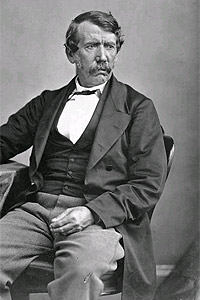
David Livingstone
Pages from History : Sale of indulgences & Johann Tetzel
15 March, 1517: Needing money to rebuild St. Peter’s basilica, Pope Leo X announces a special sale of indulgences. (The remission of temporal punishment still due for a sin that has been sacramentally absolved) A Dominican named Johann Tetzel led the way in promoting the sale in Germany and erroneously declared that indulgences would cover future sins (Leo’s forgave all past sins). The teaching angered the reformer Martin Luther, who soon posted his 95 Theses in response.

Johann Tetzel
Pages from History: Construction is completed on the Second Temple in Jerusalem (B.C 515)
12 March 515 B.C (Before Christ) – Construction is completed on the Second Temple in Jerusalem. The First Temple was built by King Solomon in seven years during the 10th century B.C in 957 B.C. It was the center of ancient Judaism and has remained a focal point for Jewish services over the millennia. The Temple replaced the Tabernacle of Moses and the Tabernacles at Shiloh, Nov, and Gibeon as the central focus of Jewish faith. This First Temple was destroyed by the Babylonians in 586 B.C, and was rebuilt seventy years later by Cyrus the Great in 516 B.C.
Centuries later, it was renovated by Herod in about 20 B.C, and this Second Temple was subsequently destroyed by the Romans in 70 A.D. All of the outer walls still stand, although the Temple itself has long since been destroyed and for many years it was believed that the western wall of the complex was the only wall standing.

The Second Temple. Model in the Israel Museum. Photo by Ariely


 Nalloor Library