Pages from History: Birth of Mariamma Joseph – Co-founder of Hoskote Mission
31 March, 1917: Birth of Mrs. Mariamma (Pennamma) Joseph (d.19 June 1986), Co-founder of the Hoskote Mission near Bangalore, Karnataka, India. Mariamma was the daughter of Mammen Mammen and Mariamma of Manalukalayil, Kumbanad. She did her Teacher’s Training Course (TTC) from Peringara School near Tiruvalla, after which she taught in many schools including Arrangatu School, Pullad, Perumbara School near Charal Mount; Kanjeettukara and Nedumprayar (Maramon).
She had the privilege to attend the classes conducted by the CMS Missionary, Miss Kellaway (Australia) of Vanitha Mandiram. Pennamma was greatly influenced through the life and testimony of this missionary. She had an earnest desire to go for mission work in Karnataka but her parents did not allow it (according to the then prevalent customs/ norms, Syrian Christian parents were scared to send their unmarried daughters to unknown ‘foreign’ lands).
However, after her marriage with Mr. M.T. Joseph, (Manon House, Maramon) her desire was fulfilled as he got the call to go to Karnataka for mission work during one of the Maramon Conventions. Because she was obedient to this heavenly call, she resigned from her teacher’s job, of a permanent income, to an uncertain future. This journey led to the humble beginnings of the Hoskote Mission.
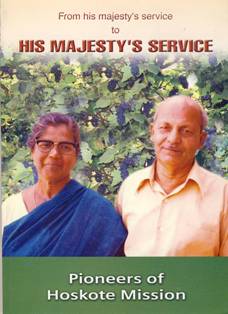
Mrs. Mariamma Joseph and Mr. M.T. Joseph (Co-founders of Hoskote Mission)
Guinness book of world record holder under the entry – ‘longest religious service’ passes away (1984)
28 March, 1984: Rev. K. M. Jacob Kottara, Pooyappally (June 1881) passes away. Rev. K.M. Jacob, of Cherukarakunnil family of Kottara Bethel Mar Thoma Church, was born in June, 1881. He became a deacon of the church in 1897, and priest on 8 October, 1903.
He was the first convener of the Kottarakkara Mar Thoma Convention and was one of the founding members of the Jubilee Mandiram in Kottarakkara.
For certain parishes he was the Vicar for more than 40 years. Achen was called to his eternal home on 28 March, 1984. Achen served the Church for more than 86 years and his name is in the Guinness book of world record under the entry – ‘longest religious service.’

Rev. K. M. Jacob Kottara

Pages from History: Birth of Hymn writer Fanny Crosby (1820)
24 March, 1820: Birth of Hymn writer Fanny Crosby. Frances Jane Crosby commonly known as Fanny Crosby, was an American lyricist best known for her Protestant Christian hymns. She was one of the most prolific hymnists in history, writing over 8,000 hymns despite becoming blind after birth. She is also known for her preaching and speaking. During her lifetime Fanny Crosby was one of the best known women in the States.
To this day, the vast majority of American hymnals contain her work. Some of her best known songs include “Blessed Assurance” “Jesus Is Tenderly Calling You Home” “Praise Him, Praise Him” and “To God be the Glory”. Since some publishers were hesitant to have so many hymns by one person in their hymnals, Crosby used nearly 100 different pseudonyms during her career.
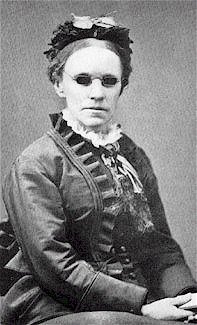
Hymn writer Fanny Crosby
Pages from History: The Archbishop of Canterbury meets with Pope (1966)
23 March, 1966: The Archbishop of Canterbury His Grace Michael Ramsey meets with Pope Paul VI at the Vatican, the first such meeting between Anglican and Catholic leaders in an official audience since King Henry VIII broke with Rome more than 400 years earlier to form the Church of England. It was the first public meeting between the leaders of the two Churches following an earlier private meeting between Archbishop Geoffrey Fisher and Pope John XXIII had on 2 December 1960.
Archbishop Ramsey met Paul three times during his visit and opened the Anglican Center in Rome with the purpose of increasing their mutual knowledge. Pope Paul replied that “by entering into our house, you are entering your own house, we are happy to open our door and heart to you.”
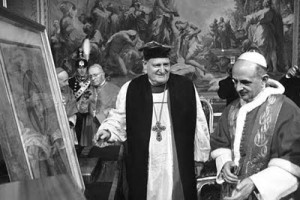
Archbishop Ramsey meeting Pope Paul VI (photo from httpdstp.rel.pl )
Pages from History: Publication of Uncle Tom’s Cabin (1852)
20 March, 1852: Abolitionist Harriet Beecher Stowe, daughter of the famous Congregational minister Lyman Beecher, publishes Uncle Tom’s Cabin (which had been serialized in an antislavery newspaper).
The book sold one million copies and was so influential in arousing antislavery sentiment that Abraham Lincoln is reputed to have said upon meeting Stowe in 1863: “So you’re the little woman who wrote the book that made this Great War!”

Harriet Beecher Stowe, c. 1852, (Bowdoin College Museum of Art, Gurney & Sons)
![Title-page illustration by Hammatt Billings for Uncle Tom's Cabin [First Edition: Boston: John P. Jewett and Company, 1852].](https://nalloorlibrary.com/wp-content/uploads/2014/03/345px-uncletomscabincover.jpg)
Title-page illustration by Hammatt Billings for Uncle Tom’s Cabin [First Edition: Boston: John P. Jewett and Company, 1852].
Pages from History: Construction is completed on the Second Temple in Jerusalem (B.C 515)
12 March 515 B.C (Before Christ) – Construction is completed on the Second Temple in Jerusalem. The First Temple was built by King Solomon in seven years during the 10th century B.C in 957 B.C. It was the center of ancient Judaism and has remained a focal point for Jewish services over the millennia. The Temple replaced the Tabernacle of Moses and the Tabernacles at Shiloh, Nov, and Gibeon as the central focus of Jewish faith. This First Temple was destroyed by the Babylonians in 586 B.C, and was rebuilt seventy years later by Cyrus the Great in 516 B.C.
Centuries later, it was renovated by Herod in about 20 B.C, and this Second Temple was subsequently destroyed by the Romans in 70 A.D. All of the outer walls still stand, although the Temple itself has long since been destroyed and for many years it was believed that the western wall of the complex was the only wall standing.

The Second Temple. Model in the Israel Museum. Photo by Ariely
Pages from History: Fire engulfs missionary William Carey’s print shop in Serampore (1812)
11 March, 1812: Fire engulfs missionary William Carey’s print shop in Serampore, India, destroying his massive polyglot dictionary, two grammar books, sets of type for 14 eastern languages, and whole versions of the Bible.
Undaunted, Carey said, “The loss is heavy, but as traveling a road the second time is usually done with greater ease and certainty than the first time, so I trust the work will lose nothing of real value . . . We are cast down but not in despair.” News of the fire also catapulted Carey to fame, bringing in abundant funds and volunteer labour.
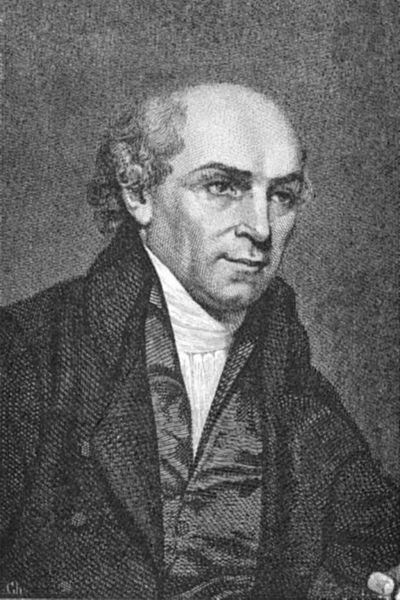
William Carey: The Shoemaker Who Became the Founder of Modern Missions; John Brown Myers; London 1887
Pages from History: George Muller Passes away (1898)
10 March. 1898: George Muller dies at the age of 93. George Muller (born on 27th Sep, 1805) was an ordinary man. His father was a tax collector. He was a man of faith. His life continues to be an inspiration and witness to all who commit their lives to God. By faith and prayer he opened many orphanages in England and he could support and take care of more than 18,000 orphan children during his lifetime. His work still continues through George Muller Foundation.
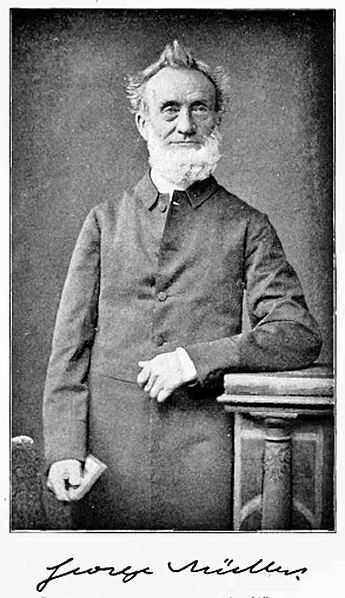
George Muller of Bristol by Arthur T. Pierson; New York; The Baker and Taylor Company; 1899
Pages from History: 8 March 1835, Freedom for slaves. (Munro Island- Travancore)
Slavery was a social evil which prevailed all over the world including what is now the state of Kerala in India. According to the 1836 census there were 164,864 slaves in Travancore vis-à-vis a total civilian population of 12,80,668.
Slaves were treated like animals and the cost of one slave was that of an ox, cost of an ox was 5 (big para) measures of Paddy or Rs. 10/- only. Slaves were chained and sold like animals in markets.
Kottayam, Changanasserry, Thirunakkara, Alleppey, Kayamkulam, Kollam, Attingal, Chirayinkizh, Kaniyapuram, Pettah and Kovalam were the notorious slave trade markets of the time. Churches in Cochin were used as godowns for the slaves except for Sundays. Slaves were exported out of the kingdom. There was no one to speak on behalf of these unfortunate people.
With the arrival and the teachings of the CMS (Church Missionary Society) missionaries, people became aware of this social evil. In 1819, Munro Island was given to the missionaries, by the then Travancore Government along with the slaves residing there on the Island. Munro Island is located at the confluence of Ashtamudi Lake and the Kallada River, in Kollam district, Kerala, India.
In 1833, England passed the Slavery Abolition Law. CMS missionaries, Benjamin Bailey and Joseph Peet made a historic declaration on 8th March 1835, giving freedom to the slaves in Munro Island.
The declaration read as follows:
“We the undersigned, acting as trustees of Munro Island, do hereby declare that… who has hitherto been a slave of the soil, is from this time liberated by us and made a free man and that his wife and offspring are wholly and forever free and are regarded by us only as hired servants and that no one has any right to bring them into servitude again. At the same time we declare that we do not consider ourselves as released from any claim which he or his wife or offspring may have upon us according to custom, privilege or law in consequence of their having been slaves.”
8 March 5. Sd/- Benj Bailey Sd/- Josh Peet,
In 1847, Uthram Thirunal Marthanda Varma became the King of Travancore. The same year CMS missionaries submitted a memorandum to the King requesting him to stop the slavery in Travancore. In 1853, by royal declaration slavery was abolished in Travancore forever. In 1864, the Kingdom of Cochin also made a similar declaration abolishing slavery.

Slaves
Pages from History: Society for Promoting Christian Knowledge (S.P.C.K.)
8 March, 1698: British missionary Thomas Bray and four laymen founded the Society for Promoting Christian Knowledge (S.P.C.K.) “to advance the honour of God and the good of mankind by promoting Christian knowledge both at home and in the other parts of the world by the best methods that should offer”. S.P.C.K. started its work in India in 1711 and is now one of the leading Christian publishing Houses in India. It is known in India as Indian Society for Promoting Christian Knowledge (ISPCK).
“Over the years, SPCK has distributed over 30 million books and has provided the means for translating the Book of Common Prayer into more than 200 languages. SPCK sent the first printing presses to India, opened the first British schools for poor children, gave equal education to girls, sent the first printed books to Australia, established libraries for clergy and missionaries in many countries, and published the first Braille books.” ~ www.spck.org.uk

SPCK
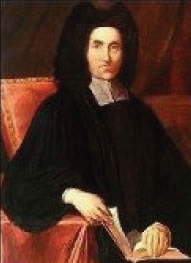
Thomas Bray