Pages from History: Council of Trent adopts Jerome’s Latin Bible translation (1546)
8 April, 1546: At its fourth session, the Council of Trent adopts Jerome’s Latin translation of the Bible (called the Vulgate), completed in 405, as the only authentic Latin text of the Scriptures. It became the official Bible of the Roman Catholic Church.
The Vulgate is an early Fifth Century version of the Bible in Latin, and largely the result of the labours of Jerome, who was commissioned by Pope Damasus I in 382 to make a revision of old Latin translations.
Its Old Testament is the first Latin version translated directly from the Hebrew Tanakh, rather than the Greek Septuagint. It became the definitive and officially promulgated Latin version of the Bible of the Roman Catholic Church, and ultimately took the name ‘versio vulgata, which means “the published translation”.
There are 76 books in the Clementine edition of the Vulgate Bible: 46 in the Old Testament, 27 in the New Testament, and three in the Apocrypha.

Saint Jerome in his Study, by Domenico Ghirlandaio
Pages from History: Strange But True – Malpan ex-communicates his cousin
6 April, 1839: Abraham Malpan ex-communicated his cousin brother for plucking vegetables (Colocasia) on Sunday. Sunday was regarded as a day of rest for the Syrian Christians and no one was allowed to work on that day.
Abraham Malpan, as vicar of the Maramon Mar Thoma parish ex-communicated his cousin brother because he uprooted a Chembu- Colocasia (a vegetable similar to potato) on a Sunday morning to make vegetable curry. He was taken back only after a proper written apology.

Abraham Malpan
Pages from History: Panditha Ramabhai passes away (1922)
5 April, 1922: Panditha Ramabhai (b.23Apr.1858) was an eminent Indian Christian social reformer and activist. She was a poet, scholar, and a champion of improvement in the plight of Indian women. As a social reformer, she championed the cause of emancipation of Indian women.
A widely travelled lady, she visited most parts of India, and even went to England and the U.S. Her father was Anant Shastri Dongre, a scholar of Sanskrit, and her mother was Lakshmibai. They were a Chitpawan Brahmin couple. Her father taught her Puranic Sanskrit and she made quite a name for herself as a scholar in Puranic circles. She acquired great reputation as a Sanskrit Scholar. Fluent in seven languages, she translated the Bible into Marathi, her mother tongue.
Deeply impressed with her knowledge and ability, Sanskrit scholars, at the Calcutta University, conferred on her the titles “Saraswati” and “Pandita”. Although she was a Brahmin, she married (13th Nov.1880) Babu Bipin Behari Madhavi, a Bengali lawyer at Bankipore (Patna, Bihar), who was not a Brahmin, and this created a stir in the orthodox circles of Hindu society. Bereft after her husband’s death shortly thereafter, she found herself unable to play the role traditionally reserved for upper-caste Hindu widows, and converted to Christianity, an action which created a scandal even in liberal Calcutta society.
She was given a scholarship to study medicine in England; when she arrived there, she found that her hearing was defective and so she could not participate in lectures. While in England, she wrote the feminist classic “The High Caste Hindu Woman”, a scathing attack on traditional practices including widowhood, polygamy and child marriage.
She established the Mukti Mission in 1889 as a refuge for young widows who were abused by their families. In Marathi, her native tongue, the word ‘mukti’ means liberation. The Pandita Ramabai Mukti Mission is still active today, providing housing, education, vocational training, and medical services, for many needy groups including widows, orphans, and the blind. Mukti Mission is located near the city of Pune (Poona) and receives support from several foreign countries including the United States and Australia.
In 1919, the King of England conferred on her the Kaiser-i-Hind award, one of the highest awards an Indian could receive during the period of the British Raj. Her contributions as a builder of modern India were recognized by the Government of India by issuing a commemorative postal stamp on 26th Oct 1989 in honour of her. The work of Pandita Ramabai continues today as a tribute to the Saviour whom she faithfully followed, Jesus Christ.
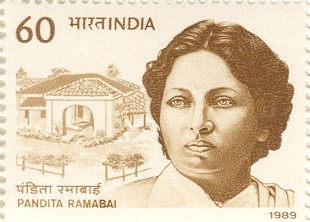
26 October 1989, in recognition of Pandita Ramabai’s contribution to the advancement of Indian women, the Government of India issued a commemorative stamp.
Pages from History: Martin Luther King Jr. is assassinated in Memphis (1968)
4 April, 1968: Civil rights leader and Baptist minister Martin Luther King, Jr., is assassinated in Memphis, Tennessee. He was born Michael Luther King, Jr. (b.15 Jan 1929), but later had his name changed to Martin.
His grandfather began the family’s long tenure as pastors of the Ebenezer Baptist Church in Atlanta, serving from 1914 to 1931; his father served from then on, and from 1960 until his death Martin Luther acted as co-pastor.
On October 14, 1964, King received the Nobel Peace Prize for combating racial inequality through non-violence.
On the evening of April 4, 1968, while standing on the balcony of his motel room in Memphis, Tennessee, where he was to lead a protest march in sympathy with striking garbage workers of that city, he was assassinated.
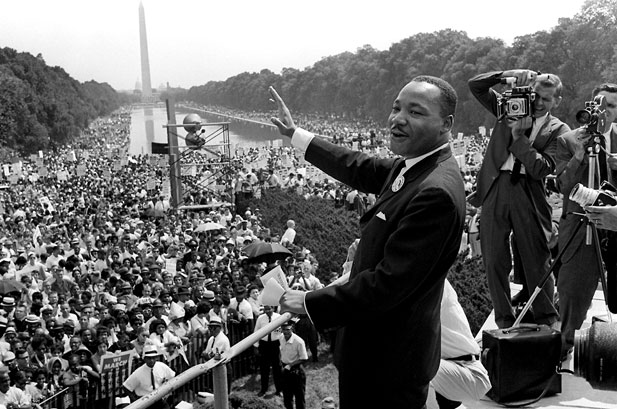
Martin Luther King Jr. addressing the March on Washington (1963)
Pages from History: Parliament orders the publication of the Book of Common Prayer (1548)
1 April, 1548: The British Parliament orders the publication of the Book of Common Prayer (BCP). Though Thomas Cranmer is rightly credited with the final form of the BCP, he worked with a committee of scholars, including Reformer Martin Bucer, to shape his famous liturgy.
The Book of Common Prayer is the common title of a number of prayer books of the Church of England and used throughout the Anglican Communion. The first book, published in 1549, in the reign of Edward VI, was a product of the English Reformation following the breach with Rome.
Prayer books, unlike books of prayers, contain the words of structured (or liturgical) services of worship. The work of 1549 was the first prayer book to contain the forms of service for daily and Sunday worship in English and to do so within a single volume; it included Morning Prayer, evening prayer, the Litany, and Holy Communion. The book included the other occasional services in full: the orders for baptism, confirmation, marriage, ‘prayers to be said with the sick’ and a funeral service.
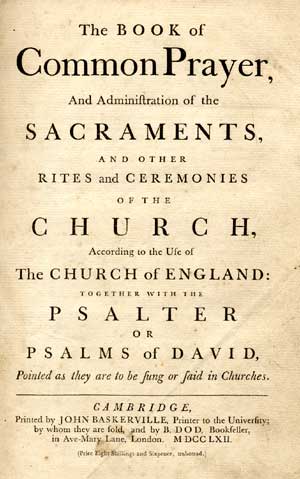
Title page of the 1662 Prayer Book, printed by John Baskerville in 1762
Pages from History: Hamilton’s start VBS (Vacation Bible School) in India (1952)
Rev. Lester John Hamilton and Mrs. Mary Hamilton
The Hamiltons (American Missionaries,) arrived in India in 1951 and were given only a brief period of language study before being plunged into the activities of the South India Bible Institute in Bangarapet, Kolar District, Karnataka. But they both continued to learn Kannada throughout their ministry in India, and found themselves quite at home with the language.
In 1952, Mrs. Mary Hamilton was requested to prepare materials for a model Vacation Bible School, and this was so well received that it has grown to become an annual event in many parts of India, and other countries in the world.
Now millions of children are attending VBS classes in different countries in different languages. Even though the Hamilton’s turned over the leadership of the VBS office into national hands, they continued to remain involved with it and gave their time and assistance until they left India in 1985.
Rev. and Mrs. Hamilton were teachers in the South India Biblical Seminary in Bangarapet, in Karnataka. They both were highly talented and have enriched the lives of many who came in contact with them. Their many and varied contributions to the ministries of South India Biblical Seminary and the Vacation Bible school movement will not be soon forgotten and we thank God for having brought them to serve in India.
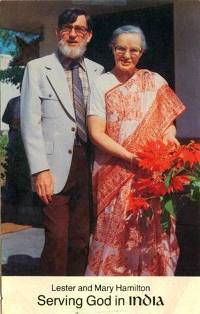
Rev. Lester John Hamilton and Mrs. Mary Hamilton
Pages from History: Birth of Mariamma Joseph – Co-founder of Hoskote Mission
31 March, 1917: Birth of Mrs. Mariamma (Pennamma) Joseph (d.19 June 1986), Co-founder of the Hoskote Mission near Bangalore, Karnataka, India. Mariamma was the daughter of Mammen Mammen and Mariamma of Manalukalayil, Kumbanad. She did her Teacher’s Training Course (TTC) from Peringara School near Tiruvalla, after which she taught in many schools including Arrangatu School, Pullad, Perumbara School near Charal Mount; Kanjeettukara and Nedumprayar (Maramon).
She had the privilege to attend the classes conducted by the CMS Missionary, Miss Kellaway (Australia) of Vanitha Mandiram. Pennamma was greatly influenced through the life and testimony of this missionary. She had an earnest desire to go for mission work in Karnataka but her parents did not allow it (according to the then prevalent customs/ norms, Syrian Christian parents were scared to send their unmarried daughters to unknown ‘foreign’ lands).
However, after her marriage with Mr. M.T. Joseph, (Manon House, Maramon) her desire was fulfilled as he got the call to go to Karnataka for mission work during one of the Maramon Conventions. Because she was obedient to this heavenly call, she resigned from her teacher’s job, of a permanent income, to an uncertain future. This journey led to the humble beginnings of the Hoskote Mission.
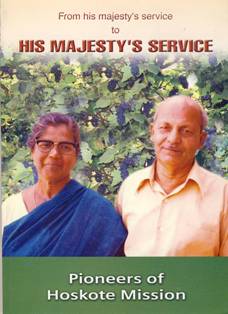
Mrs. Mariamma Joseph and Mr. M.T. Joseph (Co-founders of Hoskote Mission)
Guinness book of world record holder under the entry – ‘longest religious service’ passes away (1984)
28 March, 1984: Rev. K. M. Jacob Kottara, Pooyappally (June 1881) passes away. Rev. K.M. Jacob, of Cherukarakunnil family of Kottara Bethel Mar Thoma Church, was born in June, 1881. He became a deacon of the church in 1897, and priest on 8 October, 1903.
He was the first convener of the Kottarakkara Mar Thoma Convention and was one of the founding members of the Jubilee Mandiram in Kottarakkara.
For certain parishes he was the Vicar for more than 40 years. Achen was called to his eternal home on 28 March, 1984. Achen served the Church for more than 86 years and his name is in the Guinness book of world record under the entry – ‘longest religious service.’

Rev. K. M. Jacob Kottara

Pages from History: Birth of Hymn writer Fanny Crosby (1820)
24 March, 1820: Birth of Hymn writer Fanny Crosby. Frances Jane Crosby commonly known as Fanny Crosby, was an American lyricist best known for her Protestant Christian hymns. She was one of the most prolific hymnists in history, writing over 8,000 hymns despite becoming blind after birth. She is also known for her preaching and speaking. During her lifetime Fanny Crosby was one of the best known women in the States.
To this day, the vast majority of American hymnals contain her work. Some of her best known songs include “Blessed Assurance” “Jesus Is Tenderly Calling You Home” “Praise Him, Praise Him” and “To God be the Glory”. Since some publishers were hesitant to have so many hymns by one person in their hymnals, Crosby used nearly 100 different pseudonyms during her career.
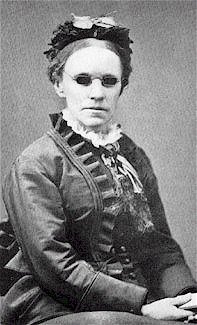
Hymn writer Fanny Crosby
Pages from History: The Archbishop of Canterbury meets with Pope (1966)
23 March, 1966: The Archbishop of Canterbury His Grace Michael Ramsey meets with Pope Paul VI at the Vatican, the first such meeting between Anglican and Catholic leaders in an official audience since King Henry VIII broke with Rome more than 400 years earlier to form the Church of England. It was the first public meeting between the leaders of the two Churches following an earlier private meeting between Archbishop Geoffrey Fisher and Pope John XXIII had on 2 December 1960.
Archbishop Ramsey met Paul three times during his visit and opened the Anglican Center in Rome with the purpose of increasing their mutual knowledge. Pope Paul replied that “by entering into our house, you are entering your own house, we are happy to open our door and heart to you.”
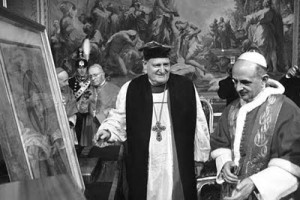
Archbishop Ramsey meeting Pope Paul VI (photo from httpdstp.rel.pl )


 Nalloor Library