First Sunday of December – Bible Sunday
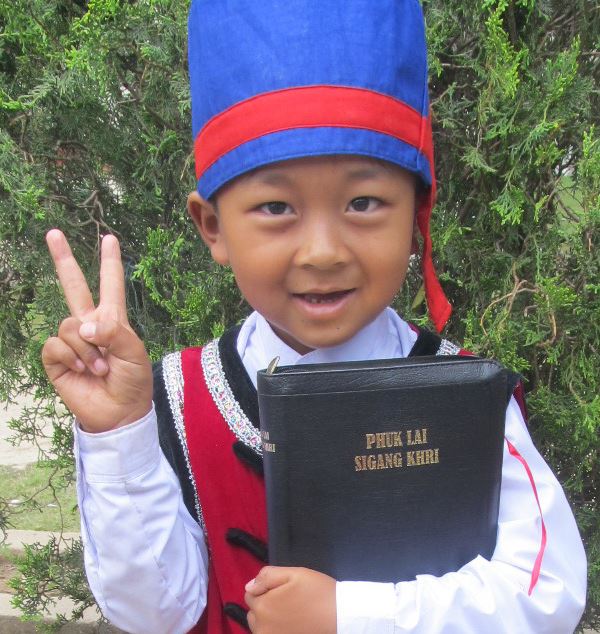
A Myanmar child holding the Bible.
The First Sunday of December is observed as Bible Society Day. It was the British and Foreign Bible Society, established in London in 1804, that first made a concerted effort of translating, printing and publishing Bibles in different languages.
In India, it’s auxiliaries were formed in Calcutta (1811), Bombay (1812), Madras (1820) and in Kerala (1956). Other auxiliaries were formed later. Even before the formation of the auxiliaries in India, the work of translation of the Bible to Indian languages had been taken up by William Carey and his associates in Calcutta. In obedience to the commandment of the Lord “Go ye unto the uttermost corners of the earth and preach my gospel”, the Bible Society aims at making available, copies of the Bible, New Testaments and portions of the Bible to
1.To Every Person in his/her own language.
2.At a price within his/her reach
3.In a style which is easily understood
It is in pursuance of this objective that it brings out special editions for students,members of the armed forces, in Braille type for the blind, etc. The United Bible Society distributes an average of 32 million full Bibles each year. In addition to that, they distribute enough New Testaments and Scripture portions to potentially reach 5% of the world’s population each year. In 2012 they distributed over 405 million Scripture items.
They also manage a growing social media ministry on Facebook and other social networks. The Digital Bible Facebook page reaches millions of young adults every year. 71% report it helps them apply the Bible’s teaching to their lives. https://www.facebook.com/UnitedBibleSocieties

Pages from History: 30th Nov 1945 – Sadhu Kochukunju Upadesi passes away.
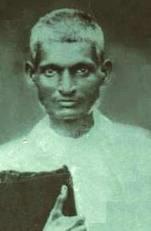
Sadhu Kochu Kunju Upadesi
30th November, 1945 (1121 Virchikam 15): Sadhu Kochukunju Upadesi (b.Dec.1883) passes away. Sadhu Kochukunju Upadesi (Mr. Moothampakkal Itty Varghese,Moothampakkal, Edayaranmula near Chengannur) was a unique personality in history of the Mar Thoma Syrian Church.
For almost forty years he preached the Bible in simple language all over South India. He practised and lived the life of a Sadhu. He wrote more than 200 hymns, many of that are printed in worship books across denominations even today. Thousands turned to God by hearing his messages. He was the first General Secretary of the ‘Mar Thoma Voluntary Evangelists’ Association, which was founded in 1924, and he continued in the post until 1945.
His continuous travels and gospel work made him sick many times. But on Friday, 30th November 1945 he became very sick and called to eternal rest on 15 Virchikam 1121 (8.45 am) and was buried in the Lakha St.Thomas Mar Thoma Church Cemetery on the following day. The funeral service itself was a great honour for him. Two Bishops, more than 100 priests and more than 40,000 people attended the funeral service.
Read more about his life in our free pdf Ebook: https://nalloorlibrary.com/wp-content/uploads/2013/06/sadhu-kuchujunu-upadeshi.pdf
Pages from History: 29 November, 1970: Formation of Church of North India (CNI).
29 November, 1970: Formation of Church of North India (CNI). The inaugural meeting of the CNI was held in the Unity Hall opposite the Anglican Cathedral in Nagpur. The metropolitan of the Mar Thoma Syrian Church Dr. Juhanon Mar Thoma attended this meeting.
It was a merger of six Christian denominations, including the United Church of Northern India; the Anglican Church of India, Pakistan, Burma (Myanmar) and Ceylon; the British and Australian Methodist churches; the Council of Baptist Churches in Northern India; the Church of the Brethren; and the Disciples of Christ.The motto of the church is: Unity – Witness – Service.
Pages from History: John Bunyan – Author of Pilgrim’s Progress is born

John Bunyan
28 November, 1628: English preacher John Bunyan (d. 31August,1688), author of more than 60 books, including the famous Pilgrim’s Progress, is born in Elston, England.
In 1655, Bunyan was baptized by immersion by Pastor John Gifford of Bedford and called to preach the Gospel of Jesus Christ. Bunyan was arrested November 12, 1660, for preaching without the approval of the Anglican Church. He was charged with “teaching men to worship God contrary to the law” and was in jail more than twelve years.
His most well-known work, The Pilgrim’s Progress, was written while in the Bedford jail. During Bunyan’s lifetime there were 100,000 copies circulated in the British isles, besides several editions in North America. It has been continuously in print since its first printing. Bunyan’s remarkable imagery was firmly rooted in the Reformation doctrines of man’s fallen nature, grace, imputation, justification, and the atonement–all of which Bunyan seems to have derived directly from Scripture. ~ http://www.chapellibrary.org
John Bunyan’s Works
The Collected Works of John Bunyan was carefully edited by George Offor, first published in 1853 and revised in 1862. These files are from the 1862 edition.
These pdf books can be downloaded at no cost and read for free. It can be accessed at http://www.chapellibrary.org/literature/bunyan/
Pages from History: Thomas Mar Athanasius Suffragan Metropolitan passes away
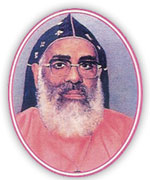
Thomas Mar Athanasius Suffragan Metropolitan
27 November, 1984: Thomas Mar Athanasius Suffragan Metropolitan of the Mar Thoma Syrian Church passes away (b.26 May 1914). Bishop Thomas was born on 26 May, 1914, to the Panampunna family,Kottayam, Kerala. He was a scholar and continued his studies to the end of his days. He was known for his deep devotion and great ability to build up the Church. In 1953, he became bishop, and in 1978, he was designated as Suffragan Metropolitan.
He attended the first Assembly of the World Council of Churches at Amsterdam in 1948, and also the Assembly at New Delhi in 1961. He was a member of the Faith and Order Commission of the World Council of Churches since 1961. Thus he made significant contributions to the cause of ecumenism.
He has attended many other international conferences in the Churches and was a delegate to the Melbourne Conference where he had made a distinct contribution as a leader of Bible Study.
He also attended the sessions of the second Vatican Council on special invitation.
His sudden death on 27 November, 1984, was severe shock to the whole Church and to the ecumenical world.
Pages from History: 21 Nov 1881: Birth of Very Rev. K. E. Oommen

Very Rev. K. E. Oommen
21 Nov 1881: Birth of Very Rev. K. E. Oommen (21/11/1881 to 23 May 1984). Very Rev K. E. Oommen was one of the first four graduates who accepted ordination together in the Mar Thoma Church. He was one of the Divisional Secretaries of the church till 1939. With his evangelical zeal and wise counsel he gave great support to Abraham Mar Thoma and later Metropolitans.
He had a long and fruitful life. He died in 1984 at the age of 103. Most Rev Philipose Mar Chrysostom of the Mar Thoma Church is his son.
Pages from History: 9 November, 1917: Birth of Dr. Sosamma Philip – Medical Missionary

Late Dr. Sosamma Philip, Medical Missionary.
9th November, 1917: Birth of Dr.Sosamma Philip, Medical Missionary. Dr. Sosamma was the daughter of Late Rev. M.C. George Kasseesa (17 April 1874 – 23 October 1923) of Maliyekkal House, Kuriannoor.
The Late Most Rev. Dr. Alexander Mar Thoma Valiya Metropolitan (10 April 1913 – 11 January 2000) was her elder brother. Dr. Sosamma passed her final school examination in 1933, but she couldn’t afford a college education. She joined the undergraduate teacher’s training course in Tiruvalla and then became a teacher in Kuriannoor Middle School. The family had to sell a portion of their ancestral property to pay for her dowry.
In 1940, she married Dr. P.V. Philip (Palathinkkal, Kottayam), who was working with the Mission Hospital in Karappuram, Cherthala. But unfortunately, Dr. Philip died after nine months of their marriage. She also lost her mother, three months later. Dr. Sosamma had an earnest desire to continue the medical work of her departed husband. She joined Alwaye U.C. College and passed her intermediate examinations and applied for a seat in Christian Medical College, Vellore. As she did not get admission at CMC Vellore, she joined the American College in Madurai and finished her B.A. and then joined the Nicholson School, Tiruvalla, as a teacher.
But the desire for a medical education was burning in her heart, so she applied again and this time she secured an admission in Christian Medical College, Vellore. Immediately after getting her Medical degree, she joined the Karapuram, Cherthala Mission, where her husband had worked. After further passing her specialization courses in Chicago, she worked with the Kumbanad and Kattanam hospitals for many years.
In 1967, she joined the Sihora Ashram Hospital in Madhya Pradesh and remained there till her retirement, 30 years later in 1997. As recognition of her work and social service, the Church awarded her the “Manava Seva Award”.
After her retirement, she returned to stay with her relatives in Kuriannoor. She was called to her eternal home on 4 May 2008 and was buried beside her parents at the St.Thomas Mar Thoma Church Cemetery in Kuriannoor.

Late Rev. M.C. George Kasseesa (Father of Dr. Sosamma Philip)
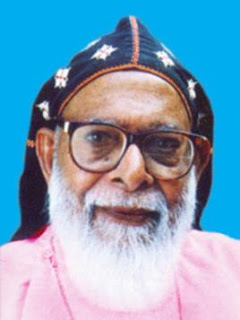
Late Alexander Mar Thoma Valiya Metropolitan (Elder brother of Dr. Sosamma Philip)
9 Nov 2014: CSI, CNI and Mar Thoma Church celebrate ‘The Communion of Churches in India (CCI) Day’.
On 9 November, 2014, Sunday: the CSI, CNI and Mar Thoma Churches celebrate this Sunday as the ‘The Communion of Churches in India (CCI) Day’.
The Communion of Churches in India (CCI) has been constituted as the visible organ for common expression of the life and witness by the founding Churches, the Church of North India (CNI), the Church of South India (CSI) and the Mar Thoma Syrian Church (MTC) which recognise themselves as belonging to the one Church of Jesus Christ in India, even while remaining as autonomous churches, each having its own identity of traditions and organizational structures. “The Communion” invites other Churches in India to enter into full communion with the member churches separately and join “The Communion”.
Pages from History: 4 October, 1836 – Abraham Malpan ends Maramon ‘Muthappan’ Festival

Image from maramonmarthomachurch.com
5 October, 1836: Malayalam Year 1012 Kanni 19: Members of the Mar Thoma Maramon Parish used to celebrate the festival of “Muthappan” every year.
Muthappan was a wooden idol in the shape of a human, made in memory of a foreign Bishop who came to Kerala in AD 1685. Offerings and prayers were conducted in front of this idol. The people of Maramon believed that the cause of all their prosperity and blessings was because of this semi-god, Muthappan.
Large crowds used to attend this yearly festival, which was a good source of income for the Maramon Parish. On 4th October 1836, the day before ‘Muthappan Festival’, the reformer of the Mar Thoma Church, Abraham Malpan threw “Muthappan” into the well situated in the Church compound and put an end to this festival forever, starting the reformation process.
Pages from History: 27 September, 1947: Formation of Church of South India (with Photos)
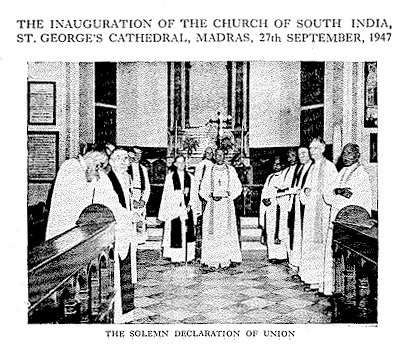
Photo credit: http://www.csisynod.com
27 September, 1947: Formation of Church of South India (CSI) in 1947, as a union of Anglican, Presbyterian, Congregationalist and Methodist churches. The idea of a Church union was proposed in 1919 at a conference held in Tranquebar (now Tarangambadi) in 1919. After 28 years of discussions various denominational churches in South India established by different Missionary societies agreed to the formation of the Church of South India in 1947 after India attained independence. The inaugural ceremony was held at St. George Cathedral Madras (Chennai).
Today the Church of South India is one of the largest Protestant churches in India and is a member of the Anglican Communion and its bishops participate in the Lambeth Conferences. It is also a member of the World Council of Churches, the World Alliance of Reformed Churches, and the National Council of Churches in India.
The Church of South India (CSI), Church of North India (CNI), and Malankara Mar Thoma Syrian Church of India jointly formed the Communion of Churches in India (CCI) in 1978 for mutual recognition of the ministry and leaders, inter communal relationship, and to explore possibilities of working together and other areas of cooperation in the fulfillment of the mission of the Church in India.
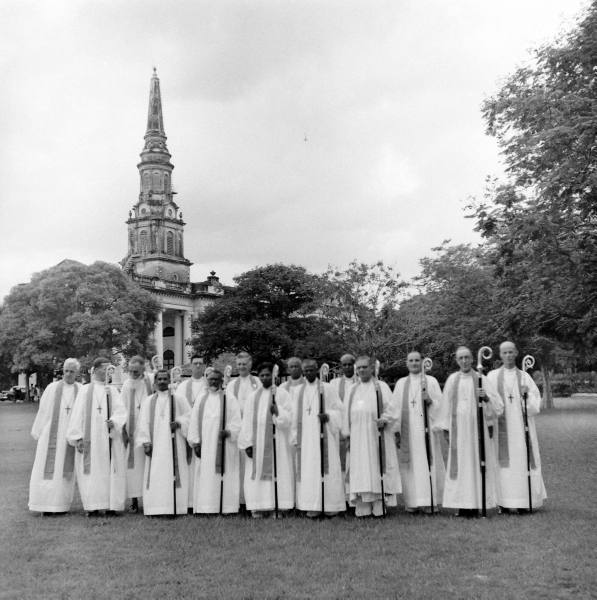
At the inauguration of Church of South India. Photo by Mark Kauffman (LIFE magazine)
The presiding bishop of the inaugural function was the Rt. Revd. C. K. Jacob of the Anglican Diocese of Travancore and Cochin. A vast congregation gathered in the cathedral at Madras from all over the world. The following historical declaration was made by Bishop Jacob at the inaugural service.
“Dearly beloved brethren, in obedience to the Lord Jesus Christ the head of the church, who on the night of his passion prayed that his disciples might be one, and by authority of the governing bodies of the uniting churches whose resolutions have been read in your hearing and laid in your prayer before Almighty God; I do hereby declare that these three churches, namely – the Madras, Madura, Malabar, Jaffna, Kannada, Telugu, Travancore Church councils of the South India United Church; the Methodist Church of South India, Trichinopoly, Hyderabad and Mysore districts; the Madras, Travancore and Cochin, Tinnevelly and Dornakal dioceses of the Churches of India, Burma and Ceylon; are become one Church of South India, and these bishops, presbyters, deacons and probationers who have assented to the basis of union and accepted the constitution of the Church of South India, whose names are laid upon this holy table, are bishops, presbyters and deacons of this church. In the name of the Father, and the Son, and the Holy Spirit, Amen.” ~ wikipedia

Inauguration procession of Church of South India. Photo by Mark Kauffman (LIFE magazine)
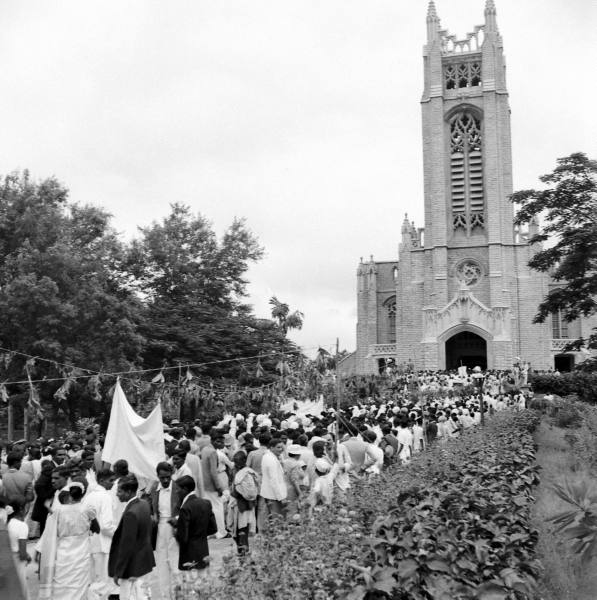
Inauguration procession of Church of South India. Photo by Mark Kauffman (LIFE magazine)
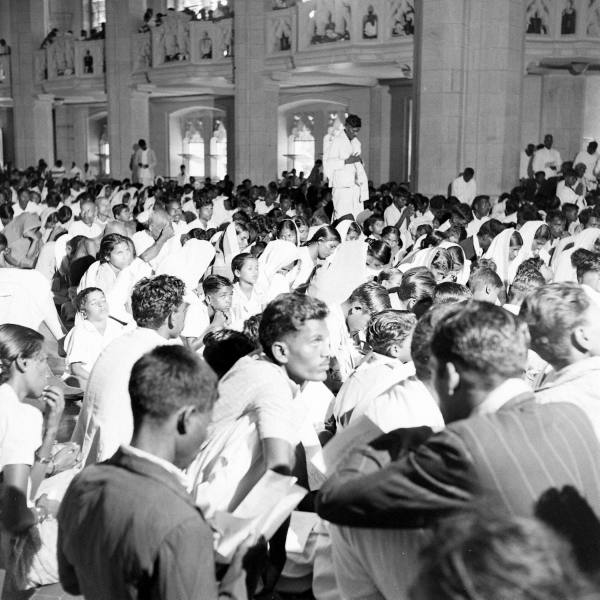
Inauguration service of Church of South India. Photo by Mark Kauffman (LIFE magazine)
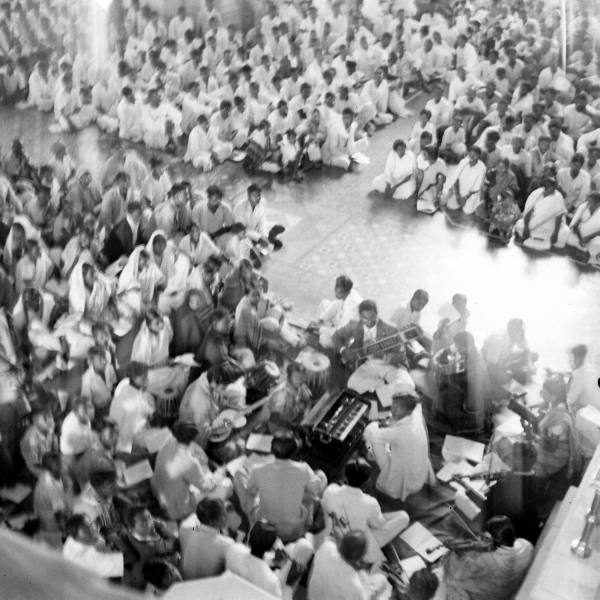
Inauguration service of Church of South India. Photo by Mark Kauffman (LIFE magazine)

Inauguration service of Church of South India. Photo by Mark Kauffman (LIFE magazine)
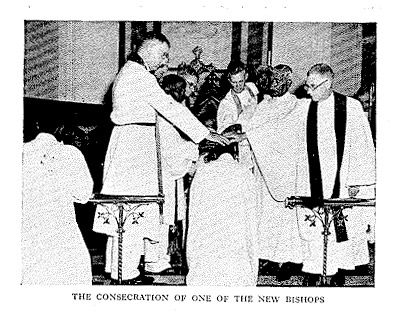
Photo credit: http://www.csisynod.com
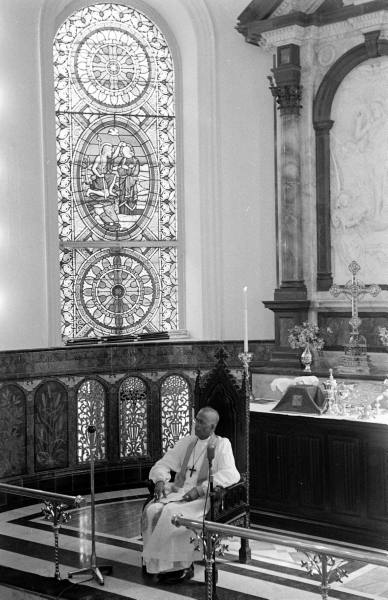
Presiding Bishop Rt. Revd. C. K. Jacob at the Inauguration of Church of South India. Photo by Mark Kauffman (LIFE magazine)
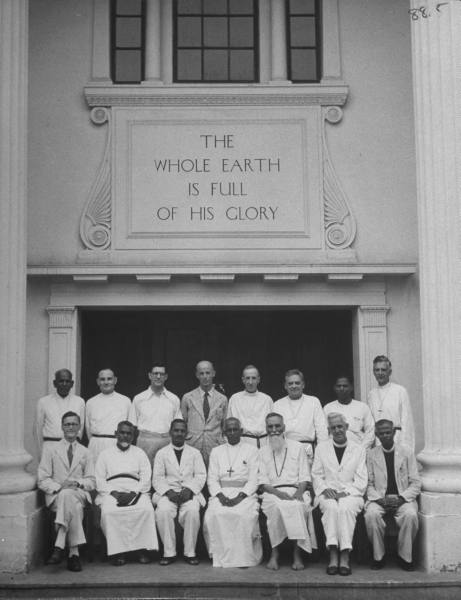
Clergymen from 5 Protestant faiths attending the inaguration of the Church of South India. Photo by Mark Kauffman (LIFE magazine)

St George’s Cathedral, Chennai (photo credit – wiki)


 Nalloor Library