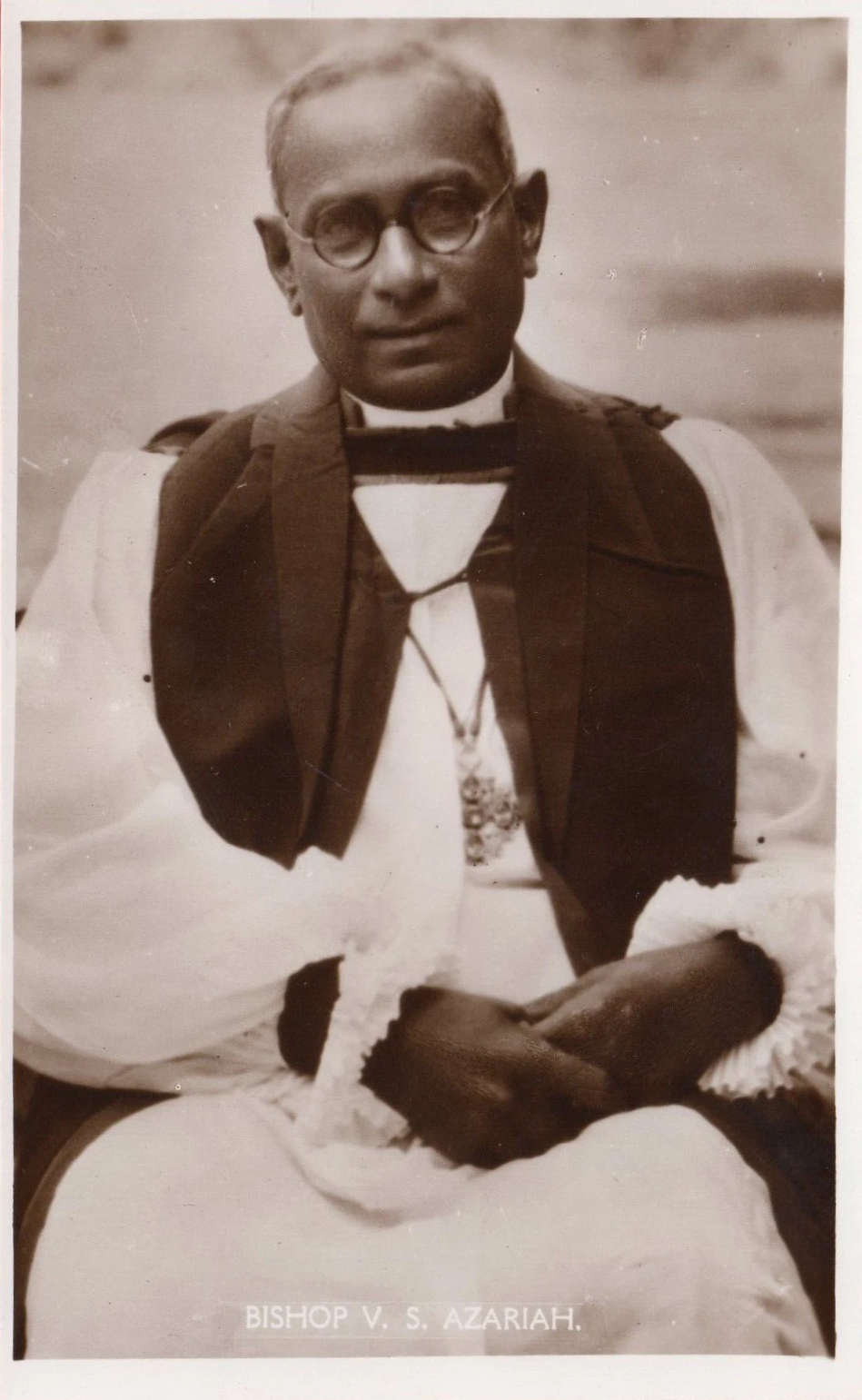
12 December, 1912: Consecration of Bishop V. S. Azariah.
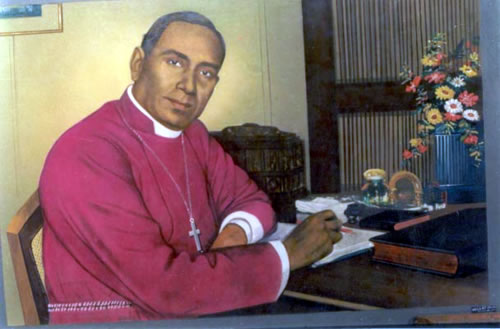
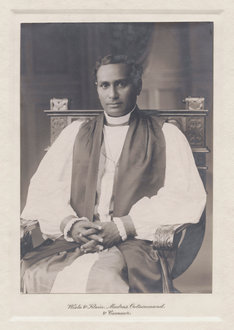
Rev. Vedanayagam Samuel Azariah was consecrated as the first Indian Bishop of the Church in India (Anglican Church) on 12 Dec 1912, in the St. Paul’s Cathedral in Calcutta. Most Rev. Dr. Copleston, assisted by ten other bishops, conducted the consecration ceremony.
First Indian bishop of the Anglican Church in India
The first Indian bishop of the Anglican Church in India, Vedanayagam Samuel Azariah was born in 1874 in a small village in Andhra Pradesh, the son of Thomas Vedanayagam, an Anglican priest, and Ellen, a woman with a deep love and understanding of the Holy Scriptures. Samuel became a YMCA evangelist at nineteen and secretary of the organization throughout South India only a few years later. He saw that, for the Church in India to grow and to bring ordinary Indians to Jesus Christ, it had to have indigenous leadership.
He helped to create the Tinnevelly-based Indian Missionary Society in 1903, and was a co-founder of the National Missionary Society of India, an all-India, Indian-led agency founded in December 1905.
At the age of thirty-five he was ordained to the presbyterate, and three years later (December, 1912) he was consecrated as the first bishop of the new Diocese of Dornakal, with eleven bishops of the Anglican Church in India participating in the liturgy at St Paul’s Cathedral in Calcutta. Bishop Azariah was the first Indian to be consecrated a bishop in the Churches of the Anglican Communion. Bishop Azariah died on January 1, 1945, two years before the inauguration of the united Church of South India (CSI).
The Bishop and the Blessing: A Story from the Life of Vedanayagam Samuel Azariah:
Bishop Vedanayagam Samuel Azariah, accompanied by the Archbishop of Canterbury Robert Runcie, visited a small village in his diocese. As they approached, an elderly woman emerged from her humble dwelling. She had never seen a white Archbishop before, and was struck by the sight of this important figure arriving in a grand car with a police escort.
To everyone’s surprise, Archbishop Runcie bowed before the elderly villager. Without hesitation, the woman placed her hands on his head and offered a blessing. Moved by this unexpected act of faith, the Archbishop was overcome with emotion . “Nobody has ever done this to me,” Runcie said, tears in his eyes. “I have laid my hands on many people. But this mother has laid her hands on me.”
This simple yet profound moment exemplified Bishop Azariah’s lifelong mission – to cultivate an indigenous Indian church where the faith of ordinary people could flourish. It revealed the deep spirituality he nurtured among his flock, where even the humblest villager felt empowered to bless an Archbishop. The incident also highlighted Azariah’s ability to bridge cultures, bringing together a high-ranking English cleric and a poor Indian woman in a touching display of mutual respect and shared faith.
Azariah had two great priorities in his work: evangelism and the desire for Christian unity.
He understood evangelism to be the acid test of Christianity. When asked what he would preach about in a village that had never heard of Christ, Azariah answered without hesitation: ‘The resurrection.’ From a convert he demanded full acceptance of Christianity which would include baptism and which could therefore include separation from family and caste. He claimed that Christianity took its origin in the death and resurrection of Jesus Christ and the outburst of supernatural power that this society manifested in the world.
Azariah recognised that because four-fifths of Indian people live in villages, for the Church to be an indigenous one it must be a rural Church. He was constantly in the villages, inspiring and guiding the teachers, clergy and congregations. He blamed the missionaries for not training people in evangelism, and thought their teaching had been mission centred instead of Church centred, and he pleaded with missionaries to build up the Indian Church. Much of the Christian outreach in his area was among the outcast people. Gradually as Christianity spread amongst the villages, the social situation began to change, the Christian outcasts gaining a new self-respect as they realised their worth in the eyes of God.
Azariah considered that one of the factors that hampered evangelism, and possibly the deepening of the spiritual life of the convert, was the western appearance of the Church in both its buildings and its services. As early as 1912 he had visions of a cathedral for the diocese to be built in the eastern style, where all Christians could feel spiritually at home regardless of their religious background and race. Building was delayed because of the Great War in Europe, but finally his dream was realised when the Cathedral Church of The Most Glorious Epiphanywas consecrated on January 6, 1936. The building is a beautiful structure embodying ideas from Christian, Hindu and Moslem architecture. Its dignity and spaciousness create a very different effect from that of the nineteenth and twentieth century Gothic churches and furnishings scattered elsewhere in India.
If evangelisation of India was Azariah’s first priority, the second was that of Church unity. He was the two as interrelated. He believed that a united Church was in accordance with the will of God, ‘that we may all be one’, and he also believed that a United Church would be more effective for evangelism. Addressing the Lambeth Conference in 1930 he pleaded:
“In India we wonder if you have sufficiently contemplated the grievous sin of perpetuating your divisions and denominational bitterness in these your daughter churches. We want you to take us seriously when we say that the problem of union is one of life and death. Do not, we plead with you, do not give us your aid to keep us separate, but lead us to union so that you and we may go forward together and fulfil the prayer, ‘That we may all be one.’”
Bishop Samuel is commemorated in the sanctoral calendars of the Anglican Church in North America and the Church of England on January 2.
The guest house of the National Council of Churches in India at their Nagpur headquarters is known as Azariah House in memory of the Bishop.
20 November, 1904: Death of Stephanos Kathanar – Author of “Shayana Namaskaram” (Mar Thoma Shayana Namaskaram).
Stephanos Kathanar (born on 14 June 1852) was a member of Kallarakkal Peedikayil family of Thazhahkkara, Mavelikkara. He became a deacon at the age of 8. He was an expert teacher of the Syrian Language.
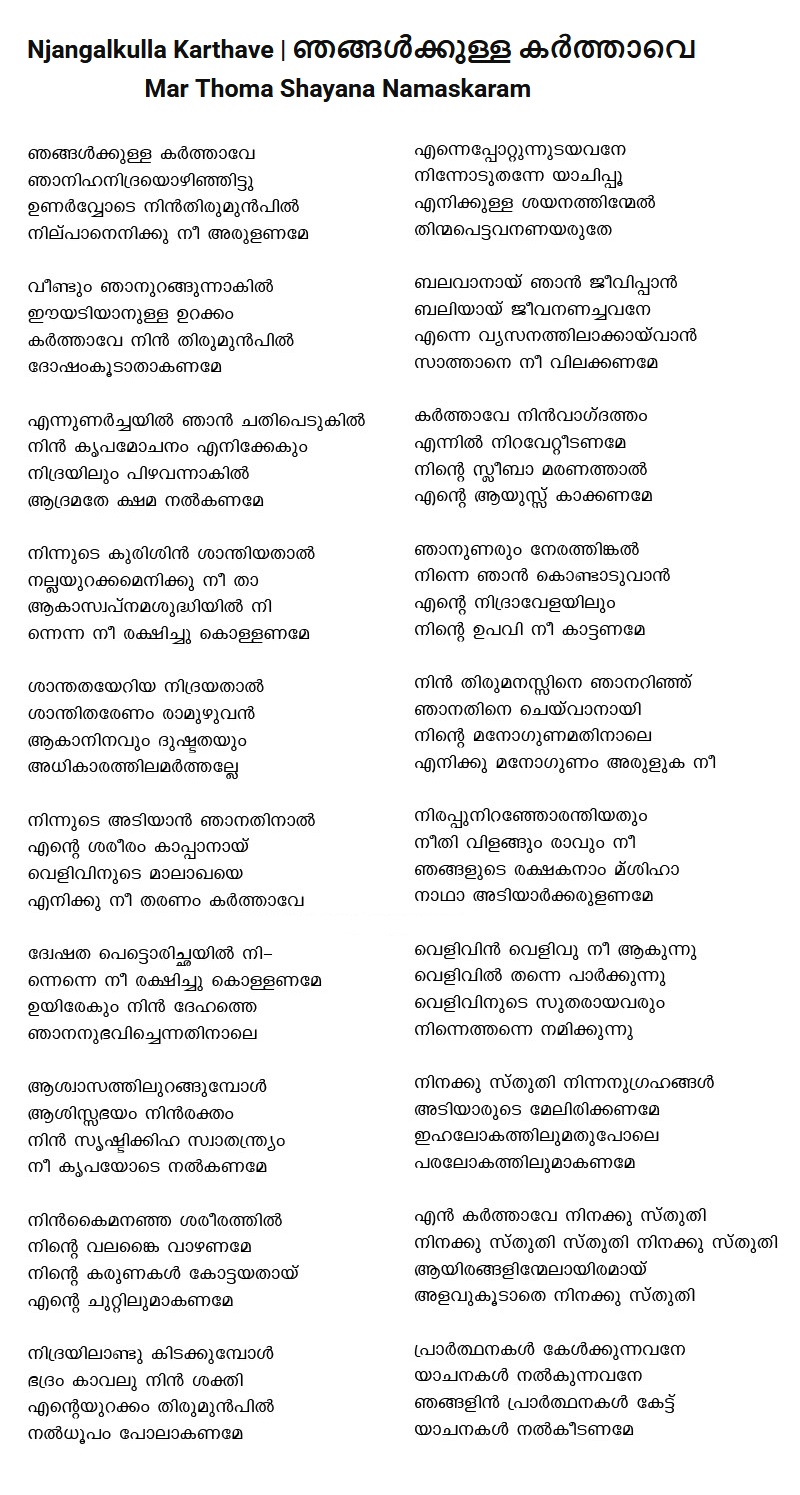
In 1897, he established Thazhakkara Mar Thoma Church and started a library for the parish. Achen is the author of The Shayana Namaskaram– (prayer song usually sung with the evening family prayer or public worship) “njangalkullha karthave…” which is still used by many Kerala Christians. Many Malayalaee Christian groups also use it for their common evening worships during the lent season.
Stephanos Kathanar was called to his eternal home on 20 Nov 1904.
Achen’s grandson Dr. Samuel Mathai was the Vice-Chancellor of the Kerala University.
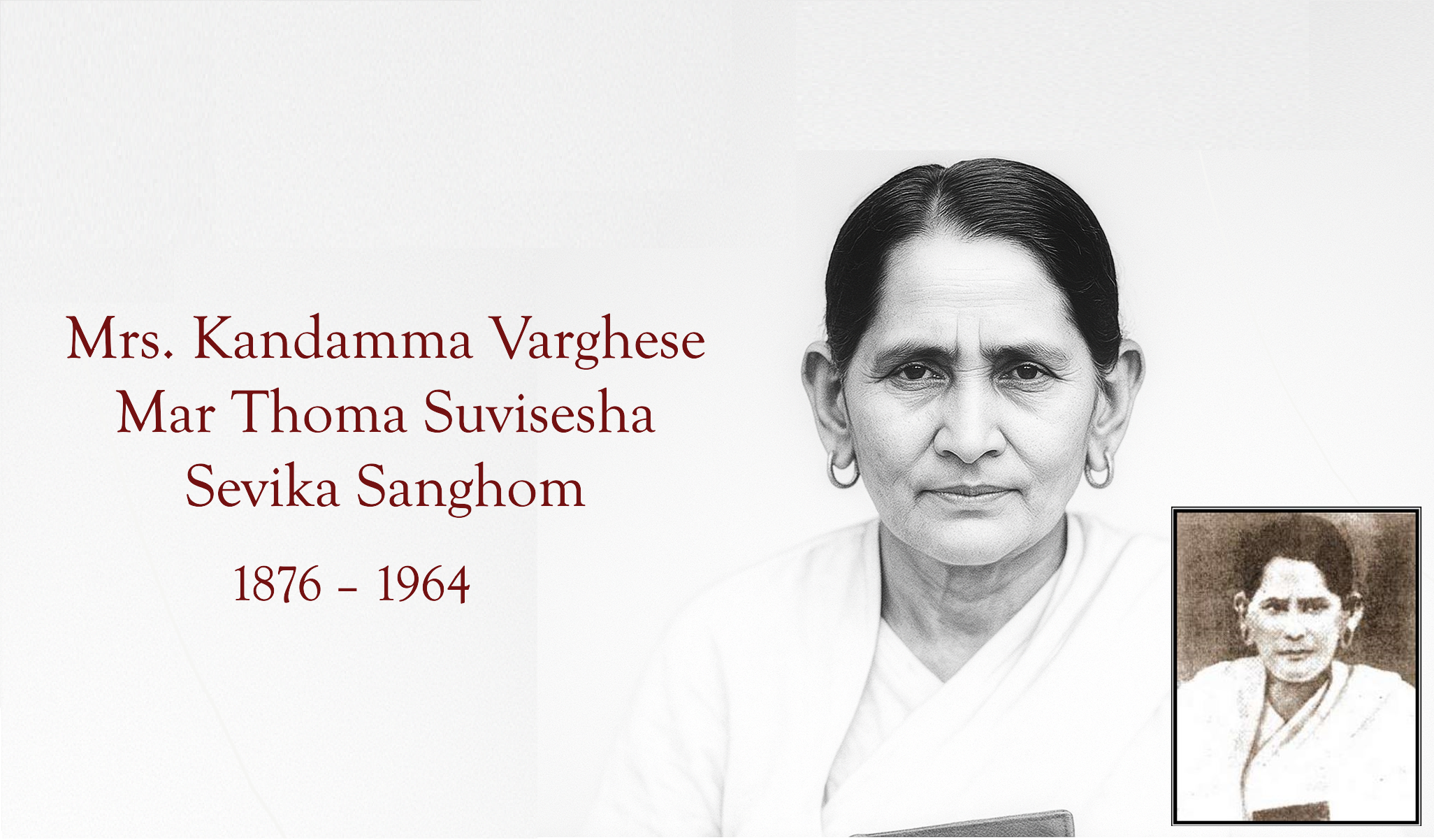
“The Mar Thoma Suvisesha Sevika Sanghom owes much to the self sacrificing work of Mrs. Kandamma Varghese who worked untiringly as the Organizing Secretary for over 20 years, traveling far and wide, organizing branches in the parishes, doing evangelistic work among Christians, building up the work in parishes.” ~ The Mar Thoma Church, Heritage and Mission – Alexander Mar Thoma Metropolitan.
Mrs. Kandamma was a modest person in wearing jewellery. She used to request people who had more than one gold chain to donate the second one for gospel work. Due to Kandamma’s loving approach to the wife of Diwan Bhadur Dr. V. Varghese sold her ornaments and donated the money for the construction of the Salem Orphanage in Tiruvalla.
The Mar Thoma Suvisesha Sevika Sanghom was established in 1919 during the Maramon Convention, under the leadership of Abraham Mar Thoma Suffragan Metropolitan, who gave the women’s organization continuous support and inspiration. Mrs. Kandamma Varghese (born 1876), Chruthuruthiyil, Thumpamon was the first traveling, organizing secretary of the Sevika Sanghom.
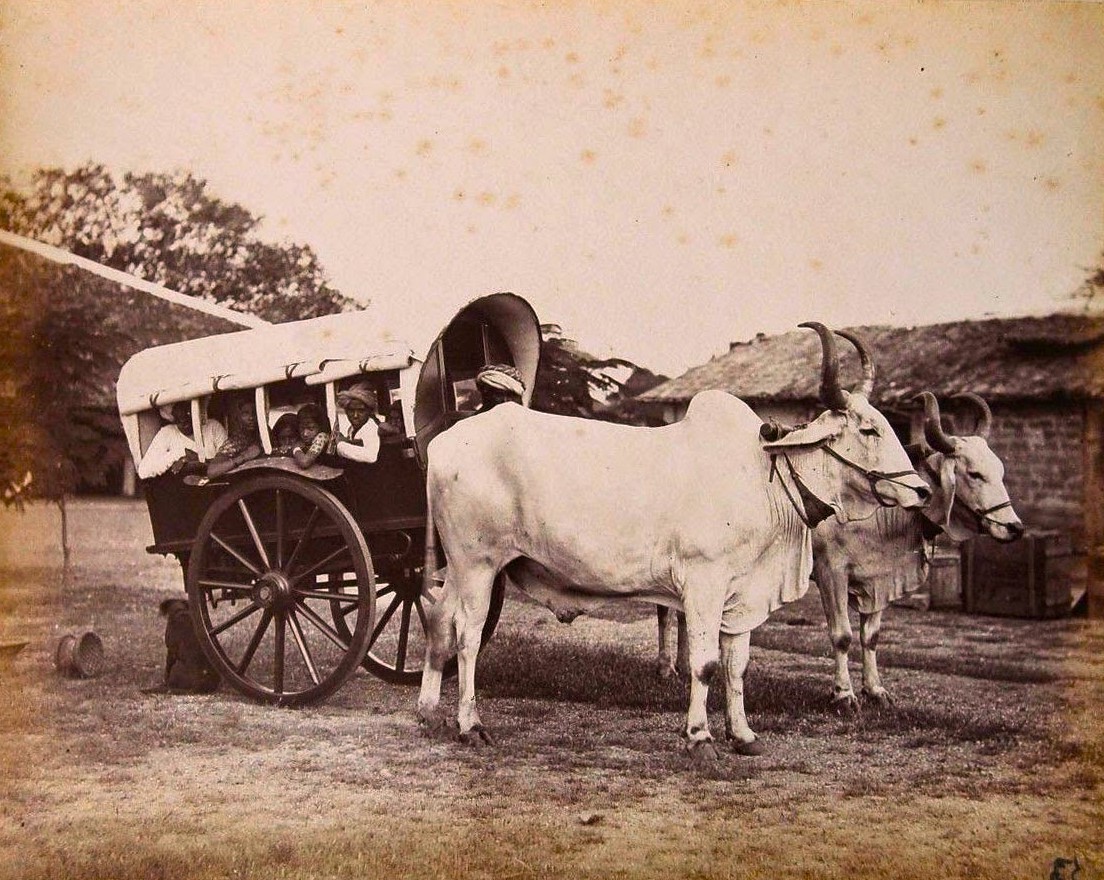
Bullock Cart transport (for illustrative purposes)
During the nearly 20 years of service she travelled far and wide to almost all corners of Travancore. In those days there were no proper roads, so she had to walk miles to her work and used bullock carts to visit distant places. One of her annual reports submitted to the Sevika Sanghom reads like this: “Visited Puthen Cavu, Kundara… (Names of so many parishes are given), etc. Conducted 101 special meetings for women, 38 meetings for girls, visited 236 Christian homes, 70 non Christian homes, personally interacted with 415 people, distributed 700 tracts, 90 gospel portions etc…”
After serving many years as a Traveling Secretary, she became the General Secretary of the Sanghom. She put a firm foundation for the smooth running of various departments of the Sevika Sanghom. When the Sanghom started the Salem Bhavanam (Orphanage) in 1923, Kandamma took up that responsibility as well. She adopted orphan children who were previously looked after by Mrs. Sosamma Eappen of Kotturethu Chengannur.
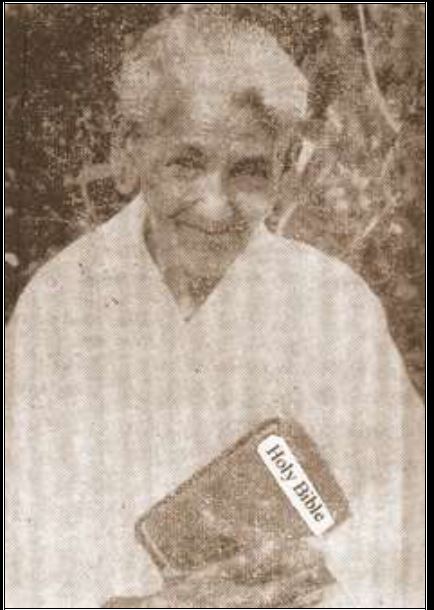
Kandamma spent her final days in Perumbavoor with her son Mr. C. V. Koshy who was the headmaster of the Ashram High school there. She was called to her eternal home on 9 November, 1964 at the age of 88. In her memory, the Mar Thoma Suvisesha Sevika Sanghom has collected a Memorial fund of Rs.15,000 (in 1964 this was a big amount) and the interest collected from this fund is still being used for the theological education of the women who are willing to do full time Gospel work.
She leaves behind a glowing legacy of her work in Kerala to inspire more young women of the church.
Mrs. Kandamma Varghese – Mar Thoma Suvisesha Sevika Sanghom
Read more details in our free pdf E-book which is also an excellent resource for Sunday Schools and church organizations.
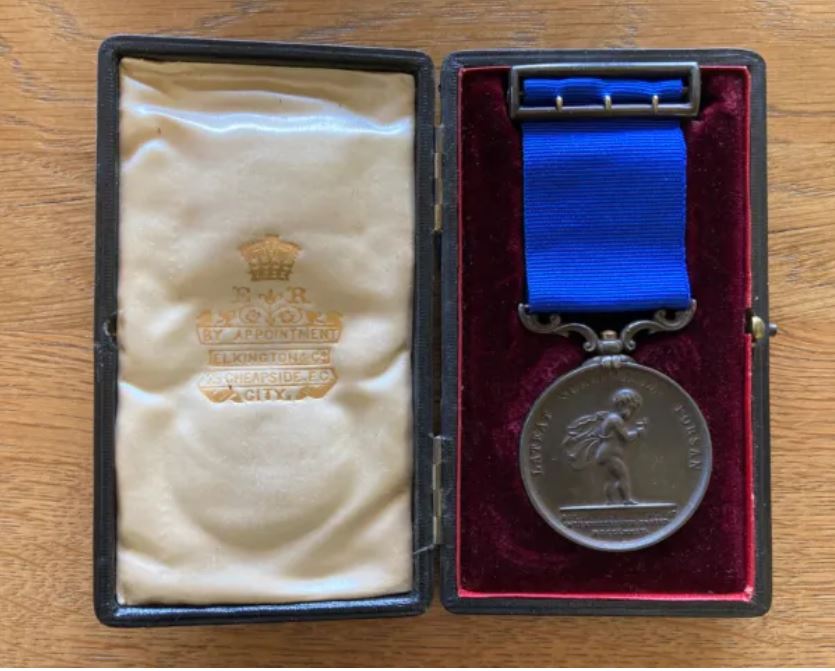
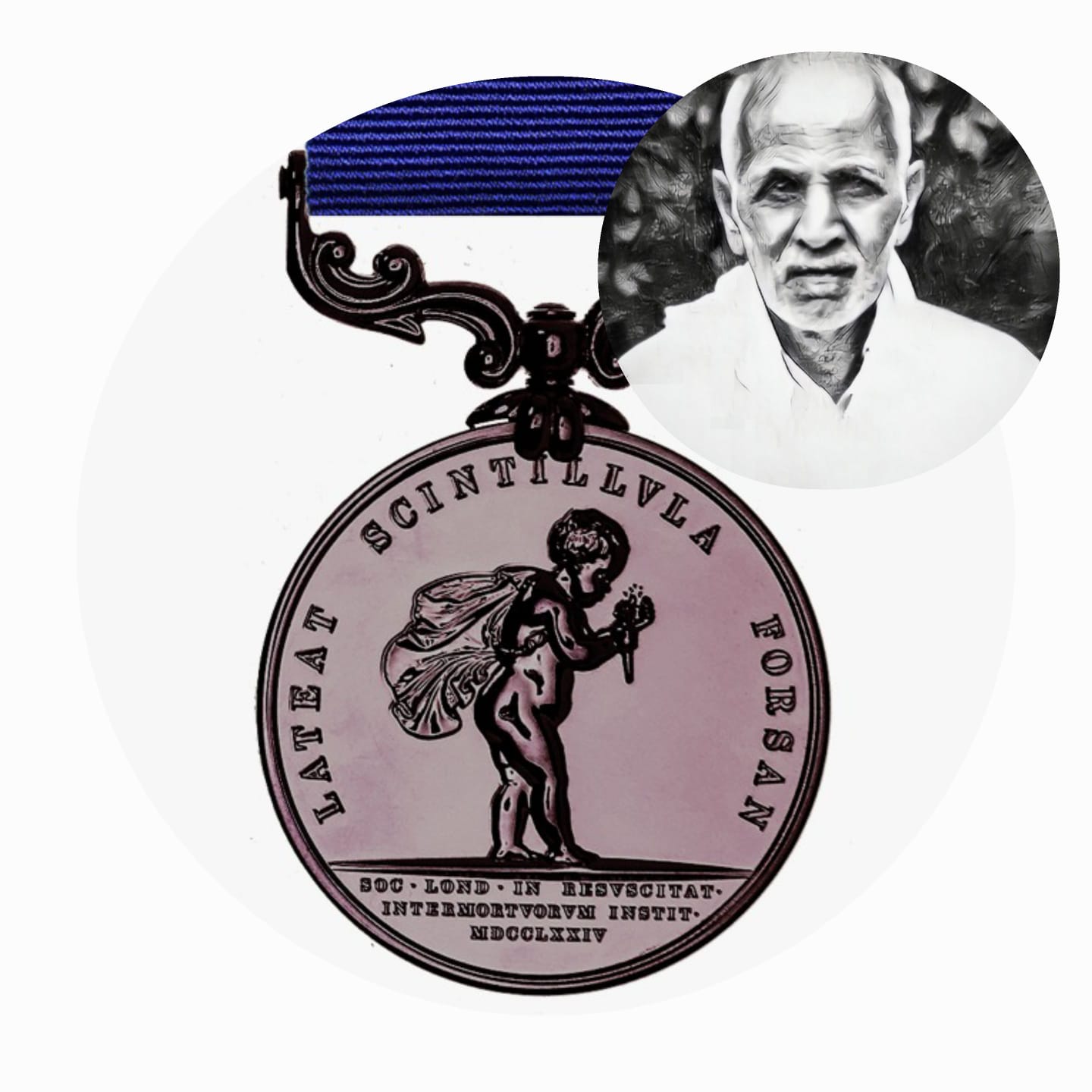
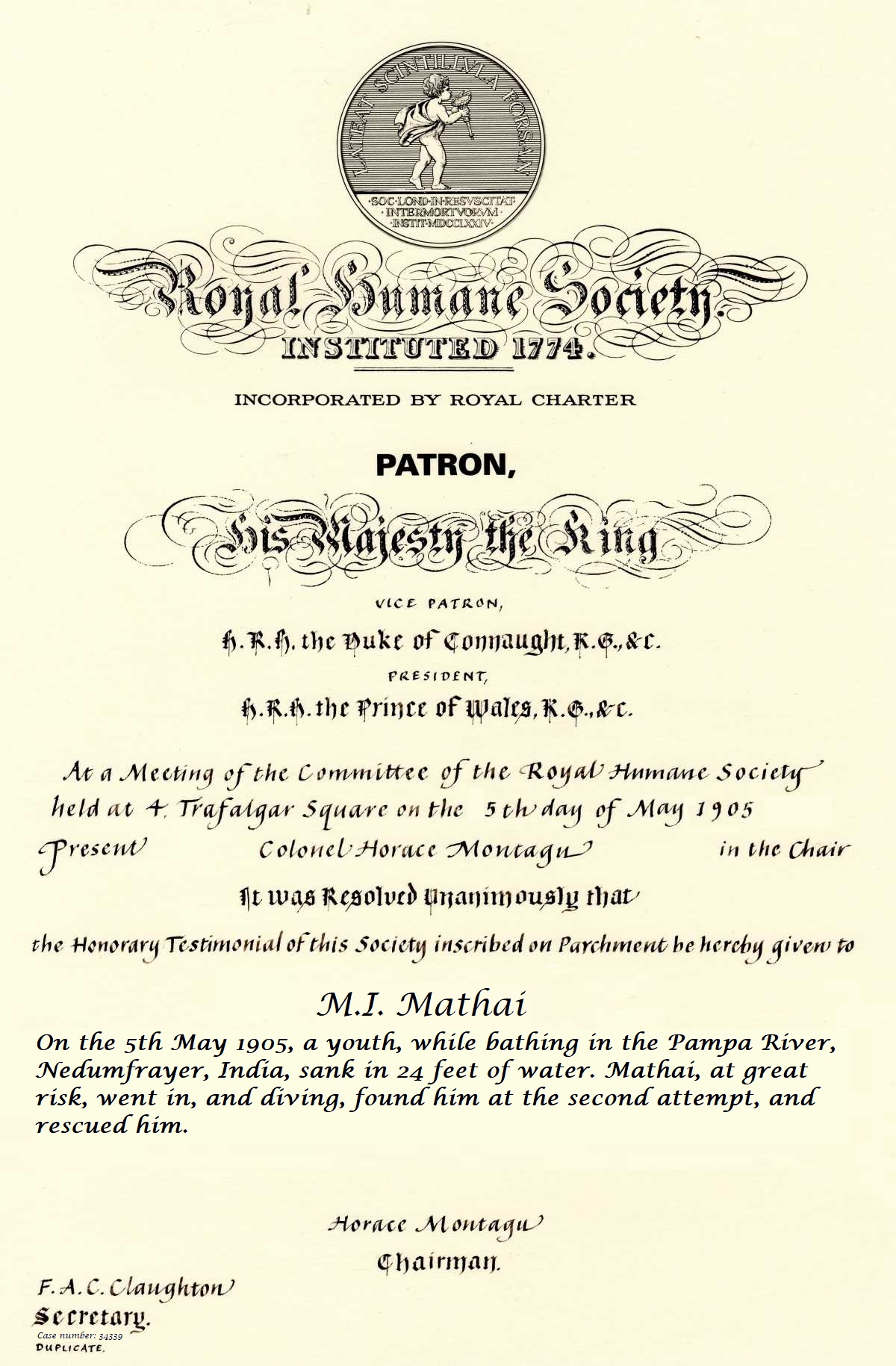
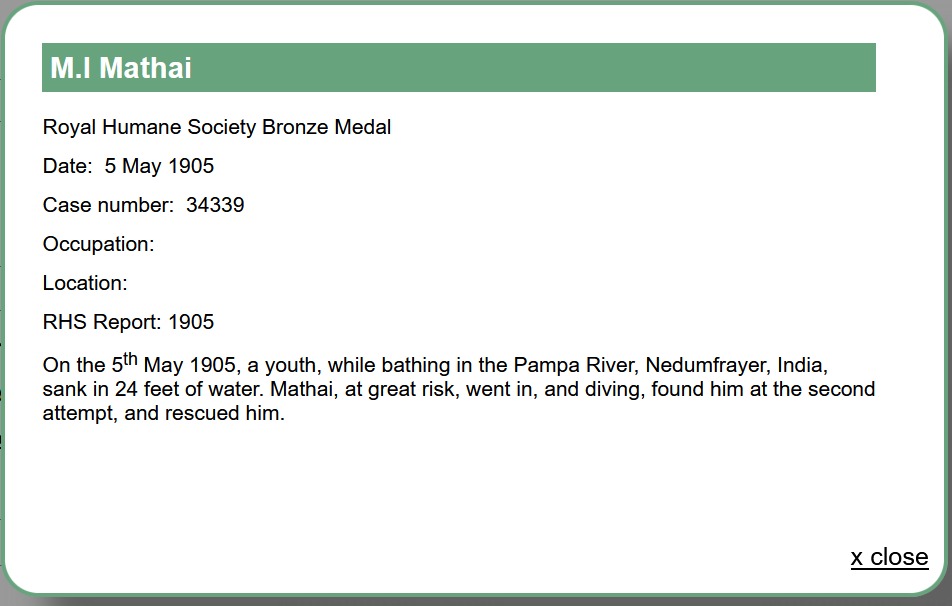
Manon Ipe Mathai was awarded the ‘ROYAL HUMANE SOCIETY BRONZE MEDAL’ in 1905 for putting his own life at great risk to save someone else’s. He may be the first Travancore citizen to receive such an award during the British Rule in India.
representative image
The Royal Humane Society Medal was established in 1774. The Medal was initially awarded to personnel in recognition of lifesaving acts or attempts to save a life from drowning. The award of the Medal was later expanded to reward all acts of exceptional bravery in rescuing or attempting to rescue persons from mines, wells, blasting furnaces, or in sewers. The medal features a Latin inscription on the reverse which translates to “He Has Obtained this Reward for Saving the Life of a Citizen.”
On 5th May 1905, while bathing in the Pamba (Pampa) River, Nedumbrayar, Pathanamthitta, India a young man sank in 24 feet of water. Mathai, at great risk, dived in. He found him in the second attempt and rescued him. It was for this courageous rescue that he was duly recognised and awarded the medal with a certificate.
Manon Ipe Mathai or Appupi (as he was fondly called) was well known for his physical strength and spiritual vigour. God enabled him to use his strong physique to rescue many lives in the community. He saved many people from drowning in the Pamba River during the flood of 1924 (Malayalam Year 1099). Thousands of people had lost their lives during this unexpected natural disaster. He saved people from wild animals, mad dogs and even poisonous snakes. In one incident, a young man had climbed up an Angili tree and could not get down. Appupi was confident he could catch him in his sturdy arms and asked him to jump off the tree. The young man was safely caught in Appupi’s strong hands.
He was committed to his community. In his free time, he would voluntarily undertake repair and maintenance work of local roads in Maramon, especially during the rainy seasons. Villagers fondly called him as Manon Thantha (Manon Appachen) or Appupi (Grandfather).
Back in 1952, during the agricultural and khadi exhibition held in Chirayirambu, Maramon, Appupi was asked to participate. He famously hung a live full-length python around his neck, holding its head in one hand and its tail in the other. His fearless act is still a vivid memory to those who attended the exhibition.
Appupi and Palakunnathu Kadon Thommachen were highly respected social leaders of the Maramon area and people would go to them to settle their disputes (civil and criminal) instead of secular courts. They also actively took part in the pandal construction work of the Maramon Convention for many years. Appupi was also a close friend of the famous Ayurveda Vaidyan, Kolathu Yohannan Vaidyan.
Appupi (Manon Ipe Mathai), was the eldest son of Mathen Ipe (Ayyakavil – Kallirikunnel family from Kanjeettukara, Ayroor) and Mariamma (daughter of Kurian, Palakunnathu Manon family, Nedumbrayar, Maramon). Ipe Mathai’s parents stayed in Manon Malayil house, Thiruvachamannu, Maramon. They were the members of the Maramon Mar Thoma Parish.
Ipe Mathai married Mariamma (daughter of Kochitty. Plathodathil House, Kuriannoor). They had two daughters – their first daughter Mariamma (jr) was married to Avarachen, Vavolil House, Ranny and their second daughter Aleyamma was married to Mathai of Kunnil Family from Maramon.
She fondly remembers visiting Valiappachen along with her siblings during their summer vacations. He was a delightful story-teller and the children would vie for a place on his lap to hear all about his adventures. He could accommodate all four siblings on his lap! He always stocked up goodies for the children – mangoes, tender coconut in jaggery, fried banana chips, etc. Visiting Valiappachen was the highlight of their holidays. May his memory be a blessing.
Astronaut James Irwin Exhibit at the Kennedy Space Center, Florida.(2011) “This igneous rock, estimated to be 3.7 billion years old, was collected by astronaut Jim Irwin in the Palus Putredinus (Marsh of Decay} lunar region. “Weight – 4.5 ounces (129 g)” Photo by Leo Boudreau
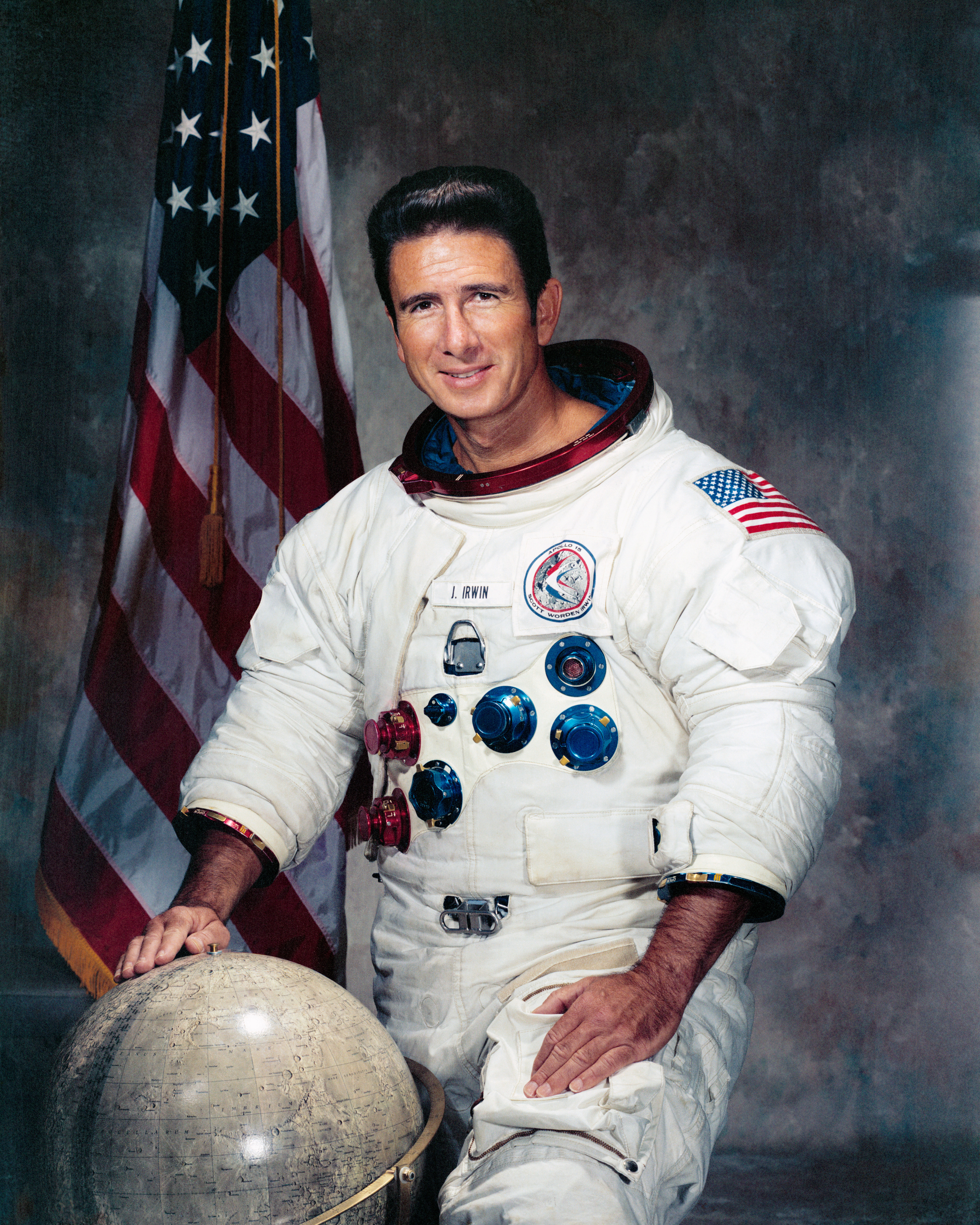
In a historic and mesmerizing moment at the 1985 Maramon Convention, the congregation witnessed a unique blend of science and spirituality as former astronaut and evangelist James Irwin took the main stage. Worshippers were left in awe as Irwin, who had walked on the moon during the Apollo missions, showcased a rare Moon rock, adding an extraordinary dimension to the spiritual gathering.
The anticipation heightened as Irwin donned custom gloves and carefully opened a special bag that cradled the precious lunar rock artefact. The air in the convention pandal was thick with excitement as he unveiled the rock retrieved during Irwin’s historic moon journey, became the centre of attention. Holding it high for all to see – the rock, once part of the distant lunar landscape, now found itself in the hands of a man whose journey had transcended the boundaries of our world.
The 1985 Maramon Convention would be remembered as the moment when the celestial and the divine converged in a sermon delivered on the banks of the River Pamba.
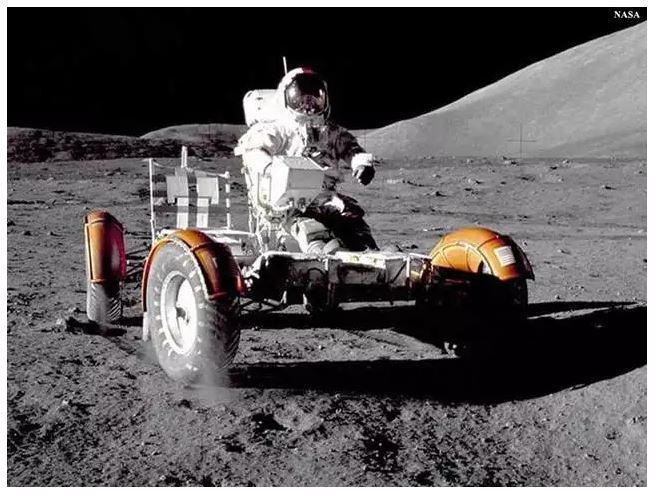
Mr. Irwin said that his experience exploring the moon on the Apollo 15 mission in July 1971 moved him to devote the rest of his life to “spreading the good news of Jesus Christ”. He resigned from the astronaut corps a year later and became the founding president of High Flight Foundation, an interdenominational evangelical organization based in Colorado Springs.
To church groups around the country, Mr. Irwin often spoke of the lunar mission as an epiphany, declaring, “I felt the power of God as I’d never felt it before.” Quoting Scripture on Moon
While on the moon, at the end of the first day exploring the rugged lunar highlands, Mr. Irwin said he was reminded of “my favorite Biblical passage from Psalms.” Speaking by radio to Mission Control in Houston, he began quoting the passage, “I’ll look unto the hills from whence cometh my help,” and added quickly, “but, of course, we get quite a bit from Houston, too. “https://www.nytimes.com/1991/08/10/us/james-b-irwin-61-ex-astronaut-founded-religious-organization.html
About Astronaut James Irwin
Astronaut James Irwin was an American astronaut, test pilot, engineer, and geologist who gained fame as the eighth person to walk on the Moon during the Apollo 15 mission. Born on March 17, 1930, in Pittsburgh, Pennsylvania, Irwin had a background in aeronautical engineering and earned a Master’s degree in the same field from the University of Michigan.
After his space career, James Irwin left NASA in 1972 and pursued various interests, including writing and public speaking. He founded the High Flight Foundation, a Christian organization, and later became involved in several ventures.
Colonel James Irwin, Apollo 15 astronaut shares his Timeless Testimony with Focus on Faith.
Tragically, James Irwin passed away on August 8, 1991, at the age of 61, due to a heart attack. Despite his relatively short time in the spotlight, his contributions to lunar exploration and the advancement of scientific knowledge left a lasting impact on space exploration and the understanding of the Moon’s geology.







 Nalloor Library