Pages from History: 30th Nov 1945 – Sadhu Kochukunju Upadesi passes away.
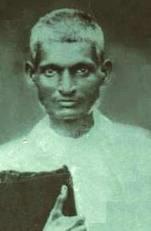
Sadhu Kochu Kunju Upadesi
30th November, 1945 (1121 Virchikam 15): Sadhu Kochukunju Upadesi (b.Dec.1883) passes away. Sadhu Kochukunju Upadesi (Mr. Moothampakkal Itty Varghese,Moothampakkal, Edayaranmula near Chengannur) was a unique personality in history of the Mar Thoma Syrian Church.
For almost forty years he preached the Bible in simple language all over South India. He practised and lived the life of a Sadhu. He wrote more than 200 hymns, many of that are printed in worship books across denominations even today. Thousands turned to God by hearing his messages. He was the first General Secretary of the ‘Mar Thoma Voluntary Evangelists’ Association, which was founded in 1924, and he continued in the post until 1945.
His continuous travels and gospel work made him sick many times. But on Friday, 30th November 1945 he became very sick and called to eternal rest on 15 Virchikam 1121 (8.45 am) and was buried in the Lakha St.Thomas Mar Thoma Church Cemetery on the following day. The funeral service itself was a great honour for him. Two Bishops, more than 100 priests and more than 40,000 people attended the funeral service.
Read more about his life in our free pdf Ebook: https://nalloorlibrary.com/wp-content/uploads/2013/06/sadhu-kuchujunu-upadeshi.pdf
Pages from History: John Bunyan – Author of Pilgrim’s Progress is born

John Bunyan
28 November, 1628: English preacher John Bunyan (d. 31August,1688), author of more than 60 books, including the famous Pilgrim’s Progress, is born in Elston, England.
In 1655, Bunyan was baptized by immersion by Pastor John Gifford of Bedford and called to preach the Gospel of Jesus Christ. Bunyan was arrested November 12, 1660, for preaching without the approval of the Anglican Church. He was charged with “teaching men to worship God contrary to the law” and was in jail more than twelve years.
His most well-known work, The Pilgrim’s Progress, was written while in the Bedford jail. During Bunyan’s lifetime there were 100,000 copies circulated in the British isles, besides several editions in North America. It has been continuously in print since its first printing. Bunyan’s remarkable imagery was firmly rooted in the Reformation doctrines of man’s fallen nature, grace, imputation, justification, and the atonement–all of which Bunyan seems to have derived directly from Scripture. ~ http://www.chapellibrary.org
John Bunyan’s Works
The Collected Works of John Bunyan was carefully edited by George Offor, first published in 1853 and revised in 1862. These files are from the 1862 edition.
These pdf books can be downloaded at no cost and read for free. It can be accessed at http://www.chapellibrary.org/literature/bunyan/
Pages from History: 21 Nov 1881: Birth of Very Rev. K. E. Oommen

Very Rev. K. E. Oommen
21 Nov 1881: Birth of Very Rev. K. E. Oommen (21/11/1881 to 23 May 1984). Very Rev K. E. Oommen was one of the first four graduates who accepted ordination together in the Mar Thoma Church. He was one of the Divisional Secretaries of the church till 1939. With his evangelical zeal and wise counsel he gave great support to Abraham Mar Thoma and later Metropolitans.
He had a long and fruitful life. He died in 1984 at the age of 103. Most Rev Philipose Mar Chrysostom of the Mar Thoma Church is his son.
Pages from History: 9 November, 1917: Birth of Dr. Sosamma Philip – Medical Missionary

Late Dr. Sosamma Philip, Medical Missionary.
9th November, 1917: Birth of Dr.Sosamma Philip, Medical Missionary. Dr. Sosamma was the daughter of Late Rev. M.C. George Kasseesa (17 April 1874 – 23 October 1923) of Maliyekkal House, Kuriannoor.
The Late Most Rev. Dr. Alexander Mar Thoma Valiya Metropolitan (10 April 1913 – 11 January 2000) was her elder brother. Dr. Sosamma passed her final school examination in 1933, but she couldn’t afford a college education. She joined the undergraduate teacher’s training course in Tiruvalla and then became a teacher in Kuriannoor Middle School. The family had to sell a portion of their ancestral property to pay for her dowry.
In 1940, she married Dr. P.V. Philip (Palathinkkal, Kottayam), who was working with the Mission Hospital in Karappuram, Cherthala. But unfortunately, Dr. Philip died after nine months of their marriage. She also lost her mother, three months later. Dr. Sosamma had an earnest desire to continue the medical work of her departed husband. She joined Alwaye U.C. College and passed her intermediate examinations and applied for a seat in Christian Medical College, Vellore. As she did not get admission at CMC Vellore, she joined the American College in Madurai and finished her B.A. and then joined the Nicholson School, Tiruvalla, as a teacher.
But the desire for a medical education was burning in her heart, so she applied again and this time she secured an admission in Christian Medical College, Vellore. Immediately after getting her Medical degree, she joined the Karapuram, Cherthala Mission, where her husband had worked. After further passing her specialization courses in Chicago, she worked with the Kumbanad and Kattanam hospitals for many years.
In 1967, she joined the Sihora Ashram Hospital in Madhya Pradesh and remained there till her retirement, 30 years later in 1997. As recognition of her work and social service, the Church awarded her the “Manava Seva Award”.
After her retirement, she returned to stay with her relatives in Kuriannoor. She was called to her eternal home on 4 May 2008 and was buried beside her parents at the St.Thomas Mar Thoma Church Cemetery in Kuriannoor.

Late Rev. M.C. George Kasseesa (Father of Dr. Sosamma Philip)
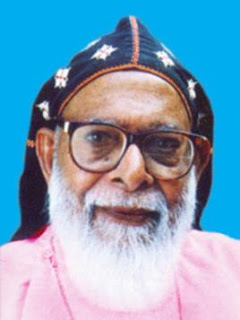
Late Alexander Mar Thoma Valiya Metropolitan (Elder brother of Dr. Sosamma Philip)
Pages from History: 4 October, 1836 – Abraham Malpan ends Maramon ‘Muthappan’ Festival

Image from maramonmarthomachurch.com
5 October, 1836: Malayalam Year 1012 Kanni 19: Members of the Mar Thoma Maramon Parish used to celebrate the festival of “Muthappan” every year.
Muthappan was a wooden idol in the shape of a human, made in memory of a foreign Bishop who came to Kerala in AD 1685. Offerings and prayers were conducted in front of this idol. The people of Maramon believed that the cause of all their prosperity and blessings was because of this semi-god, Muthappan.
Large crowds used to attend this yearly festival, which was a good source of income for the Maramon Parish. On 4th October 1836, the day before ‘Muthappan Festival’, the reformer of the Mar Thoma Church, Abraham Malpan threw “Muthappan” into the well situated in the Church compound and put an end to this festival forever, starting the reformation process.
Pages from History: 27 September, 1976: Juhanon Mar Thoma Metropolitan passes away

Metropolitan Juhanon Mar Thoma (Photo credit: LIFE magazine)
27 September, 1976: Juhanon Mar Thoma Metropolitan Passes away. (b.7 Aug.1893) .Dr Juhanon Mar Thoma was the Metropolitan of the Mar Thoma Syrian Church from 1947 to 1976. He provided the Church with the emblem having the motto: “Lighted to Lighten”. This has been appreciated by many leaders of Christian churches.
“Ecumenism was a reality for him; he restored peace with the Indian Orthodox Church. He actively participated in ecumenical councils such as the World Council of Churches. In 1948, he led the delegation to the first Assembly of the World Council of Churches in Amsterdam. At its second meeting at Evanston, Illinois in 1954 he was elected as one of the presidents of WCC. During the third Assembly in New Delhi in 1961 he was the chairman and guided the deliberations with distinction.
It was in 1974, it was decided enter into full communion with the Churches of South India, North India and with various provinces in the Anglican communion.” ~ wikipedia.com
On 26 June 1975 the then Prime Minister of India Indira Gandhi declared Emergency. Juhanon Mar Thoma was the only Christian leader in India who raised a voice and sent a letter to the Prime Minister arguing for the restoration of democracy.
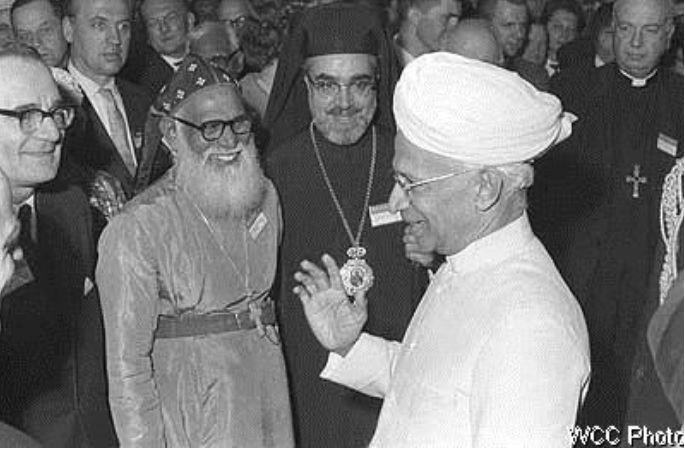
Dr Radhakrishnan, vice-president of India (right) greeting Bishop S. U. Barbieri, Metropolitan Juhanon Mar Thoma and Archbishop Iakovos during the Third Assembly of the WCC in New Delhi, November 18 – December 6, 1961. (Photo from the Archives of wcc-coe.org)
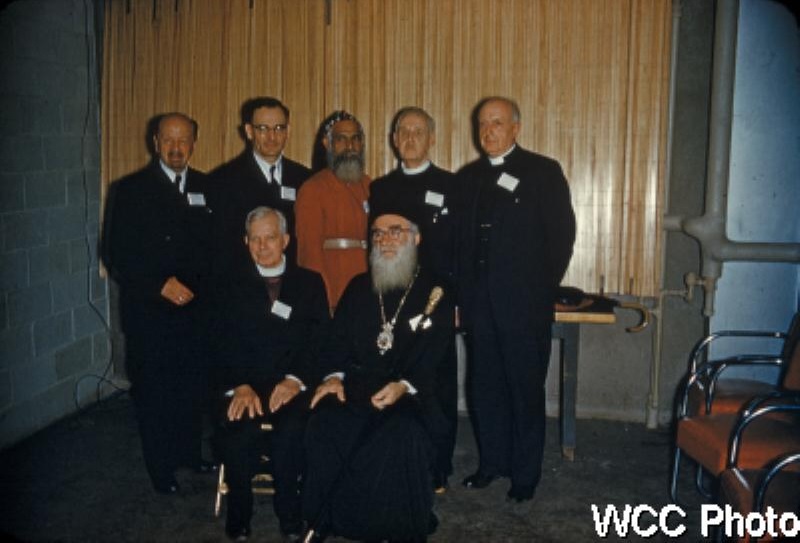
The six new elected Presidents of the World Council of Churches (1954).
Standing, left to right, the are Bishop Dibelius of the Evangelical Church of Germany, Bishop Barbieri of the Methodist Church in Argentina, Metropolitan Juhanon of the Mar Thoma Syrian Church of Malabar, India, the Very Rev. John Baillie of the Church of Scotland, Bishop Sherril of the Protestant Episcopal Church of the U.S.A.
Seated, left to right, Bishop bell of the Church of England (Honorary President), Archbishop Michael of the Eastern Orthodox Church in North and South America. (Photo from the Archive of wcc-coe.org)
Pages from History: 4 September, 1847: Henry Francis pens Hymn ‘Abide with me’
4 September, 1847: Henry Francis Lyte (1793-1847) writes the Hymn “Abide with me” (Malayalam – Koode paarkka neram vaikkunnitha, No.8 (7) in Kristheeya Keerththanagal). Lyte wrote this hymn at the end of his life, just two months before he died. The text for this Hymn was taken from Luke’s Gospel Ch.24 v. 29 “Abide with us; for it is toward evening, and the day is far spent”.
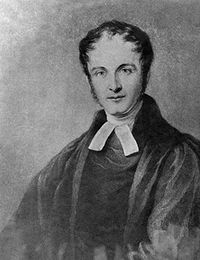
Henry Francis Lyte
Pages from History: 3 September, 1889 – Birth of Sadhu Sunder Singh
Sadhu Sunder Singh was a member of an ancient, aristocratic, and wealthy Sikh family from the village of Rampur in the State of Patiala. He was very religious. Jesus appeared to him in a vision in the early hours of 18th December 1904. Like Paul he heard a voice “Why do you persecute me? Remember that I gave my life for you upon the Cross”. On Sunday, the 3rd of September, 1905, on his sixteenth birthday, he was baptized in St. Thomas Church at Simla according to the rite of the Anglican Church.
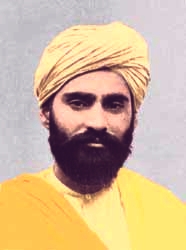
Sadhu Sundar Singh
A month after his baptism, Sundar Singh donned the yellow linen robe that celibate Indian Sadhus wore and set out to preach the gospel, carrying nothing but a New Testament. From now on he would have no permanent home and no income.”I am not worthy to follow in the steps of my Lord,” he said, “but like Him, I want no home, no possessions. Like Him I will belong to the road, sharing the suffering of my people, eating with those who will give me shelter, and telling all people of the love of God.’ He also authored eight books.
He is believed to have died in the foothills of the Himalayas in 1929 on his way to Tibet. His body was never found.
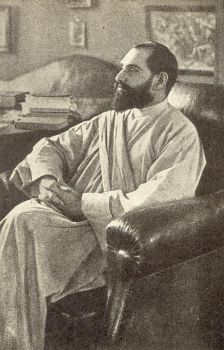
Sadhu Sundar Singh
Pages from History: Fire engulfs missionary William Carey’s print shop in Serampore (1812)
11 March, 1812: Fire engulfs missionary William Carey’s print shop in Serampore, India, destroying his massive polyglot dictionary, two grammar books, sets of type for 14 eastern languages, and whole versions of the Bible.
Undaunted, Carey said, “The loss is heavy, but as traveling a road the second time is usually done with greater ease and certainty than the first time, so I trust the work will lose nothing of real value . . . We are cast down but not in despair.” News of the fire also catapulted Carey to fame, bringing in abundant funds and volunteer labour.
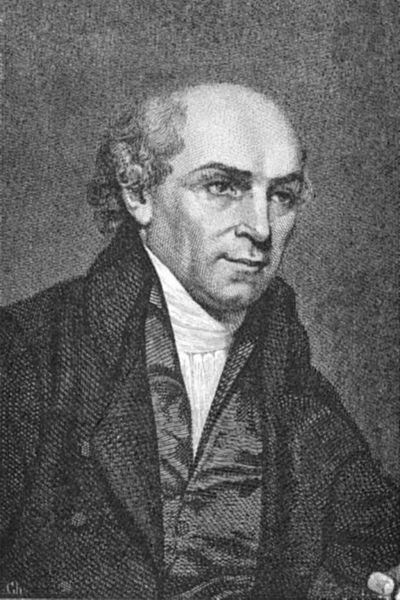
William Carey: The Shoemaker Who Became the Founder of Modern Missions; John Brown Myers; London 1887


 Nalloor Library