Pages from History: Fire engulfs missionary William Carey’s print shop in Serampore (1812)
11 March, 1812: Fire engulfs missionary William Carey’s print shop in Serampore, India, destroying his massive polyglot dictionary, two grammar books, sets of type for 14 eastern languages, and whole versions of the Bible.
Undaunted, Carey said, “The loss is heavy, but as traveling a road the second time is usually done with greater ease and certainty than the first time, so I trust the work will lose nothing of real value . . . We are cast down but not in despair.” News of the fire also catapulted Carey to fame, bringing in abundant funds and volunteer labour.
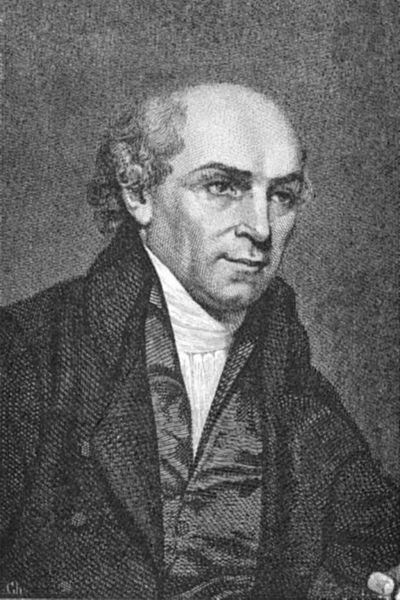
William Carey: The Shoemaker Who Became the Founder of Modern Missions; John Brown Myers; London 1887
Pages from History: 8 March 1835, Freedom for slaves. (Munro Island- Travancore)
Slavery was a social evil which prevailed all over the world including what is now the state of Kerala in India. According to the 1836 census there were 164,864 slaves in Travancore vis-à-vis a total civilian population of 12,80,668.
Slaves were treated like animals and the cost of one slave was that of an ox, cost of an ox was 5 (big para) measures of Paddy or Rs. 10/- only. Slaves were chained and sold like animals in markets.
Kottayam, Changanasserry, Thirunakkara, Alleppey, Kayamkulam, Kollam, Attingal, Chirayinkizh, Kaniyapuram, Pettah and Kovalam were the notorious slave trade markets of the time. Churches in Cochin were used as godowns for the slaves except for Sundays. Slaves were exported out of the kingdom. There was no one to speak on behalf of these unfortunate people.
With the arrival and the teachings of the CMS (Church Missionary Society) missionaries, people became aware of this social evil. In 1819, Munro Island was given to the missionaries, by the then Travancore Government along with the slaves residing there on the Island. Munro Island is located at the confluence of Ashtamudi Lake and the Kallada River, in Kollam district, Kerala, India.
In 1833, England passed the Slavery Abolition Law. CMS missionaries, Benjamin Bailey and Joseph Peet made a historic declaration on 8th March 1835, giving freedom to the slaves in Munro Island.
The declaration read as follows:
“We the undersigned, acting as trustees of Munro Island, do hereby declare that… who has hitherto been a slave of the soil, is from this time liberated by us and made a free man and that his wife and offspring are wholly and forever free and are regarded by us only as hired servants and that no one has any right to bring them into servitude again. At the same time we declare that we do not consider ourselves as released from any claim which he or his wife or offspring may have upon us according to custom, privilege or law in consequence of their having been slaves.”
8 March 5. Sd/- Benj Bailey Sd/- Josh Peet,
In 1847, Uthram Thirunal Marthanda Varma became the King of Travancore. The same year CMS missionaries submitted a memorandum to the King requesting him to stop the slavery in Travancore. In 1853, by royal declaration slavery was abolished in Travancore forever. In 1864, the Kingdom of Cochin also made a similar declaration abolishing slavery.

Slaves
Pages from History: Rev. John Varghese of Sihora Ashram passes away (1997)
7 March, 1997: Rev. John Varghese of Sihora Ashram (b.5 July 1915) passes away. Rev John Varghese B.A., B.D. was a member of the Valethu Thoppil Family of Puthencavu, near Chengannur. After his education in the Trivandrum Maharajas College, he became a teacher in Perumbavoor Ashram School.
Deeply influenced and inspired by Rev. Dr. C. E. Abraham, he went to Sihora in Madhya Pradesh in 1942. He is remembered today as one of the co-founders of the Sihora Ashram of the Mar Thoma Church.

Rev. John Varghese
Pages from History: Very Rev. P. J. Thomas passes away (1990)
7 March, 1990: Very Rev. P. J. Thomas passes away.
Rev. Thomas was a deep scholar and gifted linguist, besides being an ardent evangelist. He passed his B. D. degree examination from United Theological College, Bangalore with distinction and joined the ministry of the Church. The call came to him to take up the mission work in Ankola when he was Vicar of the Kottayam Jerusalem Mar Thoma Parish.
He readily accepted the challenge and went to Ankola with his family and established the Ashram there with two young graduates as fellow workers, Mr. Philip Oommen (now Philipose Mar Chrysostom Valiya Metropolitan) and Mr. John Thomas (late Rev. P. John Thomas). Rev. P. J. Thomas was designated Vicar General in 1976 after he came back to Kerala. He passed away on March 7, 1990.
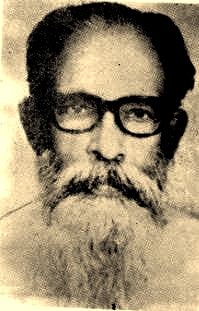
Very Rev. P. J. Thomas
Pages from History: Death of John Wesley (1791)
2 March, 1791: Founder of Methodism, John Wesley (b.17 June 1703) dies in London. Thanks to his organizational genius, we know exactly how many followers he had when he died: 71,668 British members, 294 preachers, 43,265 American members with 198 preachers and 19 missionaries. Today the Methodists number about 30 million worldwide.

“John Wesley,” by the English artist George Romney, oil on canvas. Courtesy of the National Portrait Gallery, London.
Pages from History: CSS (Christava Sahitya Samithy) Tiruvalla (1925)
March, 1925: Establishment of the Malayalam wing of the Christian Literature Society. The Malayalam Language wing of the Christian Literature Society (CLS) was established in March, 1925.
Rev. V. P. Mammen, Mr. K. K. Kuruvilla and Mr. T. K. Kuruvilla were Mar Thoma Church members who co-operated with the Anglican Church leaders for the establishment of the Malayalam wing. After many years the name was changed from CLS to CSS (Christava Sahitya Samithy).

Christava Sahitya Samithy
Pages from History: 40 Years – No Salary – Selfless Parish Service – Rev. C M Joseph
26 February, 1876: Birth of C.M. Joseph Kathanar, Cheruvathur, Kunnamkulam (d..28 February 1943) was ordained deacon on 17 November 1900 and priest on 5 Jan 1901. During his 40 years of service as vicar of various parishes he did not take any salary or any monetary benefits. It was a totally voluntary service! He was the vicar of Kunnamkulam, Pzhanji, Trichur, Chennamkerry, Chalasserry, Varakkara, Vengoor, Kizhillam, Valakam and Kochi. With ten of his friends he formed an association” Kunnamkulam Mar Thoma Suriyani Suveshesha Prasangasangam” and he was the president for it for 35 years.
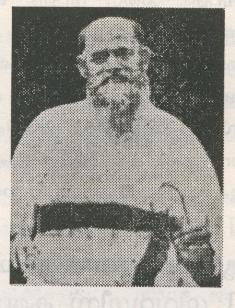
Rev. C. M. Joseph
Pages from History: Generosity Personified – Bishop Edward Alfred Livingstone Moore
25 February, 1925: Consecration of Bishop Edward Alfred Livingstone Moore (13 Nov 1870 – 22 Sep 1944) Fourth Bishop of the Anglican Diocese of Travancore and Cochin. He was consecrated in England by the Archbishop of Canterbury. He arrived in Kottayam on 10th August, 1925. He had a great concern for the people from the backward community. He ordained Rev. P. J. Isaac and Rev. C. I. Mathai – both from the backward community. He served the diocese for 12 years. He was a very generous man who donated his full salary for charitable work in the diocese.
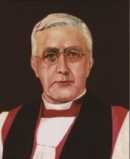
Bishop E. A. L. Moore
Pages from History: Metropolitan Suspends Vicars for violating Sabbath (1881)
27 February, 1881: (M.E. Kumbham 15, 1056): The Metropolitan suspended several vicars for solemnizing a marriage on Sunday morning. One of the Vicars of the Maramon Parish solemnized the marriage of his son a deacon on a Sunday morning with the help of another priest. All three of them were suspended from official duties for violating the fourth Commandment (Observe the Sabbath and keep it holy).

Maramon Mar Thoma Church
Pages from History:- Johannes Gutenberg publishes the Bible – 1455
23 February, 1455: (traditional date): Johannes Gutenberg publishes the Bible, the first book ever printed on a press with movable type. Gutenberg (c. 1400 – February 3, 1468) was a German goldsmith and printer, who is credited with inventing movable type printing in Europe and mechanical printing globally. His major work, the Gutenberg Bible, also known as the 42-line bible, has been acclaimed for its high aesthetic and technical quality.

The Gutenberg Bible
New York Public Library, 2009. (Author NYC Wanderer (Kevin Eng))- wikipedia.com


 Nalloor Library