Pages from History: Death of Constantine, the first Christian emperor of Rome (AD 337)
22 March, 337: Constantine, the first Christian emperor of Rome, dies at the age of 47. As emperor, he issued an edict officially tolerating Christianity, though he did little to stave off paganism. He also summoned the Council of Nicea (Nicaea) to settle the Arian dispute over the nature of Christ.
Constantine played an influential role in the proclamation of the Edict of Milan, which decreed religious tolerance throughout the empire (an edict officially tolerating Christianity). He called the First Council of Nicaea in 325, at which the Nicene Creed was professed by Christians.
Constantine is also known as the founder of the Byzantine Empire. He built a new capital at Byzantium and named it ‘New Rome’. However, in Constantine’s honour, the Romans called it Constantinople, which would later be the capital of what is now known as the Byzantine Empire for over one thousand years.
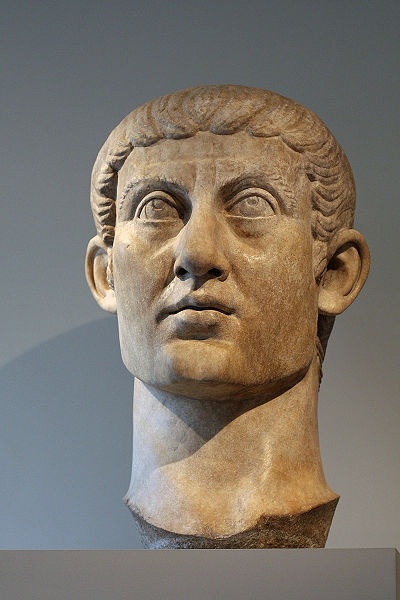
Emperor Constantine (Metropolitan Museum of Art # 26.229)
Pages from History: Rev. P. C. Cherian passes away (1978)
21 March, 1978: Rev. P. C. Cherian passes away (b.18 Jan 1907). After passing his B.A., L.T., examinations he served St. Thomas School in Keezhillam as a teacher and headmaster. He became a deacon on 15th April 1938. He served as the vicar of Keezhillam and Thodupuzha parishes. His brother P. C. George was the founder of the Manganam Agathimandiram.

Rev. P. C. Cherian
Pages from History: Publication of Uncle Tom’s Cabin (1852)
20 March, 1852: Abolitionist Harriet Beecher Stowe, daughter of the famous Congregational minister Lyman Beecher, publishes Uncle Tom’s Cabin (which had been serialized in an antislavery newspaper).
The book sold one million copies and was so influential in arousing antislavery sentiment that Abraham Lincoln is reputed to have said upon meeting Stowe in 1863: “So you’re the little woman who wrote the book that made this Great War!”

Harriet Beecher Stowe, c. 1852, (Bowdoin College Museum of Art, Gurney & Sons)
![Title-page illustration by Hammatt Billings for Uncle Tom's Cabin [First Edition: Boston: John P. Jewett and Company, 1852].](https://nalloorlibrary.com/wp-content/uploads/2014/03/345px-uncletomscabincover.jpg)
Title-page illustration by Hammatt Billings for Uncle Tom’s Cabin [First Edition: Boston: John P. Jewett and Company, 1852].
Pages from History: Death of Rev. Dr. C. E. Abraham (1985)
18 March, 1985: Death of Rev. Dr. C. E. Abraham, Cheruthottathil, Kozhencherry (b.7 Jan.1898).
Rev. Dr. C. E. Abraham was a member of the Cheruthottathill family in Kozhencherry. He was ordained as deacon in 1920 and priest in 1930. He served as Professor/Principal of the Serampore Theological College from 1925-1959. In addition to that he also served as the General Secretary of the Mar Thoma Yuvajana Sakhyam and Evangelistic Association.
Rev. Abraham also served as a visiting professor for many foreign universities around the world. He wrote many books including “Church History” and “Builders of Indian Churches”. He was the Editor of the First Mar Thoma Church Directory. Rev. Abraham will be remembered as one of the most learned and farsighted priests of the Mar Thoma Syrian Church.

Rev. Dr. C. E. Abraham
Pages from History : Sale of indulgences & Johann Tetzel
15 March, 1517: Needing money to rebuild St. Peter’s basilica, Pope Leo X announces a special sale of indulgences. (The remission of temporal punishment still due for a sin that has been sacramentally absolved) A Dominican named Johann Tetzel led the way in promoting the sale in Germany and erroneously declared that indulgences would cover future sins (Leo’s forgave all past sins). The teaching angered the reformer Martin Luther, who soon posted his 95 Theses in response.

Johann Tetzel
Pages from History: Construction is completed on the Second Temple in Jerusalem (B.C 515)
12 March 515 B.C (Before Christ) – Construction is completed on the Second Temple in Jerusalem. The First Temple was built by King Solomon in seven years during the 10th century B.C in 957 B.C. It was the center of ancient Judaism and has remained a focal point for Jewish services over the millennia. The Temple replaced the Tabernacle of Moses and the Tabernacles at Shiloh, Nov, and Gibeon as the central focus of Jewish faith. This First Temple was destroyed by the Babylonians in 586 B.C, and was rebuilt seventy years later by Cyrus the Great in 516 B.C.
Centuries later, it was renovated by Herod in about 20 B.C, and this Second Temple was subsequently destroyed by the Romans in 70 A.D. All of the outer walls still stand, although the Temple itself has long since been destroyed and for many years it was believed that the western wall of the complex was the only wall standing.

The Second Temple. Model in the Israel Museum. Photo by Ariely
Pages from History: Fire engulfs missionary William Carey’s print shop in Serampore (1812)
11 March, 1812: Fire engulfs missionary William Carey’s print shop in Serampore, India, destroying his massive polyglot dictionary, two grammar books, sets of type for 14 eastern languages, and whole versions of the Bible.
Undaunted, Carey said, “The loss is heavy, but as traveling a road the second time is usually done with greater ease and certainty than the first time, so I trust the work will lose nothing of real value . . . We are cast down but not in despair.” News of the fire also catapulted Carey to fame, bringing in abundant funds and volunteer labour.
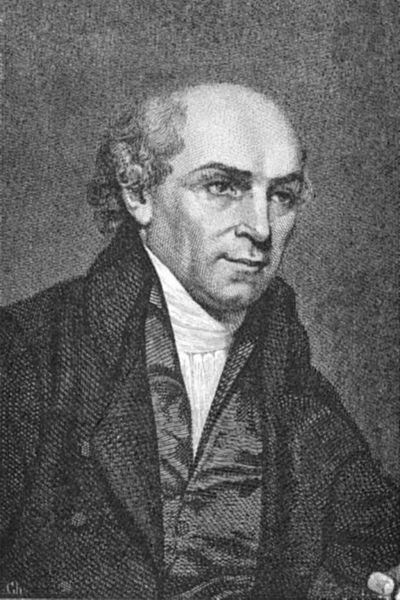
William Carey: The Shoemaker Who Became the Founder of Modern Missions; John Brown Myers; London 1887
Pages from History: George Muller Passes away (1898)
10 March. 1898: George Muller dies at the age of 93. George Muller (born on 27th Sep, 1805) was an ordinary man. His father was a tax collector. He was a man of faith. His life continues to be an inspiration and witness to all who commit their lives to God. By faith and prayer he opened many orphanages in England and he could support and take care of more than 18,000 orphan children during his lifetime. His work still continues through George Muller Foundation.
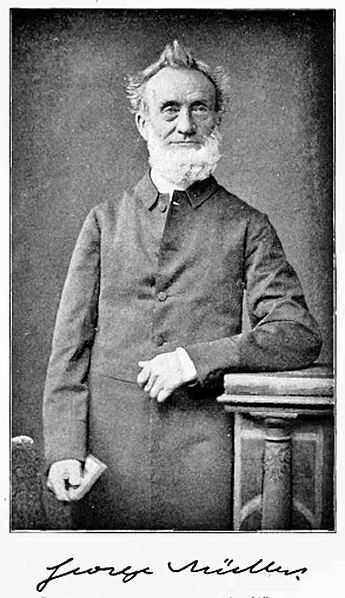
George Muller of Bristol by Arthur T. Pierson; New York; The Baker and Taylor Company; 1899
Pages from History: Society for Promoting Christian Knowledge (S.P.C.K.)
8 March, 1698: British missionary Thomas Bray and four laymen founded the Society for Promoting Christian Knowledge (S.P.C.K.) “to advance the honour of God and the good of mankind by promoting Christian knowledge both at home and in the other parts of the world by the best methods that should offer”. S.P.C.K. started its work in India in 1711 and is now one of the leading Christian publishing Houses in India. It is known in India as Indian Society for Promoting Christian Knowledge (ISPCK).
“Over the years, SPCK has distributed over 30 million books and has provided the means for translating the Book of Common Prayer into more than 200 languages. SPCK sent the first printing presses to India, opened the first British schools for poor children, gave equal education to girls, sent the first printed books to Australia, established libraries for clergy and missionaries in many countries, and published the first Braille books.” ~ www.spck.org.uk

SPCK
Thomas Bray
Pages from History: Rev. John Varghese of Sihora Ashram passes away (1997)
7 March, 1997: Rev. John Varghese of Sihora Ashram (b.5 July 1915) passes away. Rev John Varghese B.A., B.D. was a member of the Valethu Thoppil Family of Puthencavu, near Chengannur. After his education in the Trivandrum Maharajas College, he became a teacher in Perumbavoor Ashram School.
Deeply influenced and inspired by Rev. Dr. C. E. Abraham, he went to Sihora in Madhya Pradesh in 1942. He is remembered today as one of the co-founders of the Sihora Ashram of the Mar Thoma Church.

Rev. John Varghese



 Nalloor Library