Pages from History: 16 September 1498, First Spanish Inquisitor General dies
16 September, 1498: Tomas de Torquemada (b.1420), Dominican friar and the first Spanish Inquisitor General, dies. He burned over 2,000 victims, tortured thousands more, and in some areas, burnt at the stake as many as 40 percent of those accused. He was closely associated with the religious policies of King Ferdinand II and Queen Isabella I of Spain. His legacy will always be marred by the violence and barbaric methods used to ‘protect’ the faith.
Inquisition is broadly used, to refer to things related to judgment of heresy by the Roman Catholic Church. It can mean an ecclesiastical tribunal or institution from the Roman Catholic Church for combating or suppressing heresy, or the trial of an individual accused of heresy. Inquisitor General is the lead official of an Inquisition.

Tomás de Torquemada
Pages from History: 15 September, 1853: First woman ordained in the United States
15 September, 1853: Antoinette Brown Blackwell becomes the first female minister ordained in America. Antoinette Brown, (May 20, 1825 – November 5, 1921), was the first woman to be ordained as a minister in the United States, when she was called to be the pastor of the Congregational church in South Butler, New York in 1853. Her ordination, however, was not recognized by her denomination. In 1857, she returned to her work as an orator and reformer for womens rights with her husband Samuel C. Blackwell. She also was a strong activist for the right to vote for women. She died at the age of 96 in Elizabeth, New Jersey.
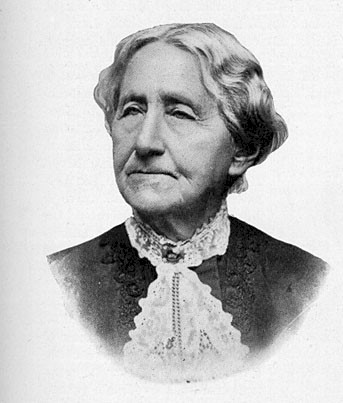
Antoinette Brown Blackwell
Pages from History: 14th September 407, Archbishop John Chrysostom dies
14 September, 407: Early church father John Chrysostom, the greatest preacher of his age, dies in exile when, in poor health, he is forced to travel on foot in bad weather. He was the Archbishop of Constantinople.

John Chrysostom
Pages from History: 4 September, 1847: Henry Francis pens Hymn ‘Abide with me’
4 September, 1847: Henry Francis Lyte (1793-1847) writes the Hymn “Abide with me” (Malayalam – Koode paarkka neram vaikkunnitha, No.8 (7) in Kristheeya Keerththanagal). Lyte wrote this hymn at the end of his life, just two months before he died. The text for this Hymn was taken from Luke’s Gospel Ch.24 v. 29 “Abide with us; for it is toward evening, and the day is far spent”.
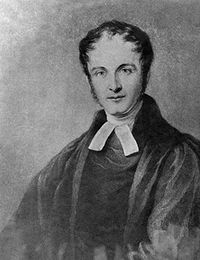
Henry Francis Lyte
Pages from History: 3 September, 1889 – Birth of Sadhu Sunder Singh
Sadhu Sunder Singh was a member of an ancient, aristocratic, and wealthy Sikh family from the village of Rampur in the State of Patiala. He was very religious. Jesus appeared to him in a vision in the early hours of 18th December 1904. Like Paul he heard a voice “Why do you persecute me? Remember that I gave my life for you upon the Cross”. On Sunday, the 3rd of September, 1905, on his sixteenth birthday, he was baptized in St. Thomas Church at Simla according to the rite of the Anglican Church.
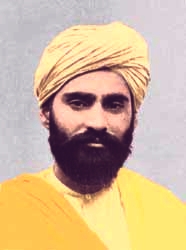
Sadhu Sundar Singh
A month after his baptism, Sundar Singh donned the yellow linen robe that celibate Indian Sadhus wore and set out to preach the gospel, carrying nothing but a New Testament. From now on he would have no permanent home and no income.”I am not worthy to follow in the steps of my Lord,” he said, “but like Him, I want no home, no possessions. Like Him I will belong to the road, sharing the suffering of my people, eating with those who will give me shelter, and telling all people of the love of God.’ He also authored eight books.
He is believed to have died in the foothills of the Himalayas in 1929 on his way to Tibet. His body was never found.
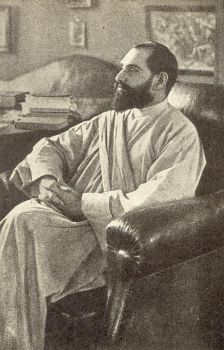
Sadhu Sundar Singh
Pages from History: 31 August, 1688: John Bunyan dies.
English Puritan writer and preacher John Bunyan, author of “Pilgrim’s Progress” dies at the age of 69. Though one of England’s most famous authors even in his own day, he maintained his pastoral duties to his death, which was caused by pneumonia he caught while riding in the rain to reconcile a father and son.

John Bunyan

John Bunyan’s grave at Bunhill Fields, London.
Pages from History, Herod executes John the Baptist.
29 August, A.D 29: Herod executed John the Baptist. Since the fifth century, this has been considered as the traditional date for the beheading of John the Baptist. 
Pages from History, 28 August, A.D 430: Saint Augustine passes away.
St. Augustine was born on 13 Nov 354, in Tagaste, Numidia, in Roman North Africa, of a mixed marriage. His father was a pagan, but his mother, Monica, was a Christian. It was because of her prayers that Augustine became a church leader and later a saint. He was known for his writings that consists of more than one hundred separate titles in Latin.. Nobody before Martin Luther (reformation Leader) has influenced the western Church as much as Augustine.

St. Augustine
Pages from History, 29 July, 1955: Mr. Daniel files suit against Mar Thoma Metropolitan
K. Ninan Daniel
On 29 July, 1955, Mr. Ninan Daniel, of Kurumthottikkal, Melukara Pathanamthitta District and three others filed a civil suit in District Court of Kottayam against the then Metropolitan of the Mar Thoma Church Most Rev. Juhanon Mar Thoma and six others.
Pages from History: 14 July, 1947, Punchamannil Mammen Upadeshi passes away
14 July, 1947: Punchamannil Mammen Upadeshi passes away. Mammen Upadeshi was born in the Vadasseri house of the Punchamannil family in Maramon on 25 Nov.1868, as the son of Mathai and Achiyamma.
Mammen’s elder siblings all died while they were still infants. So Mammen was baptized at home when he was very young by the Parish Priest Rev. Titus (Later Rt. Rev. Titus I Mar Thoma).
Mammen Upadeshi trusted the Lord like the Old Testament Prophet Elijah and lived like Elijah, spoke the messages of the Lord like Elijah, fought against evil forces like Elijah and even performed miracles like Elijah.

Punchamannil Mammen Upadeshi





 Nalloor Library