26th October 2014: Family Sunday Service (Free pdf EBook)
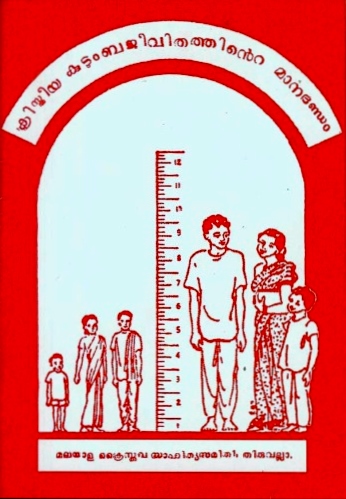
The Principles of Christian Family Life (Malayalam)
On 26th October 2014 (20th Sunday after Pentecost), Family Sunday is celebrated by the CSI church, CNI church and the Mar Thoma Syrian Church. The focus of the service is on the “Faith that has to be formulated in family life”.
Download this free pdf Ebook published in Malayalam in 1951 that is still relevant to today’s Christian life. This book can be used as a resource for your Family Sunday service. The link can be shared and used by church members, parishes and church organziations. It can be accessed on any smartphone, tablet or computer for free.
The Principles of Christian Family Life (Malayalam) (Published in 1951)
or
Pages from History: 29 September, 1978 – Pope John Paul I passes away
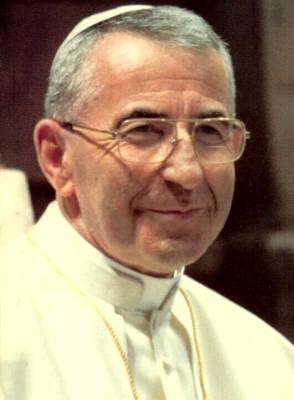
Pope John Paul I
29 September, 1978: Four weeks after being elected, Pope John Paul I passed away while reading a devotional in bed.His 33-day papacy was one of the shortest reigns in papal history, Having died before he could make a legacy as a pope, he is best remembered for his friendliness and humility, making him known as “the smiling Pope”.
Pages from History: 27, 28 September 1917 – First Mar Thoma Clergy Conference
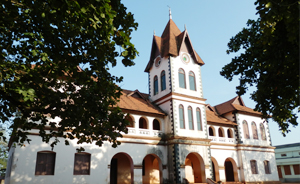 27, 28 September, 1917 (12, 13 Kanni M.E 1092): First Mar Thoma Clergy Conference. The first annual conference for the priests of the Mar Thoma Church was held in September 1917 at the Syrian Christian Seminary in Tiruvalla under the leadership of Bishop Titus II. It was a two-day conference. Priests from Anglican Church also attended this Conference. Rev. Dr. L. P. Larsen Principal of the Bangalore Theological College was the main speaker.
Pages from History: 27 September, 1947: Formation of Church of South India (with Photos)
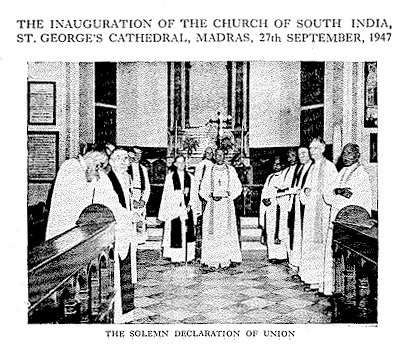
Photo credit: http://www.csisynod.com
27 September, 1947: Formation of Church of South India (CSI) in 1947, as a union of Anglican, Presbyterian, Congregationalist and Methodist churches. The idea of a Church union was proposed in 1919 at a conference held in Tranquebar (now Tarangambadi) in 1919. After 28 years of discussions various denominational churches in South India established by different Missionary societies agreed to the formation of the Church of South India in 1947 after India attained independence. The inaugural ceremony was held at St. George Cathedral Madras (Chennai).
Today the Church of South India is one of the largest Protestant churches in India and is a member of the Anglican Communion and its bishops participate in the Lambeth Conferences. It is also a member of the World Council of Churches, the World Alliance of Reformed Churches, and the National Council of Churches in India.
The Church of South India (CSI), Church of North India (CNI), and Malankara Mar Thoma Syrian Church of India jointly formed the Communion of Churches in India (CCI) in 1978 for mutual recognition of the ministry and leaders, inter communal relationship, and to explore possibilities of working together and other areas of cooperation in the fulfillment of the mission of the Church in India.
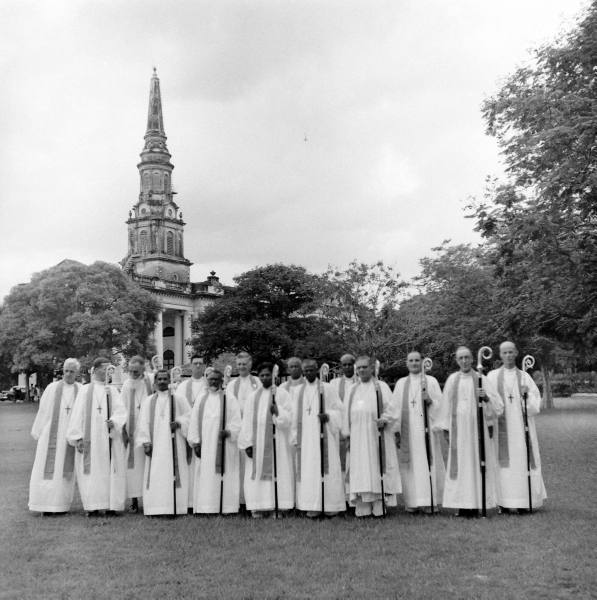
At the inauguration of Church of South India. Photo by Mark Kauffman (LIFE magazine)
The presiding bishop of the inaugural function was the Rt. Revd. C. K. Jacob of the Anglican Diocese of Travancore and Cochin. A vast congregation gathered in the cathedral at Madras from all over the world. The following historical declaration was made by Bishop Jacob at the inaugural service.
“Dearly beloved brethren, in obedience to the Lord Jesus Christ the head of the church, who on the night of his passion prayed that his disciples might be one, and by authority of the governing bodies of the uniting churches whose resolutions have been read in your hearing and laid in your prayer before Almighty God; I do hereby declare that these three churches, namely – the Madras, Madura, Malabar, Jaffna, Kannada, Telugu, Travancore Church councils of the South India United Church; the Methodist Church of South India, Trichinopoly, Hyderabad and Mysore districts; the Madras, Travancore and Cochin, Tinnevelly and Dornakal dioceses of the Churches of India, Burma and Ceylon; are become one Church of South India, and these bishops, presbyters, deacons and probationers who have assented to the basis of union and accepted the constitution of the Church of South India, whose names are laid upon this holy table, are bishops, presbyters and deacons of this church. In the name of the Father, and the Son, and the Holy Spirit, Amen.” ~ wikipedia

Inauguration procession of Church of South India. Photo by Mark Kauffman (LIFE magazine)
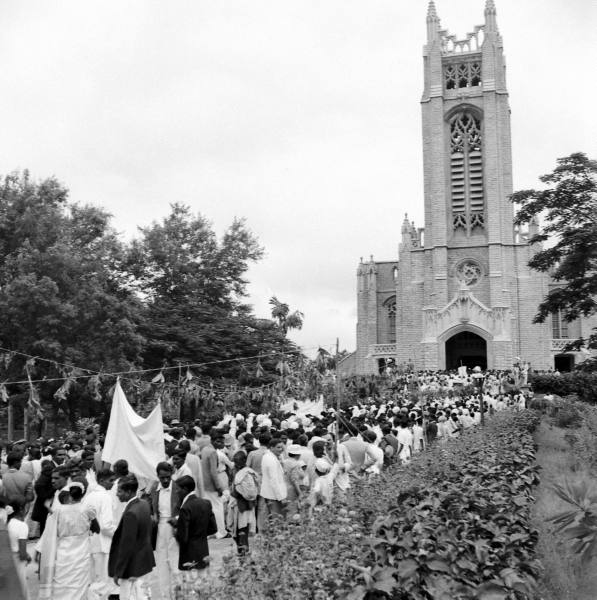
Inauguration procession of Church of South India. Photo by Mark Kauffman (LIFE magazine)
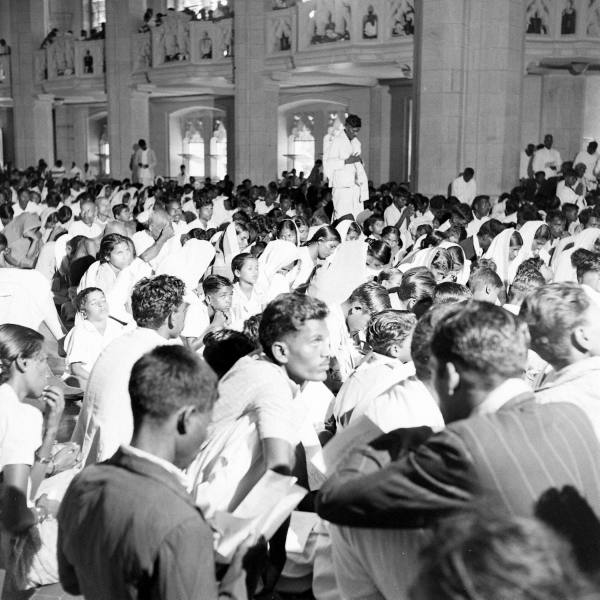
Inauguration service of Church of South India. Photo by Mark Kauffman (LIFE magazine)
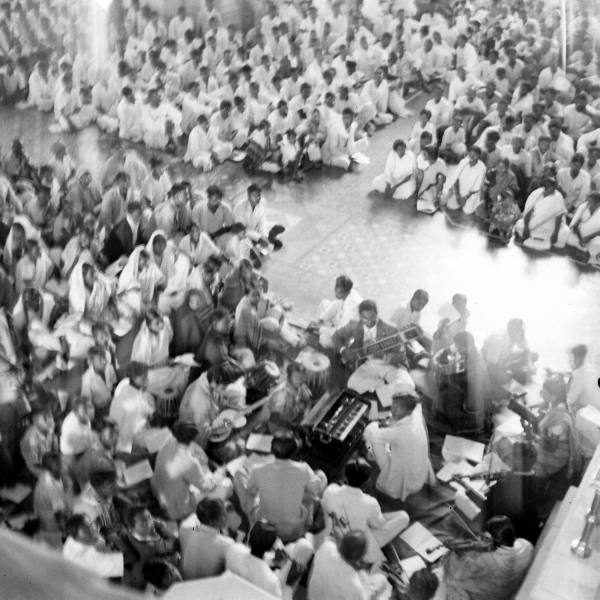
Inauguration service of Church of South India. Photo by Mark Kauffman (LIFE magazine)

Inauguration service of Church of South India. Photo by Mark Kauffman (LIFE magazine)
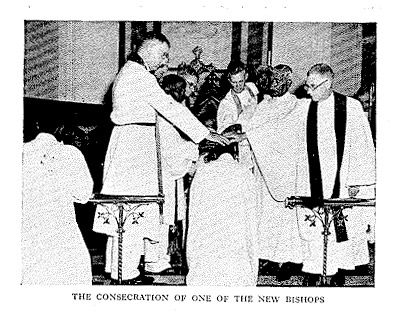
Photo credit: http://www.csisynod.com
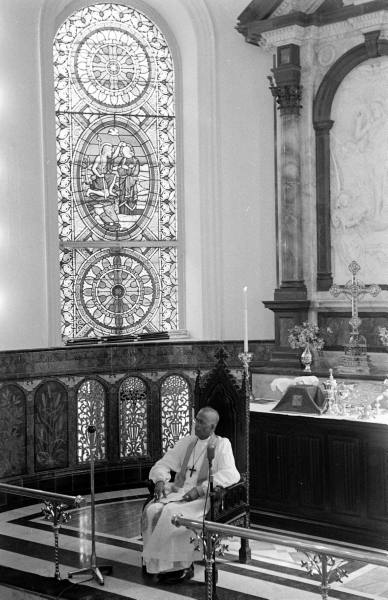
Presiding Bishop Rt. Revd. C. K. Jacob at the Inauguration of Church of South India. Photo by Mark Kauffman (LIFE magazine)
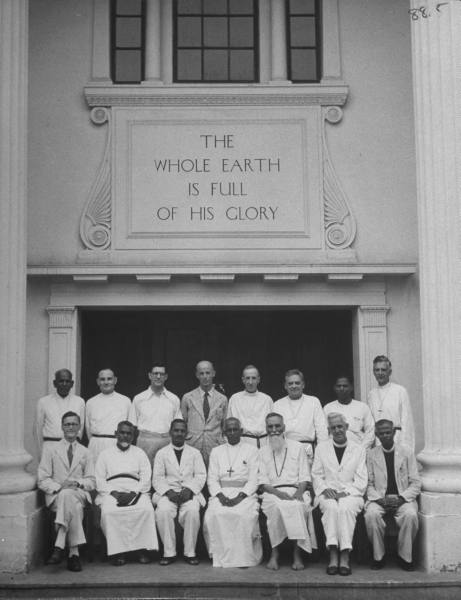
Clergymen from 5 Protestant faiths attending the inaguration of the Church of South India. Photo by Mark Kauffman (LIFE magazine)

St George’s Cathedral, Chennai (photo credit – wiki)
Pages from History: 27 September, 1976: Juhanon Mar Thoma Metropolitan passes away

Metropolitan Juhanon Mar Thoma (Photo credit: LIFE magazine)
27 September, 1976: Juhanon Mar Thoma Metropolitan Passes away. (b.7 Aug.1893) .Dr Juhanon Mar Thoma was the Metropolitan of the Mar Thoma Syrian Church from 1947 to 1976. He provided the Church with the emblem having the motto: “Lighted to Lighten”. This has been appreciated by many leaders of Christian churches.
“Ecumenism was a reality for him; he restored peace with the Indian Orthodox Church. He actively participated in ecumenical councils such as the World Council of Churches. In 1948, he led the delegation to the first Assembly of the World Council of Churches in Amsterdam. At its second meeting at Evanston, Illinois in 1954 he was elected as one of the presidents of WCC. During the third Assembly in New Delhi in 1961 he was the chairman and guided the deliberations with distinction.
It was in 1974, it was decided enter into full communion with the Churches of South India, North India and with various provinces in the Anglican communion.” ~ wikipedia.com
On 26 June 1975 the then Prime Minister of India Indira Gandhi declared Emergency. Juhanon Mar Thoma was the only Christian leader in India who raised a voice and sent a letter to the Prime Minister arguing for the restoration of democracy.
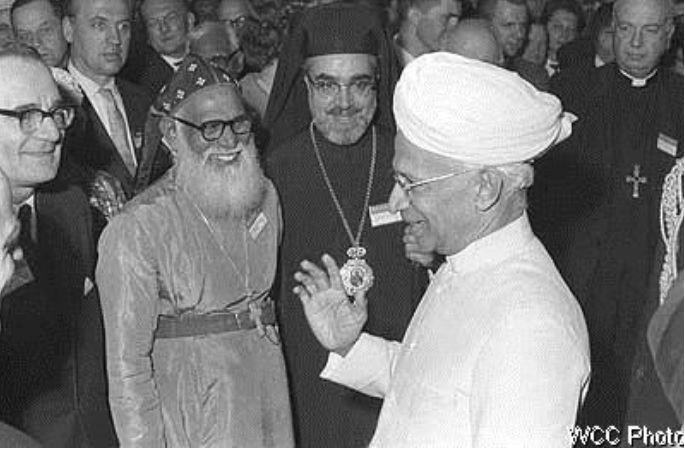
Dr Radhakrishnan, vice-president of India (right) greeting Bishop S. U. Barbieri, Metropolitan Juhanon Mar Thoma and Archbishop Iakovos during the Third Assembly of the WCC in New Delhi, November 18 – December 6, 1961. (Photo from the Archives of wcc-coe.org)
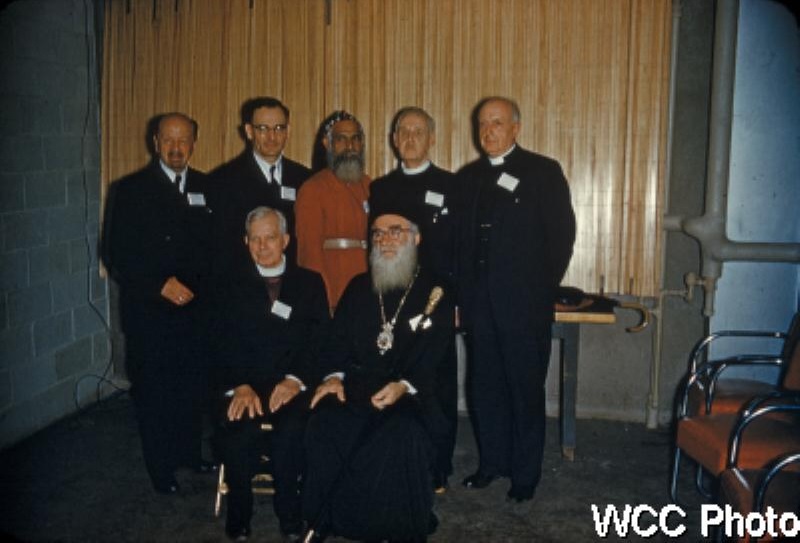
The six new elected Presidents of the World Council of Churches (1954).
Standing, left to right, the are Bishop Dibelius of the Evangelical Church of Germany, Bishop Barbieri of the Methodist Church in Argentina, Metropolitan Juhanon of the Mar Thoma Syrian Church of Malabar, India, the Very Rev. John Baillie of the Church of Scotland, Bishop Sherril of the Protestant Episcopal Church of the U.S.A.
Seated, left to right, Bishop bell of the Church of England (Honorary President), Archbishop Michael of the Eastern Orthodox Church in North and South America. (Photo from the Archive of wcc-coe.org)
Pages from History: 21 September, 1522: Martin Luther publishes the New Testament in German
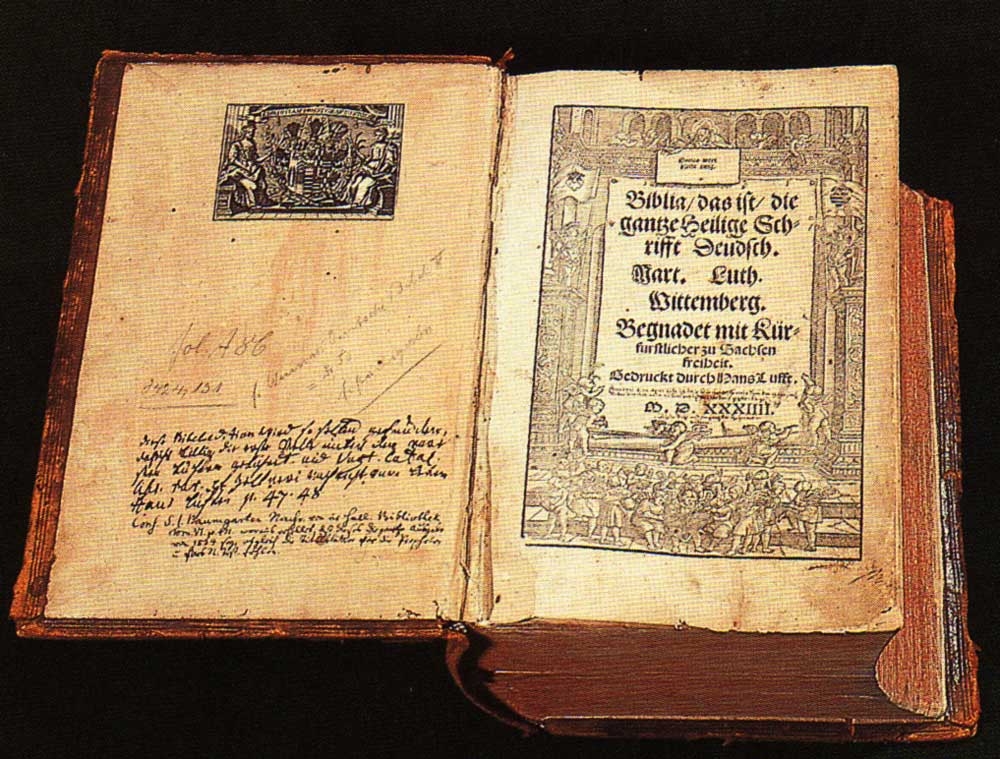
Martin Luther Bible
21 September, 1522: Martin Luther’s translation of the New Testament is published. Luther’s translated the Bible into the vernacular German language making it more accessible to ordinary people. The Luther Bible was not the first German Bible translation, but it was the most influential having a tremendous political impact on the church and on German culture. Luther even had large-print Bibles made for those who had failing eyesight.
The translation also furthered the development of a standard version of the German language, added several principles to the art of translation, and influenced the translation of the English King James Bible.
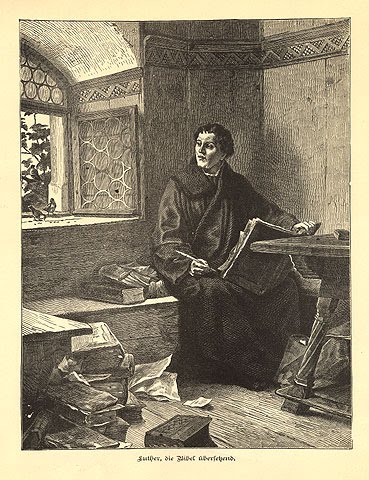
Martin Luther translates the Bible into German.
Pages from History: 20 September, 1224: Francis of Assisi receives the stigmata

St. Francis of Assisi
20 September, 1224: On or about this date, on Italy’s secluded Mount Alvernia, Francis of Assisi reportedly prayed, “O Lord, I beg of you two graces before I die—to experience in myself in all possible fullness the pains of your cruel passion, and to feel for you the same love that made you sacrifice yourself for us.” Soon his heart was filled with both joy and pity, and wounds appeared on his hands, feet, and side. He reportedly carried these scars (called stigmata – divine marks corresponding to those left on Christ’s body by the Crucifixion,) until his death in 1226.
Pages from History: 19 September, 1882 : Salvation Army starts its work in India
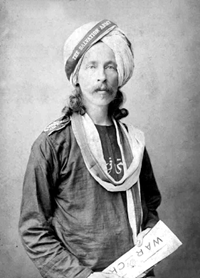
Frederick St George de Lautour (Booth)Tucker – ( Photo from http://www.salvationarmy.org/India)
19 September, 1882: Salvation Army starts its work in India. The Salvation Army was started in 1865 by William Booth as “The Christian Mission” in London to work among the poor and the unchurched people. Later he changed the mission’s name to the Salvation Army.
India is the Salvation Army’s oldest mission field. Frederick St George de Latour Tucker, of the Indian Civil Service, read a copy of The War Cry, and became a Salvationist taking the Indian name of Fakir Singh. He commenced the Army work in Bombay on 19 September 1882. The adoption of Indian food, dress, names and customs gave the pioneers ready access to the people, especially in the villages. In addition to evangelistic work, various social programmes were inaugurated for the relief of distress from famine, flood and epidemic. Educational facilities such as elementary, secondary and industrial schools, cottage industries and settlements, were provided for the depressed classes by the Salvation Army. ~ http://www.salvationarmy.org

Pages from History: 18 September, 1858: Birth of Kate Booth
18 September, 1858: Birth of Kate Booth (d.9 May 1955). She was the oldest daughter of William and Catherine Booth. Kate Booth brought the Salvation Army to France. As a captain, she led two lieutenants in preaching the Gospel in Paris, wearing sandwich boards when the police forbid them to hand out leaflets. They were not well received. Their street-corner sermons were often interrupted by people pelting them with mud and stones. After repeated attempts by men on the roads to strangle them by their bonnet strings, they began pinning the strings on rather than sewing them. She married Arthur Clibborn and had 10 children.
After becoming Pentecostals in 1906, the Booth-Clibborns together continued preaching and spreading the Gospel as travelling evangelists in Europe, the United States, and Australia for the rest of their lives.
The ‘Kate Booth House’, a Salvation Army residential environment for women and children fleeing family violence in Vancouver, British Columbia, was named in her honour.
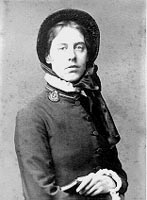
Catherine Booth-Clibborn (Katie Booth)
Pages from History: 17 September 1917, Birth of M. E. Cherian
17 September, 1917: Birth of M. E. Cherian, author of “Anugrahaththin Adhipathiye”.
Cherian was the son of Kuriannoor Thannikkapurathuttu T. M. Easow (Kunjachen Upadeshi) and Ayroor Kanjeettukara Panamthottathil Aleyamma. At the age of 9 he accepted Jesus as his personal saviour. He taught at the Noel Memorial School in Kumbanad for a few years, and from 1943 onwards he started full time gospel work.
He has written more than 300 hymns and 13 books. Hymn nos. 92, 93, 94, 95, 233, 236, 238, 239, 241, 245, 248, 304, 364, 365, 379, 385, 386 and 409 in the Mar Thoma Syrian Church Hymn book (Kristheeya Keerththanangal) are written by him.
He was called to his eternal home on 2 October, 1993 while he was on a gospel trip in Muthukulathoor Village near Madurai in Tamil Nadu.

M. E. Cherian


 Nalloor Library