Remembering Dr. Ida Sophia Scudder – Founder of CMC Vellore
Dr. Ida Sophia Scudder
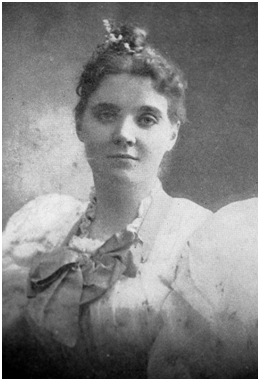
‘Aunt Ida’, as Dr. Ida Scudder was fondly called, was born in Ranipet, Tamil Nadu on 9th December, 1870 and passed away on 24th May, 1960, in Kodaikanal. To this day, she is remembered with great affection by the staff, students and alumni of CMC Vellore and the citizens of Vellore.
Her passionate concern for the women of India sprang from the night she was begged by a Brahmin gentleman to come to save his young wife who was struggling in childbirth. Then only a teenager with no medical training, she could offer no help – but the man refused to allow her doctor father to come near his wife: “it would be better that she died than be seen by a man”. On that same night, two other men came to her parents’ bungalow with the exact same request, and departed with the same sad response. The next morning she was shocked to learn that all three mothers and their babies had died – all for want of a female doctor. She gave up all thoughts of marriage and a comfortable life in the USA, and instead threw herself into medical training, returning to India as a qualified doctor in the year 1900.

Her primary focus in those early years was women and children. She started with a tiny clinic: just one bed with a window through which medicines were dispensed. In the year 1902 she opened the 40-bedded Mary Taber Schell Memorial Hospital in Vellore. In the next year, with a small band of dedicated helpers, she saw over six thousand patients and conducted 40 surgical operations. She did not neglect the rural population, but would take out bullock carts, carrying nurses and medicines, and hold ‘roadside clinics’ at the nearby villages.
The funds to build the first small hospital were donated by a New York banker, Mr. Schell, in memory of his late wife Mary. He actually gave Ida Scudder more money than she asked for because he wanted it, he said, to be a “very good hospital”. This concept of not settling for “good enough” but striving for excellence was one of the hallmarks of Aunt Ida’s life, and of the institution she founded. CMC has always tried to be the very best it can be, sending its staff for higher studies at leading institutions around the world, and investing in the latest medical technology.
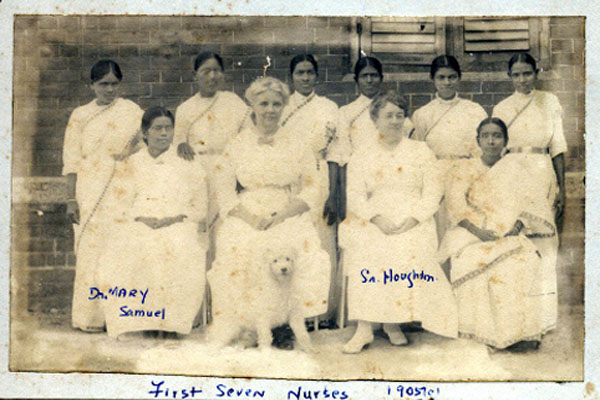
Right from the beginning, Ida knew that she needed to train women to help women. Initially it was compounders and nurses: formal nurse training began in 1909. By the year 1918, she proudly opened the Missionary Medical School for Women, which offered the LMP (Licensed Medical Practitioner) course.

In 1928, ground was broken for the “Hillsite” medical school campus on 200 acres at Bagayam, Vellore. In 1928, Mahatma Gandhi visited the medical school.
In 1942 this was upgraded to a full MBBS degree course, and men were admitted from 1947 onwards. The Nursing School became the first College of Nursing in India in 1946 and is now a WHO collaborating centre for Nursing and Midwifery. In 2020, CMC Vellore celebrated Aunt Ida’s 150th birth anniversary and 120 years of CMC Vellore.
Ida Scudder is famous as the founder of the Christian Medical College and its associated hospitals, but her legacy is far greater than the institution and its buildings.

She brought new hope and dignity to women in South India, giving them the benefits of modern medicine previously denied them by cultural barriers. She opened up the health care professions to women from all faiths and backgrounds, encouraging families to allow their daughters to train as nurses and doctors and showing by her own example and her students’ achievements that women could equal men both in medical studies and clinical proficiency, and excel in leadership even in the toughest of times.
Ida Scudder inspired hundreds of young medical professionals to take the words of Jesus as their motto. He said that he had come, “not to be served but to serve.” Many of her graduates dedicated their lives to bringing healthcare and new hope to remote areas of India. Others continued to serve in Vellore, passing on the torch of knowledge, skill and compassionate caring to new generations.
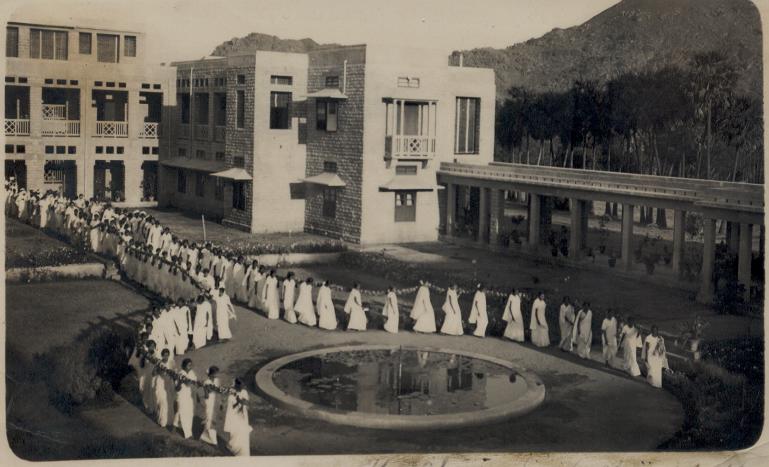
At the same time, Ida never lost “the common touch”. Patients loved her because of her compassionate care for them and the way, even after retirement, she used to sit beside them in their pain and hold their hands. Her students loved her because she made them her family, spending her off-duty time with them for relaxation and fun, and not just studies. Her colleagues and staff members respected her trust in them and her integrity, tireless hard work and indefatigable spirit as she strove to build “not a medical college, but the Kingdom of God”.
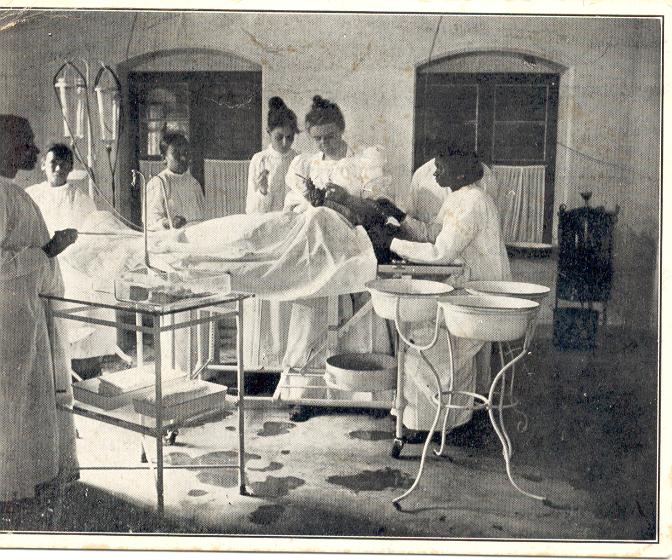
Ida Scudder, who never had any postgraduate medical training, was a pioneer in many areas: medical training for women, roadside clinics, new initiatives in education and research. Yet, she was so determined to start helping in India that she had arrived in Vellore, in 1900, without any working experience: her plan was to serve her internship under the supervision of her father. However, he died within a year of her return to India.
When it came to the first years of academic teaching, she had to go back to her basic text books and constantly study to keep ahead of her students. Nevertheless, she recognised the value of research and both published papers herself and encouraged others to do so. She tried to make sure that CMC was at the forefront of introducing new treatments and acquiring the latest equipment. Her commitment to improving the quality and effectiveness of medical practice has resulted in CMC Vellore being one of the leading medical research institutes in India.
For her tremendous and tireless service to the nation, Ida Scudder received the Kaiser-i-Hind medal in 1920. But she was not someone who merely achieved great things herself; she also inspired others to achieve more than they could imagine. She had to cajole and persuade people to train in new specialities and take up unfamiliar administrative responsibilities – and people responded willingly because of her leadership and passion. Somehow, during the closing years and aftermath of the Second World War and with no financial security, she managed to pull together a top class faculty to staff the new Medical College.
As we now gradually recover a respect for nature, and an awareness of its value and fragility, we should remember that Ida Scudder, one hundred years ago, was a committed environmentalist. She ensured that there was always space for flowers and trees in her hospital. She loved creation and retired to the blossoms and natural beauty of Kodaikanal.
Ida Scudder continued to provide inspiration and moral support for those who assumed leadership of the College and hospital after her retirement in 1945. She encouraged the emergence of a cadre of Indian professionals who were committed to the highest standards of medical practice and education. Her funeral in 1960 in Vellore was an all-community event with thousands of people of many faiths lining the streets. The Government of India issued a commemorative stamp on 12th August 2000 in her honour.
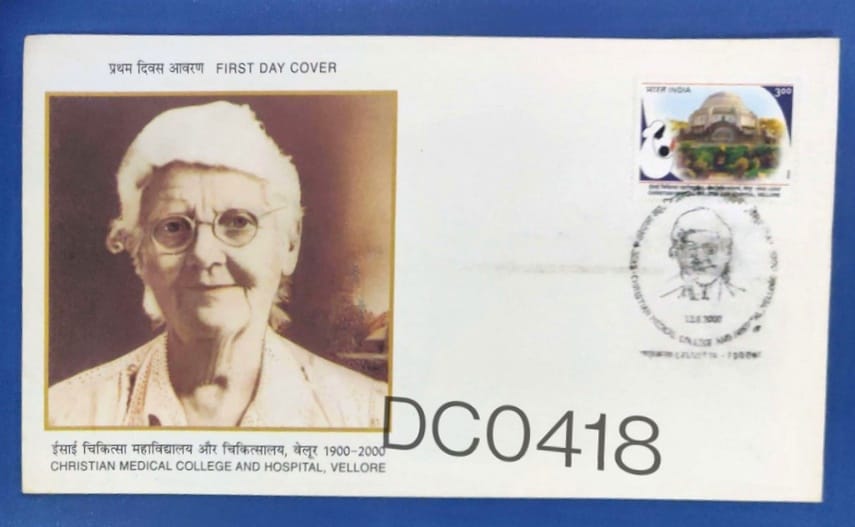

Ida Scudder’s example of dedicated service to God and to mankind, her tireless work, pioneering spirit and deep practical faith has continued to motivate the Christian Medical College Vellore, its staff and students, to the present day. Her values and ideals remain at the centre of the institution and are the reason why it continues to grow, continues to have room for both rich and poor and continues to hold international respect for its work in education, healthcare and research.
Always she carried great burdens: responsibilities to her patients and staff, shortage of resources and difficult leadership decisions. However, this never showed, for she relied ultimately on her God, who, in the words of her favourite hymn, was her Vision, Shield and Delight.
Ida, a charismatic and indomitable leader who was completely committed to her cause, was ably supported by many wonderful women who strengthened her hands and worked beside her, to make all her dreams for India and Indian women come true.


Additional Reading
Calling, Conflict and Consecration: The Testament of Ida Scudder of Vellore
By Reena Mary George, MBBS, MD(RT), MA(CS), Professor of Palliative Medicine, Christian Medical College, Vellore, India https://journal.cjgh.org/index.php/cjgh/article/view/10/82
For further study – Researchers can follow this link to the Ida Sophia Scudder Papers. Schlesinger Library Archived at https://hollisarchives.lib.harvard.edu/repositories/8/resources/5677#
12 Nov 2023: CSI, CNI and Mar Thoma Church celebrate “Festival of Unity of Communion of Churches in India (CCI) CSI- CNI-MTC”
On 12 November, 2023, Sunday: the CSI, CNI and Mar Thoma Churches will celebrate this Sunday as the ‘”Festival of Unity of Communion of Churches in India (CCI) CSI- CNI-MTC”‘.
The Communion of Churches in India (CCI) has been constituted as the visible organ for common expression of the life and witness by the founding Churches, the Church of North India (CNI), the Church of South India (CSI) and the Mar Thoma Syrian Church (MTC) which recognise themselves as belonging to the one Church of Jesus Christ in India, even while remaining as autonomous churches, each having its own identity of traditions and organizational structures. “The Communion” invites other Churches in India to enter into full communion with the member churches separately and join “The Communion”.
In a meeting of the Executive Committees of the CNI, CSI & MTC in November 1999 at CharalKunnu, Kuriannoor, Kerala from 11-14 November, 1999, it was unanimously recommended that the name ‘The Communion of Churches in India’ be adopted in place of the Joint Council to reflect the growth in the experience of unity among the three churches.
Festival Of Unity
CCI week every year in the second week of November with special combined worship service on second Sunday in November in all the Churches of the member Churches. Please look for the Special Order of Worship prepared for the Occasion
Common Liturgy – The Communion of Churches in India
Historical Background
The Communion of Churches in India (CCI) has been constituted as the visible organ for common expression of the life and witness by the founding Churches, the Church of North India (CNI), the Church of South India (CSI) and the Malankara Mar Thoma Syrian Church (MTC) which recognise themselves as belonging to the one Church of Jesus Christ in India, even while remaining as autonomous churches, each having its own identity of traditions and organizational structures.
“The Communion” invites other Churches in India to enter into full communion with the member churches separately and join“The Communion”. The genesis of the story goes back to the invitation by the CNI to form three commissions of representatives of the three churches: the Church of North India, Church of South India and the Malankara Mar Thoma Syrian Church (here-in-after referred to as CNI.CSI and MTC) to explore the ways and means of further cooperation and witness in India. This move was welcomed during the meeting of the CSI and MTC Negotiation Commission, held on 17th May 1974. Therefore the three churches appointed their representatives to the Theological Commissions of their respective churches and these commissions began to function as a Joint Theological Commission.
The first meeting of the Joint Theological Commission was held in January 1975 at Madras. The object of the Commission was to explore the possibilities of close cooperation between the CNI, the CSI and the MTC and to discuss the question of faith and order and other relevant issues. The aim of this was that there might be union between these churches, keeping in mind the ultimate goal of all Christ’s people in India i.e. the fulfillment of the Mission of the Church. During their third meeting in September 1976, the JTC passed the proposal for a new model of union for these three churches, which was accepted, and the Joint Council was inaugurated in July 1978, at Nagpur.
Aims And Objects Of The Communion
✮ To serve as the common organ of the member Churches for working towards a visible manifestation of the Unity of the Churches and of the whole Church of Jesus Christ in India.
✮ To help the Churches to fulfill the Mission of Evangelization of the people of India and of witnessing to the righteousness of God revealed in the Gospel of Jesus Christ by striving for a just society.
✮ To work with all people of good will to establish peace with justice and integrity of creation.
✮ To explore possibilities of common action for the fulfillment of the mission of the Church in India and outside.
✮ To consider the question of Faith, Worship and Order and other relevant issues arising from their present relationship of full communion and make appropriate recommendations, so that the churches may grow in mutual understanding, the deepening of the experience of oneness in Christ, and in the visible manifestation of unity.
Late Dr. Russel Chandran, one of the active proponents of the council since its formation used to say that the Joint Council was established on the basis of acknowledgement of the three churches that they were already one church because of their oneness in doctrine and mutual recognition of their sacrament and ministry. It was intended to give visible expression of the unity which already existed. One of the components of visible unity was adoption of a common name. Some expressed the difficulty, that do adopt a common name would be a question of losing the identity of the three churches. However organic unity with a common name was ruled out. The attempt was made to manifest oneness through a common structure, while retaining the autonomy of the three churches.
According to the Preamble of the new constitution, the objects are :
✮ To serve as the common organ of the member churches and of the whole church of Jesus Christ in India.
✮ To help the churches to fulfill the mission of evangelization.
✮ To strive with all people for justice and integrity of creation.
✮ To explore possibility of common action for fulfillment of mission.
✮ To consider question of faith, worship and order and other relevant issues.
In a meeting of the Executive Committees of the CNI, CSI & MTC thin November 1999 at Charal Kunnu, Kerala from 11-14 November, 1999, it was unanimously recommended that the name ‘The Communion of Churches in India’ be adopted in place of the Joint Council to reflect the growth in the experience of unity among the three churches. The new name was adopted and announced at the 10 Joint Council Meeting held in Calcutta on 13th and 14th November 2000. According to the Constitution of the CCI the General Assembly is held ordinarily every four years. The first General Assembly of the Communion of Churches was held on 10 March 2004 in Cochin but somehow after two years the second General Assembly was held in CSI Centre, Chennai from 3rd to 5th July 2006. The third General Assembly was held in CNI Bhavan New Delhi on 2nd and 3rd March 2010. It was decided to observe second Sunday in November every year as the Festival of Unity in the second meeting of the Executive Committee of the Joint Council held on 5th May 1979.
The first General Assembly held at Shantigiri, Aluva held from 7th to 10th March 2004 had noted the following challenges:
✮ Unity at the level of people’s struggle
✮ Making visible the unity we have
✮ From Institution to movement
✮ Empowering people as a form of service towards justice.
✮ From bureaucracy to people
✮ From National to local The CNI Moderator in his keynote address had said “ We need to learn lessons from our past, from our mistakes and also from the insights of our ancestors and be guided by the Holy Spirit into that Unity which God wants. Let us walk together on a new journey and make a new beginning in our effort for walking as united in faith and action.
Prayer

JOINT COUNCIL (CCI) PRAYER
“Almighty God, our heavenly Father, in you alone all things are held together in unity. You have united us in a new way in Jesus Christ by the power of the Holy Spirit. We praise you for your love which is the bond of our unity.
We give thanks to you that you have led the three churches to which we severally belong to come together and to form a Joint Council and now called the Communion of Churches. You have also called us to united in prayer that we may all receive your blessings and grow in unity.
In our prayers, O Father, we join with our Lord Jesus Christ in his prayer for all who believe in him “that they all may be one.. that the world may believe” (John 17:20) We confess before you our tolerance of disunity and our share in taking pride in our heritages more than in Jesus Christ and his Cross.
We pray for the continued guidance of your Holy Spirit that through the Joint Council our bond of unity in love may deepen and our oneness may strengthen our witness t the Gospel of Jesus Christ. Help us to unite for Christ’s mission not only at the national level but in all levels, wherever we can be together for worship, mission and service. We seek your blessings so that our common life and witness may be a blessings to the nation to which we belong.
We specially pray for the Presiding Bishop and the members of the Presidium,……the Moderator of the Church of North India,……the Moderator of the Church of South India and … the Metropolitan of the Mar Thoma Church, and the members of the CCI Secretariat and for all other Bishops, ministers and the laity and commend them to your mercy, protection and guidance. Grant that led by their ministry the churches may continually grow in love and unity. May your peace, our heavenly Father, be always with us. Through Jesus Christ our Lord.
AMEN.
for more information visit https://communionofchurchesinindia.org.in