3rd September, 1889 – Birth of Sadhu Sunder Singh (Special Video Feature)
Sadhu Sunder Singh the renowned Indian Christian missionary was a member of an ancient, aristocratic, and wealthy Sikh family from the village of Rampur in the State of Patiala (present day Punjab). He was a very religious and God fearing person. Jesus appeared to him in a vision in the early hours of 18th December 1904. Like Paul in the New Testament, he heard a voice “Why do you persecute me? Remember that I gave my life for you upon the Cross”. On Sunday, the 3rd of September, 1905, on his sixteenth birthday, he was baptized in St. Thomas Church at Shimla according to the rite of the Anglican Church.
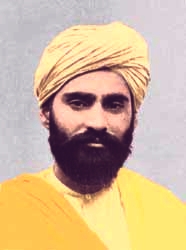
Sadhu Sundar Singh
A month after his baptism, Sundar Singh donned the yellow linen robe that celibate Indian Sadhus wore and set out to preach the gospel, carrying nothing but a New Testament. From now on he would have no permanent home and no income.”I am not worthy to follow in the steps of my Lord,” he said, “but like Him, I want no home, no possessions. Like Him I will belong to the road, sharing the suffering of my people, eating with those who will give me shelter, and telling all people of the love of God.’ He also authored eight books.
Sadhu Sunder Singh was one of the speakers of the Maramon Convention in 1918. He spoke in Hindi and the translation was done by Mr. M. O. Oommen, Chief Conservator of the then Travancore Kingdom.
Sadhu Sunder Singh drew crowds greater than any previous conventions, so much so that before the end of the week the pandal (covered area) had to be enlarged. It is estimated at the final meeting about 32,000 people gathered to hear his message.
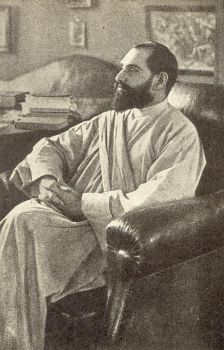
Sadhu Sundar Singh
He is believed to have died in the foothills of the Himalayas in 1929 on his way to Tibet. His body was never found.
Journey to the Sky – Sadhu Sundar Singh (1977)
12 July, 1889 – Seminary Case: Division of the Mar Thoma Church and Jacobite Church (Video)
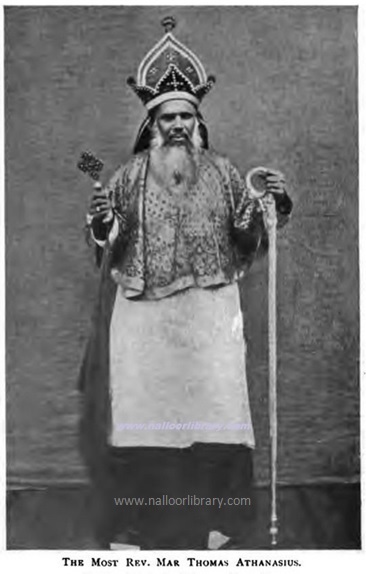
Thomas Mar Athanasius Metropolitan (Mar Thoma XIV) Photo from The Indian Christians of St. Thomas by William Joseph Richards (1908)
12 July, 1889: Seminary Case Judgment. In 1879 a case was filed in the district court of Alleppey by Bishop Joseph Mar Dionysius against the then Metropolitan of the Church Most Rev. Thomas Mar Athanasius.
Mar Dionysius prayed to the court to declare him as the rightful Metropolitan of the Malankara Church and also requested the court to evict Mar Athanasius and his followers from the Old Seminary building in Kottayam. The final verdict of this case came on 12 July 1889 from the Royal Court of Travancore. Two Judges decreed that Joseph Mar Dionysius was the rightful Metropolitan of the Malankara Church as he expressed allegiance to the Patriarch of Antioch. One Christian judge gave the verdict in favour of Thomas Mar Athanasius because of his conviction that the Malankara Church has been an independent Church from the beginning. The Majority view prevailed and Thomas Mar Athanasius had to leave the Old Seminary and the properties of the Church, because he upheld the autonomy of the Mar Thoma Syrian Church. This led to the formal division of the church into two sections: the Mar Thoma Church and Jacobite Church.
The followers of Mar Athanasius got the Kottarakkara church without a duel, they got the Maramon and Kozhencherry churches through court decision, and was given the right to conduct services on alternate Sundays in five other churches. They put up small sheds in other places to hold worship services.
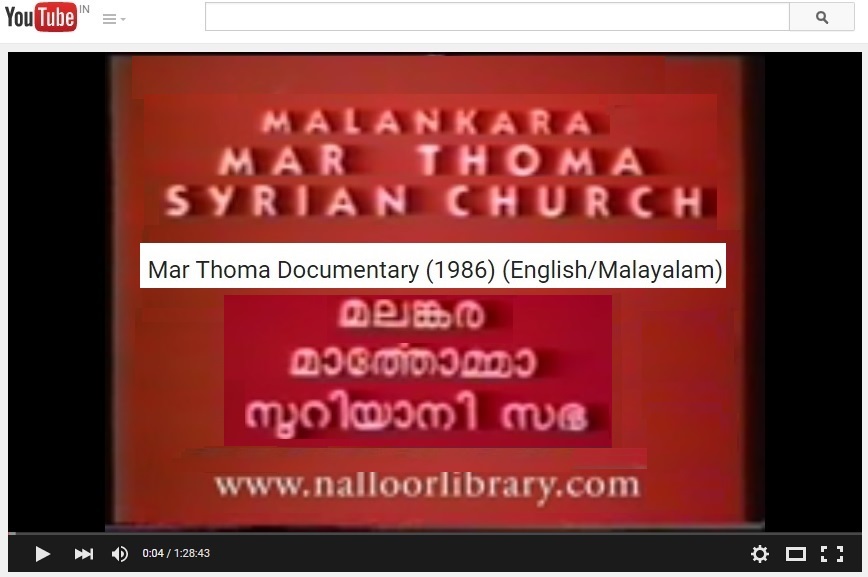
To learn more about Mar Thoma Syrian Church History – watch this Special Documentary with rare footage on the Malankara Mar Thoma Syrian Church – (English/Malayalam) produced in 1986. It offers a peek into the history, rich culture and heritage of the Mar Thoma Syrian Church.