Pages from History. 10 July, 1919: P.V. Thommy Upadeshi passes away
10 July, 1919: P.V. Thommy Upadeshi passes away. Thommy Upadeshi was born in a very poor family of the Kunnamkulam Mar Thoma Parish in 1881. After his basic education he became a teacher. But after few years of teaching he became a full time evangelist in the Mar Thoma Church.
Rev. C.M. Joseph, Vicar of the Kunnamkulam Parish encouraged him in his Gospel work. Titus II Metropolitan appointed him as evangelist in Trichur and Perumbavoor He was a blessed Hymn writer. In 1905 he published a Hymn Book “Vishudha Geethangal” comprising of 136 hymns.
His language is simple and even the illiterate persons can enjoy his hymns. The following hymns in the book Kristheeya Keerththanangal are written by him: 3 (3), 11(10), 12(11), 30(28), 56(56), 61(61), 67(67), 70(70), 71(71), 73(73), 96(96), 130(111), 35(126), 145(136), 243(221), 247(225), 286(286), 295(281), 345 (345), 351(351), 366(242), 368(251).
In 1919 there was an outbreak of Cholera in Kunnamkulam and many persons died. Thommy Upadesi volunteered to serve the cholera patients and was finally infected with cholera. He passed away on Wednesday 10 July 1919 at the age of 38.

Kristheeya Keerththanangal
Pages from History: 5 July 1415, Church burns John Hus
5 July, 1415: John Huss, Bohemian preacher and forerunner of Protestantism, is burned as a heretic in Constance, Germany. John Huss was a religious thinker and reformer. He initiated a religious movement based on the ideas of John Wycliffe.
His followers became known as Hussies. The Catholic Church did not condone such uprisings, and Huss was excommunicated in 1411, condemned by the Council of Constance. Hus was offered a chance to recant and declined with the words “God is my witness that the things charged against me I never preached. In the same truth of the Gospel which I have written, taught, and preached, drawing upon the sayings and positions of the holy doctors, I am ready to die today.” He was then burned at the stake, and his ashes thrown into the Rhine River.

Jon Hus being burnt at the Stake.
Janíček Zmilelý z Písku – Jena codex
Pages from History: 1 July 1899, Formation of The Gideons International
1 July, 1899: Three travelling businessmen met in a YMCA building and decided to form an organization to distribute Bibles. The Christian Commercial Men’s Association of America, later renamed the Gideon’s, placed their first Bibles in a hotel nine years later.
Gideon’s started their work in India in 1961. The 33rd annual convention of Gideon’s International (India) was held at Tiruvalla in May, 2002.
Gideon’s distribute complete Bibles, New Testaments, or portions thereof. They have placed 1.9 billion Scriptures and are on a mission to reach 2 billion.

The Gideons International
Pages from History: 27 June, 1880, Birth of Helen Keller
27 June, 1880: Birth of Helen Keller (d.1 June 1968) in Tuscumbia, a little town of northern Alabama, USA.
As a baby of nineteen months, Helen Keller was stricken with a severe illness which left her totally blind and deaf. Then Anne Mansfield Sullivan a English teacher came to teach her and there began that remarkable story of her development into a woman of great culture and spiritual insight.
Helen Keller devoted her life to helping blind and deaf-blind people. She appeared before US state and national legislatures and international forums, travelled around the world to lecture and to visit areas with a high incidence of blindness, and wrote numerous books and articles. She is known as a symbol of Hope for blind people across the world.

Miss Sullivan reading to Miss Keller, circa 1898 (http://www.afb.org)
Pages from History: 25 June, 1865, Formation of China Inland Mission
25 June, 1865: Formation of China Inland Mission. English Missionary J Hudson Taylor is the founder of the China Inland Mission. Its missionaries were not having any guaranteed salary. They never appealed for funds. They trusted in God for all their needs and they even adopted the Chinese way of dressing.
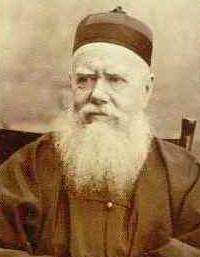
J. Hudson Taylor
(http://www.jameswatkins.com/hudsontaylor.htm)
Pages from History: 20-26 June, 1599: Synod of Diamper (Udayamperoor)
20-26 June, 1599: Synod of Diamper (Udayamperoor) was held under the president ship of Aleixo de Menezes, (25 January 1559 – 3 May 1617) the then Archbishop of Goa. One of the decrees of the synod about marriage reads as follows “No man shall be married hereafter, until he has attained the age of fourteen years at least, nor any woman before she is fully twelve.”

Archbishop Aleixo de Menezes (http://www.ibiblio.org)
Pages from History:- Birth of Bartholomew Ziegenbalg (1682)
10 June, 1682: Birth of Bartholomew Ziegenbalg.
Ziegenbalg was born in a little Saxony town called Pulsnitz in southeast Germany. His parents were God fearing Christians with a missionary outlook.
With the help of King Frederick IV of Denmark, Ziegenbalg and his friend started their sea journey to India on 29 Nov 1705 and reached the coast of present Tamil Nadu, a place called Tranquebar on 9 July 1706.
They were the first protestant Missionaries to India and hence 9th July is celebrated as the birthday of Protestant Missions in India. Ziegenbalg passed away on 23 Feb 1719.
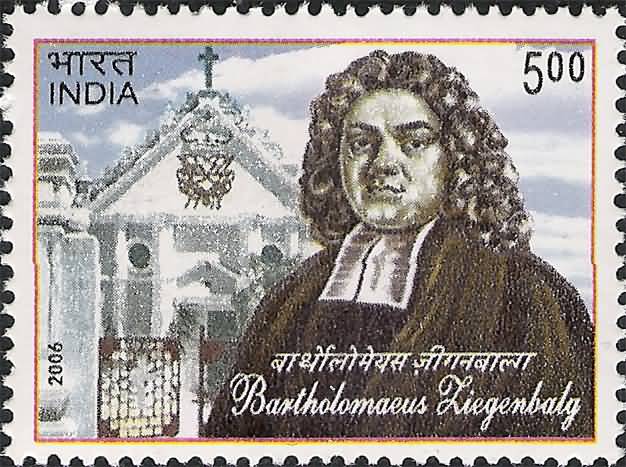
Pages from History: William Carey passes away (1834)
9 June, 1834: William Carey often called “the father of modern Protestant missions” dies, having spent 41 years in India without a furlough. His mission could count only about 700 converts, but he had laid a foundation of Bible translations, education, and social reform.
He also inspired the missionary movement of the nineteenth century, especially with his cry, “Expect great things from God; attempt great things for God “. As per his will he was buried in the Serampore Cemetery with the following inscription on the tomb stone “William Carey, Born 17 Aug 1761, Died 9 June, 1834; A wretched, poor and helpless worm, on thy kind arms I fall”.
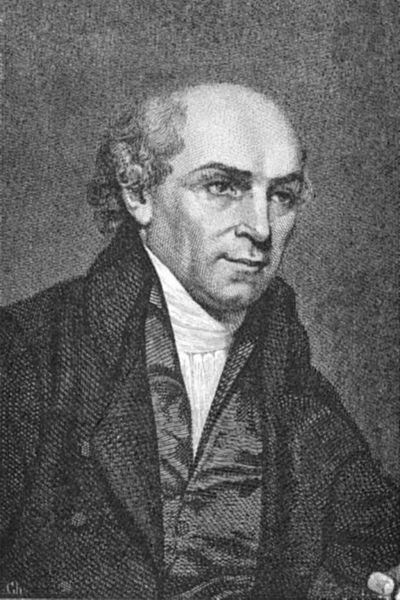
William Carey: The Shoemaker Who Became the Founder of Modern Missions; (John Brown Myers; London 1887)
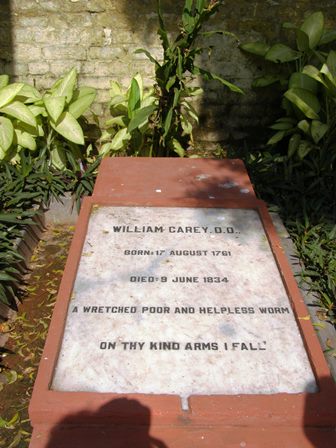
William Carey’s tombstone at the Serampore Christian burial grounds (Photo from http://www.careyfamilynetwork.co.uk)
Pages from History : 6 June, 1844: Formation of YMCA
6 June, 1844: Formation of Young Men’s Christian Association (YMCA).
The Young Men’s Christian Association was founded in London, England, on June 6, 1844, in response to unhealthy social conditions arising in big cities at the end of the Industrial Revolution (roughly 1750-1850). Growth of the railroads and centralization of commerce and industry brought many rural young men in need of jobs to cities like London.
They worked 10 to 12 hours a day, six days a week. Far from home and family, these young men often lived at the workplace. They slept crowded into rooms over the company’s shop, a location thought to be safer than London’s tenements and streets. Outside the shop, things were bad -open sewers, pickpockets, thugs, beggars, drunks, lovers for hire and abandoned children running wild by the thousands.
In India, YMCA was introduced in the last quarter of the 19th century. National Council of YMCA’s in India was established in 1891.

Pages from History: Anglican Church ordains first priest from Pulaya Community (1931)
31 May, 1931: Anglican Church ordains first priest from Pulaya Community. Due to the work of CMS missionaries many people from the backward classes were converted to Christianity. But Syrian Christians were not willing to worship with them or accommodate them in their churches or society.
Special churches were made to for them and they were treated as untouchables by the high Class Syrian Christians. On 31st May, 1931, Mr. P. J. Isaac a member of the Pulaya community was ordained to the priesthood by Bishop Moore in an effort to eradicate this social evil.





 Nalloor Library